


More news on this day
One of LaGuardia Airport’s primary runways remains out of service after a sinkhole was discovered near the pavement, with current projections indicating repairs could allow operations to resume around midday.
Get the latest news straight to your inbox!
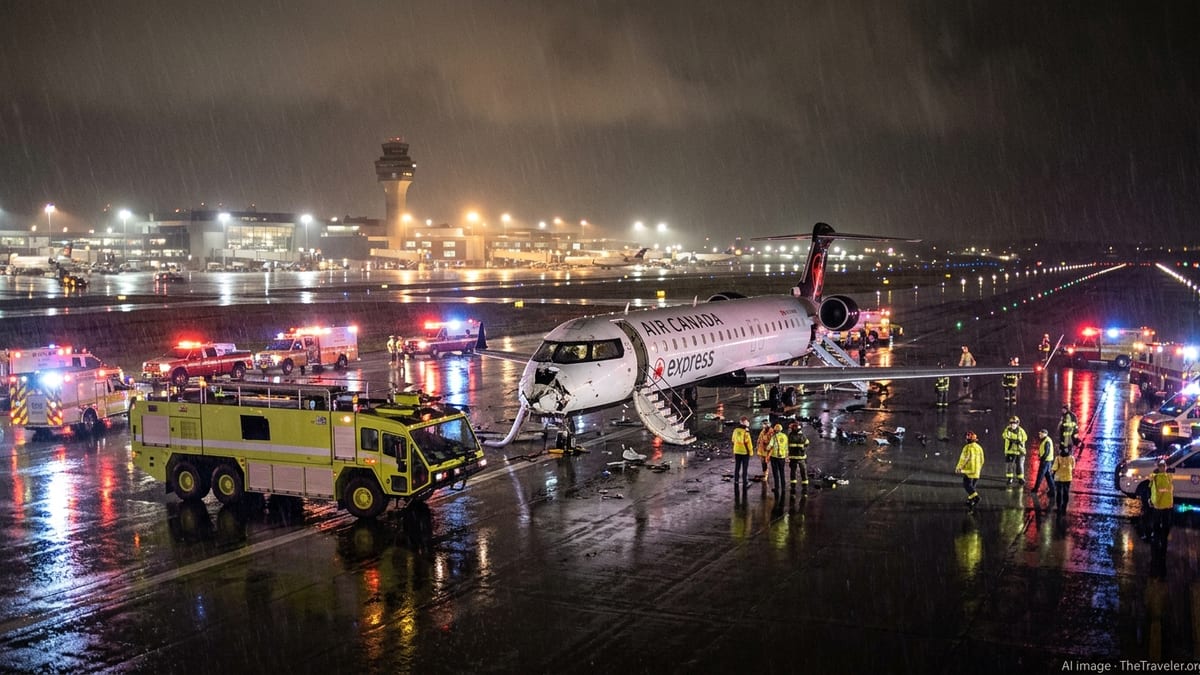
Runway 4/22 still offline after sinkhole discovery
Published coverage indicates that the disruption began late Wednesday morning, May 20, when a routine airfield inspection identified a sinkhole near Runway 4/22, one of LaGuardia’s two main operational runways. The finding led to an immediate closure of the strip and a rapid shift to single-runway operations at the busy Queens airport.
Reports describe the affected area as a localized cavity in or adjacent to the pavement structure, large enough to raise concerns about the stability of aircraft loads on takeoff and landing. Out of caution, all movements on the runway were halted while engineering teams assessed the damage and prepared emergency repairs.
Publicly available information from aviation tracking services shows that the closure quickly rippled through LaGuardia’s tightly scheduled operations. With only one runway available, the airport’s capacity dropped sharply, putting pressure on carriers already contending with unsettled spring weather in the New York region.
As of Thursday morning, the runway remained closed while repair crews continued to work on the subsurface problem. Local media and aviation data providers are indicating that a tentative reopening is expected around midday, though that timing remains subject to change as inspections continue.
Hundreds of flights disrupted across the network
Disruption metrics compiled by flight-tracking platforms point to hundreds of delays and cancellations tied to the runway shutdown. On Wednesday, LaGuardia registered one of the highest disruption levels in the United States, with cancellations and long departure queues mounting through the afternoon and evening.
Many of the most affected routes were short-haul business and shuttle flights to cities such as Boston, Washington, Chicago and Atlanta, as airlines struggled to re-time or reroute services into the more limited schedule. Some carriers shifted capacity to other New York–area airports, while others consolidated frequencies or delayed departures until slots became available.
Travelers reported extended wait times on the ground and in terminal areas as aircraft waited for takeoff clearance on the remaining runway. Published coverage notes that arrival traffic also faced ground delay programs, with inbound flights held at origin or slowed en route to manage congestion around the constrained airfield.
Early Thursday, schedules still reflected elevated levels of disruption, though some carriers appeared to be building contingency plans around a potential midday reopening. Passengers with same-day itineraries into or out of LaGuardia were being advised through public channels to anticipate changing departure times and possible aircraft swaps as the situation evolves.
Repair focus on stabilizing subsurface conditions
According to engineering details shared in news reports, the immediate priority for airfield crews is to excavate the affected section, identify the underlying cause of the void and rebuild the structure to withstand repeated aircraft loads. That process typically involves removing damaged pavement, compacting or replacing underlying fill, and restoring the asphalt or concrete surface to certified standards.
LaGuardia’s location on reclaimed shoreline and infill has long posed challenges for maintaining a stable airfield surface. Infrastructure analysts frequently point out that ground settlement, aging utilities and drainage patterns can all contribute to localized failures such as sinkholes or depressions, particularly after cycles of freeze-thaw and heavy rain.
Airport construction planning documents indicate that LaGuardia routinely schedules overnight runway maintenance during warmer months to manage these risks, but sudden defects can still emerge between planned interventions. The current closure differs from routine work because it was triggered by an unexpected structural concern, prompting a more urgent and disruptive shutdown.
Once emergency repairs are complete, the runway will require inspections and possibly test operations before being cleared for regular commercial use. Reports suggest this process is driving the current projection that operations might resume sometime around midday, assuming no further structural issues are uncovered.
Weather and recent incidents heighten sensitivity
The sinkhole closure has arrived at a challenging moment for LaGuardia’s operations. Recent weeks have brought several rounds of thunderstorms and low clouds to the New York region, periodically reducing arrival rates and compounding delays. With one runway offline, any additional weather constraints can quickly lead to cascading disruptions.
Publicly available information also highlights that Runway 4/22 has been in the spotlight since a serious collision in March involving a commercial aircraft and an airport fire vehicle. That earlier incident, which resulted in fatalities and injuries, has kept attention focused on safety and resiliency along the same stretch of pavement now affected by the sinkhole.
While there is no indication from current reporting that the sinkhole is linked to the previous accident, the proximity in time and location has added to public concern. Aviation commentators note that any structural problem on a runway with such a recent history naturally prompts questions about inspection regimes, drainage systems and longer-term investment in airfield infrastructure.
With passenger numbers at LaGuardia elevated by the spring travel season, the combination of weather, infrastructure strain and heightened safety awareness is creating a complex operational environment. The airport and airlines are relying heavily on schedule adjustments, diversions and fleet swaps to maintain at least partial connectivity for travelers.
What travelers can expect through the afternoon
For passengers flying through LaGuardia today, publicly available guidance points to a day of uncertainty, particularly in the morning hours before the expected reopening. Even if Runway 4/22 returns to service around noon, it is likely to take several hours for operations to stabilize as airlines work through backlogs and reposition aircraft and crews.
Industry practice suggests that early flights are the most vulnerable to cancellation when capacity is reduced, while later departures may be delayed but still operate once conditions improve. Travelers with flexible plans may find it easier to accept rebooking options to other New York–area airports or to later departures that avoid the morning’s tight capacity constraints.
Observers note that the disruption at LaGuardia is also having knock-on effects at connecting hubs, where arrival and departure banks are being reshuffled to account for reduced New York flows. This means that even passengers not starting or ending their journeys in New York could experience irregular operations if their itineraries pass through the affected network.
With attention now focused on the midday repair timeline, the next update on LaGuardia’s runway status will be critical in determining whether the airport can return to near-normal operations by evening or whether significant residual delays will extend into the night.