


More news on this day
A sinkhole discovered near one of LaGuardia Airport’s primary runways has forced a runway shutdown and set off a fresh wave of flight cancellations and lengthy delays for travelers moving through New York City and beyond.
Get the latest news straight to your inbox!
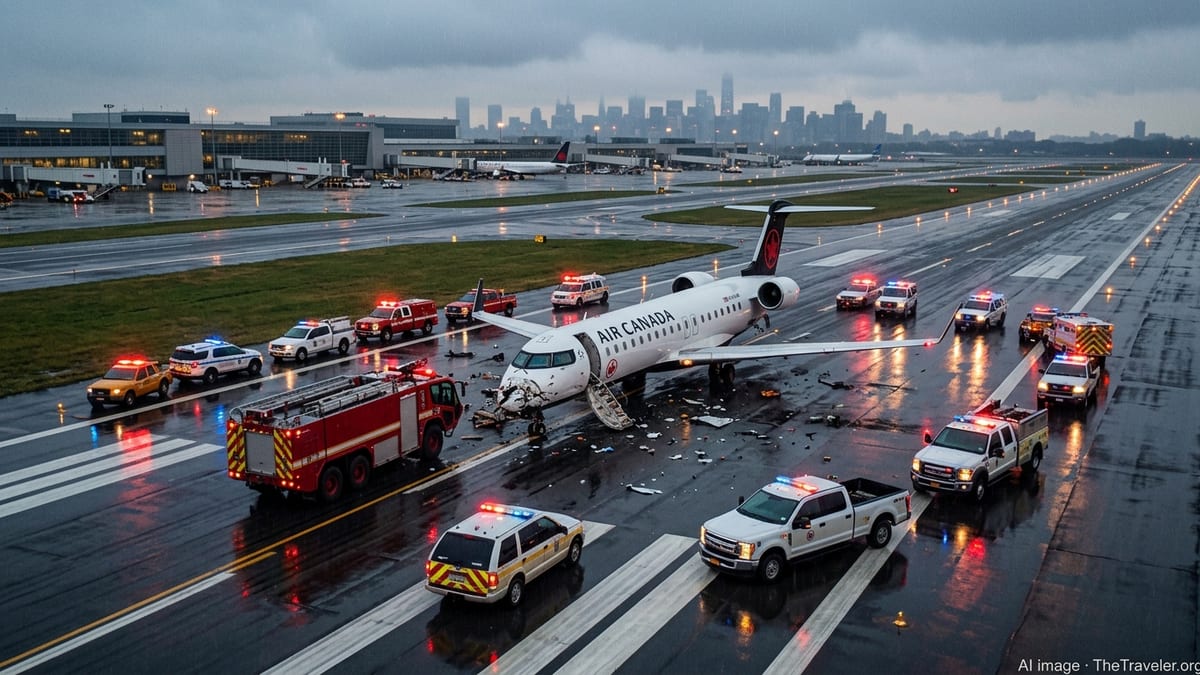
Runway 4/22 taken out of service after inspection finds sinkhole
Publicly available information shows that airfield crews at LaGuardia identified the sinkhole late Wednesday morning, May 20, during a routine inspection of the airfield. The depression was found adjacent to Runway 4/22, one of the airport’s two main runways, prompting the immediate closure of that strip to all operations while engineers assessed the site.
Reports indicate that the Port Authority of New York and New Jersey, which operates LaGuardia, moved quickly to cordon off the affected area and dispatch emergency construction and engineering teams. Images carried by local television outlets showed heavy equipment and work crews clustered near the damaged pavement as temporary shoring and excavation work began.
According to published coverage from national and local news outlets, the Federal Aviation Administration responded by slowing arrivals into LaGuardia and implementing traffic management programs to meter inbound flights. With one runway offline at an already capacity‑constrained airport, even a localized infrastructure failure translated into significant operational strain.
As of Thursday morning, there was no publicly announced timeline for a full reopening of Runway 4/22. Updates from aviation trackers and airline communications suggested that repairs were expected to continue through at least part of the day, with the potential for intermittent adjustments as engineers evaluated the stability of the surrounding pavement and subsurface.
Cancellations, delays and ground holds ripple through the system
Flight‑tracking data cited in multiple reports show that hundreds of flights into and out of LaGuardia were canceled or delayed after the sinkhole was discovered. By late Wednesday, tallies from aviation data services indicated close to 200 cancellations and a similar number of delayed departures and arrivals, with average departure delays approaching or exceeding an hour and a half at times.
Publicly available information from the Federal Aviation Administration described a ground delay program for LaGuardia, effectively spacing out inbound flights and limiting the number of aircraft allowed to depart for the airport during peak repair activity. Travelers in cities such as Chicago, Atlanta and Dallas reported disruptions as aircraft and crews scheduled to operate LaGuardia routes were held or reassigned.
Reports also noted that the timing of the sinkhole further complicated operations. Thunderstorms forecast for the New York area on Wednesday and into Thursday had already prompted airlines to warn of weather‑related schedule changes. The combined effect of limited runway capacity and convective weather led to rolling delays that extended well beyond the New York region.
Passengers posting on social media and speaking to local broadcasters described long lines at check‑in counters and customer service desks as airlines worked to rebook travelers. Many carriers encouraged customers with flexible plans to postpone nonessential trips or to consider rebooking through John F. Kennedy International Airport or Newark Liberty International Airport, where capacity was also under pressure but runways remained fully available.
Why a single runway issue hits LaGuardia so hard
Aviation analyses frequently characterize LaGuardia as one of the most space‑constrained major airports in the United States, with just two primary intersecting runways handling dense schedules of short‑haul business and connecting traffic. Even on routine days, modest disruptions such as low clouds, thunderstorms or minor construction can significantly reduce throughput and increase delays.
Infrastructure and planning documents for the airport, along with previous federal assessments, have highlighted the challenges of maintaining and upgrading runways built on reclaimed shoreline and former marshland. Specialists note that such soil conditions can be more susceptible to settlement, water infiltration and erosion, all of which can contribute to pavement depressions or sinkholes if not detected early.
Reports on Wednesday’s event indicate that the affected area was near, rather than squarely in the center of, Runway 4/22. Even so, safety protocols require wide buffer zones around any visible subsidence in the pavement or underlying structure. With limited space to reroute aircraft movements and no spare runway, taking one of LaGuardia’s strips out of service quickly forces the entire operation onto the remaining runway.
Published commentary from aviation experts suggests that the incident underscores how thin the margin is at high‑demand urban airports. When every time slot and taxiway is heavily used, small infrastructure failures can have outsized consequences, cascading through schedules and impacting passengers thousands of miles away.
Traveler impact: what passengers are being advised to do
According to airline advisories and airport statements cited in news coverage, travelers booked to or from LaGuardia on Wednesday and Thursday have been urged to closely monitor their flight status and to expect significant disruptions. Many major carriers have issued travel waivers allowing customers to change flights or reroute through other New York‑area airports without typical change fees, subject to fare differences and specific validity windows.
Reports indicate that passengers whose flights were canceled outright were generally being rebooked on the next available departures, though constrained seat availability on peak routes meant some travelers faced overnight delays or multi‑stop itineraries. Those already in transit sometimes experienced extended ground holds at origin airports while traffic managers evaluated whether LaGuardia could accommodate additional arrivals.
Travel industry analysts quoted in recent coverage recommend that anyone with tight connections, time‑sensitive business, or cruise and tour departures consider alternative plans until the extent of the disruption becomes clearer. For some, that has meant shifting to rail along the busy Northeast Corridor or using nearby airports in Philadelphia, Hartford or Boston to bypass congestion in the New York airspace altogether.
Consumer advocates also emphasize the importance of keeping documentation of delays and cancellations, including airline notifications and receipts for any hotel or meal expenses. While each carrier’s policies differ, some passengers may be eligible for reimbursement or goodwill credits, particularly if disruptions extend beyond the immediate repair period.
Renewed questions about infrastructure resilience at major hubs
Beyond the immediate operational turmoil, the LaGuardia sinkhole has intensified discussion about the resilience of critical infrastructure at aging urban airports. The facility has undergone a multibillion‑dollar terminal redevelopment in recent years, transforming passenger spaces and improving overall capacity, but runway and taxiway systems remain heavily used and dependent on complex underground utilities and drainage networks.
Commentary in national and local outlets has framed the incident as part of a broader pattern of infrastructure stress, pointing to recent weather‑related flooding events and construction‑related runway closures that have affected air travel across the country. In that context, a localized sinkhole becomes a symbol of the pressure on transportation assets that must remain operational nearly around the clock.
Policy discussions highlighted in recent analysis pieces suggest that airport operators and regulators may face renewed pressure to accelerate airfield inspections, invest in subsurface monitoring technologies, and build greater redundancy into runway configurations where geography allows. For tightly constrained sites like LaGuardia, that may mean exploring operational contingencies and coordination protocols designed to contain the knock‑on effects of unexpected closures.
For travelers, the sinkhole at LaGuardia serves as another reminder of how dependent modern mobility is on infrastructure that often remains out of sight. As repairs continue and operations gradually stabilize, the episode is likely to feature prominently in ongoing debates about how cities prioritize maintenance and modernization at essential travel gateways.