


More news on this day
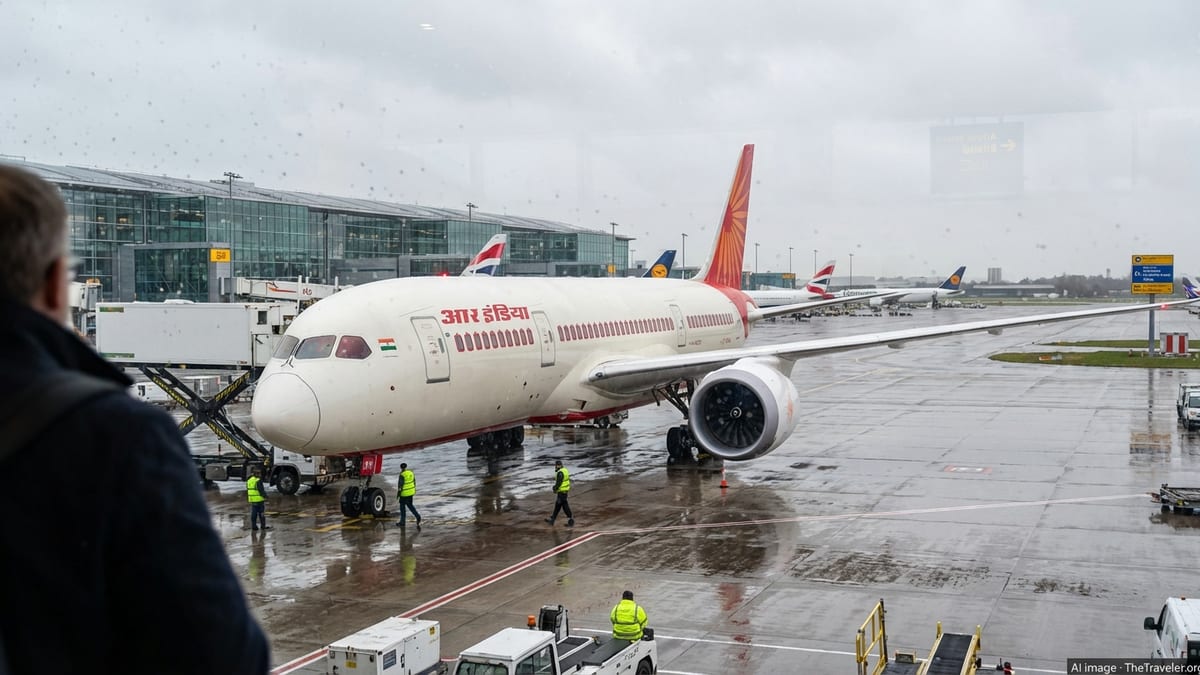
Air India is preparing to restore a large share of its curtailed international and domestic network from September, following months of disrupted schedules caused by aircraft shortages, airspace closures and an extensive safety and retrofit drive.
Get the latest news straight to your inbox!
From deep cuts to phased restoration
Publicly available information shows that Air India has spent much of the past year operating a reduced schedule across its network. A combination of extended routings around closed airspace in West Asia, ongoing cabin retrofit work and a voluntary tightening of safety checks has limited the carrier’s ability to operate its full timetable.
Reports on recent schedule filings indicate that this pattern is set to change from September, when the airline intends to restore most of the frequencies it had cut on key long haul and regional routes. Industry data points to a sharp increase in available seats from India to Europe and North America in particular, compared with the summer season.
The shift comes after a period in which many passengers faced cancellations, consolidations and last minute reroutes as the airline juggled scarce aircraft and longer flight times. The September ramp up is being framed by aviation analysts as Air India’s most substantial capacity rebuild since the disruptions began.
Travel trade feedback suggests that the planned additions are already visible in booking systems, giving tour operators greater confidence to promote autumn and early winter departures that had remained uncertain earlier in the year.
Key routes expected to see more capacity
Based on published schedules and industry tracking services, the most significant recovery is expected on trunk routes linking India with major hubs in Europe and North America. Services from Delhi and Mumbai to London, Frankfurt, Paris, New York and other gateways are projected to see more frequencies compared with the peak of the disruptions.
Air India has also been gradually rebuilding selected routes in the Middle East and Southeast Asia, although these remain more sensitive to geopolitical and airspace developments. From September, capacity on several Gulf routes is projected to edge closer to prior levels, while some temporarily withdrawn links in Europe are slated to return with reduced but steady operations.
Domestic connectivity is set to benefit indirectly as additional widebody and narrowbody aircraft rotate back into service following maintenance and retrofit work. Schedules filed for the late September and October period suggest better alignment between international arrival banks and onward connections to major Indian cities, improving overall journey times.
At the same time, network data indicates that a handful of routes affected by structural fleet changes or chronic demand weaknesses may not return immediately, implying that the restoration will be broad but not absolute.
Drivers behind months of disruption
According to published coverage, several overlapping factors combined to push Air India into an extended period of schedule cuts. Prolonged airspace restrictions over parts of Pakistan and West Asia forced longer diversions on some long haul routes, tying up aircraft and crews and reducing effective capacity.
In parallel, the airline has been progressing a multi year fleet refurbishment and cabin retrofit programme, temporarily grounding aircraft for interior upgrades and maintenance. While these projects are intended to improve long term reliability and passenger experience, the short term effect has been fewer available jets to operate the planned timetable.
In addition, a voluntary intensification of safety and technical checks on certain aircraft types, described in company statements as part of a broader safety focus, required further schedule adjustments. Industry observers note that similar initiatives at other carriers have routinely triggered short term reductions before operations stabilise.
The combined impact of these elements has been particularly visible on long haul routes with limited back up capacity and on seasonal services that depend on precise fleet planning, including some flights between India and North America and selective services to Europe and Southeast Asia.
Implications for passengers and the wider market
For travellers, the planned restoration from September offers the prospect of more choice, better timings and reduced uncertainty after a period in which itinerary changes had become commonplace. Travel agents report that the return of additional nonstop options is especially important for passengers seeking shorter journeys between India and key global business and diaspora markets.
However, industry commentary also stresses that schedules remain subject to change if airspace closures persist or additional aircraft are pulled for maintenance. Passengers are being encouraged by travel advisors to monitor their bookings closely and to allow extra flexibility around peak travel dates in the early stages of the ramp up.
For rival airlines, Air India’s move back toward pre disruption capacity may reshape competitive dynamics on some routes where foreign carriers had captured additional market share during the Indian flag carrier’s reduced operations. More seats from September could exert downward pressure on fares in certain city pairs, especially where multiple airlines are restoring capacity at the same time.
Within India, a more stable long haul schedule could also benefit airports that serve as key international gateways, by supporting higher connecting traffic and more predictable terminal and airside operations ahead of the busy festival and winter travel period.
What to watch as the ramp up begins
Aviation analysts are closely tracking how quickly Air India can translate its intended schedule into reliable day to day operations once September arrives. The airline’s ability to maintain high on time performance while juggling returning aircraft, evolving airspace restrictions and seasonal demand spikes will be a critical indicator of the sustainability of the restoration.
Observers also point to the pace of the retrofit and fleet renewal programme as a key variable. As more upgraded widebody aircraft enter service, the carrier gains additional flexibility to restore or even grow capacity on long haul sectors, though each new modification wave can temporarily sideline individual jets.
From a passenger perspective, early reports on the consistency of the new schedule, the handling of any residual disruptions and the quality of on board service on reintroduced routes will play a major role in shaping sentiment. After months of uncertainty, many frequent flyers are expected to take a cautious wait and see approach before shifting more of their travel back to the airline.
For now, the planned September ramp up marks a notable turning point in Air India’s post disruption trajectory, setting up the final months of 2026 as a test phase for the carrier’s broader transformation and growth ambitions.