


More news on this day
Powerful monsoon thunderstorms over the past week have battered communities, flooded roads and triggered widespread flight disruptions from the American Southwest to South Asia, as airlines and airports struggled to keep schedules on track.
Get the latest news straight to your inbox!
Storm cells lash neighborhoods and highways
In the U.S. desert Southwest, intense monsoon storms brought sudden downpours, strong winds and pockets of damaging hail to metro areas already primed for flash flooding. Local television coverage from Arizona showed toppled trees, smashed car windshields and scattered debris in residential streets after evening storm cells pushed across Phoenix and surrounding suburbs.
Video from several communities highlighted how quickly conditions deteriorated as dust, then sheets of rain and lightning moved in. In some neighborhoods, accumulated runoff turned residential roads into shallow streams, while storm drains struggled to keep up with the volume of water. Publicly available radar imagery indicated slow-moving cells repeatedly tracking over the same corridors, a pattern that increases both flooding and lightning risk.
Transportation corridors were hit hard. Portions of major freeways around Phoenix and in other Southwestern cities experienced standing water, forcing drivers to slow abruptly or divert altogether. State transportation alerts pointed to lane closures tied to disabled vehicles and minor collisions, a familiar pattern during the summer monsoon season.
The bursts of wind that preceded the heaviest rain also caused localized power interruptions. Utility outage dashboards in affected metropolitan areas showed thousands of customers briefly without electricity at the height of the storms, particularly where downed limbs fell into distribution lines.
Ground stops and rolling delays at major U.S. hubs
The same storm systems contributing to monsoon moisture and severe weather have also disrupted some of the nation’s busiest airports. According to published coverage from Dallas–Fort Worth, thunderstorms in North Texas earlier in the week led to hundreds of delays and cancelations at Dallas Fort Worth International Airport and Dallas Love Field, with data from flight-tracking services showing totals climbing into the high triple digits as storms lingered over departure and arrival corridors.
In Atlanta, publicly available Federal Aviation Administration advisories and local news reports documented a ground stop and subsequent ground delay program at Hartsfield–Jackson Atlanta International Airport tied to a line of strong storms crossing the metro area. The ground stop was later lifted, but ripple effects continued into the evening, as aircraft and crews fell out of their planned positions and departure queues lengthened.
Farther south and along the Gulf coast, severe summer thunderstorms around major Florida airports, including Tampa and Miami, have also produced extended ground holds in recent days. Regional coverage out of Tampa described a “major ground delay” at Tampa International as lightning and heavy rain moved across the airfield, temporarily halting ramp work and takeoffs. Travel-data summaries for Miami showed dozens of delays and cancellations during similar storm windows, illustrating how quickly convective weather can choke already busy airspace.
These rolling interruptions have had a cascading impact on the broader domestic network. Because many aircraft operate multiple segments per day, a storm-induced delay at one hub can disrupt flights hours later and thousands of miles away, a pattern that has been evident this week in schedule changes reported at airports across the country.
South Asian monsoon rains upend Mumbai operations
While U.S. travelers contended with storm-related backups, South Asia’s summer monsoon brought its own aviation challenges. In Mumbai, one of India’s busiest gateways, intense rainfall and gusty winds on a recent Monday severely disrupted operations at Chhatrapati Shivaji Maharaj International Airport. Business outlets in the region reported that more than a dozen flights were canceled and hundreds delayed as the city coped with flooded roads and reduced visibility.
The India Meteorological Department issued a red alert for Mumbai and neighboring districts around the same time, signaling a high likelihood of very heavy rainfall. Airport authorities implemented staggered arrival and departure slots as aircraft waited out cells offshore or diverted to alternate fields. Airlines serving the Mumbai market publicly advised passengers to monitor flight status closely and arrive early due to waterlogged access roads.
Residents across the city documented waist-deep water in underpasses, backed-up traffic and stalled buses, conditions that slowed the movement of both passengers and airline staff. With monsoon conditions forecast to persist, analysts noted that intermittent disruption at the Mumbai hub could continue, affecting regional connections throughout the week.
The Mumbai situation underscores how tightly linked airport performance is to surrounding urban infrastructure. Even when runways remain serviceable, severe monsoon flooding on approach roads can prevent passengers and crew from reaching terminals in time, compounding operational strain.
Travelers face long waits and shifting schedules
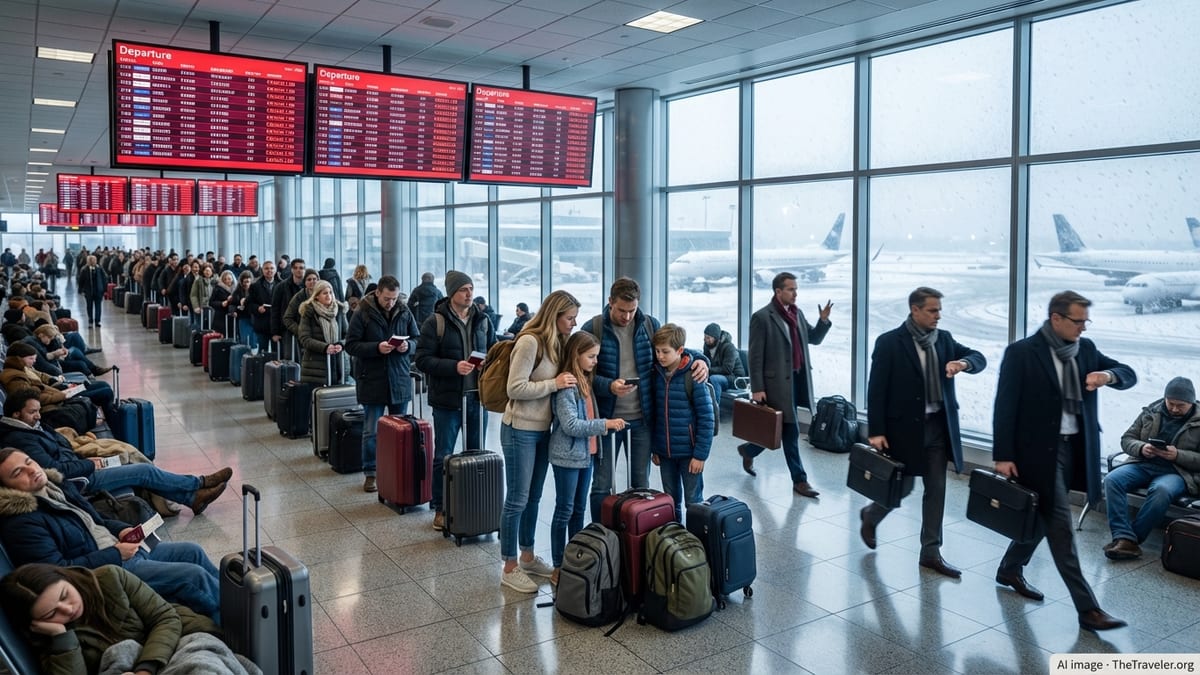
For passengers caught in the latest wave of storms, the most visible impact has been time. Travelers posting on social media from hubs including Dallas, Atlanta, Seattle and several Florida airports shared images of crowded gates, snaking customer-service lines and departure boards filled with yellow and red delay markers.
Airport dashboards and third-party tracking platforms consistently show weather listed as a leading cause of delays during the North American summer, and this week has reinforced that pattern. When lightning is detected near an airfield, ramp workers are often pulled back from exposed areas for safety, halting baggage loading and aircraft pushbacks even if rain intensity is moderate. As a result, flights that have boarded may sit without a confirmed departure time, adding to passenger frustration.
Industry guidance recommends that travelers build additional time into connections during peak storm season, opt for earlier departures when possible and keep a close eye on airline notifications and mobile apps. Some carriers also issue formal travel waivers ahead of forecast severe weather, allowing customers to rebook without change fees within certain windows, a practice that has been in effect multiple times this month for routes in the Eastern United States.
Consumer-rights organizations continue to emphasize that compensation rules differ widely by country and by cause of disruption, and that weather is frequently treated as an extraordinary circumstance. Even so, they encourage passengers to retain receipts for meals and lodging and to review airline policies after significant delays or cancellations.
Monsoon trends highlight rising weather sensitivity in aviation
Climatological assessments released in recent years point to an uptick in intense short-duration rainfall events in several monsoon-affected regions, including the U.S. Southwest and parts of South Asia. Scientific papers on aviation resilience note that thunderstorms, heavy rain and associated winds are among the most disruptive hazards for airlines, driving delays, diversions and increased fuel burn.
For airports, adapting to stronger monsoon bursts can involve infrastructure and procedural changes, from improved drainage and flood-control systems to refined lightning-safety protocols for ground crews. Some facilities in storm-prone areas have invested in more detailed real-time weather monitoring and decision-support tools designed to anticipate when convective cells will require preemptive adjustments to runway usage and traffic flow.
Aviation analysts suggest that the recent string of weather-affected days in both hemispheres is a reminder that climate variability and long-term warming can translate into more frequent operational stress tests. As this latest series of monsoon storms demonstrates, even relatively short-lived events can reverberate through flight networks for hours, stranding travelers and complicating recovery efforts well after skies begin to clear.
With the core of the Southwest and South Asian monsoon seasons still ahead, forecasters and aviation planners are watching for additional storm clusters that could again bring a mix of localized damage on the ground and widespread turbulence in the air travel system.