


More news on this day
AirBorneo’s highly anticipated inaugural jet service between Kuala Lumpur and Kuching on July 20 experienced a disruption attributed to a technical issue, according to early local coverage and aviation industry reports, putting fresh scrutiny on the fledgling Sarawak-owned carrier’s efforts to stabilise its operations.
Get the latest news straight to your inbox!
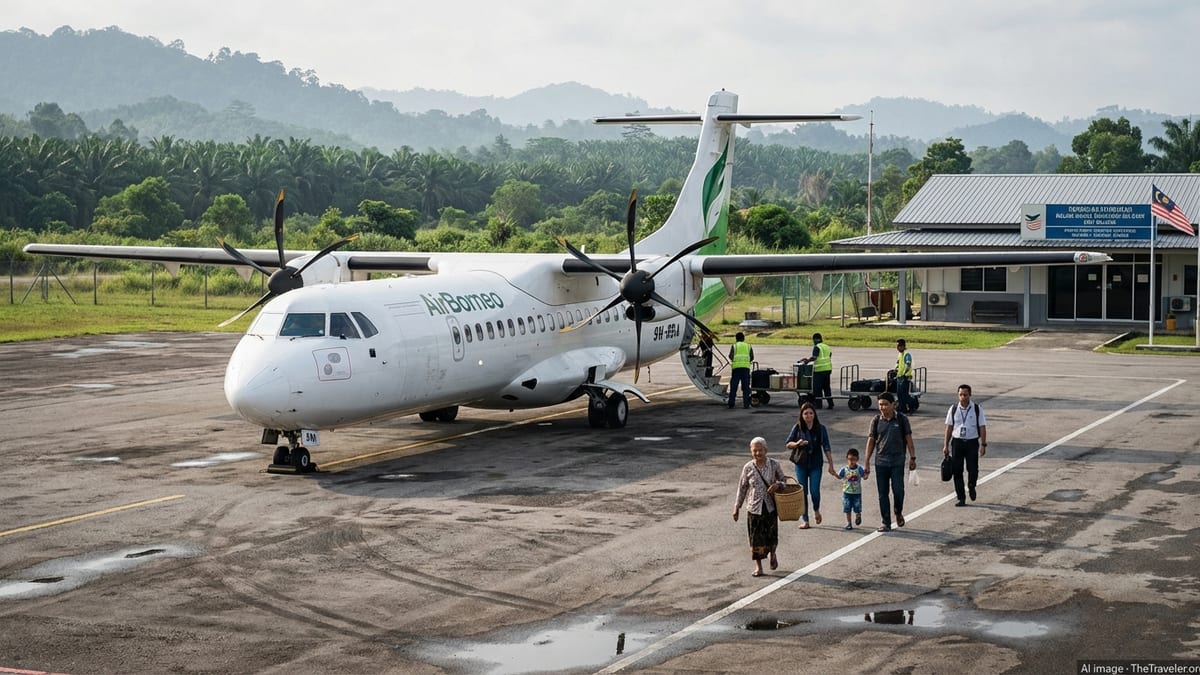
Technical problem mars first Kuala Lumpur–Kuching rotation
Publicly available information from Malaysian media and aviation tracking platforms indicates that AirBorneo’s first scheduled Boeing 737-800 service on the Kuala Lumpur–Kuching route did not operate as originally planned, with passengers reporting delays and re-accommodation following what the airline described as a technical matter involving the aircraft.
Initial schedules had the state-owned airline commencing twice-daily jet flights between Kuching and Kuala Lumpur on July 20, supported by its first newly delivered 737-800, which arrived in Kuching earlier in the week as part of final preparations for launch. The disrupted sector therefore came at a sensitive moment, coinciding with heightened public and political attention on the airline’s performance and reliability.
According to local news summaries, AirBorneo has expressed regret for the inconvenience to travellers and has pointed to a technical issue as the underlying cause, consistent with its stated policy of withdrawing aircraft from service whenever engineers require additional time to complete safety checks or rectification work. Passengers on the affected rotation were reported to have been reassigned to later departures or alternative routings.
While detailed timelines of the disruption are still emerging, the incident effectively meant that one of the airline’s first high-profile jet flights linking Sarawak with Peninsular Malaysia did not proceed according to schedule, undercutting what had been billed as a milestone moment for the carrier and for the state’s connectivity goals.
Launch follows weeks of turbulence for the Sarawak-owned carrier
The Kuala Lumpur–Kuching disruption comes after a challenging period for AirBorneo, which has been managing a series of operational issues primarily affecting its turboprop and Twin Otter network across Sabah and Sarawak. In early June, public statements from the airline and national media coverage highlighted unscheduled technical rectification work, scheduled maintenance and crew rostering constraints as key factors behind delays and cancellations across multiple routes.
These earlier difficulties prompted advisories for passengers to expect changes to flight times and frequencies, while the carrier emphasised that safety remained its top priority and that aircraft requiring technical attention would remain on the ground until engineers were fully satisfied with their condition. Regulatory notices from Malaysia’s civil aviation authorities have also pointed to ongoing monitoring of the situation and reiterated consumer rights in the event of disruptions.
In mid-July, shortly before the Kuala Lumpur route debut, AirBorneo announced temporary adjustments to flight frequencies on a select number of services between July 6 and late October as part of efforts to improve fleet reliability and on-time performance. That move was presented as a consolidation measure intended to give maintenance teams more flexibility and reduce knock-on delays caused by tight aircraft utilisation.
Against this backdrop, the Kuala Lumpur–Kuching launch was widely framed by regional outlets as a significant step in AirBorneo’s transition from a primarily intra-Borneo operator into a carrier with jet services linking Sarawak to key national and regional markets, including future flights to Singapore. The disruption on day one has therefore attracted outsized attention compared with a routine delay on a mature route.
Passenger impact and response options during the disruption
Travellers booked on the affected Kuala Lumpur–Kuching flight reported a mix of extended waits at the airport, schedule changes and, in some cases, onward connection concerns, reflecting the growing role of the new route as a bridge between Sarawak and wider domestic and international networks. Publicly accessible travel forums and social platforms carried accounts of passengers being offered rebooking options and, where necessary, alternative routings on later flights.
Consumer guidance issued by Malaysian aviation regulators in recent weeks, in light of broader AirBorneo disruptions, has reminded passengers that they are entitled to clear information about any change to their itinerary, including the reasons for the disruption and the options available, such as rebooking, refunds or other forms of redress depending on the circumstances. These general rights apply regardless of whether the cause is a technical issue, adverse weather or other operational factors.
Travel planners point out that for passengers using Kuala Lumpur as a connecting hub, disruptions on newly launched routes can have a disproportionate effect, particularly when frequencies are limited and spare capacity is constrained. In such cases, missed onward flights can translate into overnight stays or significant changes to travel plans, underscoring the importance of build-in buffer times and flexible ticket conditions when booking during an airline’s startup phase.
At the same time, aviation analysts note that technical holds during the early days of a new jet operation, while disruptive, can indicate a conservative safety culture when engineering teams prefer to err on the side of caution. For passengers, however, the immediate experience is one of inconvenience, making timely communication, clear options and visible care measures crucial to maintaining confidence.
Balancing growth ambitions with reliability concerns
AirBorneo’s move into the Kuching–Kuala Lumpur market has been positioned by state officials and company leaders as central to a broader strategy of improving connectivity for Sarawak residents while keeping fares relatively stable compared with previous operators on similar routes. Promotional materials ahead of the launch highlighted introductory all-in fares and framed the new jet services as a way to give travellers more choice across the South China Sea.
At the policy level, Sarawak’s transport authorities have spoken publicly about leveraging the state-owned carrier to address long-standing complaints over high airfares and limited capacity between East and Peninsular Malaysia. The Kuala Lumpur route, together with planned services to Singapore and other regional destinations, is seen as a key test of whether those ambitions can be met in practice once operational realities and cost structures are taken into account.
The technical disruption on the debut flight brings those questions into sharper focus. Aviation observers will be watching how quickly AirBorneo can demonstrate consistent on-time performance on its new jet network, especially after the frequency reductions and maintenance-driven adjustments announced earlier in July. Sustained reliability will be essential if the airline is to win over sceptical travellers who have already experienced disruptions on its domestic services.
Industry commentary suggests that, while occasional technical issues are an expected part of airline operations worldwide, new entrants face a steeper reputational curve. Early missteps tend to linger in public perception, making transparent communication and visible improvements in punctuality key measures for rebuilding trust after high-profile disruptions such as the Kuala Lumpur–Kuching incident.
What the disruption means for travellers considering AirBorneo
For travellers weighing whether to book AirBorneo’s Kuala Lumpur–Kuching flights in the coming weeks, the disruption on launch day serves as both a caution and a reminder of the trade-off between supporting a new regional carrier and accepting a degree of startup turbulence. Travel industry watchers suggest that passengers planning critical time-sensitive journeys may wish to build extra connection buffers or opt for flexible tickets that allow changes without substantial penalties.
At the same time, some analysts argue that once the immediate technical issue is resolved and the airline settles into a stable maintenance and scheduling rhythm, the additional capacity on the Kuala Lumpur–Kuching corridor could help moderate fares and provide more options for travellers heading to and from Sarawak. The success of that scenario will depend on how effectively AirBorneo manages its fleet, staffing and contingency planning to avoid repeat disruptions.
For now, the disrupted inaugural flight underscores the importance of monitoring real-time flight information, staying alert to airline advisories and understanding basic consumer rights in the event of delays or cancellations. As AirBorneo works to bed in its first jet route and expand toward Singapore and other regional destinations, its handling of this early setback on the Kuala Lumpur–Kuching service is likely to shape traveller sentiment toward the brand in the months ahead.