


More news on this day
Airbus is signaling confidence in the resilience of global air travel demand, indicating there is no sign of a wave of aircraft order cancellations even as airlines grapple with higher fuel costs, profit pressures and renewed questions over capacity growth.
Get the latest news straight to your inbox!
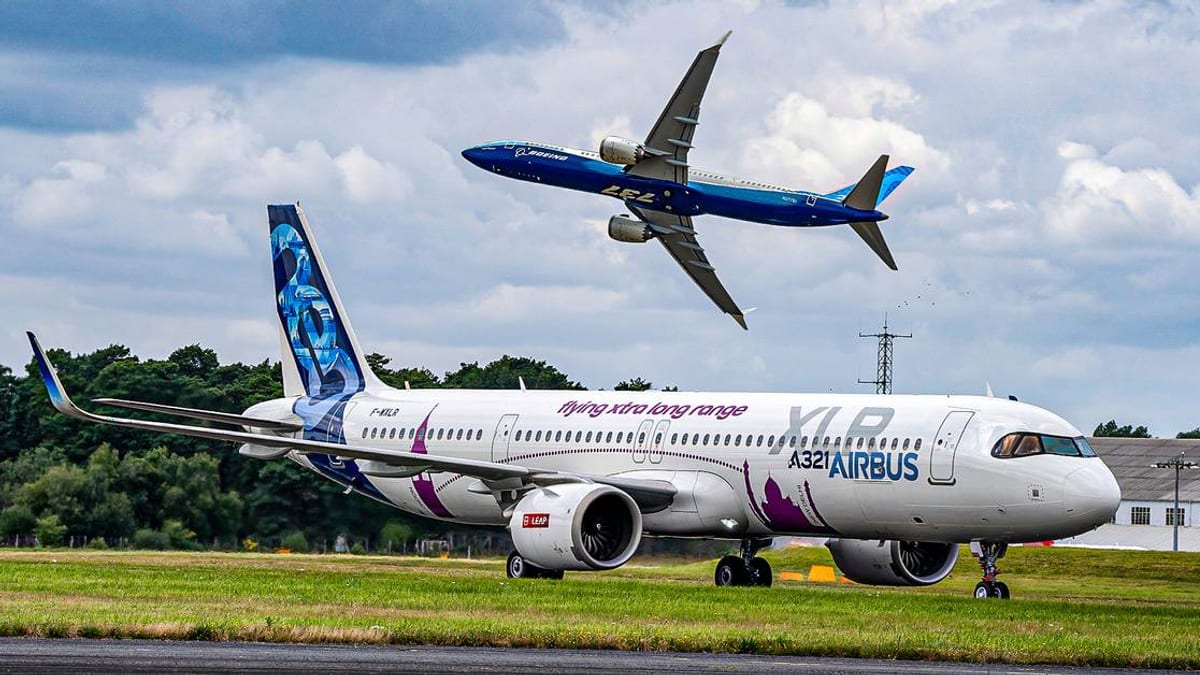
Order book holds steady as airlines face cost pressures
Recent coverage of Airbus investor communications indicates that the manufacturer sees no material increase in cancellations across its commercial aircraft programs, despite a more challenging environment for many carriers. Reports from European business media describe airline concerns over fuel price spikes and softer yields in some markets, but note that these headwinds have not yet translated into widespread deferrals or abandoned orders.
Publicly available order data for 2025 and early 2026 shows that Airbus continues to post positive net orders, with cancellations remaining a small fraction of gross sales. Monthly updates on orders and deliveries in the first quarter of 2026 indicate that even when individual deals are adjusted, overall backlog still grows, suggesting that demand from new and existing customers is replacing any isolated reductions.
Market commentary points to the long term nature of aircraft procurement as one reason for the apparent stability. Airlines typically commit to new jets years in advance, tying orders to multi year fleet renewal and growth plans rather than short term swings in profitability. This dynamic appears to be cushioning Airbus against more immediate turbulence in airline earnings.
Industry analysts also highlight that many carriers are still catching up on deferred fleet investments from the pandemic era. That pent up need for modern, fuel efficient aircraft is helping to underpin the order book even as operating conditions temporarily worsen for some airlines.
Record backlog underscores structural demand
Airbus entered 2026 with what company data describes as a record commercial aircraft backlog, equivalent to well over a decade of production at current delivery rates. Figures released in January for full year 2025 showed 1,000 gross commercial aircraft orders and 889 net orders, leaving the manufacturer with 8,754 jets still to be delivered across its main product lines.
The composition of that backlog leans heavily toward the A320neo family, which remains central to the fleet strategies of many low cost and network carriers. At the same time, recent years have seen a steady build up of widebody commitments for the A350 and A330neo as long haul travel recovers and airlines seek to replace older twin aisles with more efficient types.
Independent tracking of program specific data, such as orders and deliveries for the A320neo, A220 and A350, reinforces the picture of strong multi year demand. Large contracts announced in 2024 and 2025 by airlines in Europe, the Middle East, Asia and the Americas have contributed to what observers describe as a structurally full production skyline for the remainder of the decade.
For investors following Airbus shares under the EADSF ticker on the U.S. over the counter market, the scale of the backlog is viewed as a key support for revenue visibility. While delivery timing and production efficiency remain variables, the underlying volume of contracted work appears robust.
Deliveries rise but supply chain and quality issues linger
While orders have remained resilient, Airbus has continued to navigate supply chain constraints and manufacturing challenges that affect the pace of deliveries. Company disclosures for 2025 show that the manufacturer handed over 793 commercial aircraft, about 4 percent more than in 2024 and slightly above a revised target of around 790 jets.
The revision of that target late in 2025 was linked to quality issues affecting fuselage panels on some A320 family aircraft, which temporarily disrupted production. According to published coverage, the problem forced Airbus to adjust its delivery schedule, even as it maintained broader financial guidance on the back of strong pricing and services revenue.
Despite these headwinds, Airbus has outlined ambitions to lift output again in 2026, targeting a new record in annual deliveries if supply chains and internal operations support the planned ramp up. That effort remains central to converting the large backlog into revenue and cash flow, particularly for popular narrowbody models where customers are facing long waits for new capacity.
Industry data for the first months of 2026 shows continued deliveries of A320neo family jets and a steady flow of A350 and A330neo aircraft, though the overall monthly cadence reflects the lingering impact of past bottlenecks. Analysts note that any further disruption could push some deliveries into later years, but would not necessarily jeopardize the underlying orders.
Airline turmoil shifts from demand fears to profitability squeeze
The latest turbulence in the airline sector differs in character from the collapse in demand seen during the pandemic. Passenger traffic has largely recovered on a global basis, with many carriers reporting high load factors and resilient leisure travel. The current stress instead centers on profitability, as airlines confront higher fuel prices, increased labor costs and intense competition in key markets.
Several large carriers have issued profit warnings or trimmed capacity plans for 2026, citing fuel price shocks and weaker pricing power on some routes. Nevertheless, most recent fleet plans discussed in earnings presentations still assume gradual growth and ongoing replacement of older aircraft, rather than dramatic reversals in previously announced expansion.
From Airbus’s perspective, this distinction matters. The combination of sustained traffic, regulatory pressure to reduce emissions and the aging of existing fleets continues to favor new generation aircraft such as the A320neo, A321XLR and A350, which offer significant fuel burn and carbon efficiency improvements compared with older models.
Market observers note that in an environment where airlines are squeezed by operating costs, the relative economics of more efficient jets can become even more attractive. As a result, even carriers facing short term profit challenges may be reluctant to walk away from strategically important aircraft slots that could prove difficult to secure again later in the decade.
Competitive landscape and investor implications
The broader competitive picture in large commercial aircraft remains shaped by the duopoly between Airbus and Boeing. Recent data for 2025 indicates that Boeing narrowed the gap in deliveries and, in some reports, outpaced Airbus in gross orders for the year, helped by aggressive sales campaigns. Nonetheless, Airbus retained the lead in total jets delivered and continued to benefit from exceptionally strong demand for its largest narrowbody variants.
For investors tracking Airbus on European exchanges and through the EADSF listing, the combination of a record backlog, growing services activity and an expanding defense and space portfolio frames the company as a long duration industrial play on global air travel. Volatility in quarterly deliveries and airline earnings can still influence sentiment, but the absence of a pronounced cancellation wave has so far limited fears of a more fundamental downturn in demand.
Financial results for 2025 pointed to higher revenue and improved margins, aided by the increase in deliveries and a favorable mix of aircraft. Analysts following the stock have emphasized execution risk around the planned production ramp up, as well as potential exposure to further supply disruptions or geopolitical shocks that could affect airlines’ investment plans.
In the near term, attention is likely to focus on Airbus’s ability to translate its healthy order intake into consistent, predictable output while preserving pricing power. As long as airlines continue to prioritize fleet renewal and capacity for growth once profitability stabilizes, current indications of limited cancellations suggest that the manufacturer’s long term outlook remains broadly intact.