


More news on this day
Airbus and Singapore Airlines are expanding their joint training venture in Singapore with the region’s first Airbus A220 full-flight simulator, a move positioned to support Asia Pacific’s accelerating demand for flight crew training on newer single-aisle aircraft.
Get the latest news straight to your inbox!
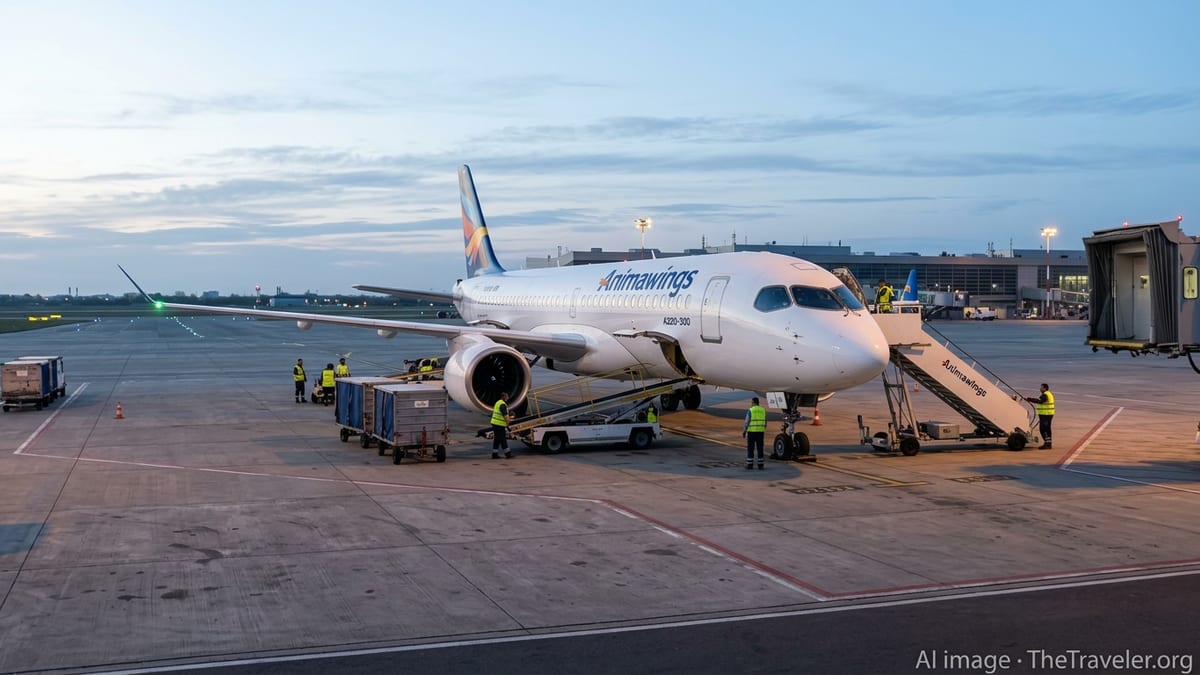
New A220 Simulator Headed to Airbus Asia Training Centre
Publicly available information from Airbus indicates that an A220 full-flight simulator will be deployed at the Airbus Asia Training Centre (AATC) in Singapore, with entry into service targeted for the fourth quarter of 2027. The device will be installed at AATC’s campus in Seletar Aerospace Park and is intended to serve airlines from across the Asia Pacific region that are inducting or planning to induct the A220 into their fleets.
The simulator will be a CAE 7000XR full-flight simulator, developed under a training partnership framework that already supports A220 training in Europe and North America. Reports indicate that the Singapore unit will extend that network into Asia Pacific, creating a new regional hub for A220 pilot type-rating, recurrent training, and associated courses.
According to published coverage in Asian aviation trade media, the project is framed as a capacity-building initiative rather than a one-off addition. The A220 simulator is expected to complement AATC’s existing portfolio of Airbus simulators and align with long-term forecasts for airline growth and fleet modernization across the region.
Strategic Boost for Asia Pacific Pilot Training Capacity
Asia Pacific is widely cited as one of the fastest-growing aviation markets, with traffic growth and fleet expansion translating into sustained demand for pilots and instructors. Airbus forecasts have consistently highlighted that carriers in the region will need tens of thousands of new pilots over the next two decades, with narrowbody aircraft representing a major share of new deliveries. The introduction of a dedicated A220 full-flight simulator in Singapore is designed to respond directly to that trajectory.
AATC already operates multiple full-flight simulators covering Airbus’s in-production jetliner family, including A320, A330, A350, and A380 types, as well as an ATR 72-600 turboprop simulator. Airbus material describes the Singapore facility as the largest Airbus flight crew training center globally, emphasizing its role as a central node in the manufacturer’s worldwide training network.
By adding the A220 to this lineup, the center will be able to offer an end-to-end portfolio of Airbus flight training in one location, which can simplify logistics for airlines that operate mixed Airbus fleets. For carriers, basing type-rating and recurrent training for several aircraft types at a single site can streamline scheduling, standardize training quality, and reduce travel time for crew.
Singapore’s Role as an Aviation Training Hub
Singapore has long positioned itself as a regional aviation hub, and AATC is a key part of that strategy. Located in Seletar Aerospace Park, the training center is a joint venture between Airbus and Singapore Airlines and has received approvals from regulators including the European Union Aviation Safety Agency and the Civil Aviation Authority of Singapore. Public documents highlight that AATC offers type-rating, cross-crew qualification, and recurrent training for a broad range of Airbus aircraft.
Annual reports from Singapore Airlines show that AATC has steadily expanded since opening in 2015, growing its simulator fleet and serving an increasing number of airline customers from within and beyond Asia Pacific. In recent financial years, the center has been described as operating near full utilization, with expectations of double-digit percentage increases in simulator use as airlines ramp up flying and introduce new aircraft.
The new A220 simulator aligns with Singapore’s broader ambition to deepen its aerospace and aviation ecosystem. The country hosts maintenance, repair, and overhaul facilities, component manufacturing, and aviation technology testbeds, with training capacity seen as a complementary pillar. Positioning the first A220 full-flight simulator in the region at Seletar further enhances Singapore’s profile as a one-stop location for airline partners seeking aircraft support, engineering, and crew training.
Implications for Airlines Operating the A220
The Airbus A220 has been gaining traction globally as a fuel-efficient, lower-capacity jet well-suited for regional and thin long sectors. While the aircraft is already in service with several Asia Pacific operators, including carriers in markets such as Australia and Japan, training infrastructure in the region has so far lagged behind that of more established Airbus types.
The Singapore-based simulator is expected to shorten travel distances and reduce time away from base for pilots who previously needed to travel to training centers in other regions for A220 qualification. For airlines evaluating the A220 for future fleet plans, the presence of regional training capacity can be a practical factor in their decision-making, as it influences both direct training costs and overall crew-management planning.
Industry analyses suggest that airlines are increasingly looking for scalable training solutions that can be adapted quickly as fleets grow or are rebalanced. Having an A220 full-flight simulator within the existing Airbus Asia Training Centre framework provides a way to integrate new aircraft training into established processes, including standardized courseware, instructor pools, and regulatory approvals.
Expanded Training Ecosystem Beyond Airline Crews
While AATC’s primary mission is to train airline flight crews, the facility also contributes to a wider aviation ecosystem that includes engineers, aviation students, and the public. Media coverage and promotional material indicate that the center has hosted outreach programs for youth and collaborated with travel-experience platforms to offer limited simulator experiences, showcasing the technology used for professional pilot training.
The arrival of an A220 simulator is likely to enhance this ecosystem by widening the mix of aircraft types and training scenarios available on site. For technical staff and engineers, having access to A220 training and familiarization courses in the region can support maintenance and operational readiness as airlines bring the aircraft into service. For regulators and industry bodies, the additional simulator offers another platform for validating procedures and best practices related to new-generation aircraft.
With the A220 full-flight simulator scheduled to become operational in 2027, Singapore’s Airbus Asia Training Centre is poised to deepen its role as a cornerstone of pilot training in Asia Pacific, while giving regional airlines a locally accessible option for one of the market’s most modern single-aisle jets.
Airbus press release on the A220 simulator at Airbus Asia Training Centre
Overview of Airbus operations and training presence in Singapore
Profile of Airbus Asia Training Centre in Singapore
Flight Training Alliance information on A220 training expansion in Asia Pacific