


More news on this day
Airbus strengthened its position at the top of the global jetliner market in May by delivering more aircraft and securing more net orders than Boeing, underscoring the European manufacturer’s current advantage as both planemakers race to ramp up output in a recovering air travel sector.
Get the latest news straight to your inbox!
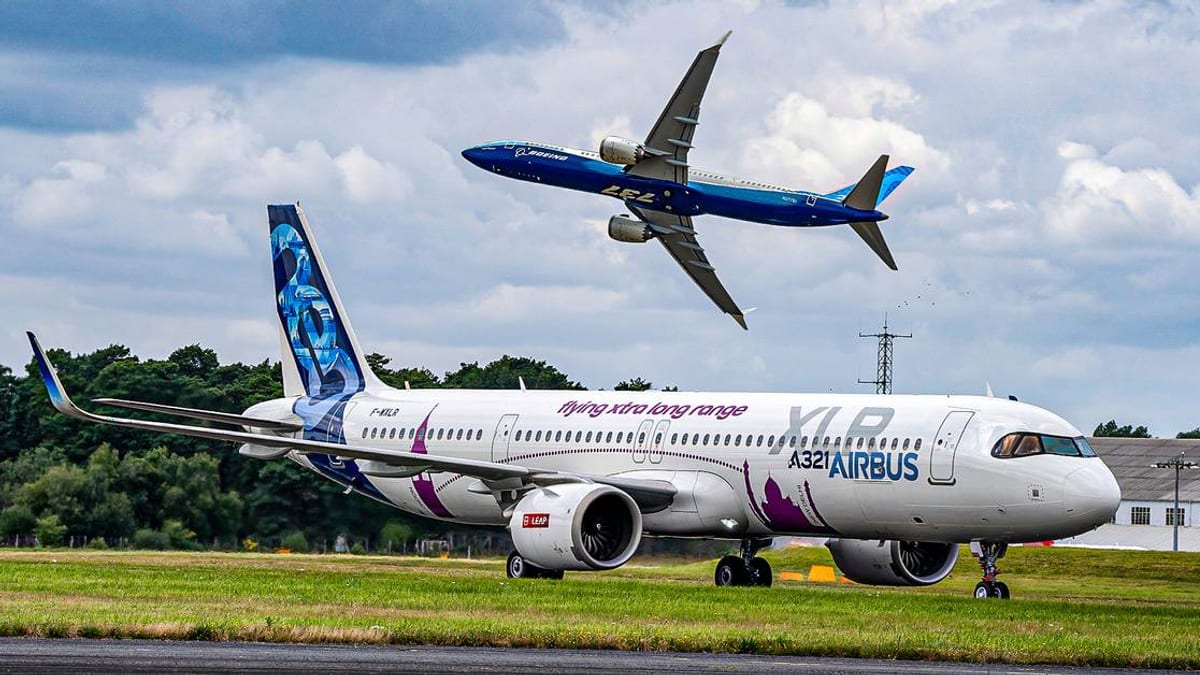
May figures show Airbus pulling ahead
Freshly released industry data and company disclosures indicate that Airbus delivered 81 commercial jets in May 2026, compared with 60 aircraft handed over by Boeing. The monthly gap highlights how Airbus continues to convert its large order backlog into flying metal more quickly than its U.S. rival.
On the sales side, publicly available figures show Airbus booking 379 gross aircraft orders in May, with a strong mix of single aisle and widebody deals, while Boeing recorded 22 net orders after cancellations. The contrast in momentum underlines how airlines and leasing firms are continuing to place substantial volumes of new business with Airbus even as Boeing’s order book remains sizable.
The May data follow a broader pattern seen over the past several years in which Airbus has led the global delivery race, while Boeing has at times been more competitive on yearly net orders. For 2026 so far, however, Airbus appears to be ahead on both measures, reflecting robust demand for its A320neo and A321neo families and a gradual ramp up in A220 and widebody programs.
Analysts note that monthly tallies can be volatile as aircraft move through final assembly and certification milestones, yet May’s outcome reinforces Airbus’s reputation among some customers for offering more predictable delivery slots amid ongoing supply chain constraints.
Boeing’s deliveries rebound but still trail
For Boeing, the delivery of 60 jets in May represented a meaningful rebound compared with earlier months of 2026. Industry coverage indicates that the total was roughly one third higher than Boeing’s April handovers, signaling a modest recovery after quality and certification issues slowed output at key programs, particularly the 737 MAX line.
The May performance was led by the 737 MAX, which continues to form the backbone of Boeing’s narrowbody portfolio. Additional deliveries of 787 Dreamliners and 777 freighters contributed to the total, but widebody volumes remain relatively stable as the company works through production and certification milestones on the forthcoming 777X.
Even with the improvement, Boeing’s monthly tally still fell short of Airbus’s delivery count. That gap mirrors trends from 2025, when Airbus finished the year with 793 commercial aircraft delivered, well ahead of Boeing’s total. Industry observers say Boeing now faces the dual challenge of stabilizing production while convincing airlines that its delivery schedules can reliably match their fleet plans.
Data on the first five months of 2026 indicate that Boeing’s overall deliveries are running ahead of the same period a year earlier, supported by stronger 737 MAX output and ongoing 787 handovers. However, the company’s path back to delivery parity with Airbus is likely to be gradual as it navigates regulatory oversight and supply chain bottlenecks.
Orderbook strength highlights diverging strategies
The surge in Airbus orders in May reflects both opportunistic mega deals and a steady stream of incremental purchases from airlines and leasing companies. Reports indicate that many of the new commitments involve A320neo family aircraft, including high capacity A321neo and A321XLR variants that allow carriers to open long, thin routes with narrowbody economics.
Airbus’s order momentum adds to an already record backlog, which stretches well into the next decade for some models. Publicly available figures show the manufacturer holding thousands of unfilled orders across its portfolio, providing long term visibility for production planning but also extending delivery wait times for new customers.
Boeing, by contrast, has leaned on a strong run of widebody business in recent months, including substantial orders for 787s and 777X family jets. Industry data show the U.S. company posting its second highest order total on record for the first five months of a year, even though May’s net order intake was comparatively modest.
That divergence points to different tactical priorities. Airbus is capitalizing on intense demand for fuel efficient single aisle jets that can replace older fleets and support network growth, while Boeing is emphasizing the long haul and high capacity segment where its twin aisle aircraft remain in high demand among global carriers planning future international expansion.
Production ramps face shared supply chain constraints
Both manufacturers continue to wrestle with supply chain challenges that constrain how quickly they can increase output, particularly in engines, avionics and cabin components. Reports from industry suppliers suggest that labor shortages and parts availability remain limiting factors for ramping beyond current monthly production rates.
Airbus has set an ambitious target of about 870 deliveries in 2026, implying a substantial acceleration in the second half of the year. To hit that goal, the company will need to maintain or exceed May’s pace in coming months while avoiding major disruption from supplier delays or certification issues. The strong May performance is seen by analysts as a positive indicator, but not yet a guarantee that the annual target will be met.
Boeing is similarly seeking to lift production, particularly on the 737 MAX line, where it has been working with regulators to satisfy quality and safety requirements before moving to higher monthly build rates. Recent reporting indicates that the company is making progress on those fronts, but industry commentators caution that any new technical or regulatory setback could quickly ripple through its delivery schedule.
For airlines awaiting aircraft, the constraints at both planemakers translate into tighter capacity in some markets and extended timelines for fleet renewal. Many carriers have responded by keeping older jets in service longer or leasing additional capacity while they wait for new deliveries from Airbus and Boeing.
Implications for airlines and travelers
For airline customers, Airbus’s lead in May deliveries and orders reinforces the perception that securing early production slots at the European manufacturer has become increasingly difficult. Carriers that did not lock in positions years ago often face delivery dates well into the 2030s for popular single aisle variants, prompting some to split future fleet plans between Airbus and Boeing to diversify risk.
Boeing’s gradual delivery recovery may offer opportunities for airlines seeking capacity sooner than Airbus can provide, particularly in North America and parts of Asia where Boeing has historically strong relationships. Industry analysts suggest that pricing, availability and route strategy will all factor into whether carriers lean more heavily on Boeing or continue to pursue Airbus’s latest models despite the waits.
For travelers, the near term impact of May’s figures is subtle but meaningful. Higher delivery volumes from Airbus mean more fuel efficient A320neo, A321neo and A220 aircraft entering service, which can support new point to point routes and potentially lower operating costs for airlines. Over time, that can translate into expanded networks, newer cabins and, in competitive markets, pressure on fares.
At the same time, Boeing’s efforts to ramp up 737 MAX and 787 deliveries will shape the mix of aircraft on key domestic and long haul routes from the United States. As both manufacturers push to convert swollen orderbooks into aircraft on the line, the balance of their monthly delivery tallies will remain a closely watched indicator for airlines, investors and passengers alike.