


More news on this day
Thousands of commercial flights are abandoning traditional Gulf and Middle East overflight corridors in 2026, as rolling airspace closures over Iran, Iraq, Israel and parts of the Gulf push airlines to carve new, crowded routes across the Mediterranean and Levant, drawing Syria into a rapidly evolving east–west aviation map.
Get the latest news straight to your inbox!
From Gulf Crossroads to Conflict Zone
Publicly available airspace notices and flight-tracking data for early 2026 show an unprecedented hollowing out of the skies above Iran, Iraq, Israel and several Gulf states following the outbreak of open conflict involving Iran, the United States and Israel in late February. Reports indicate that within hours of the first strikes, at least nine states either fully closed or severely restricted their airspace, including Iran, Iraq, Israel, Jordan, Qatar, Bahrain, Kuwait, the United Arab Emirates and parts of Syria. Airlines that once relied on direct east–west tracks over the Gulf and Mesopotamia suddenly found those routes unavailable.
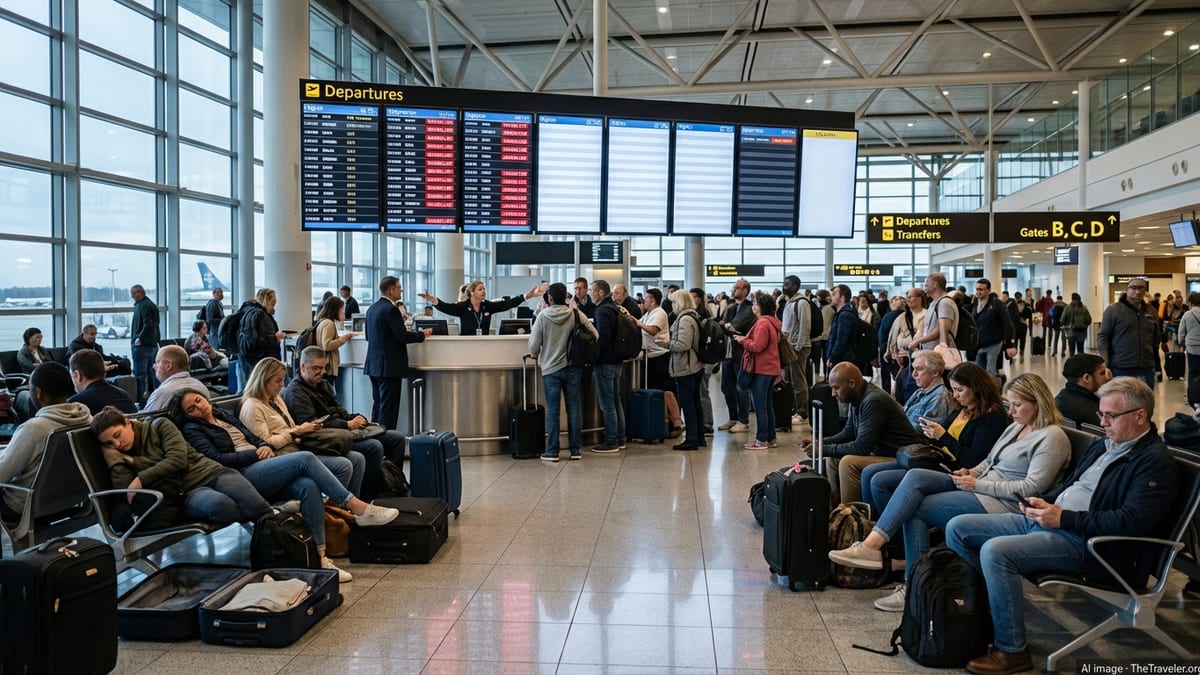
Analyses compiled by specialist aviation outlets and airspace risk consultancies describe the disruption as the largest simultaneous airspace shutdown the modern Middle East has seen. A quarterly disruption report for the first three months of 2026 notes a 59 percent reduction in flights to, from and within the broader Middle East at the height of the closures, with thousands of cancellations worldwide as carriers reworked flight plans or suspended services. That collapse in capacity from traditional Gulf and Levant hubs has set the stage for a wholesale re-routing of long-haul traffic.
According to published coverage, carriers ranging from European network airlines to Asian and Australian operators have either rerouted around or entirely stopped using Iranian and Iraqi airspace since January, with restrictions intensifying after the February escalation. Flight-tracking platforms have repeatedly shown wide gaps over Iran, Iraq and Israel, while arcs of traffic bend north and west over the eastern Mediterranean, the Black Sea region or the Red Sea and Egypt instead.
New Mediterranean and Levant Corridors Take Shape
As Gulf and Mesopotamian skies emptied, traffic flows began consolidating along a series of alternative corridors looping around the conflict zone. Eurocontrol trend analyses and independent route-mapping by aviation data firms show dense streams of flights now tracking over Turkey, the eastern Mediterranean and the central Mediterranean as they connect Europe with South Asia, Southeast Asia and Australasia. Aircraft previously flying near-direct great-circle routes via Iranian and Iraqi airspace are instead adding 30 to 90 minutes to journeys by detouring over the Mediterranean basin.
In this new pattern, countries such as Turkey, Cyprus, Greece and Egypt have emerged as pivotal overflight and transit points. According to publicly available network data, traffic on some southeast axis flows linking central Europe to the eastern Mediterranean and onward to Africa and Asia has risen sharply compared with pre-crisis baselines. Airports in Istanbul, Antalya, Larnaca, Paphos, Athens, Heraklion, Cairo and Sharm el-Sheikh are seeing heightened strategic importance, whether as diversion options, fuel stops or back-up hubs for disrupted itineraries.
The Levant has also been redrawn on the aviation map. Although Jordan and Lebanon were among the states hit by restrictions during the initial shock, airspace management notices indicate that specific high-altitude corridors and controlled routes have gradually reopened or remained available for carefully managed overflights. That has allowed some operators to stitch together complex routings that weave between closed zones, keeping aircraft within recognized safe corridors while still taking advantage of Mediterranean proximity to shorten detours where possible.
Syria’s Airspace Re-emerges in a Highly Managed Role
One of the more striking developments of 2026 is the reappearance of Syrian airspace in airline routing discussions after years of near-avoidance by most Western carriers. Industry reports focusing on the current crisis note that, as closures in Iran, Iraq and Israel constricted options, portions of the Damascus flight information region have been designated for limited, structured overflights at specific altitudes and along narrow tracks, subject to conflict-zone advisories from European regulators.
Available route visualisations suggest that these controlled corridors are being used primarily by carriers from the broader region, including operators based in Turkey, the Gulf and parts of Asia, rather than by North American or most European airlines, which remain more cautious. However, Syria’s technical re-entry into the network underscores how the conflict has forced airlines and regulators to reconsider previously shunned airspace in order to maintain some directivity between Europe and Asia.
Regional air navigation data also shows closer coordination between Syria and neighbours such as Turkey, Jordan and Lebanon, as flows are handed off across their respective flight information regions to keep rerouted traffic moving. While the scale of usage still appears modest compared with pre-war Gulf overflight volumes, the very fact that Syria is once again part of mainstream contingency planning marks a notable shift in the operational geography of the Middle East.
Winners and Losers Among Regional Hubs
The abrupt reshaping of air routes has produced clear winners and losers among airports and airlines. Major Gulf hubs that once sat astride some of the world’s busiest east–west corridors have seen large portions of their connecting traffic evaporate, at least temporarily, as closures and missile threats forced waves of cancellations. Aviation business publications report that leading Gulf carriers have grounded widebody aircraft, trimmed dozens of routes and consolidated operations into windows that match the limited airspace access currently available.
By contrast, Mediterranean and near-Levant airports are emerging as relative beneficiaries. Istanbul’s main hubs have strengthened their status as primary gateways between Europe and Asia, with publicly available scheduling data pointing to additional capacity and retimed banks aimed at capturing displaced connecting passengers. In Cyprus and Greece, local media and travel-industry briefings describe hectic days of diversions and rebookings as airlines use these islands as stepping stones between Europe, the Middle East and beyond.
Egypt, already a significant player through Cairo and Red Sea airports, has become still more important for operators choosing to swing south of the conflict zone. Routing guides for dispatchers highlight Egypt’s role in a so-called southern corridor that sees flights skirt the Arabian Peninsula via the Red Sea and East Africa before turning east toward India and Southeast Asia. That path adds distance but allows airlines to avoid the most heavily restricted skies over the Gulf and Levant.
Longer Flights, Higher Costs and a New Risk Map
For travellers, the most visible consequence of the 2026 shake-up is time. Rerouting around closed or high-risk airspace typically adds between half an hour and an hour and a half to many Europe–Asia and Europe–Australasia journeys, according to estimates published by aviation consultancies drawing on flight plan data. That translates into later arrivals, tighter or missed connections and an overall increase in schedule complexity for airlines and passengers alike.
Airlines are also wrestling with higher fuel burn, crew duty-time challenges and congestion on the remaining open corridors. As more flights converge on fewer routes over the Mediterranean and Levant, air traffic flow managers in Europe and the surrounding regions have reported increased complexity in coordinating departures, overflights and arrivals, even as overall flight numbers remain below what they would have been without the conflict. Network managers have warned that summer peaks could prove especially delicate if the current pattern of closures persists.
Beyond immediate delays and costs, the crisis is forcing a broader rethink of aviation risk management across the Middle East and its periphery. Industry reports compare the current upheaval to earlier landmark shocks that permanently changed how airlines view conflict zones. With a patchwork of closures extending from the Gulf to the Levant and knock-on effects stretching into the Caucasus, North Africa and Central Asia, route planners are testing new combinations of northern, Mediterranean and southern detours. Even if ceasefires and partial reopenings gradually restore some of the old corridors, the experience of 2026 is likely to leave a lasting imprint on how and where the world flies between Europe, the Gulf and Asia.