


More news on this day
Airlines in the Gulf, India and Europe are extending or adjusting suspensions of flights to key Saudi Arabian cities into late 2026 and early 2027, as carriers respond in different ways to ongoing security risks linked to Houthi missile and drone attacks that have targeted Riyadh and other locations.
Get the latest news straight to your inbox!
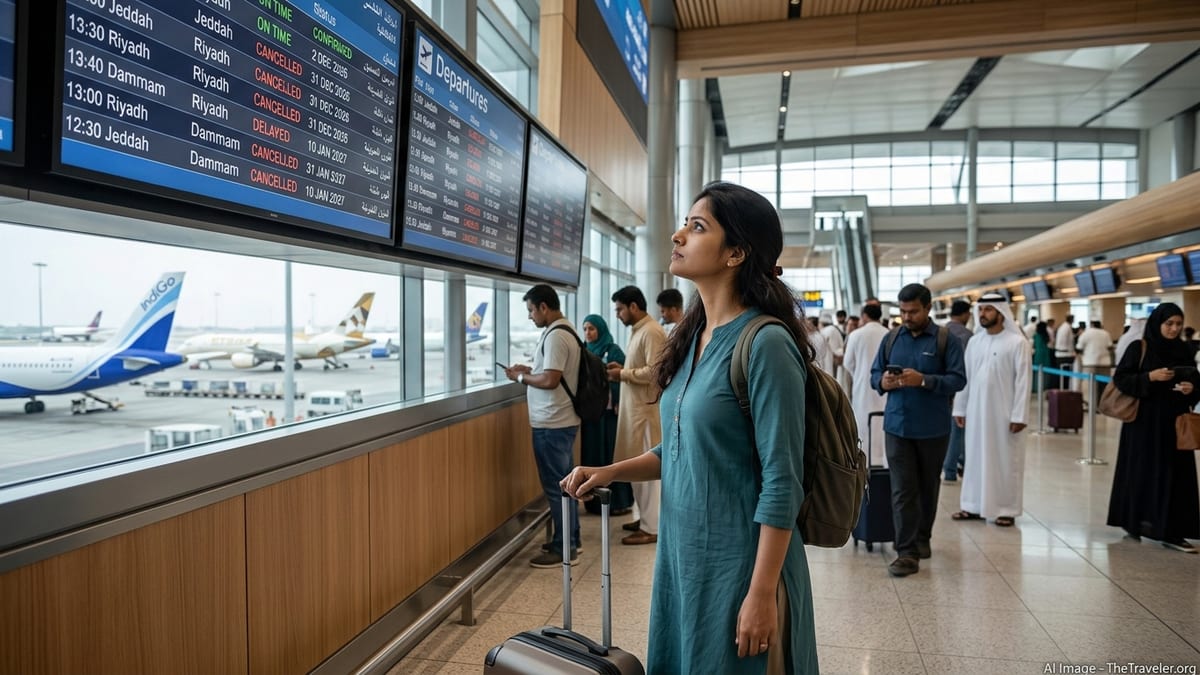
What has changed on Saudi routes and why it matters
The latest timetable updates show a patchwork of suspensions and resumptions on Saudi Arabia services, affecting passengers travelling from the UAE, India and parts of Europe. While some operators are beginning to restore flights to Jeddah and other destinations, many links to Riyadh and Dammam remain paused, with end dates that stretch from late November into January 2027. The result is that connections that once formed part of dense Gulf and South Asia networks are now subject to frequent revision, and travellers booking for the northern winter need to check individual routes and dates rather than assuming Saudi Arabia is uniformly accessible.
The schedule changes follow a series of missile and drone incidents attributed to Yemen’s Houthi movement, which have repeatedly targeted Saudi cities and energy infrastructure since October 2026. Although Saudi air defences have intercepted many projectiles, some strikes have caused damage in Riyadh and in the Eastern Province, prompting aviation regulators and airlines to adjust their risk assessments. Carriers have framed the latest cancellations as precautionary decisions based on ongoing security reviews, with safety cited as the primary factor in route planning and overflight choices.
Operationally, the disruption has been most acute on services to Riyadh and Dammam, which lie closer to areas singled out by recent threat assessments. Jeddah, on the Red Sea coast, has generally seen earlier resumptions and higher frequencies once airlines were able to reroute around the most sensitive airspace, although its services too have periodically been suspended. For travellers, this means that options to fly into western Saudi Arabia may return sooner than those into the capital and the Eastern Province, but availability and timings differ by carrier.
UAE carriers: targeted suspensions and partial resumptions
Among UAE-based airlines, flydubai remains one of the most directly affected by the latest wave of attacks. After earlier cancellations through early November, the Dubai carrier has now extended its suspension of flights to Riyadh into December, with all services on the route cancelled up to at least 10 December 2026. Flights to Abha in the south of Saudi Arabia are paused for longer, with operations on that route suspended until at least 31 December. Flydubai has advised passengers to monitor its website and app for updates and to ensure that contact details on bookings are current, so that any last-minute changes can be communicated quickly.
Etihad Airways is continuing a more selective approach. The Abu Dhabi airline has cancelled all passenger and cargo flights between Abu Dhabi and Riyadh and between Abu Dhabi and Dammam through at least the end of November 2026, according to recent advisories and consolidator travel updates. By contrast, Etihad’s flights to other Saudi destinations, including Jeddah and Medina, are still operating on adjusted schedules. The airline describes the situation as dynamic and stresses that further revisions remain possible if the security environment shifts, which means that even operating routes can be subject to short-notice timing changes.
Other UAE carriers, such as Emirates and Air Arabia, have also made targeted cuts to Saudi schedules at various points since October, focusing particularly on Riyadh and Dammam. However, they continue to operate at least some services to other cities in the kingdom, giving passengers alternative entry points. For example, travellers who originally booked to Riyadh may find that options via Jeddah or Medina still exist, although such routings often involve longer surface transfers inside Saudi Arabia and may not be suitable for all itineraries, particularly those tied to fixed appointment times in the capital.
Indian carriers: phased Jeddah restart and longer Riyadh pause
Indian airlines, which carry substantial migrant worker and religious traffic to Saudi Arabia, are among the most cautious on Riyadh and Dammam. Air India Express has confirmed a phased resumption of Jeddah flights from 2 December 2026, starting with three weekly services between Jeddah and Mangaluru. This limited restart reflects a view that operations into western Saudi Arabia can be managed under current security procedures, while flights into central and eastern regions remain on hold. The carrier has stated that services to and from Riyadh and Dammam will stay suspended until at least 31 December 2026.
For passengers whose itineraries fall within the suspension window, Air India Express is offering a one-time complimentary rescheduling option. Travellers with tickets issued on or before 27 November for travel up to 31 December on affected Riyadh, Dammam and Jeddah sectors can rebook to any operational Air India Express destination in Saudi Arabia or to Bahrain, subject to seat availability. Importantly, revised travel must be completed by 14 January 2027. Those unwilling or unable to travel under the revised options can instead request a full refund without penalty to the original form of payment, which is particularly relevant for passengers who booked around peak holiday periods and no longer wish to make the trip.
Akasa Air has opted for a more extended pause. After initially suspending Saudi services only until the end of November, the airline has now pushed its Jeddah suspension through to at least 10 January 2027 and its Riyadh suspension through to at least 31 January 2027. The carrier has linked these longer dates directly to its security reviews for flight corridors in and out of the kingdom, indicating that its assessments support a more conservative timeline before reconsidering operations. For affected passengers, Akasa is providing the choice of a full refund, processed back to the original payment method within about a week, or complimentary rescheduling once services resume. Customers who booked through travel agents or online intermediaries are being directed to those partners to manage changes.
European and other international airlines adjust Saudi services
Beyond the Gulf and India, several European and Asian airlines have also updated their Saudi Arabia schedules as they recalibrate exposure to missile and drone activity. Travel advisories and airline statements in mid and late November indicate that Air France, ITA Airways, British Airways, KLM and Cathay Pacific have all set their own suspension timelines for Riyadh and, in some cases, Dammam. Although the exact dates differ by carrier, many of the pauses currently run into December 2026 or January 2027, particularly on Riyadh routes that are seen as more sensitive from a risk perspective.
KLM, for example, has indicated that its flights to Riyadh and Dammam are cancelled up to at least late December 2026, as it evaluates routing and overflight options. Air France has paused Riyadh services through mid December, while Italy’s ITA Airways has suspended its connection into early January 2027. British Airways has set a later restart date for its London to Riyadh route, with services currently not expected to resume before mid January 2027. Cathay Pacific’s timetable revisions indicate a suspension of Riyadh operations until the end of January 2027. These dates remain subject to change if the security outlook improves or deteriorates.
Some Gulf and regional carriers have taken a slightly different approach, curtailing frequencies or rerouting flights rather than suspending entire city pairs. Qatar Airways, for instance, has temporarily reduced Jeddah frequencies while pausing certain services to Riyadh and Dammam in response to previous airspace advisories. Such adjustments reflect the influence of regulatory guidance from bodies such as the European Union Aviation Safety Agency, which has advised extra caution when flying over parts of the Gulf and Red Sea region. For passengers, the key practical effect is that seats to and from Saudi Arabia, especially Riyadh, can be harder to find on preferred dates, and routings may involve additional stops compared with pre-disruption schedules.
What travellers should do next
For anyone planning to travel to or through Saudi Arabia over the coming weeks, the most important step is to verify the exact status of their flight directly with the operating airline before departure, even if tickets were purchased through a travel agent or third-party website. Since many of the current suspension dates are described by airlines as provisional and subject to ongoing security reviews, schedules that appear bookable well into December or January can change at short notice. Checking flight-status tools and airline notifications in the 24 to 48 hours before departure can help prevent surprise airport disruptions.
Passengers affected by cancellations should familiarise themselves with the specific rebooking and refund options offered on their route. Policies differ by airline and by booking channel. Air India Express, for example, allows one-time complimentary rescheduling or a full refund for eligible Saudi bookings, with revised travel required by mid January 2027, while Akasa Air has committed to refunds within around seven days for cancelled Riyadh and Jeddah services or free date changes once flights restart. UAE and European carriers typically permit rebooking onto later departures or alternative Saudi destinations, although fare differences and seasonal blackout dates may apply.
Because security-driven suspensions are tied to evolving regional conditions rather than to fixed infrastructure works or regulatory bans, no airline has yet provided a definitive timeline for a full return to pre-October 2026 schedules. Travellers with non-essential trips may therefore wish to consider flexible booking options, such as refundable fares or journeys via hubs with multiple daily Saudi connections, which can offer more alternatives if disruptions continue. Those with time-sensitive travel, including business appointments in Riyadh or onward connections through Dammam, should build in additional contingency time or explore alternative routings, such as flying into Jeddah or Medina and completing the journey overland, while carefully checking local travel advisories and entry requirements for domestic movements inside the kingdom.