


More news on this day
Mounting queues, missed connections and frustrated travelers are putting intense pressure on the European Union’s new Schengen Entry/Exit System, as leading aviation groups step up calls for the bloc to relax border rules ahead of the peak summer season.
Get the latest news straight to your inbox!
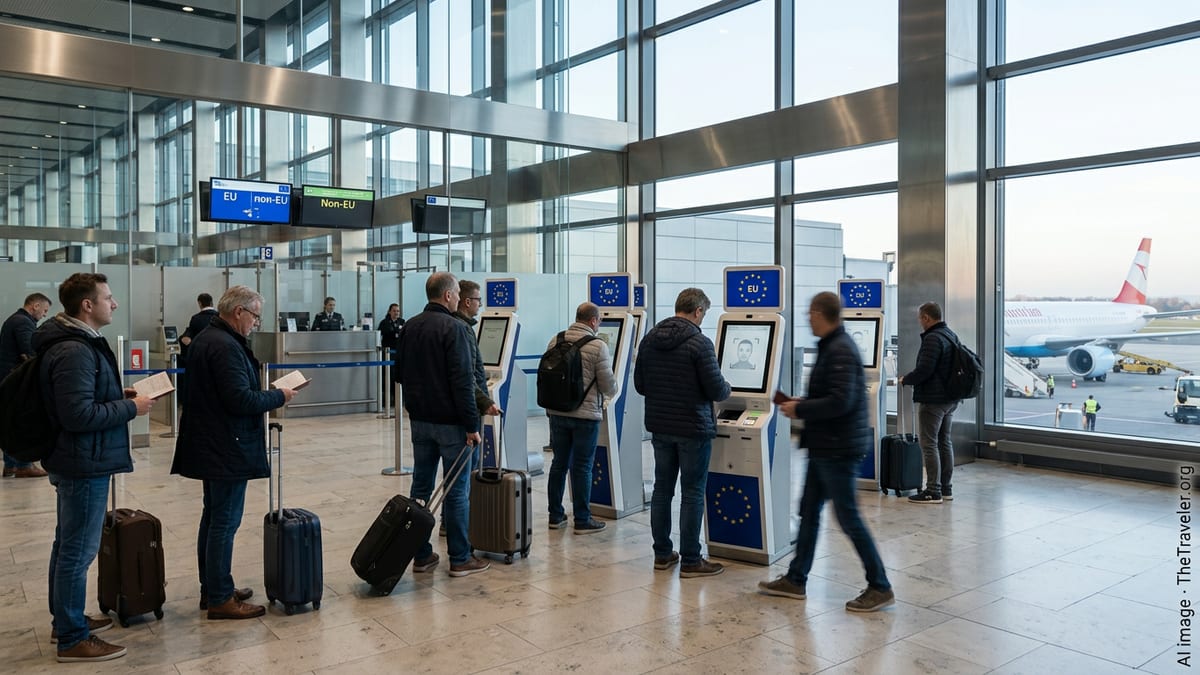
Industry Warns of Systemic Strain at Schengen Borders
Europe’s main airport and airline associations have intensified public pressure on Brussels in recent months, arguing that the Entry/Exit System, or EES, is overburdening border control points across the Schengen area. According to publicly available statements from Airports Council International Europe, Airlines for Europe and the International Air Transport Association, the combination of biometric checks, new IT processes and staffing gaps has pushed passport control times sharply higher for non EU travelers.
The system, fully activated across external Schengen borders in April 2026 after a phased rollout from late 2025, replaces manual passport stamping with digital records linked to fingerprints and facial images. Industry assessments indicate that while the shift is intended to strengthen security and reduce document fraud, it has added minutes to individual screenings during enrollment, causing queues that can stretch for hours during peak traffic.
Reports from major hubs, including Brussels, Lisbon, Geneva and popular leisure gateways in Italy and Spain, describe departure and arrival hall bottlenecks, with some passengers missing flights despite arriving well in advance. Airport executives have increasingly framed the issue as a structural challenge rather than a short term teething problem, warning that existing border infrastructure and staffing levels are not yet configured for the higher processing times associated with full scale EES checks.
Travel commentary from passengers has echoed these concerns, with accounts of repeated biometric registrations, malfunctioning kiosks and confusion over procedures at air, land and sea borders. Publicly accessible discussions suggest that connecting passengers are particularly exposed, as longer queues at the first point of entry into Schengen leave less buffer for onward flights.
Calls Grow for Flexible Application and Partial Suspensions
In a joint push that has gained urgency as the summer 2026 holiday period approaches, aviation associations are urging European institutions and national governments to make fuller use of the flexibilities already built into the EES legal framework. Their central request is that member states retain, and where needed expand, the option to partially or completely suspend EES checks at specific border points during peak periods in order to keep traffic moving.
According to industry position papers and press releases, airports and airlines want authorities to formalize the ability to scale back biometric capture temporarily when queues exceed predefined thresholds, reverting to simplified or manual procedures until conditions stabilize. Advocates argue that this kind of targeted relief would help prevent the four to six hour waits some analysts fear could materialize during high demand weekends if current practices remain unchanged.
Some carriers and airport operators have gone further, appealing for a coordinated pause in full EES enforcement for the busiest weeks of the summer season. Publicly available reports indicate that individual companies have written to transport and interior ministries across the 29 participating EES countries, warning that without a reprieve, widespread delays could undermine confidence in European travel and damage tourism reliant economies.
National level decisions already reflect this pressure in certain markets. Media coverage points to selective suspensions or eased checks for particular traveler groups at some Mediterranean destinations, especially where tourism is a critical economic sector and airport terminals are physically constrained. These local adjustments are being cited by industry as examples of how a more flexible, risk based approach to EES can reduce disruption without abandoning the system.
EU Institutions Defend Security Aims but Signal Openness to Adjustments
Public documentation from EU institutions maintains that the Entry/Exit System is a cornerstone of Schengen border modernization, designed to improve the detection of overstays, enhance security and provide more accurate data on travel flows. The system logs each entry and exit of non EU nationals admitted for short stays, replacing the manual passport stamps that previously served as the main record of time spent inside the border free area.
In recent communications assessing the first months of full scale deployment, the European Commission has highlighted early operational challenges but continues to describe EES as a necessary investment in digital border management. Official reports stress that once travelers have completed an initial enrolment, subsequent crossings should be faster, with biometric checks speeding verification compared with manual inspections.
At the same time, EU level documents and statements acknowledge that close coordination with the aviation sector is essential for the system to function smoothly. References to the role of industry stakeholders, as well as to tools such as pre registration kiosks, e gates and the Travel to Europe mobile application, suggest that Brussels is encouraging member states to exploit all available options to streamline the process.
Negotiations between national governments, border agencies and industry representatives now appear to focus less on whether EES should continue and more on how strictly the rules should be applied during the coming high season. Publicly reported discussions include proposals for phased thresholds, differentiated treatment between first time and repeat visitors, and clearer criteria for when member states may temporarily ease or suspend biometric requirements.
Passenger Experience and Data Concerns Add Political Pressure
Beyond the operational strains, the experience of ordinary travelers is placing additional political weight on the debate over how EES should function in practice. Travel media reports describe queues of up to three hours at some airports during busy weekends, with occasional accounts of even longer waits where technical outages or staffing shortages coincide with peak arrival waves.
Passengers arriving from the United States, the United Kingdom and other non EU markets report spending far longer than anticipated at border controls, with some missing cruise departures or onward rail connections. Consumer advice from travel outlets and tourism forums increasingly recommends arriving earlier than before, allowing wider buffers for transfers and avoiding very tight connections when first entering Schengen.
Privacy advocates and some elected representatives are also questioning the breadth and retention of biometric and travel data collected under EES. Public debates highlighted in national media include criticism that the system risks normalizing large scale biometric databases accessible to multiple law enforcement bodies, and that protections need to be closely monitored as the technology beds in.
This mix of practical inconvenience and civil liberties concerns is contributing to calls for a slower and more adaptive rollout, especially while reliability issues and data quality problems are still being resolved. Travel sector observers note that if passenger frustration remains high through summer 2026, pressure for deeper revisions to the scheme could gain momentum in several member states.
Outlook for Summer 2026 Travel Across Schengen
With the main holiday season about to begin, aviation stakeholders and policymakers face a narrow window to reduce the risk of severe bottlenecks. Industry briefings suggest that airports are racing to reconfigure queuing areas, deploy additional staff and expand the use of automated gates where technically feasible, while airlines adjust schedules and advise customers to arrive earlier at departure terminals.
Some governments are trialing or expanding pre registration tools that allow travelers to submit biographic data and facial images through mobile apps or airport kiosks before reaching the border desk, in an effort to shorten interaction times with officers. Where such pilots are in place, early reports indicate modest improvements, though take up among travelers remains uneven and communication campaigns are still ramping up.
For now, however, the aviation industry’s central demand remains greater flexibility in how EES rules are applied at the sharp end of border control. Representatives argue in public forums that without the option to temporarily lower the intensity of checks when queues spike, even well staffed and well equipped airports could struggle to keep up with record passenger volumes.
Travel analysts expect that the performance of Schengen borders over the next three months will strongly influence the longer term trajectory of EES. If targeted easing and operational tweaks help stabilize waiting times, the system may gradually gain acceptance among carriers and passengers. If not, calls for a broader re design of Europe’s digital border regime are likely to grow louder as the aviation sector seeks a balance between security imperatives and the smooth movement of people.