


More news on this day
Air travel across Europe faced another day of disruption as more than 80 flights were reportedly cancelled and around 576 services delayed, with major airlines including Virgin Atlantic, SAS, British Airways, KLM and Air Canada affected at key hubs in the UK, Netherlands, Norway, Germany, Switzerland, France, Finland and Italy.
Get the latest news straight to your inbox!
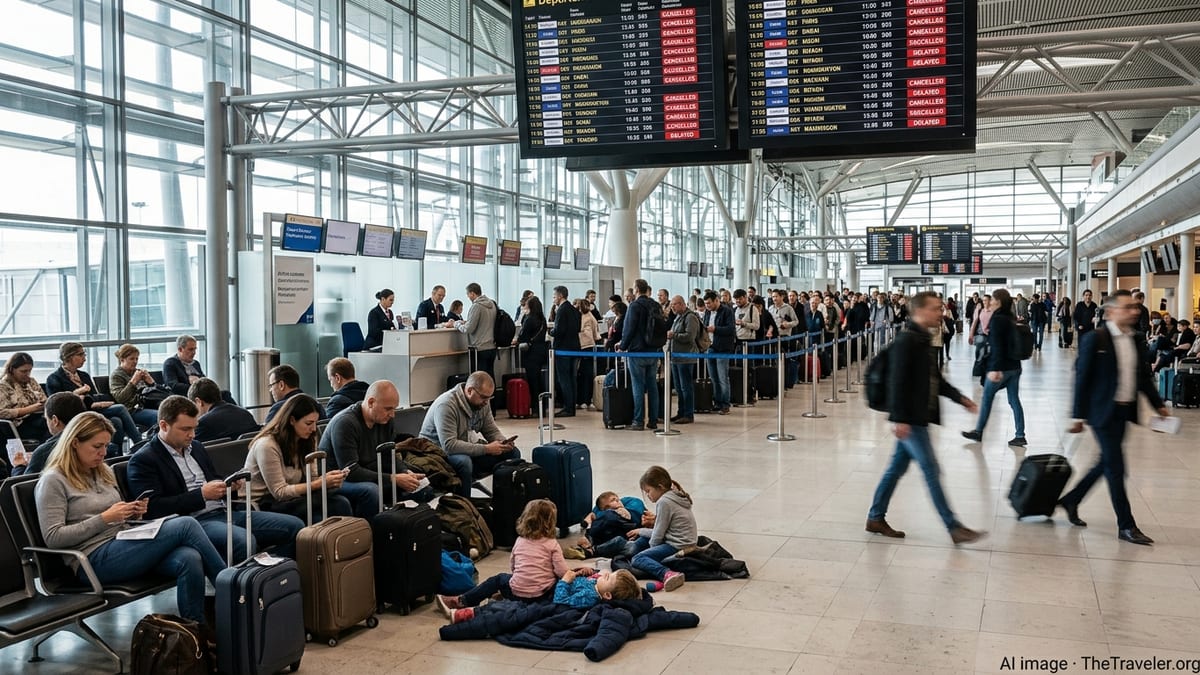
Wide-Ranging Cancellations Hit Major Carriers
According to aggregated flight-tracking and passenger-rights data published on Wednesday, the latest wave of disruption resulted in scores of cancellations and several hundred delays concentrated at Europe’s busiest airports. The figures indicate that at least 80 flights were scrapped and 576 delayed over the course of the day, reflecting the increasingly fragile state of the region’s aviation network during peak travel periods.
The impact was spread across a mix of network and long-haul airlines. Virgin Atlantic, SAS, British Airways, KLM and Air Canada were among the carriers listed with flights cancelled or running significantly behind schedule, alongside several European low-cost operators. Publicly available disruption dashboards show that many of the affected services were short-haul intra-European routes that feed larger long-haul operations, magnifying the knock-on impact for connecting passengers.
Passenger-rights platforms that monitor day-of-travel performance in real time report that the number of disrupted services on this latest day sits below the most severe strike-related episodes recorded earlier in 2026, but still represents a substantial interruption for thousands of travellers. Comparisons with previous events suggest that when delays and cancellations cluster at hub airports, missed connections and aircraft being out of position can cause residual disruption well into the following day.
Operational updates issued by airlines in recent months underline how quickly schedules can unravel when bad weather, staffing constraints or air traffic limitations coincide. Several carriers have highlighted that even a modest reduction in runway capacity at key hubs can trigger tactical cancellations, as they prioritise longer-haul departures and flights with high volumes of connecting passengers.
Key Hubs in the UK, Netherlands and Scandinavia Struggle
In the UK, London Heathrow and London Gatwick featured prominently among the airports experiencing delays, reflecting their role as primary hubs for British Airways and important bases for other European and long-haul airlines. Industry analysis frequently notes that Heathrow operates with minimal spare capacity, which means that any deterioration in visibility or wind conditions can quickly lead to extended holding patterns and schedule compression.
In the Netherlands, Amsterdam Schiphol again emerged as a focal point for disruption. Flight-performance reports tracking the spring and early summer period in 2026 describe Schiphol as one of the most delay-prone hubs in Europe, with strong winds and low cloud regularly forcing runway reconfigurations and throttling movements. Earlier this year, periods of winter weather and storms already led to hundreds of cancellations and delays at the airport, and recent monitoring suggests that congestion continues to pose challenges during busy peaks.
Airports across Scandinavia, including Oslo and other Norwegian gateways, as well as facilities in Finland, were also listed among the locations affected. SAS and Finnair, which rely heavily on punctual short-haul operations to feed long-haul services, have previously warned that tight turnarounds and high utilisation leave little room to absorb surprises in the system. When ground handling or de-icing operations slow down, the effect can cascade across entire daily rotations.
Further south, passenger-traffic centres in Germany, Switzerland, France and Italy reported elevated levels of delay, reflecting how quickly issues at one hub can reverberate across the continent. Earlier this year, industrial action at German airports showed how stoppages confined to one market can spill into France, the Netherlands, the UK and the Nordic countries as aircraft and crews struggle to return to their planned positions.
Weather, Staffing and Air Traffic Limits Combine
Travel-analytics firms tracking on-time performance across Europe in 2026 point to a familiar trio of causes behind the latest disruption: unsettled weather patterns, constrained staffing and ongoing pressure on air traffic control capacity. Short-haul cancellations at major hubs have been rising compared with pre-pandemic norms, with some airports classified in higher disruption tiers due to consistently long average delays.
Recent studies on European short-haul operations show that passengers departing from large hubs such as Heathrow and Schiphol can wait well over an hour on average when delays occur, particularly during the busiest bank of departures. When these delays begin early in the day, airlines are often forced to trim frequencies or consolidate services later in the schedule to avoid crews exceeding duty-time limits.
Staffing remains a sensitive issue across ground handling, security screening and air traffic management. While most airlines have rebuilt their workforces since the pandemic slump, several reports highlight that replacing experienced staff has taken longer than expected. Training bottlenecks and competition for skilled workers have contributed to situations where airports operate close to their effective staffing limits, leaving them vulnerable when sickness or localised disruptions arise.
Weather has also played a recurring role in Europe’s recent travel seasons. This year’s winter and spring brought periods of snow, high winds and storms that repeatedly reduced capacity at airports in the UK, Netherlands, Germany and Scandinavia. Even when conditions improve, the backlog of delayed departures and arrivals can take many hours to clear, particularly at airports that already run near their maximum planned throughput.
Knock-On Effects for Travelers Across the Continent
For passengers, the combination of 80 cancellations and hundreds of delays translated into missed connections, rebooked itineraries and, in some cases, overnight stays. Travel-assistance services note that when cancellation numbers climb into the dozens across multiple hubs, accommodation near the airport can quickly become scarce, and passengers may be re-routed through secondary airports far from their original destinations.
The latest figures illustrate how even a single difficult operating day can disrupt travel plans across a large swath of Europe. Travellers flying between the UK and continental hubs, or connecting from long-haul services into regional European routes, remain particularly exposed when the network comes under stress. Publicly available guidance from major carriers emphasises that schedules may be adjusted at short notice to stabilise operations, with airlines sometimes cancelling lower-demand frequencies to protect key trunk routes.
Airports and airlines have increasingly encouraged passengers to use mobile apps and digital notifications to stay informed as conditions develop. Flight-status tools typically provide updates on departure times, gate changes and rebooking options, while some carriers offer proactive travel waivers that allow passengers to move their trip to another date when disruption is expected. However, consumer advocates observe that not all passengers receive timely notifications, especially when bookings are made via third parties.
In previous disruption episodes, many travellers unfamiliar with their rights have discovered only afterwards that they may have been eligible for assistance or compensation. Industry observers suggest that the complexity of rules, combined with the stress of same-day travel changes, often leads passengers to focus on reaching their destination rather than documenting their case.
Passenger Rights Under European and UK Rules
The latest wave of disruption has renewed attention on air-passenger rights legislation in Europe and the UK. Under Regulation EC 261 in the European Union and its UK counterpart, travellers on eligible flights may be entitled to care, re-routing and, in some cases, financial compensation when long delays or cancellations occur and are within an airline’s control.
Consumer-rights organisations explain that, depending on the length of the journey, compensation can reach several hundred euros per person if a flight is cancelled at short notice or arrives more than three hours late, provided the disruption is not caused by extraordinary circumstances such as severe weather or air traffic control restrictions. Passengers are typically advised to keep boarding passes, booking confirmations and receipts for any expenses incurred during the delay.
Specialist claims services and legal-tech platforms have emerged in recent years to help travellers check eligibility and pursue claims arising from days like the latest disruption. These services analyse historical flight data and airline communications to determine whether an interruption appears to fall under compensable categories or is more likely to be exempt due to external factors.
Regulators and consumer bodies across Europe continue to urge travellers to familiarise themselves with their rights, particularly during peak seasons when the aviation system faces sustained pressure. With the summer travel period approaching, analysts expect airlines and airports to remain under close scrutiny as they seek to balance full schedules with the need to preserve resilience when conditions deteriorate.