


More news on this day
Weeks after a freight train derailed near Hickman, work crews and contractors remain on site as a complicated wreckage cleanup and environmental review continue to reshape daily life in the small river community.
Get the latest news straight to your inbox!
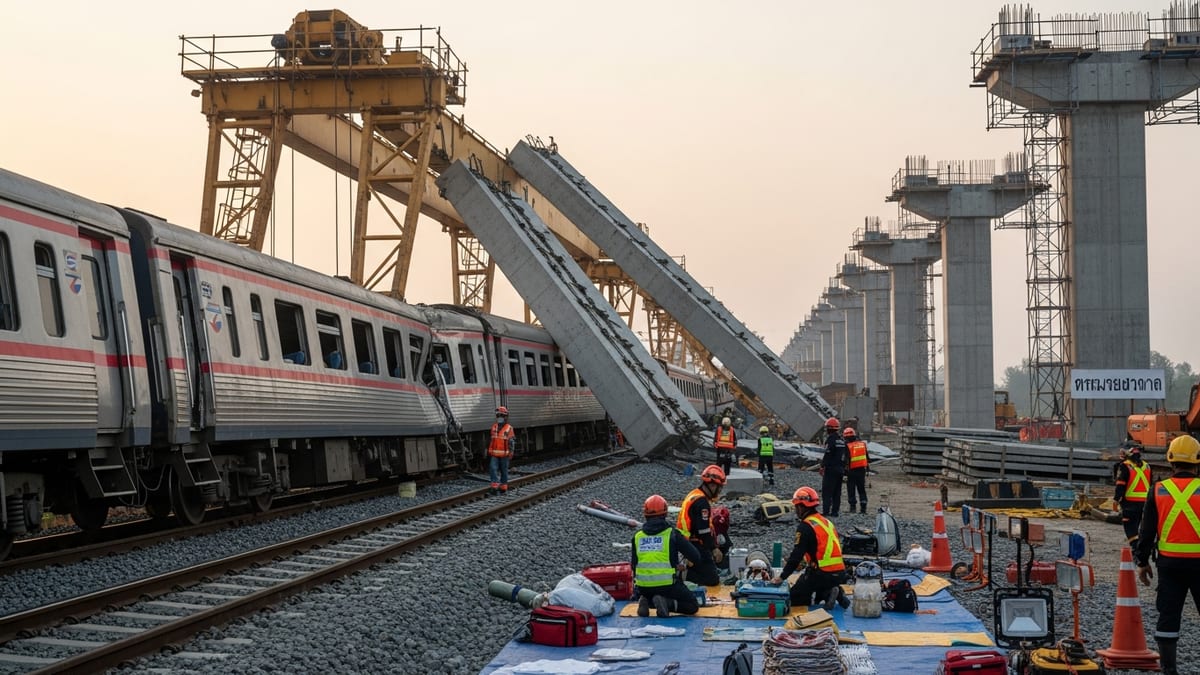
Slow Progress at a Complex Wreck Site
Publicly available information indicates that the Hickman derailment involved multiple freight cars leaving the tracks near key local roadways and utility corridors, creating a challenging work zone that has not been quick to clear. Removal of heavy railcars, damaged track and torn-up ballast has required cranes, excavators and specialized rail equipment that can only work in tight windows alongside limited rail traffic.
Reports from regional outlets describe a step-by-step process in which responders first stabilized the site and contained any immediate leaks, then shifted to methodical cutting, lifting and hauling of twisted metal and debris. That phased approach appears to be one reason the effort is still visible weeks later, as each stage must be completed before the next can safely begin.
Crews are also navigating the constraints of working close to residential areas and sensitive ground along the Mississippi River corridor. Noise, dust and lighting have to be managed so nearby homes and businesses can continue operating, which further slows the pace compared with a more remote freight-yard incident.
In addition, rail operators are under pressure nationally to keep freight moving even while cleanup continues. That dynamic often leads to temporary single-tracking or carefully timed closures at derailment sites, stretching wreckage removal over a longer period instead of completing it within a matter of days.
Environmental Monitoring Extends Timeline
Although early information from the Hickman derailment pointed to limited immediate public health risk, the presence of fuel, lubricants and other rail-related materials has triggered ongoing environmental checks. According to published coverage of similar derailments elsewhere, agencies frequently require repeated soil and water sampling before signoff, especially near rivers, creeks or wetlands.
In Hickman, that means the wreck is not just a steel and concrete problem but also a monitoring project that spans several weeks. Contractors must document any material that left the rail corridor, haul away contaminated soil where needed and confirm that run-off protections such as berms and absorbent booms remain in place during rain events.
Experience from other high-profile derailments in the region shows that regulators often ask for extended air and groundwater testing, even when no major hazardous cargo is involved. That trend, shaped by national attention on rail safety, is likely contributing to the cautious pace of work on the Hickman site as companies and agencies move carefully to avoid longer-term environmental liabilities.
For residents, that translates into a visible presence of monitoring trucks, sampling teams and marked test wells long after the initial smoke and noise of the derailment have faded. The scientific work is less dramatic than the first emergency response, yet it is one of the key reasons the cleanup can stretch from days into many weeks.
Road Closures and Travel Disruption for Locals
One of the most tangible impacts for travelers in and around Hickman has been the continued disruption to local roads that cross or parallel the affected rail line. Detours remain in place near the wreck site while equipment occupies shoulders and temporary access roads, according to local transportation notices.
Because Hickman sits at a bend in the Mississippi with relatively limited through-traffic options, even a partial closure can lengthen commutes and complicate routine errands. Drivers heading to regional highways or agricultural facilities often face slower routes on rural roads not designed for sustained detour traffic.
Similar derailments in small river towns across the Ohio and Mississippi valleys have shown how quickly a blocked crossing can affect tourism and local business patterns. Visitors may divert to alternate river overlooks or bypass town altogether when navigation apps flag delays near the main entrance routes.
In the Hickman area, those patterns are expected to continue until the last railcars are removed and inspectors clear the roadbed for full reopening. Even after that point, repaving or shoulder repairs can keep lane shifts in place, meaning sporadic slowdowns are likely to linger beyond the core wreckage removal phase.
Rail Operations Resume as Repairs Continue
Railroad operators typically prioritize restoring at least one operable track after a derailment, and Hickman appears to be following that playbook. Trains have gradually resumed movement through the corridor on a reduced basis while heavier cleanup activities persist alongside the rails.
This parallel approach allows time-sensitive freight, including agricultural products, manufacturing supplies and consumer goods, to keep moving through the region. However, it also requires tight coordination, as wreck trains, ballast tampers and track crews must pause or shift aside when scheduled freight needs to pass.
Industry reports on other recent derailments describe this period as a hybrid phase where the line is technically open but not yet back to normal capacity. Schedules can be volatile, with temporary slow orders, restricted speeds and changing meet points as dispatchers balance safety with network efficiency.
For passengers and motorists near Hickman, intermittent horn blasts, idling locomotives and short traffic stops at rail crossings are signs of this transitional period. It can be disorienting to see trains moving past a still-active wreck site, but in today’s freight rail system, full closure for the entire duration of cleanup is relatively uncommon.
Lingering Questions Around Rail Safety
Weeks of wreckage removal near Hickman are also feeding into a broader national conversation about rail safety and infrastructure resilience. Public documents on derailments over the past several years show recurring references to aging track components, mechanical failures and extreme weather as contributing factors.
Investigators routinely examine wheel bearings, rail welds, signaling systems and train handling records to pinpoint what went wrong. While detailed findings for the Hickman incident have not yet been widely published, the extended cleanup has drawn attention to how even a single mishap can disrupt communities for long periods.
Travel advocates and local leaders across the region are using cases like Hickman to call for more robust inspection regimes, stronger tank car standards and better planning for detours when incidents do occur. Those discussions often stress that modern rail corridors serve not only freight customers but also tourism, river recreation and small-town economies that depend on predictable access.
For Hickman, the ultimate legacy of this derailment will likely hinge on how quickly the corridor is fully restored, what long-term monitoring reveals about the site and whether promised safety improvements materialize. Until then, the cranes, earthmovers and sampling teams working among the damaged cars remain a daily reminder of how long recovery from a single rail accident can take.