


More news on this day
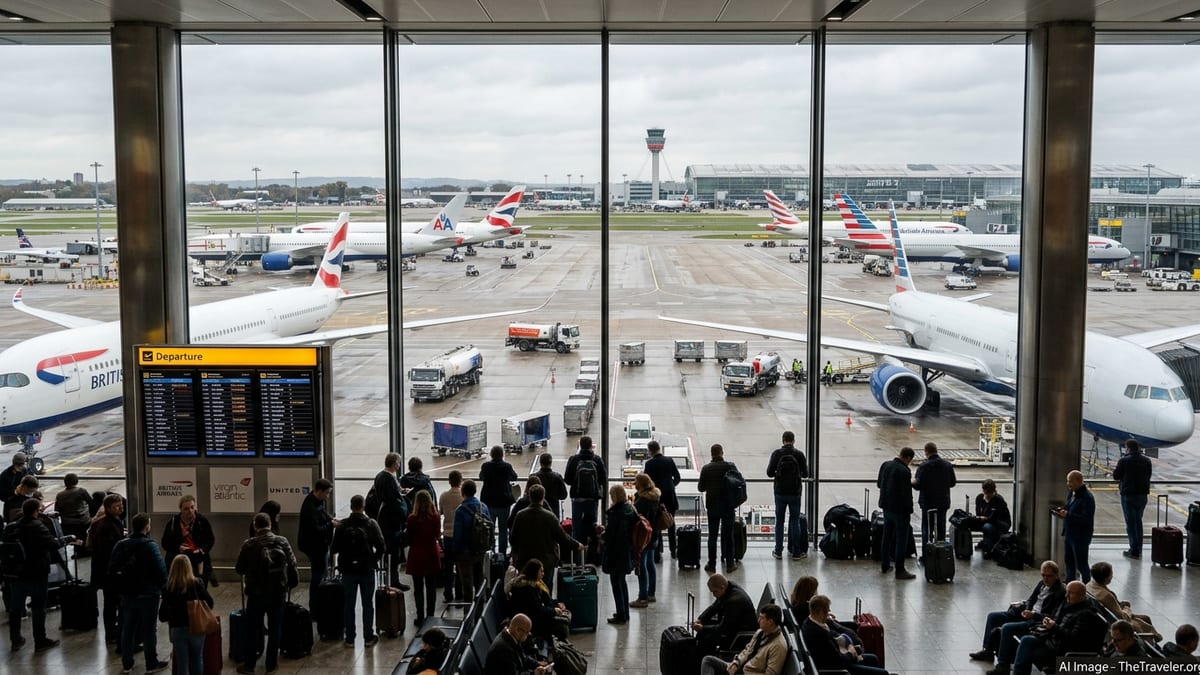
Europe is contending with a fourth day of transatlantic travel disruption on 17 November 2026, as the after effects of a nationwide Federal Aviation Administration (FAA) ground stop in the United States continue to delay and cancel flights between London and multiple US cities, affecting thousands of passengers and forcing widespread schedule changes on both sides of the Atlantic.
Get the latest news straight to your inbox!
The core development: US ground stop ripples into Europe
The key development driving the current disruption is the FAA’s decision on Friday 13 November 2026 to issue a rare nationwide ground stop across US airspace after a faulty router overwhelmed parts of the agency’s communications network. The outage halted departures for several hours at major US airports and sharply restricted traffic flows, creating a large backlog of aircraft and crews that airlines are still working through.
By late Saturday 14 November, flight tracking data showed more than 6,400 of roughly 41,000 scheduled flights in the United States cancelled that day, on top of thousands of cancellations and delays on Friday. Airlines have since been operating with displaced aircraft, out of position crews and limited spare capacity, which has cascaded into international routes. Long haul services between the US and Europe, particularly overnight flights that rely on tight rotations, have been among the hardest hit.
For London travelers, the practical effect was visible on the morning of 14 November, when nearly 30 flights between Heathrow and US destinations were cancelled before departure and additional services departed late. Disruption continued over the weekend as airlines trimmed schedules, consolidated lightly booked services and re timed flights to match available aircraft and rested flight crews. Although the FAA lifted the ground stop on Friday and says its air traffic system is now stable, normal operations are only gradually returning.
How London and other European hubs have been affected
Across Europe, the impact has been most acute at major transatlantic hubs that handle a high volume of US bound traffic. At London Heathrow, which typically sees several hundred arrivals and departures daily, tracking services and compensation specialists report elevated delay and cancellation rates since Friday, with a noticeable cluster affecting flights to and from US cities such as New York, Boston, Washington, Chicago and Los Angeles. Some Heathrow departures to US gateways have operated hours behind schedule as airlines waited for inbound aircraft from disrupted US airports.
Other London airports have also felt knock on effects, though on a smaller scale. London Gatwick, a significant base for low cost and leisure carriers serving cities like Orlando and Tampa, has seen isolated long haul cancellations and late running flights as operators adjusted schedules. London Luton experienced separate air traffic control restrictions on 17 November that temporarily limited movements and added further complexity for carriers already juggling US related disruptions, although this local constraint is distinct from the FAA issue.
Continental hubs with strong US links, including Amsterdam Schiphol, Paris Charles de Gaulle, Frankfurt and Dublin, have reported similar patterns of rolling delays and sporadic cancellations on North Atlantic routes. Eurocontrol’s early November network data already showed weather related punctuality pressures at London Heathrow, and the FAA outage has come on top of that, compounding congestion at peak times and stretching recovery resources across the European network.
Why schedules are still unstable days after the outage
Although the ground stop itself lasted only hours, its effects have persisted because of how tightly airline schedules are structured. Long haul aircraft typically operate daily rotations, with an overnight transatlantic flight followed by a return the next day. When a westbound service from Europe to the US is cancelled or significantly delayed, the aircraft and crew that would have operated the eastbound return are no longer in the right place at the right time. That mismatch then disrupts the next day’s flying program, even after the original technical fault is resolved.
US and European airlines also face strict crew duty time rules that limit how long pilots and cabin crew can remain on duty before mandatory rest. After the FAA ground stop, many crews reached legal limits while waiting on the ground or operating extended flights around congestion, which forced airlines to cancel or substitute subsequent segments, including some transatlantic services. With the Thanksgiving travel period approaching, carriers have limited spare aircraft and staff to plug gaps, so recovery is slower than on a quieter travel week.
Industry punctuality reports published before the outage indicated that European departure on time performance in early November hovered around 70 to 75 percent, leaving modest margin to absorb such a major external shock. Once thousands of US domestic flights were removed from the system over two consecutive days, network planners had to re build complex rotations. That process can take several days to stabilize, so passengers in Europe are still feeling knock on effects even as headline cancellation totals decline.
Practical impact on travelers departing from London and Europe
For travelers, the most visible effects are longer queues, schedule changes at short notice and a higher risk of missed connections, particularly for itineraries involving a change of plane in the United States. Passengers booked on London to US flights in the days following the ground stop have faced scenarios such as overnight cancellations with re booking one or two days later, downgraded or rerouted journeys via alternative hubs, and extended layovers where onward domestic legs were delayed or removed from the schedule.
Travelers departing from London who connect onward within the US are most exposed to lingering disruption, since a delay on the first leg can now more easily cause a missed domestic connection at congested hubs like New York, Chicago or Dallas. Some transatlantic flights are operating broadly on time, but airlines are warning that schedules remain subject to change and advising passengers to check flight status repeatedly before heading to the airport. Flexible tickets and carry on only travel can reduce rebooking complications, but do not eliminate the risk of same day changes.
Within Europe, travelers using London simply as a transfer point on routes to North America may see their non US sectors operate normally while the US bound segment is retimed or cancelled. In those cases, passengers may be re protected on later departures from the same airport, moved to services from another London terminal or re routed via a different European hub. While European passenger rights regulations generally require airlines to offer rerouting and care in the event of cancellations, the actual options available depend on seat availability and the carrier’s network, so some travelers face extended delays despite those protections.
What to watch in the coming days
Operational data from flight tracking services and airport statistics suggests that cancellation numbers are easing compared with the peak on Friday and Saturday, but schedules remain less reliable than normal and pockets of disruption could re emerge as airlines work through remaining imbalances. The FAA has indicated that its communications network is functioning and that it expects airline timetables to largely normalize, yet it has not published a precise timeline for full recovery across all carriers and routes.
For travelers planning transatlantic trips from London or other European cities in the next week, the most useful step is to monitor their booking closely. Checking airline apps and airport departure boards repeatedly in the 24 hours before departure can reveal early schedule changes that might allow voluntary rebooking on more stable options. Passengers with critical time sensitive plans, such as cruises or events starting in US cities, may wish to build in additional buffer days where possible until on time performance data confirms that operations have settled.
Regulators and aviation agencies on both sides of the Atlantic are still investigating the root technical causes of the ground stop and assessing whether further safeguards are needed for key communications infrastructure. Any subsequent findings or mandated changes are likely to be announced in the coming weeks and would not affect near term travel. For now, the main issue for passengers is residual instability in airline schedules rather than new restrictions, and conditions are expected to gradually improve if no further systemic outages occur.