


More news on this day
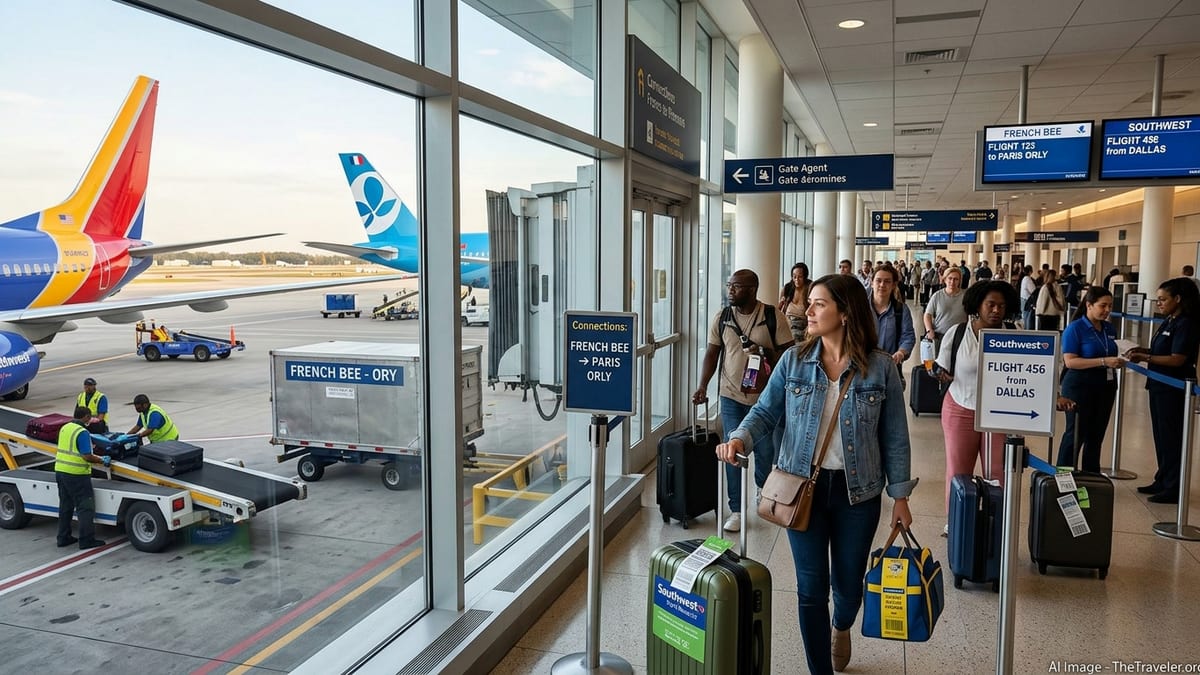
On November 16, 2026, Southwest Airlines launched a new interline partnership with French low cost long haul carrier French bee, adding a twelfth international partner and giving U.S. travelers new one ticket options to reach Paris Orly and French bee’s long haul network via Southwest’s domestic flights.
Get the latest news straight to your inbox!
What Southwest and French bee Have Confirmed
Southwest announced the French bee deal in a company news release dated November 16, 2026, describing it as a global interline partnership that is effective immediately. The carrier states that customers can now book itineraries that combine French bee’s long haul flights with Southwest operated domestic segments on a single ticket sold through French bee and participating travel agencies. French bee has separately confirmed the agreement, presenting it as a way to funnel more U.S. traffic onto its flights from Paris Orly.
French bee is a French low cost long haul airline based at Paris Orly Airport that currently focuses on leisure routes such as San Francisco, Los Angeles and New York to Paris, as well as services to Papeete in Tahiti and Réunion in the Indian Ocean. The new partnership does not create new nonstop routes for either carrier but instead links their existing networks commercially, allowing passengers to buy through itineraries such as Kansas City to Paris Orly via a French bee gateway, with Southwest providing the U.S. domestic sector.
Southwest classifies the arrangement as an interline rather than a codeshare. That means each airline keeps its own flight numbers and branding, and French bee or a travel agent issues a single ticket that covers both airlines’ flights. Checked baggage can be tagged through to the final destination when itineraries are properly ticketed, but each carrier continues to operate its own aircraft, cabins and service standards.
How the Interline Works and Where Travelers Can Connect
Southwest’s public guidance on “flying on a partner itinerary” explains that partner itineraries are generally sold by the international airline or a travel agency, with Southwest sectors embedded as domestic feeder legs. For the French bee agreement, that means travelers starting in U.S. cities that Southwest serves can be ticketed to French bee’s U.S. gateways and onward to Paris Orly or beyond, with French bee controlling the overall booking. Specific city pairs will depend on which U.S. airports French bee chooses as connection points and where schedules line up.
Both airlines have not yet published a definitive list of connection airports for the new partnership. However, French bee currently operates to U.S. gateways such as Newark, San Francisco and Los Angeles, while Southwest maintains sizable domestic operations at those airports or nearby fields, which makes them likely candidates for interline flows. In practice, a customer might be offered an itinerary that combines a Southwest flight from a mid sized U.S. city into a French bee gateway followed by a French bee flight to Paris Orly, all appearing on one ticket with coordinated minimum connection times.
Operationally, the arrangement follows Southwest’s standard partner rules. Passengers on a valid interline ticket check in with the first operating carrier on their itinerary and have bags checked through when system links allow. In case of disruptions, responsibility for rebooking is governed by the interline ticket and each airline’s conditions of carriage, which generally provide more support than two completely separate tickets but stop short of the full obligations seen in deep codeshare or joint venture partnerships.
Southwest’s Growing Web of 12 International Partners
The French bee announcement slots into a wider strategic shift at Southwest that the airline detailed in its 2025 annual report filed in February 2026. In that filing, Southwest reported that it launched its first international partnerships in 2025 to expand its network reach and generate additional demand across its domestic system. The company listed existing interline partners including Icelandair, China Airlines, EVA Air, Philippine Airlines, Condor and Turkish Airlines and said it intended to add more during 2026.
By its third quarter 2026 financial report, Southwest stated that since February 13, 2025, it had implemented and or announced strategic partnerships with a total of 11 carriers that connect its domestic flights with destinations worldwide. Those partners, reflected in Southwest’s public airline partnership pages and supporting customer documentation, now include Icelandair, China Airlines, EVA Air, Philippine Airlines, Condor, Turkish Airlines, All Nippon Airways, Singapore Airlines, Air Premia and TAP Air Portugal, among others. French bee becomes the twelfth such partner mentioned in company communications, indicating that Southwest has met its previously stated goal of adding additional partners in 2026.
Southwest pairs this partnership strategy with a broader change in distribution. The airline’s 10 K and related policy documents explain that it has expanded access to its fares in global distribution systems such as Amadeus, Travelport and Sabre and signed an agreement with German ticketing specialist Hahnair to make Southwest segments easier to sell through overseas travel agencies. These moves are designed to allow partner airlines and foreign agents to issue tickets that include Southwest flights in local currencies, a critical technical step for partnerships such as the new French bee interline.
What Changes for Travelers Booking France and Beyond
For travelers, the most immediate practical change is the ability to buy a single ticket that combines domestic Southwest flights with French bee’s long haul services, rather than arranging two separate bookings. This can simplify planning for trips from smaller U.S. cities to Paris Orly, Tahiti or other French bee destinations, reducing the risk that a delay on an initial flight leaves the customer stranded without protection on the onward leg. Under an interline ticket, travelers generally have a clearer right to rebooking within the combined itinerary than they would with two unrelated reservations.
The partnership does not, at this stage, integrate loyalty programs. Southwest’s own customer materials and investor communications have consistently cautioned that partnership launches begin as interline arrangements without the ability to earn or redeem Rapid Rewards points on partner airlines. The airline has told investors that it expects to enable Rapid Rewards members to earn and redeem points through some international loyalty partners starting in spring 2027, but has not yet named specific airlines or confirmed whether French bee will be included. For now, Southwest customers should not assume that partner segments will earn Southwest points or that Southwest points can be used to book French bee flights.
Pricing also remains separate. Fares on French bee segments continue to be set by French bee and can differ from tickets bought directly from the airline, particularly once travel agency markups or through ticket surcharges are included. While one ticket may bring baggage and disruption handling advantages, it will not always be the cheapest option compared with separate point to point bookings, especially for travelers without checked baggage who are comfortable managing separate reservations.
Limitations, Risks and What to Watch Next
There are several important limitations to the new arrangement that travelers should understand before relying on it. Southwest still does not operate transatlantic flights itself and has not announced any near term plans to begin doing so, so every France or Tahiti itinerary using this partnership will involve a connection to a French bee operated international leg. Additionally, interline agreements do not usually provide reciprocal elite recognition, lounge access or through check in for separate, non interlined tickets, so customers need to ensure their reservation is properly ticketed as a partner itinerary if they want bags checked through.
Another constraint is that booking paths are not yet universal. Southwest’s public partner guidance and external reporting on its earlier partnerships indicate that, at this stage, most partner itineraries cannot be constructed on Southwest’s own website or app. Instead, customers typically need to book through the international carrier, in this case French bee, or through a travel agency that has access to the relevant booking systems. That means travelers who are accustomed to managing everything in Southwest’s digital channels may find the process less straightforward and should pay close attention to ticketing confirmations and operating carrier details.
Looking ahead, Southwest has told investors that it plans to deepen its international partnerships in stages, including the launch of earning and redemption options with select partners from spring 2027. The airline also continues to expand its presence in global distribution systems, which should make it easier for overseas agencies and partner carriers to sell complex itineraries that include Southwest flights. For now, travelers considering the French bee partnership should confirm whether their preferred city pair is bookable on a single ticket, check baggage and connection rules carefully, and monitor Southwest and French bee announcements for any future additions such as loyalty integration or expanded connection points.