


More news on this day
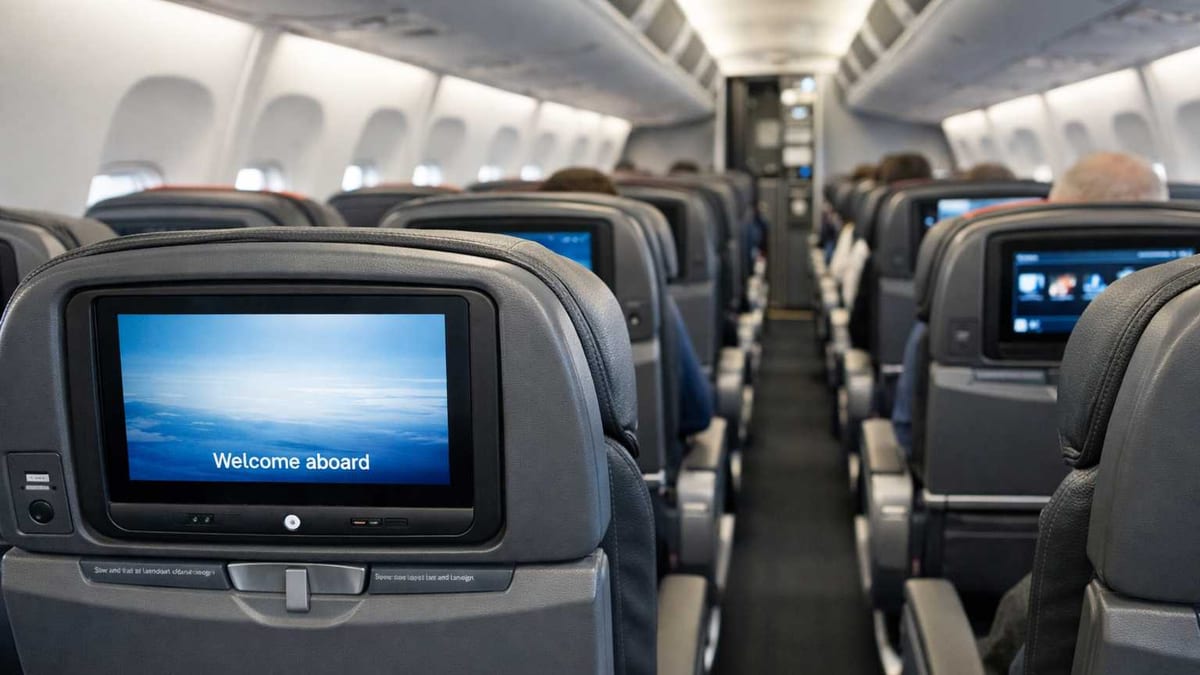
After years of betting on passengers’ personal devices for in-flight entertainment, American Airlines is edging back toward a more traditional model, with plans emerging to bring seat-back screens to large parts of its fleet in the coming years.
Get the latest news straight to your inbox!
From Removing Screens to Rethinking the Cabin
American Airlines spent much of the past decade moving away from built-in entertainment systems on domestic aircraft, stripping out or sidelining seat-back screens on many narrowbody jets. Industry coverage indicates that the strategy was framed around lighter cabins, lower fuel burn and the rise of streaming on phones and tablets, supported by widespread onboard Wi-Fi.
That decision set American apart from key U.S. rivals. Delta Air Lines and United Airlines continued to invest heavily in embedded entertainment, promoting every-seat screen availability as a core part of their onboard experience. Travelers who valued built-in screens for long domestic flights increasingly pointed to American as an outlier, particularly on workhorse Boeing 737 and Airbus A321 routes where only older or specially configured aircraft still offered the amenity.
The landscape has shifted again as premium leisure and business travel demand has recovered. Carriers across the industry are refreshing cabins with more comfortable seats, larger premium sections and upgraded technology. In that context, American’s earlier choice to remove many screens is now being reassessed, both in the boardroom and in the cabin, as expectations for inflight comfort rise.
Reports over the past two years show American already rolling out new long-haul interiors with large 4K seat-back displays on its Boeing 787-9 aircraft and reconfigured Boeing 777-300ER jets, positioning widebody entertainment as a key part of the product on international routes. Those investments on larger aircraft have now set the stage for a broader reconsideration of what passengers see in front of them on domestic flights as well.
New Orders, Retrofits and a Technology Upgrade
American’s recent aircraft orders and cabin retrofit programs provide the clearest window into how seat-back entertainment is coming back. In early 2024 the airline placed a large order for new Boeing 737 MAX 10 and Airbus A321neo aircraft, alongside a program to refresh existing Airbus A319 and A320 jets. Publicly available company materials describe these cabins focusing on more premium seating, in-seat power and upgraded connectivity.
For widebodies, the shift is already tangible. Newly delivered Boeing 787-9 aircraft feature 4K seat-back screens in every cabin, paired with Bluetooth headphone support and multiple charging options at each seat. Refurbished 777-300ER jets are receiving similar hardware, giving long-haul travelers an experience more in line with what they find on Delta and United’s international fleets.
On the narrowbody side, American’s plans are still emerging but point toward a more screen-forward future than in recent years. Industry analysts and aviation outlets report that the airline is preparing new domestic interiors that restore individual displays to many mainline seats, particularly on longer routes where passengers are more likely to expect a full entertainment system. These plans align with remarks from leadership that emphasize upgraded onboard technology as a pillar of closing the profitability and product gap with competitors.
Passengers can already see hints of the transition. Aircraft comparison tools and booking displays increasingly highlight whether a flight offers seat-back entertainment, personal-device streaming or both. As new jets arrive and older ones are retrofitted, more American flights are expected to move into the category that features a built-in screen, reversing a trend that defined much of the last decade.
Wi-Fi, Streaming and the Case for Both Screens and Devices
Even as seat-back screens reappear, American is not backing away from its focus on connectivity and streaming. In recent months the carrier, in partnership with a major telecommunications company, introduced free high-speed Wi-Fi for loyalty program members on large numbers of flights, positioning connectivity as a cornerstone of its onboard experience.
That approach reflects a broader industry view that connectivity and embedded entertainment can complement each other. On many American aircraft, passengers can already stream a library of films, television shows and music to their own devices at no extra charge, using the airline’s portal while connected to onboard Wi-Fi. The addition of seat-back displays on more jets is expected to offer another option, particularly appealing to travelers who prefer not to rely on battery life or storage space on their phones and tablets.
Cabin designers have increasingly built around this dual model. American’s new and refurbished interiors combine large seat-back screens with features like device shelves, USB-C charging and AC outlets, acknowledging that passengers might watch a movie on the screen while working on a laptop or scrolling on a second device. The airline’s recent premium-focused upgrades on regional jets, which emphasize power ports and consistent Wi-Fi, also suggest that connectivity will remain universal even where screens are slower to return.
For American, the balance between hardware and bandwidth is partly a cost calculation. Seat-back systems require substantial upfront investment and maintenance, while satellite Wi-Fi and streaming platforms involve recurring fees and technology partnerships. The current strategy appears to be shifting toward offering both on higher-profile aircraft and routes, using cabin refreshes and new deliveries to spread the cost over time.
Competitive Pressures and Passenger Expectations
Competitive pressure is a major factor in American’s move back toward seat-back entertainment. Industry reporting on recent earnings and strategy briefings notes that the airline trails its two principal legacy rivals in profitability, and that executives see cabin quality and onboard amenities as central to closing that gap.
Delta has marketed its every-seat-screen strategy for years, and United has embarked on an extensive retrofit campaign that is adding large high-definition displays even to many single-aisle jets. Against that backdrop, American’s earlier focus on personal devices stood out, especially for frequent flyers who spend long hours on cross-country or transcontinental routes where screens have become part of the expected baseline.
Passenger feedback, visible in customer surveys and online commentary, often highlights seat-back entertainment as a deciding factor when fares are similar. Many travelers appreciate not needing to juggle phones, cables and battery packs for several hours, and families in particular tend to value an individual screen for each child. As American remodels cabins across its network, bringing screens back on more aircraft could help recapture those customers.
By combining new premium seating, stronger Wi-Fi and an expanded footprint for built-in entertainment, American is effectively repositioning itself in the domestic market. While the full rollout of new screens will take years and may not touch every aircraft, the shift marks a clear departure from the idea that personal devices alone can carry the inflight entertainment load on one of the world’s largest airlines.