


Seattle–Tacoma International Airport, better known as SEA, is the main gateway to the Pacific Northwest and one of the busiest airports in the United States. For first-time visitors, its single terminal with multiple concourses, constant construction projects, and maze-like parking garage can feel overwhelming. This guide walks you step by step through how SEA is laid out, how to get to and from the airport, where to sleep, where to eat and relax, and what to expect at arrivals and departures so your first transit through Seattle is smooth rather than stressful.
Get the latest updates straight to your inbox!
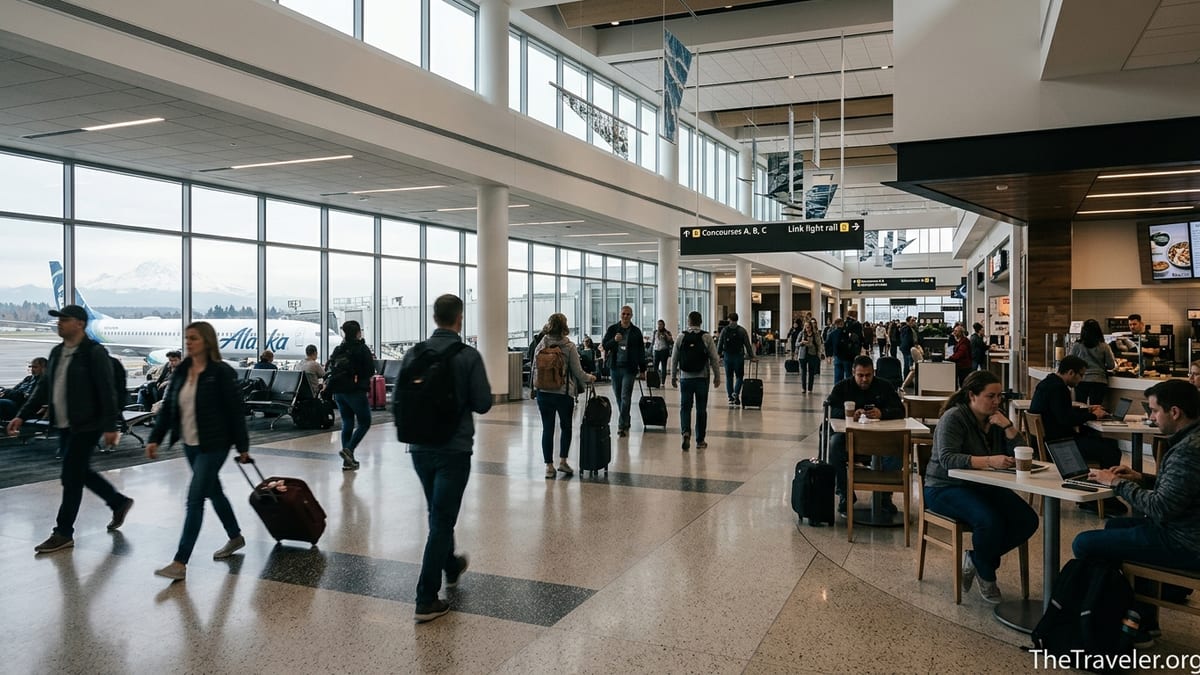
Understanding SEA’s Layout: Terminal, Concourses, and Satellites
Unlike airports with multiple standalone terminals, SEA has one main terminal building with a Central Terminal hall and four concourses labeled A, B, C, and D, plus two satellite concourses to the north and south. Concourse A typically hosts carriers such as Delta and United, while B, C, and D are heavily used by Alaska Airlines and its partners. The North Satellite, often labeled the N Concourse, is Alaska’s primary hub space, and the South Satellite, or S Concourse, handles most international long-haul flights with dedicated customs and immigration facilities.
For a first-time traveler, the most important thing to know is that all concourses and both satellites are connected airside. That means once you are through security, you can reach any gate without exiting and re-clearing. Underground trains make this much easier: the blue line connects the main terminal to the North Satellite, and the green line connects to the South Satellite. For example, if you land on an Alaska flight at an N gate and connect to a Delta flight departing from A, you simply follow signs for the underground train toward Concourse A rather than leaving the secure area.
The airport has been in a long-running upgrade program, including a major expansion of the C Concourse that added several new floors of dining, seating, and art installations. In practice, that means you will see bright, high-ceilinged spaces and new restaurants in parts of C, while other corners of the airport may still feel older or be under renovation. Leave a few extra minutes if your route requires moving between older and newly opened areas, as detours or narrow corridors are common while work continues.
Wayfinding at SEA is generally clear once you learn the color coding and letters. Security checkpoints at the ticketing level feed into different parts of the concourses, but because everything connects behind security, you do not have to use the checkpoint closest to your gate. If Checkpoint 4 has a long line and Checkpoint 2 is nearly empty, you can use the shorter one and then follow overhead signs to walk or train to your departure concourse.
Airlines, Arrivals, and Departures: What to Expect
SEA is a primary hub for Alaska Airlines and a major West Coast base for Delta, so most domestic travelers will fly with one of those two carriers. Alaska flights are heavily concentrated in the C and D concourses and the North Satellite, while Delta uses much of Concourse A and some international-capable gates. Other domestic airlines, such as Southwest, JetBlue, and Frontier, use gates primarily in the B and A concourses. International carriers like British Airways, Lufthansa, and Korean Air usually arrive and depart from the South Satellite so passengers can connect directly to U.S. Customs and Border Protection.
For arrivals, domestic passengers typically walk directly from the gate into the concourse and then follow signs for baggage claim, which routes you back toward the Central Terminal and down escalators to the baggage level. If you are connecting onward, you can usually ignore the baggage claim signs and instead focus on your next gate. An example: arriving on Southwest at a B gate and connecting to Alaska at C requires a 10 to 15 minute walk through the Central Terminal, with an optional stop for coffee or food along the way.
International arrivals are more structured. If you land from overseas in the S Concourse, you will follow signs to passport control and baggage claim in the international arrivals facility. After clearing immigration and customs, you either exit into the public arrivals hall or, if you have a tight connection, follow the dedicated re-check counters and security screening to re-enter the secure area. Give yourself generous padding for connections that involve customs; many airlines recommend at least 2 hours, and during peak summer weekends, lines can easily justify that buffer.
For departures, SEA security wait times fluctuate by time of day and construction progress. Early mornings between 5 and 8 a.m. are among the busiest because of banked departures by Alaska and Delta. If you have a domestic flight during those hours, aim to arrive 2 hours before departure, especially if you need to check bags or return a rental car. For a midday departure on a weekday, 90 minutes can be sufficient, while for an international flight in the evening you should treat 3 hours as a safe standard.
Getting To and From SEA: Trains, Rideshares, and Cars
One of SEA’s strengths is its direct connection to Seattle’s Link light rail system. The SeaTac/Airport Station sits on the east side of the airport, connected to the main terminal via skybridges through the parking garage. Walking from the terminal to the station typically takes 7 to 10 minutes, including escalators and elevators. From there, frequent light rail trains run north through South Seattle and into downtown, with stops near stadiums, the International District, and the central business core. Travel time to downtown is usually around 35 to 40 minutes, and fares are relatively low compared with taxis or rideshares.
If you are landing late at night with heavy luggage or small children, rideshare and taxi options may be more comfortable despite the higher cost. Uber, Lyft, and traditional taxis are all coordinated through well-signed pickup areas in the parking garage and ground transportation center. A typical rideshare fare from SEA to downtown hotels can range from moderate to high depending on time of day and traffic, with surges during big events like Seahawks games or summer cruise departures. If you are heading south to Tacoma or north toward the Eastside suburbs, ride costs increase with distance, so it is often worth comparing estimates in your apps before you leave the terminal.
Several shuttle companies run hotel and regional shuttles from designated zones outside baggage claim. Many SeaTac-area hotels advertise free 24-hour shuttles, but in reality some operate on fixed schedules (for example, every 30 minutes) or require you to call upon landing to request pickup. Before your trip, check your hotel’s shuttle hours and pickup point; a common pattern is for shuttles to stop at Island 1 or 3 in the ground transportation area. For longer-distance trips to places like Bellingham or Olympia, you will find scheduled bus services and private shuttles that use the same general curbside zones.
Public buses also serve the airport from various regional transit agencies, using stops near the light rail station and along International Boulevard. These are most useful if you are a budget traveler or a local who knows the routes well. For first-time visitors heading to downtown Seattle, light rail is generally simpler and more predictable, while buses might make sense if your hotel is in neighborhoods not directly served by the train, such as parts of West Seattle or Burien.
Parking, Rental Cars, and SeaTac Hotels
SEA’s multi-level parking garage is one of the largest in North America and connects directly to the terminal via skybridges on the fourth floor. Parking here is convenient but usually more expensive than off-airport lots. Daily on-site parking rates are set at a premium level, and you should expect higher charges during peak travel seasons. The garage offers general parking levels as well as priority sections for electric vehicles and accessible spaces closer to the skybridges. Many travelers use the port’s pre-booking system to reserve a spot in advance, which can lock in a lower rate and save time hunting for spaces.
Off-airport parking lots and private garages along International Boulevard typically advertise lower daily rates and free shuttle service running every 10 to 20 minutes. If you are leaving your car for a week-long trip, these lots can result in significant savings over the main garage. For example, a family heading to Hawaii for seven nights might pay substantially less at an independent lot, even after adding a small booking fee, than they would in the main SEA garage. The trade-off is relying on shuttle timing and allowing extra buffer for the ride back to the terminal when you return.
The airport’s consolidated rental car facility sits a short bus ride away from the terminal. After collecting bags, you follow “Rental Cars” signs outside to dedicated shuttle stops, where frequent buses run to the multi-story rental center. Most major brands operate here, including Enterprise, Hertz, Avis, Budget, Alamo, and National, along with a few smaller operators. Pick-up and return traffic is generally well organized, but during peak Sunday afternoons or holiday periods the drive in and out can be slow, so build in a cushion of at least 20 to 30 minutes to your schedule when returning your vehicle.
For early departures or late arrivals, many travelers choose to stay in one of the cluster of hotels within a short distance of the terminal. Properties range from budget motels to full-service brands. For instance, you can find simple roadside-style options south along International Boulevard with basic rooms and complimentary continental breakfast, as well as larger branded hotels just north of the airport with on-site restaurants and meeting space. A common strategy is to sleep near the airport and use light rail to sightsee downtown during the day, which can offset higher central-city hotel prices while still giving you access to major attractions.
Lounges, Food, and Amenities Inside the Airport
For a single-terminal airport, SEA offers a surprisingly dense network of lounges. Alaska Airlines operates several Alaska Lounge locations, including in the C and D concourses and the North Satellite, catering to its frequent flyers and day-pass guests. Delta runs two Sky Club lounges in Concourse A, and above one of them is the newer Delta One Lounge focused on premium international and transcontinental passengers. There is also a United Club in Concourse A, a British Airways lounge in the South Satellite, and The Club at SEA locations in both Concourse A and the S Concourse that can be accessed with certain membership programs or paid day passes.
In addition, the airport now features an American Express Centurion Lounge located in the Central Terminal area, popular with cardholders looking to work, eat, or simply escape the gate crowds. Facilities vary by lounge but commonly include hot and cold buffet selections, complimentary beer and wine, Wi‑Fi, and power outlets at nearly every seat. Some lounges, particularly the Centurion Lounge, certain Delta Sky Clubs, and the British Airways facility, also offer shower suites, which are extremely valuable after an overnight flight into SEA or before a long-haul departure to Europe or Asia.
Even if you are not using a lounge, you will find a wide range of dining options across the concourses. Local and regional brands feature heavily, from Seattle-based coffee shops to Pacific Northwest seafood counters, as well as national chains recognizable to most U.S. travelers. The newly expanded C Concourse, for example, includes several newer restaurants and bars, while the Central Terminal offers fast-casual choices and grab-and-go markets with prepacked salads, sandwiches, and snacks. Prices are typical for a major U.S. airport, so expect to pay a bit more than in the city for a sit-down meal or specialty coffee.
Amenities extend beyond food and lounges. There are children’s play areas, pet relief zones both inside and outside security, and several art installations throughout the terminal that highlight Pacific Northwest themes. Free Wi‑Fi is available airport-wide, and most seating areas now include charging ports. Shops range from travel essentials and bookstores to local souvenir stores where you can pick up Washington wines, Seattle chocolates, or sports merchandise for local teams, which is handy if you are headed straight to visit friends or family.
First-Time SEA Survival Tips and Common Pitfalls
First-time visitors are often surprised by how long walks can feel at SEA, especially when moving between the main terminal and the satellite concourses. Comfortable shoes and built-in walking time can make the difference between an easy connection and a stressful sprint. As a rule of thumb, assume a minimum of 10 minutes to walk between adjacent concourses and 15 to 20 minutes if your journey involves an underground train to the satellites and a stop to check information boards.
Another surprise is the complexity of the arrivals and departures roadways. During busy hours, digital signs sometimes direct drivers to use either the arrivals or departures level depending on congestion. If you are being picked up, agree on a specific location with your driver in advance, such as “Departures level by door near Alaska check-in” or “Arrivals level outside baggage carousel 10.” Some locals prefer to meet arriving friends at or near the light rail station entrance on the far side of the parking garage, where traffic is lighter, and then drive through nearby surface streets rather than battling curb congestion directly in front of the terminal.
Security strategy is also important. SEA offers several checkpoints along the ticketing level, and their wait times can differ substantially. If you hold TSA PreCheck or a trusted traveler membership like Global Entry with TSA benefits, make sure you follow signs for those dedicated lanes. During holiday weekends, consider arriving a bit earlier than usual, because even priority lanes can back up temporarily. Keep liquids and electronics organized in your carry-on so that if you are routed into a standard lane, you can clear screening quickly without repacking at the end of the conveyor.
Finally, remember that SEA is undergoing near-continuous construction and expansion, especially as it prepares for future events and long-term growth. That can mean sudden shifts in where certain services live: a restaurant you visited last year might have moved, or a hallway might be temporarily narrowed while work is completed. Build in a margin of error, pay attention to temporary signage, and if you feel lost, look for the roaming customer service ambassadors and volunteers in distinctive uniforms who are stationed throughout the terminal specifically to answer first-timer questions.
FAQ
Q1. How early should I arrive at Seattle–Tacoma International Airport for my flight?
For most domestic flights, plan to arrive 2 hours before departure, especially in the early morning rush. For international flights, 3 hours is a safer guideline, as security and immigration lines can be longer during peak travel seasons.
Q2. Which airlines primarily use SEA and where are their gates?
Alaska Airlines is the largest carrier at SEA, with many gates in the C and D concourses and the North Satellite. Delta Air Lines operates a large share of flights from Concourse A. Other U.S. carriers use a mix of A and B gates, while most international airlines operate from the South Satellite.
Q3. Is it easy to connect between flights at SEA?
Yes, once you clear security, all concourses and satellites are connected inside the secure area. You can walk between A, B, C, and D, and use underground trains to reach the North and South Satellites. Allow at least 45 minutes for a comfortable domestic connection and more if you are arriving from an international flight.
Q4. What is the best way to get from SEA to downtown Seattle?
For most travelers, the Link light rail is the best balance of cost and convenience. The station is about a 7 to 10 minute walk through the parking garage from the terminal, and trains reach downtown in roughly 35 to 40 minutes. Taxis and rideshares are faster during light traffic but significantly more expensive.
Q5. Where should I meet my ride at SEA to avoid congestion?
The default choice is the curbside arrivals level just outside baggage claim, but it can be crowded. Many locals choose to meet on the departures level instead or at the far side of the parking garage near the light rail station entrance, where traffic is usually lighter.
Q6. Does SEA have airport lounges I can pay to access?
Yes. In addition to airline-operated lounges from Alaska, Delta, and United, SEA offers The Club at SEA lounges in Concourse A and the South Satellite and an American Express Centurion Lounge in the Central Terminal. Many of these can be accessed via membership programs or paid day passes, subject to capacity.
Q7. Is on-site parking at SEA worth the cost?
The main SEA parking garage is the most convenient option, with direct skybridges to the terminal, but it is also one of the more expensive choices. For trips of several days or longer, many travelers prefer off-airport lots along International Boulevard that offer lower daily rates and shuttle service.
Q8. How family-friendly is Seattle–Tacoma International Airport?
SEA is reasonably family-friendly, with nursing rooms, family restrooms, children’s play areas, and pet relief zones. Wide concourses and plentiful seating help, but you should still allow extra time for walking with kids, strollers, and gear, especially when using the satellite concourses.
Q9. Can I sleep at SEA if I have an overnight layover?
Spending the night in-terminal is possible but not especially comfortable. Most seating has armrests, and cleaning and announcements continue overnight. Many travelers with long layovers choose a nearby hotel with a free shuttle, check in for a short night’s rest, and return to the airport in the early morning.
Q10. Are there any special tips for first-time visitors to Seattle using SEA?
Wear comfortable shoes, arrive early, and use the light rail to save money getting into the city. Take advantage of local food options in the Central Terminal or C Concourse, and do not hesitate to ask airport staff or volunteers for help if you are unsure about directions or transit connections.