


More news on this day
American Airlines flight AAL2992, operating from Dallas Fort Worth to Charlotte Douglas International Airport, diverted en route on Thursday, disrupting travel plans for dozens of passengers and drawing renewed attention to how quickly routine domestic services can be interrupted by weather and operational issues.
Get the latest news straight to your inbox!
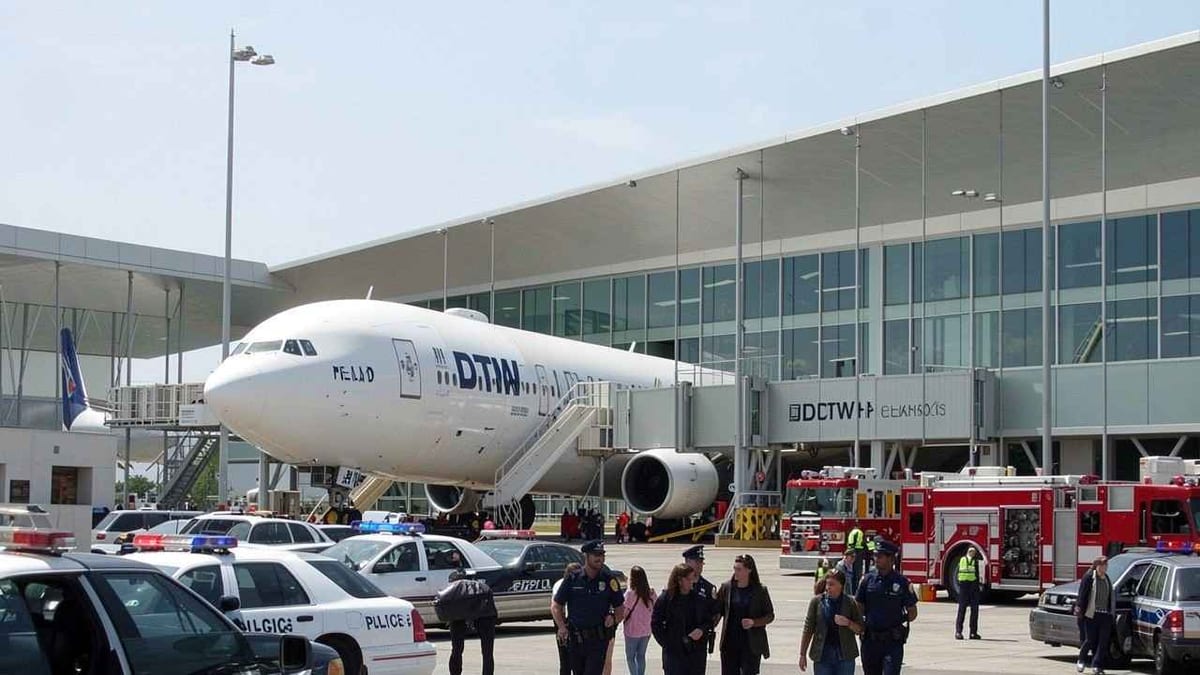
Dallas to Charlotte Service Interrupted Midflight
Publicly available flight-tracking information indicates that AAL2992 departed Dallas Fort Worth International Airport as a regularly scheduled American Airlines service to Charlotte before deviating from its planned route and diverting to an alternate airport. Data show that the aircraft leveled off away from its intended arrival profile and changed course, a typical pattern when crews receive updated instructions from air traffic control or dispatch.
Reports from tracking platforms suggest that the diversion occurred late in the flight, after the aircraft had already begun progressing toward North Carolina. Instead of continuing to Charlotte Douglas International Airport, the flight was routed to another airfield where it could land safely and refuel or await improved conditions.
Initial indications point to a mix of adverse weather in the Charlotte area and wider congestion across the regional network as likely contributors. Summer thunderstorms around major hubs often trigger holding patterns, ground stops and diversions when aircraft cannot be sequenced safely into already busy arrival banks.
No injuries were reported, and available data show the aircraft landed normally at the diversion field. For passengers on board, however, the sudden midair change translated into hours of additional travel time and uncertainty about onward connections.
Weather, Congestion and Airline Hubs
Charlotte Douglas functions as one of American Airlines’ primary hubs, handling waves of connecting traffic between the Northeast, Southeast and Midwest. When storms or low visibility develop near the airport, the knock-on effects can ripple through dozens of inbound and outbound flights, including services from Dallas Fort Worth.
AAL2992’s diversion fits a broader pattern that aviation observers see routinely during peak storm seasons. When holding areas become saturated or when fuel reserves approach planned limits, airline dispatchers and cockpit crews collaborate with air traffic controllers to identify the nearest suitable airport that can accept the aircraft and its passengers.
Industry guidance emphasizes that diversion decisions prioritize safety and regulatory fuel requirements over schedule considerations. Even when conditions in Charlotte may be improving, a flight nearing the end of its fuel planning window may have limited options and must commit to an alternate field rather than risk extended circling or congestion delays.
Once on the ground at the diversion airport, the flight can wait for a new departure slot, receive additional fuel, or in some situations be taken out of service if crew duty limits or maintenance checks become a factor. That sequence often leads to an eventual cancellation of the original flight number, with passengers moved to replacement services.
Impact on Passengers and Downline Flights
For travelers booked on AAL2992, the diversion meant missed connections at Charlotte, particularly for those continuing to smaller regional destinations that may only see a few daily departures. Publicly visible schedules show that many of these spoke routes rely heavily on tight banked connections through the hub.
Passengers commonly experience a cascade of disruptions in such scenarios: the initial diversion, an extended wait on the ground, and then the challenge of securing rebooked seats on alternative flights with limited spare capacity. Those connecting to the final departures of the day may face overnight stays if no later options are available.
In similar recent cases across the industry, airlines have used a mix of rolling rebookings, hotel vouchers where policies allow, and same-day standby to move affected customers. Digital tools, including mobile apps and automated text notifications, play a growing role in letting passengers confirm new itineraries without waiting at crowded airport service counters.
Travelers rely heavily on real-time information from flight status pages and third-party tracking services in these situations. When a flight like AAL2992 diverts unexpectedly, these platforms are often the first public indications that a routine domestic leg has turned into a more complex operational event.
Operational Pressures Behind a Single Diversion
While each diversion has its own causes, the episode involving AAL2992 highlights several broader pressures on the U.S. air travel system. Airlines continue to operate tight schedules with high load factors, leaving less slack when a single hub experiences storms or when an aircraft unexpectedly leaves its assigned rotation.
After a diversion, the aircraft may not be able to position back into its original sequence quickly, which can force revisions to later flights assigned to the same jet. Crews may also reach duty-time limits, requiring replacements who are not always immediately available at the diversion airport.
For American Airlines, a network strongly centered on Dallas Fort Worth and Charlotte, any disruption to traffic flowing between those cities can quickly touch travelers headed to destinations throughout the East Coast and beyond. A single Dallas to Charlotte flight, such as AAL2992, may carry passengers destined for dozens of final cities.
Aviation analysts note that these dynamics are not unique to American; they are an inherent feature of hub and spoke systems used by large carriers. When weather or congestion affects a hub, diversions and rolling delays become tools to maintain overall safety and order in a constrained system.
What Travelers Can Do When Flights Divert
The diversion of AAL2992 serves as another reminder that even short and familiar domestic routes can change rapidly. Travel experts often recommend that passengers build buffer time into itineraries that require critical same-day connections, particularly during storm seasons in the South and Southeast.
When a diversion occurs, monitoring airline apps and gate screens frequently can help travelers react quickly as new options appear. In many recent disruptions, travelers who confirmed rebookings through self-service tools while still on the aircraft were able to secure scarce seats before they were fully allocated.
Flexible planning, such as avoiding the last flight of the day for important connections and allowing extra time when connecting through busy hubs like Charlotte, can reduce the risk of being stranded overnight. For time-sensitive trips, some travelers choose earlier departures from cities like Dallas Fort Worth, accepting an early start in exchange for more recovery options later in the day.
For the passengers on AAL2992, the immediate priority was reaching their final destinations safely, even if hours later than planned. As operations normalize and aircraft and crews return to position, the diversion becomes one more data point in the complex daily choreography of American’s domestic network.