


More news on this day
American Airlines flight AAL899 made an unscheduled diversion to Tampa International Airport, where it landed safely after a reported in-flight issue prompted the crew to alter course and bring the aircraft down in Florida.
Get the latest news straight to your inbox!
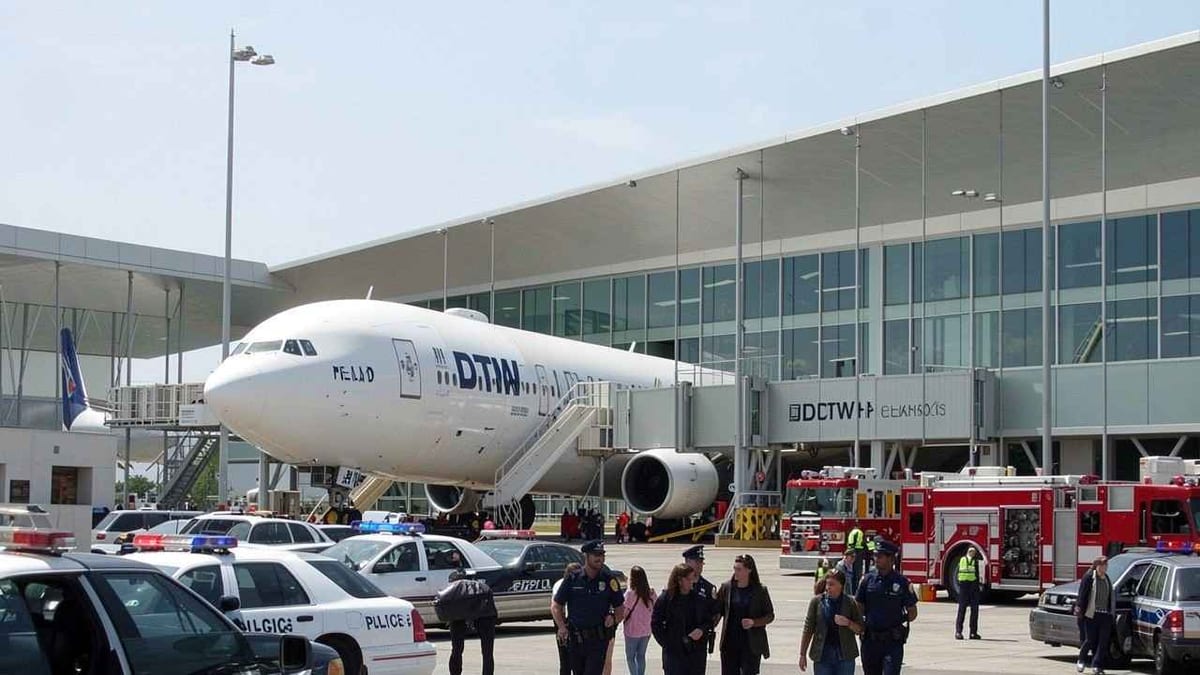
Unscheduled Diversion Brings AAL899 to Tampa
Flight tracking data and publicly available aviation records indicate that American Airlines service AAL899, operating a regularly scheduled passenger route, diverted to Tampa International Airport instead of continuing to its intended destination. The aircraft altered course en route and initiated a descent into Tampa, arriving without incident.
Reports show that the diversion occurred while the aircraft was already in cruise, suggesting that the crew made the decision in response to a developing situation that required a prompt but controlled change of plans. No injuries have been reported, and there is no indication of an evacuation or emergency on the runway.
Data from flight tracking platforms typically used by the public to monitor commercial movements show that AAL899 taxied under its own power after landing, an indication that the diversion was handled as a precautionary measure rather than a severe mechanical or structural emergency.
American Airlines has not released a detailed public narrative of the event, but the available evidence points to a standard safety response in which the crew prioritized a timely landing at a well-equipped airport.
Reason for the Diversion Remains Under Review
As is common with mid‑flight diversions, early information has focused on the aircraft’s route change rather than the specific trigger. Publicly accessible flight status tools listed AAL899 as diverted to Tampa, without elaborating on whether the cause was technical, medical, weather related, or connected to air traffic control constraints.
Such diversions frequently stem from issues like mechanical alerts, passenger medical needs, or operational factors involving crew duty limits and congestion in the airspace ahead. Available reporting on AAL899 points to a controlled arrival in Tampa and routine ground handling procedures after landing, which often signals that a potentially escalating situation was stabilized.
In similar cases across the industry, crews use conservative criteria when evaluating cockpit messages, sensor indications, or passenger health concerns, often choosing to land earlier at a suitable airport rather than continue to a more distant destination. AAL899’s diversion appears to align with that broader, safety‑first approach that major carriers regularly apply.
Further details may emerge in the coming days through updated flight records or regulatory databases, but there is currently no public indication that the event involved a serious incident classification or that an extended investigation is under way.
Impact on Passengers and Downline Operations
For travelers on board AAL899, the immediate consequence of the diversion was an unscheduled stop in Tampa and disruptions to their onward plans. Standard airline practice in situations of this kind is to bring the aircraft to the gate, allow passengers to disembark when safe, and begin arranging rebooking or onward transport as conditions permit.
Operational data from recent American Airlines diversions at other airports suggest that rebooking typically combines placing passengers on later departures, moving them to alternate routings, or, where feasible, continuing the original aircraft once ground checks are complete. The handling of AAL899 in Tampa appears to have followed a similar pattern, with the airline working to restore the integrity of its schedule while accommodating individual itineraries.
Disruptions from an unexpected landing can cascade across a carrier’s network, affecting aircraft rotations and crew assignments. However, major hubs such as Tampa International have sufficient infrastructure and partner connections to absorb irregular operations, limiting the broader impact on the day’s schedule.
Passengers connecting beyond the original destination may face extended travel times or overnight stays, but publicly available information to date does not indicate widespread cancellations directly tied to the AAL899 diversion.
Tampa International’s Role in Handling Diversions
Tampa International Airport is a frequent alternate for flights operating across the southeastern United States because of its runway capacity, weather patterns, and range of maintenance and ground services. Aviation records show that commercial diversions to Tampa occur periodically for a variety of reasons, including thunderstorms elsewhere in Florida, holding delays, and in‑flight technical concerns.
The airport’s facilities are capable of accepting a wide range of aircraft types, and local emergency resources routinely train for scenarios involving unscheduled landings. In most cases, diverted flights such as AAL899 are met by standard ground crews who conduct basic checks and coordinate passenger services while any required technical inspections are carried out.
Weather across central Florida can be highly variable, with rapid development of thunderstorms that affect routes along the Gulf Coast and interior corridors. While there is no definitive public confirmation that weather played a role in AAL899’s diversion, Tampa’s position and capabilities make it a logical option when conditions or operational considerations render other airports less suitable at a given moment.
Once an aircraft is on the ground, Tampa International’s connections to other major American Airlines stations allow for relatively swift repositioning of both planes and passengers, helping the carrier return to normal operations after irregular events.
Diversions as a Routine Part of Modern Air Travel
Although any mid‑flight diversion may feel dramatic to those on board, data from industry reports and academic studies on airline operations indicate that such events are a routine element of modern commercial aviation. Diversions occur across all major carriers and aircraft types, and are designed into flight planning and fuel calculations from the outset.
Studies of U.S. domestic flight patterns show that unscheduled landings are a predictable, if infrequent, outcome of variables such as weather, air traffic volume, and aircraft reliability. The outcome observed with AAL899, in which the aircraft landed safely, taxied normally, and passengers were managed through standard airport procedures, is consistent with how the system is built to function when conditions change.
Regulators and airlines emphasize the principle that safety margins must remain wide, even at the expense of schedule reliability. From that perspective, the decision to divert AAL899 to Tampa reflects the broader culture of commercial aviation, where altering course is considered an expected tool for managing risk rather than a sign of failure.
For travelers, the episode is another reminder that diversions, while inconvenient, are one of the mechanisms that underpin the industry’s strong safety record. In the case of AAL899, all available information points to a conservative operational decision that led to a safe landing and a controlled resolution on the ground.