


More news on this day
Travelers passing through Phoenix Sky Harbor International Airport faced mounting delays and disrupted itineraries after an American Airlines technology outage triggered a cascade of schedule problems across the carrier’s network.
Get the latest news straight to your inbox!
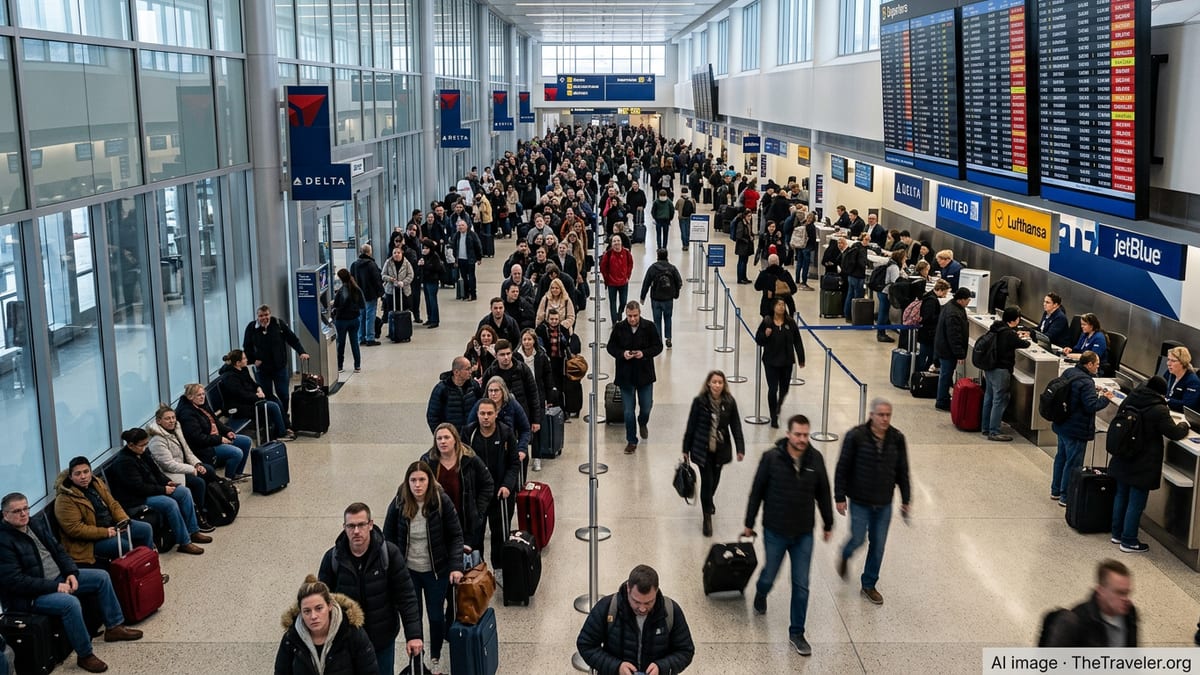
IT outage sends delays rippling through Phoenix hub
The latest disruption emerged on July 28 when a widespread American Airlines information technology issue prompted a temporary halt to departures, affecting flights nationwide and hitting key hubs such as Phoenix Sky Harbor particularly hard. Publicly available flight tracking data shows a pattern of extended departure holds, rolling 30 minute delay increments and late night arrivals for American-operated services into and out of Phoenix.
American relies on Phoenix Sky Harbor’s Terminal 4 as a major western gateway, so interruptions to crew scheduling, gate management and passenger processing quickly translated into gate holds and missed connection windows. Online tracking services indicate that transcontinental and eastbound red eye departures from Phoenix were among the flights experiencing the longest downstream delays as the airline worked to recover its schedule.
Published coverage of the outage describes a period in which American’s core systems, including tools used by gate agents and flight crews, were intermittently unavailable, forcing manual workarounds at airports. For passengers in Phoenix, the result was longer lines, uncertainty around boarding times and difficulty rebooking when connections became impossible.
Reports from travelers on social platforms referencing Phoenix describe aircraft waiting on taxiways after pushback, as well as flights held at gates while crews awaited updated clearances and revised flight plans. Those rolling delays compounded existing summertime challenges in the desert hub, where extreme heat and monsoon storms already leave little margin for schedule disruptions.
Travelers report missed connections and overnight disruptions
As the IT outage unfolded, connecting passengers in Phoenix bore the brunt of the operational strain. Posts from travelers reference tight connections through Sky Harbor turning into multi hour, and in some cases overnight, misconnects when inbound flights arrived too late for onward departures. In several accounts, passengers described being rebooked onto later flights or routed through alternate hubs after their original itineraries became unworkable.
Some accounts from the airport highlight the cumulative effect of sequential short delays. Passengers reported seeing departure times repeatedly pushed back in half hour increments as systems came back online and crews attempted to reposition aircraft and reassign staff. Those rolling changes made it difficult for travelers to make informed decisions about whether to wait at the gate, seek rebooking, or arrange overnight accommodation.
Domestic routes linking Phoenix with major American Airlines markets such as the East Coast and the Midwest appeared particularly affected, with late evening departures sliding into the early morning hours. Flight status boards at Sky Harbor reflected clusters of American flights showing delayed or unusually late estimated departure times compared with their published schedules.
The disruption also created knock on effects for flights departing Phoenix the following morning, as aircraft and crews ended up out of position. Early morning departures depended on how quickly American could reset its operations overnight, leaving some travelers uncertain about their status until shortly before boarding.
Operational strain layered on top of summer weather challenges
The IT problems arrived at a time when Phoenix Sky Harbor was already managing a demanding summer travel season. Extremely high temperatures, seasonal thunderstorms and ongoing airfield construction all contribute to a more fragile operational environment. Federal aviation planning documents show that runway and taxiway work at Phoenix can reduce capacity during certain periods, increasing the risk of holding patterns and minor delays even on normal days.
When a large carrier’s technology systems falter in that context, the margin for recovery shrinks quickly. Heat related performance limits can restrict aircraft takeoff weights in Phoenix during the hottest afternoon hours, making it harder to swap aircraft or consolidate flights. Thunderstorm activity, common in late July, can temporarily close arrival and departure corridors, forcing airlines to build in additional buffer time that disappears when an IT outage slows decision making and communication.
Travelers and aviation observers noted that many of the longest delays during the American Airlines glitch occurred during peak afternoon and evening periods, when heat, storms and heavy traffic often intersect. That timing increased the likelihood of missed curfews at downline airports and contributed to additional rebookings and crew duty time complications.
In practice, this meant that a technical problem rooted in airline systems translated into real world congestion in Phoenix’s concourses, with full departure lounges and long lines at customer service counters as passengers sought new options.
What stranded passengers in Phoenix can expect from the airline
The disruption has also renewed attention on what travelers are entitled to when controllable airline issues such as technology outages cause major delays. Consumer facing summaries of U.S. Department of Transportation rules note that, while airlines are not required to provide compensation for every delay, many large carriers, including American, have publicly committed to specific customer service standards when the cause is within the airline’s control.
In the case of an IT system failure, publicly available policy documents and recent regulatory guidance describe such an event as a controllable disruption. Under American’s published commitments, that typically means affected passengers can request no cost rebooking on the next available flight, meal vouchers when delays extend beyond several hours, and hotel accommodation with ground transportation when an overnight stay becomes unavoidable because of the airline’s operations.
Travel advocacy materials circulated after previous American IT incidents emphasize that travelers should document their original itinerary, boarding passes and any written delay notices provided by the airline. Those records can be important when seeking reimbursement for out of pocket expenses related to hotels, meals or alternative transportation arranged during lengthy delays at hubs such as Phoenix.
For travelers whose trips originated or connected through Sky Harbor during this latest outage, options may vary depending on ticket type and whether the journey included partner airlines. However, the combination of public commitments by the carrier and evolving federal expectations around customer protections means many affected passengers may have recourse if they experienced significant, controllable delays attributable to the IT glitch.
Recovery continues as schedules stabilize
By the day after the outage, flight tracking platforms showed American Airlines operations gradually returning closer to normal, with many Phoenix departures operating near their scheduled times. Even so, some residual delays remained visible on select routes, reflecting ongoing efforts to reposition aircraft and crews after the prior day’s systemic disruption.
For Phoenix Sky Harbor, the episode underscores how quickly a technology problem at a single airline can reverberate through a busy hub. With American operating a large share of departures in Terminal 4, a ground stop or widespread delay affecting that one carrier is enough to fill gate areas and stretch airport services even as flights on other airlines remain relatively unaffected.
Travel industry analysts note that as airlines increasingly rely on integrated digital platforms for functions ranging from crew assignment to passenger check in, IT resilience has become as critical to on time performance as weather forecasting or aircraft maintenance. The experience of travelers caught in the latest American outage at Phoenix illustrates the practical consequences when those systems falter, even briefly, during a peak travel period.
For travelers with upcoming trips through Phoenix, experts commonly recommend monitoring flight status closely on the day of departure, building extra connection time into itineraries when possible, and retaining documentation of any disruptions. While the immediate crisis from the IT glitch appears to be easing, the episode serves as a reminder of how interconnected airline technology and passenger experience have become at major hubs such as Sky Harbor.