


More news on this day
American Airlines is accelerating a multiyear plan to refit large portions of its fleet with more premium seats and expanded high-speed Wi-Fi, a move that points to the growing importance of higher-paying leisure and business travelers across its network.
Get the latest news straight to your inbox!
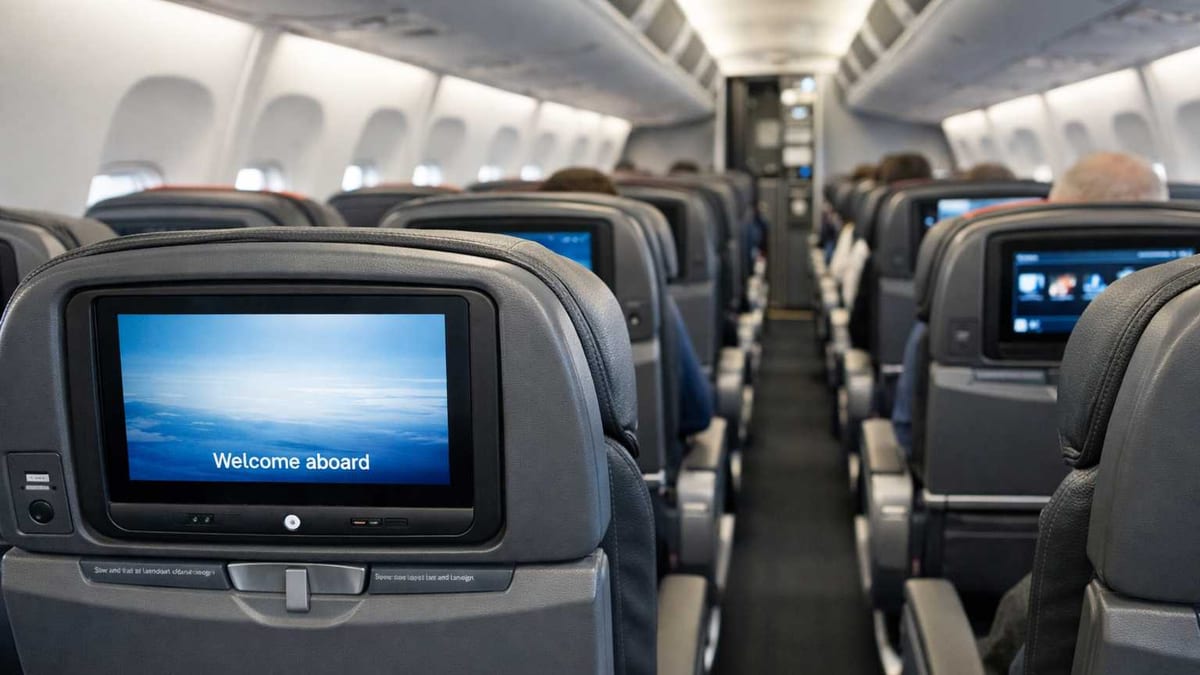
Retrofit programs focus on premium capacity
Recent investor materials indicate that American Airlines is in the middle of at least two major domestic retrofit programs on its Airbus A319 and A320 fleets, with the explicit aim of increasing the share of premium seating on board. Executives have described the strategy as creating a greater “premium seat preponderance,” aligning the cabin layout more closely with demand for first, business and extra-legroom products on key routes.
The narrowbody refits build on earlier long-haul projects that introduced Premium Economy cabins on Boeing 777 and 787 aircraft and set the stage for new Flagship Suite business-class products on incoming Boeing 787-9 and Airbus A321XLR deliveries. Publicly available information shows that the new long-haul layouts will trade some standard economy rows for higher-yield premium cabins, continuing a trend already visible on international routes.
While legacy “Project Oasis” configurations drew criticism for compressed legroom and densified cabins, current retrofit plans appear to emphasize a different mix, keeping overall seat counts competitive while carving out more space for premium and extra-legroom products. Industry analysis suggests this approach is designed to capture revenue from frequent flyers who increasingly expect at least a modest upgrade in comfort, even on shorter flights.
The shift toward more premium capacity also reflects changing booking patterns after the pandemic, with more travelers willing to pay for upgraded seating on domestic and transcontinental routes. Reports indicate that American is seeking to match that demand with a cabin structure that offers clearer step-ups in comfort and service, from Main Cabin to extra-legroom, Premium Economy and lie-flat business class.
High-speed connectivity extended across mainline and regional jets
American Airlines has spent several years standardizing high-speed satellite Wi-Fi across its mainline narrowbody fleet, and recent announcements point to a similar push on regional aircraft. According to published coverage, nearly 300 dual-class regional jets are already equipped with gate-to-gate satellite connectivity, with the remainder of the dual-class regional fleet slated to follow by early 2026.
Once complete, the carrier is expected to offer high-speed connectivity on more aircraft than any other United States airline, including smaller regional jets that historically lagged behind in cabin technology. Newer systems are designed to support streaming, messaging and basic work tasks, making regional hops more consistent with the experience on larger mainline aircraft.
American has also introduced options for customers to redeem loyalty miles for in-flight Wi-Fi on selected services, tying connectivity more closely to its AAdvantage program. Public information shows that the airline is experimenting with different pricing models, including day passes and device-specific subscriptions, as it works to balance revenue from onboard sales with competitive pressure from rivals that offer complimentary access on some routes.
For travelers, the combination of more premium seating and broadly available high-speed Wi-Fi means that aircraft type may matter less when it comes to productivity and entertainment. The goal, according to airline statements cited in industry reporting, is to create a more uniform experience whether a trip is operated by a large Boeing 787 or a smaller regional jet.
New cabins debut with Flagship Suite and upgraded Premium Economy
The next phase of American’s premium push will be visible on its incoming Airbus A321XLR and Boeing 787-9 aircraft, which are set to introduce a new Flagship Suite business-class product and an updated Premium Economy cabin. According to aircraft interiors coverage, these jets will feature fully enclosed business-class suites with privacy doors, alongside refreshed Premium Economy seats with enhanced privacy, personal-device storage and power.
In Premium Economy, published materials highlight wider seats, more generous recline and upgraded soft products, including enhanced bedding and amenity kits on long-haul routes. The cabins are expected to sit between business class and Main Cabin Extra, providing a middle option for long flights where travelers may not wish to pay for a lie-flat seat but still value added personal space.
Onboard technology is also central to the new designs. The latest cabins will offer 4K-capable personal screens in premium sections and seat power at every position, with high-speed Wi-Fi positioned as the backbone for streaming entertainment and personal devices. Rather than relying solely on embedded entertainment systems, American is leaning into a hybrid model that assumes most passengers will connect their own phones, tablets or laptops.
These aircraft are intended for long transcontinental and transatlantic missions, where premium demand is strongest and where competitors have also invested heavily in upgraded business and premium economy products. The rollout of the new cabins is expected to influence future retrofit decisions on existing widebody jets as American works to harmonize the onboard experience.
Upgrade rules evolve as premium cabins expand
As American Airlines adds more premium seats, the way those seats are sold and upgraded is also changing. Recent coverage of AAdvantage program updates shows that travelers now earn miles and status-qualifying credit when paying cash to upgrade, integrating buy-up offers more directly into the loyalty ecosystem.
At the same time, American has begun refining complimentary upgrade policies on certain domestic routes, particularly where Premium Economy cabins are being added or expanded. Industry reports describe a more segmented approach in which separate upgrade paths may exist for moves from Main Cabin to Premium Economy, and from Premium Economy to business class, mirroring practices already common on long-haul international flights.
These changes mean that travelers may see more paid offers for extra-legroom and premium cabins both before departure and at check-in, as the airline seeks to maximize revenue from its expanded inventory of higher-end seats. Complimentary upgrades for elite members remain part of the proposition, but the growing number of differentiated cabin types creates a more complex hierarchy of who sits where when flights depart with unsold premium capacity.
For frequent flyers, the net effect of more premium seats can be positive, but the benefit depends on how aggressively those seats are marketed for sale. Analysts note that as airlines densify cabins with additional premium rows, the balance between rewarding loyalty and protecting fare integrity becomes more delicate, a dynamic American’s evolving policies appear designed to manage.
Competitive landscape drives onboard investment
American’s renewed focus on premium seating and Wi-Fi comes amid a broader race among major United States carriers to court high-yield travelers with upgraded onboard experiences. Rivals have rolled out new business-class suites, expanded extra-legroom offerings and in some cases introduced complimentary messaging or full-flight Wi-Fi, prompting American to sharpen its own value proposition.
Publicly available commentary from airline executives underscores four key pillars behind the current strategy: premium products, corporate and high-value leisure demand, a network focused on profitable hubs and a consistent customer experience. Adding more premium seats, modernizing cabins and ensuring reliable high-speed connectivity fit directly into that framework.
For destinations that rely on American’s network, particularly hubs and key business markets, the retrofit and Wi-Fi expansion programs signal continued investment in aircraft that serve both domestic and international travelers. As new aircraft enter service and older jets are refitted, passengers can expect to see more flights marketed with distinct Premium Economy cabins, upgraded business-class suites and advertised high-speed Wi-Fi, turning the cabin itself into a central part of the airline’s pitch.
The full impact of these upgrades will depend on how quickly aircraft cycle through refurbishment lines and how consistently the promised experience appears across routes. However, the direction of travel is clear: American Airlines is betting that more premium seats, paired with fast and widely available Wi-Fi, will be key to competing in the next phase of global air travel recovery.