


More news on this day
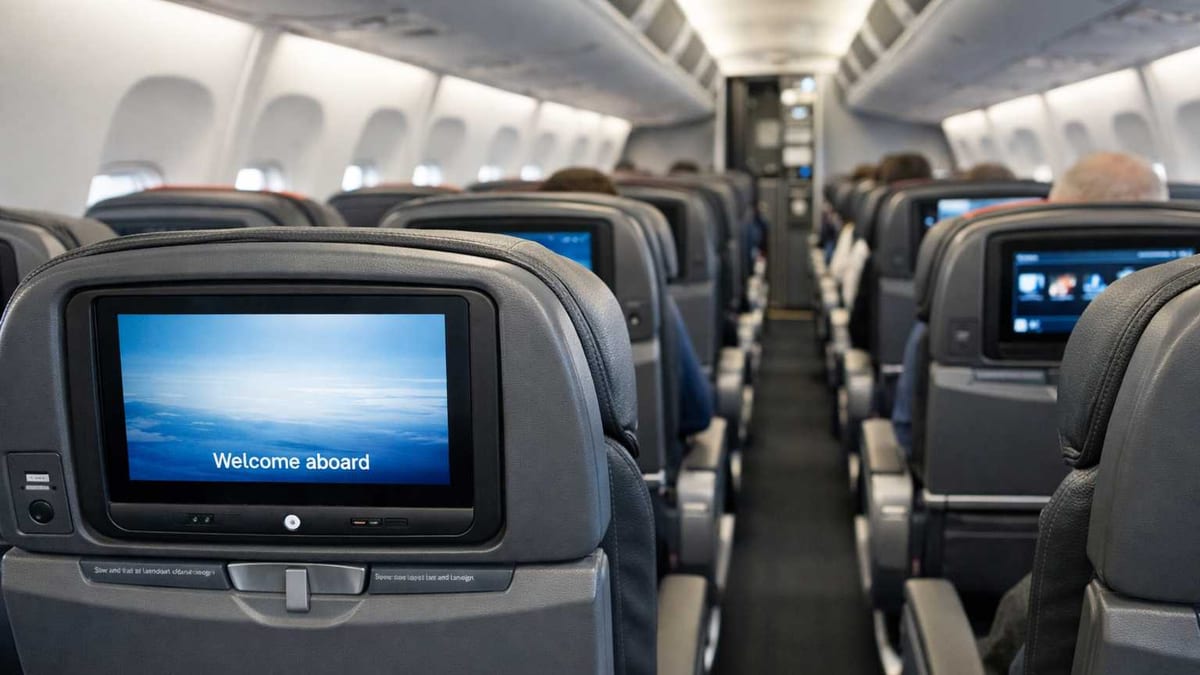
American Airlines is preparing to reverse years of cost-cutting on in-flight entertainment by bringing back seatback screens across parts of its fleet, part of a wider premium strategy aimed at regaining ground with travelers who have defected to rivals offering more robust onboard amenities.
Get the latest news straight to your inbox!
A Strategic Reversal After a BYOD Bet
For much of the past decade, American Airlines championed a bring-your-own-device model for in-flight entertainment on domestic and shorter international routes, betting that passengers would prefer to stream content on their own phones and tablets. The approach aligned with a broader industry trend toward lighter cabins and lower fuel burn, as airlines removed heavy in-seat systems in favor of Wi-Fi based streaming platforms.
Publicly available information shows that American removed most of its legacy seatback systems from narrowbody aircraft and promoted its browser-based entertainment portal instead, even as competitors such as Delta Air Lines and United Airlines invested heavily in new-generation screens. Travelers were encouraged to download content before boarding or connect to onboard Wi-Fi to access movies, television shows and live TV on personal devices.
In recent years, however, sentiment among many frequent flyers has shifted. Online discussion forums and passenger feedback highlight frustration with the inconsistency of the streaming experience, battery anxiety on longer flights and the perception that the absence of screens signals a cut-rate product on a carrier that still markets itself as full service. Against that backdrop, the decision to restore integrated displays marks a notable course correction for the largest U.S. airline by fleet size.
The move also reflects a larger rethink within the industry about what constitutes a premium cabin experience. While high-speed connectivity is now considered a baseline feature, many travelers have come to see high-resolution, responsive seatback screens as a visible marker of quality, particularly in premium cabins where tickets command a significant fare premium.
New Premium Cabins Built Around High-Resolution Screens
American has been rolling out a new generation of long-haul interiors centered on its Flagship Suite, a business-class product debuting on Boeing 787-9 aircraft and future Airbus A321XLRs. Company statements and product materials describe suites with privacy doors, wireless charging, expanded storage and direct-aisle access, paired with 4K seatback displays in premium cabins and updated screens in premium economy.
On these aircraft, in-seat entertainment is positioned as an integral part of the overall product, with large-format, high-definition screens serving as both entertainment hubs and interfaces for service features such as seat controls and lighting. New 787-9 cabins that entered service in 2025 showcase this approach, with redesigned premium economy seats featuring upgraded headrests, power outlets and high-resolution monitors.
The reintroduction of screens is not confined to premium cabins alone. American has signaled that future retrofits of widebody aircraft will include refreshed seating and 4K-capable displays in the main cabin, along with Bluetooth connectivity and multiple charging options. This aligns the carrier more closely with global competitors that highlight universal access to in-seat entertainment as a standard feature, regardless of cabin.
By making screens a central element of its latest cabin designs, American is signaling that in-flight entertainment is once again a differentiator in its product strategy, rather than a cost center to be minimized. The airline’s recent modernization programs frame these investments as part of an “elevated onboard experience” designed to appeal to higher-yield business and leisure travelers.
Narrowbody Fleet to Gain Seatback Entertainment
The most striking shift for many U.S. travelers will be the planned return of seatback screens on American’s narrowbody fleet, which operates the bulk of its domestic network and a large portion of short-haul international flying. Reports indicate that the airline intends to equip upcoming narrowbody deliveries and retrofits with in-seat systems, effectively reversing its earlier decision to rely almost exclusively on streaming to personal devices for these aircraft.
While detailed retrofit schedules have not been fully disclosed, publicly available descriptions of cabin programs point to a phased rollout tied to broader interior upgrades. On single-aisle jets, new configurations are expected to include additional Main Cabin Extra seating, updated sidewalls and lighting, and redesigned premium cabins, with modern in-seat entertainment installed throughout most or all of the aircraft.
For passengers, the narrowbody change could be particularly significant on longer domestic routes and premium transcontinental services, where screens had become a key selling point for competitors. American has already committed to using its A321XLR aircraft on high-profile routes such as New York to Los Angeles and San Francisco, with those jets configured to feature seatback screens in both premium and economy cabins.
By restoring screens on narrowbodies, American narrows a competitive gap with rivals that have marketed fleetwide entertainment as a signature feature. It also creates a more consistent experience between domestic and international flights, reducing the likelihood that a traveler will step off a long-haul aircraft with state-of-the-art suites and screens only to connect to a domestic jet with bare seatbacks.
Pivot to Premium in a Crowded Market
The decision to reinvest in hardware-based entertainment is closely linked to American’s broader premium strategy. In earnings calls and investor presentations, the carrier has emphasized the importance of higher-margin premium cabins and loyalty-driven revenue, noting that frequent flyers and loyalty program members account for a substantial share of its premium cabin sales.
Industry observers view the latest cabin program as part of a “pivot to premium,” in which American seeks to upgrade its product to win back corporate contracts and high-spend leisure travelers who have gravitated toward competitors perceived as offering better onboard comfort and amenities. In that context, seatback screens are less about individual movie choices and more about signaling that the carrier is willing to invest in the overall travel experience.
This strategic recalibration comes amid intense competition in North America, where Delta and United have both invested in cabin modernization, high-speed connectivity and new in-flight entertainment platforms. Canadian and European airlines have also highlighted large-format seatback screens in their premium cabins as part of broader campaigns to court transatlantic and transpacific traffic.
By moving to align its hardware footprint with these competitors, American positions itself to argue that passengers no longer have to trade screens and comfort for schedule breadth or loyalty benefits. The challenge will be delivering the promised upgrades across a fleet that exceeds 1,000 mainline aircraft, while maintaining reliability and cost discipline.
Balancing Screens, Wi-Fi and Passenger Expectations
The return of seatback screens does not mean that American is abandoning its investment in connectivity and streaming. Instead, the airline appears to be pursuing a hybrid model in which high-speed Wi-Fi, personal device streaming and in-seat entertainment coexist. Public information about current and future cabins describes aircraft equipped with upgraded satellite-based internet capable of supporting browsing, messaging and, on some routes, full streaming.
In practice, that means passengers should be able to choose between using their own devices, which may offer greater personalization and familiarity, and the convenience of a dedicated screen that does not depend on battery life or personal hardware. For families and travelers juggling multiple devices, the combination could make longer flights more manageable.
At the same time, expectations are rising. Travelers who have experienced modern systems on other carriers increasingly anticipate large, responsive touchscreens, curated content libraries, Bluetooth audio pairing and minimal interruptions from announcements and advertising. As American brings back seatback screens, it will face pressure to ensure that its new systems feel contemporary rather than nostalgic.
How quickly the airline can complete its retrofits and how consistently the new product appears across routes will likely shape traveler perception over the next several years. For now, the commitment to reinstall in-seat entertainment marks a notable shift in strategy for a carrier that once argued that screens belonged on smartphones, not seatbacks.