


Walk into an American Express Centurion Lounge at a busy hub like Dallas Fort Worth or New York JFK and it feels a world away from the public terminal: baristas instead of food courts, spa-style showers instead of crowded restrooms, cocktails instead of plastic cups of soda. But in 2026, Centurion Lounges are no longer the only premium option in town. Capital One, Chase, Delta and others have raised the bar, while Amex has tightened access rules. After comparing Centurion Lounges against other top-tier airport lounges on multiple trips, here is how the experience really stacks up now.
Get the latest updates straight to your inbox!
Where Centurion Lounges Fit in Today’s Premium Lounge Landscape
When the first Centurion Lounge opened in Las Vegas in 2013, it redefined what a U.S. credit-card lounge could be. Instead of snack jars and basic bar service, travelers suddenly had sit-down meals designed by named chefs, competent cocktails and clubby, living-room decor. A decade later, the network has grown to roughly 30-plus locations worldwide and about 16 in the United States, including major hubs such as JFK, LaGuardia, Newark, Dallas Fort Worth, Miami, San Francisco, Los Angeles, Denver, Seattle, Las Vegas, Houston and Atlanta. That reach means many frequent travelers with the American Express Platinum Card can realistically plan routings around Centurion access.
At the same time, rivals have caught up. Delta’s Sky Clubs at hubs like Atlanta and Seattle now feel almost as polished, with vast footprints and strong buffet offerings. Chase Sapphire Lounges by The Club, which you can access with a Chase Sapphire Reserve, have opened in Boston, New York LaGuardia and Hong Kong, with more announced. Capital One Lounges, currently in airports such as Dallas Fort Worth, Denver and Washington Dulles, lean heavily into high-quality food and grab-and-go options. On top of that, Priority Pass, often bundled with premium cards from Chase, Amex and Capital One, offers access to more than a thousand independent lounges worldwide.
The result is that American Express no longer competes in a vacuum. For a traveler deciding whether to pay hundreds of dollars in annual fees for a Platinum or Centurion Card, the Centurion Lounge network must be evaluated against these alternatives, not just against the chaos of the main terminal. The context also matters: a Centurion Lounge at a crowded hub on Monday morning can feel very different from a quiet Capital One Lounge in Denver on a Tuesday evening.
The other change in 2026 is a clear shift toward crowd control. Amex has introduced or tightened time limits and guest rules for Centurion Lounges, similar to access clampdowns at Delta Sky Club and other networks. In practice, that means the quality of the lounge itself is only half the story. The ease of getting in, and how long you can stay, is now equally important.
Access Rules, Guest Policies and the 5‑Hour Question
To enter a Centurion Lounge in 2026, most travelers rely on the American Express Platinum Card, Business Platinum Card, or the invite-only Centurion Card. These cards typically grant complimentary entry to the cardholder, with guesting privileges subject to evolving rules. Recent changes mean that standard Platinum cardholders usually pay a per-person fee for adult guests unless they meet a high annual spend threshold on the card, at which point a limited number of complimentary guests may be unlocked for the rest of that year and the next. Families should factor this pricing in, because a couple of paid guest visits on each trip can quickly erode the value of the annual fee.
One of the most talked-about policy shifts has been Amex’s time limits. Historically, passengers could only enter a Centurion Lounge within three hours of a scheduled departure, unless they were in transit on a layover. In 2026, American Express has begun rolling out stricter variations of this rule at U.S. and select international locations. In some cases, travelers on layovers are limited to accessing the lounge within about five hours of their connecting departure time. Online forums are filled with real-world stories of passengers on long, irregular layovers being turned away because their onward flight fell outside that allowed window, even though they technically remained airside.
Guest requirements have tightened as well. In several locations, guests must now be flying on the same itinerary or at least the same departing flight as the primary cardholder. That might not matter for a solo business traveler, but it does affect groups. For example, a cardholder who used to bring a colleague departing on a later flight from the same airport may now find that only those on their own flight are allowed in as guests. For families, this usually does not change much if everyone is on one booking, but it can complicate plans when teens or adult children are ticketed separately.
Compare that to competing products. A Capital One Venture X cardholder can typically bring a generous number of guests for free into Capital One Lounges, though the footprint is still small. Chase Sapphire Reserve grants access to Sapphire Lounges with up to two guests, while also bundling Priority Pass with restaurant credits at some airports. Delta Sky Club has introduced its own entry limits for Amex Platinum holders, capping visits per year and restricting access during peak hours. In this environment, Centurion Lounges are neither uniquely generous nor uniquely restrictive; they are one more player trying to balance exclusivity and crowd control against packed travel demand.
Design, Atmosphere and Crowding: How Centurion Feels Now
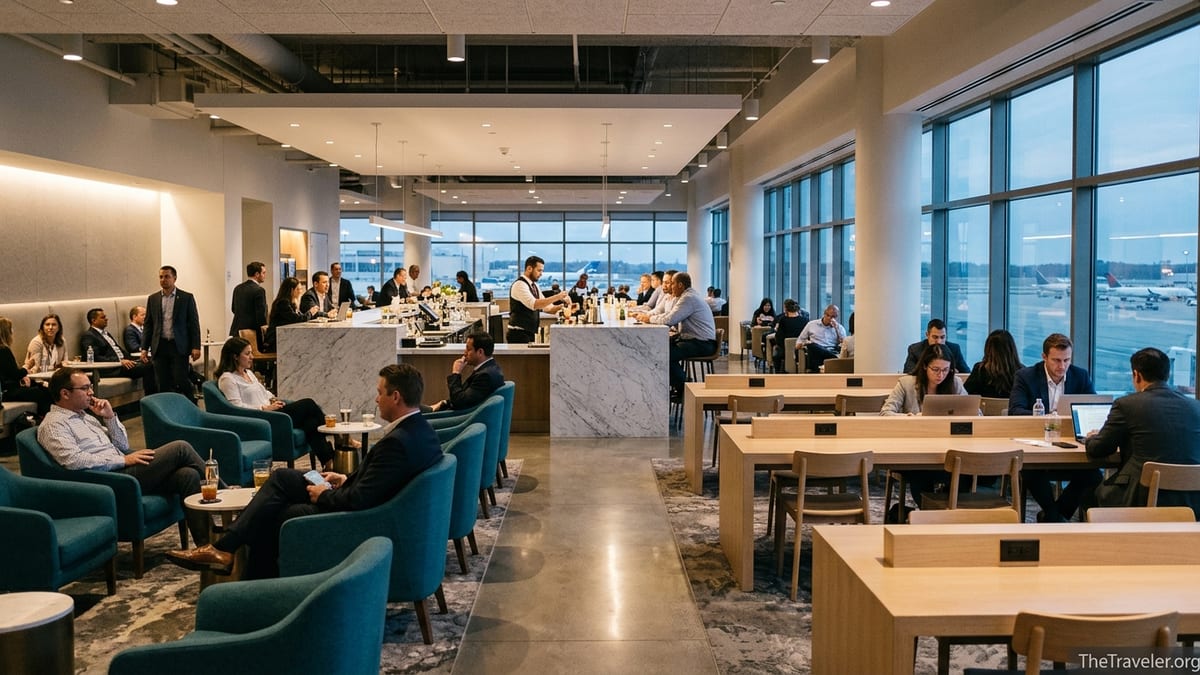
Walk into the Centurion Lounge at Dallas Fort Worth or Miami around midday and the design language is instantly recognizable: airy ceilings, a long polished bar, a mix of mid-century inspired chairs and sofas, and curated local artwork. The overall feel is closer to a boutique hotel lobby than to an airline club. Many locations, such as San Francisco and Seattle, offer large windows with runway or apron views, while newer lounges like New York LaGuardia emphasize natural light, plants and a lighter color palette.
In practice, however, crowding can dramatically change the experience. Regulars at hubs like Denver and Las Vegas report that by early morning bank departures, seats can be hard to find and food stations busy. In some airports, travelers queue outside the entrance as staff manage a one-in, one-out line. That undermines the sense of exclusivity and is one of the reasons Amex has leaned into tighter entry windows and higher requirements for free guests. Travelers comparing this to a newer Chase Sapphire Lounge or a lightly used airline club might legitimately find those competitors more peaceful.
By contrast, a mid-afternoon visit to the Centurion Lounge in Seattle or Houston can feel much more relaxed. There, passengers might find empty clusters of armchairs, quieter business corners and nap-friendly chaise lounges. The same lounge that felt like a hectic co-working space at 8 a.m. can feel like a peaceful living room at 2 p.m. The key for travelers is to understand their own patterns: if you tend to depart in peak morning or evening banks, you are more likely to feel the crowding pressure in Centurion Lounges.
Atmosphere also differs from competitors. Capital One Lounges often borrow from boutique co-working spaces, with polished concrete, big communal tables and well-marked quiet zones. Chase Sapphire Lounges emphasize understated luxury with darker woods, plush seating and a slightly more intimate feel. Delta Sky Clubs and United Clubs can vary widely by location, but new flagship clubs at hubs are often bright and modern. Against that backdrop, Centurion’s design still holds up, but its ubiquity and age at older locations mean it can feel less novel than the rivals that are designing lounges from scratch in 2024 and beyond.
Food, Drinks and Showers: Centurion’s Core Strengths
If there is one area where Centurion Lounges consistently outperform the typical airline club or Priority Pass facility, it is food and drink. Most locations feature hot, chef-designed buffets instead of the heavy carbs and basic salads that dominate many competitor spreads. In Miami, for example, travelers can often find Latin-inspired mains and sides that feel more like a neighborhood restaurant than a generic buffet. In San Francisco, seasonal vegetables and inventive salads are common. Many lounges, such as those in Las Vegas and Houston, offer rotating menus across the day so breakfast, lunch and dinner all feel distinct.
The bar program is another hallmark. Cocktails are generally crafted to order with real ingredients, and each lounge highlights a short list of signature drinks alongside a respectable wine and beer selection. Travelers used to pre-mixed drinks or house wines at an airline club often notice the difference immediately. That said, peak-hour waits of five to ten minutes for a drink at the bar are not uncommon in the busiest locations, especially before evening bank departures.
Showers are available in many Centurion Lounges and are a standout compared with the typical Priority Pass or U.S. airline club. After a red-eye into Dallas Fort Worth or a long-haul flight into New York JFK, being able to book a private shower room with hotel-grade towels and toiletries can transform the day. Realistically, slots are limited when several long-haul flights arrive around the same time, so it is wise to put your name down as soon as you enter. Travelers who rely on showers as a core part of their wellness routine should pay close attention to which airports and lounges actually offer them before deciding a card is worth the fee.
How does that stack up against the latest competitors? Chase Sapphire Lounges and Capital One Lounges have approached food with similar ambition. Chase’s location in Boston, for example, has drawn praise for an elevated breakfast service with fresh pastries and hot options that feel closer to a hotel brunch than to an airport cafe. Capital One’s Dallas Fort Worth lounge is known for grab-and-go refrigerators stocked with salads, sandwiches and cold brew, a model that is particularly appealing to travelers rushing to tight connections. In taste tests, road warriors tend to see Centurion as very good but no longer uniquely top of class across the board.
Real-World Trips: Centurion vs Delta Sky Club, Chase and Capital One
Consider a frequent flyer based in New York who holds both an Amex Platinum and a Chase Sapphire Reserve. On a JFK to Los Angeles trip in business class on Delta, they can choose between the Centurion Lounge in Terminal 4 and the Delta Sky Club nearer to their gate. If they have time to spare and want a proper meal and craft cocktail before a mid-afternoon departure, the Centurion Lounge is still a compelling destination. The tradeoff: it may be a longer walk and more crowded, especially if multiple international flights are leaving around the same time. For a quick snack and glass of wine close to boarding, the Sky Club can be the more practical, if slightly less special, choice.
On another itinerary, a traveler connecting through Dallas Fort Worth on American Airlines might face a different decision. If they hold an Amex Platinum and a Capital One Venture X, they can choose the Centurion Lounge or the Capital One Lounge, both located in the same airport. Many recent visitors have praised the Capital One Lounge for its quiet corners and to-go options, which suit tight domestic connections. On the other hand, the Centurion Lounge may have a more extensive hot buffet and a more social bar scene. The choice comes down to whether you want to sit down for a proper meal and cocktail or grab a boxed salad and coffee for the plane.
Internationally, the calculus changes again. A traveler flying from Hong Kong to the United States on Cathay Pacific with an Amex Platinum might compare the Centurion Lounge with Cathay’s own business-class lounges and independent Priority Pass options. In that context, the Centurion Lounge still provides a familiar, card-branded experience, but it may be overshadowed by flagship airline lounges that offer made-to-order dining or quiet work rooms. For many international trips, the real value of Amex’s Global Lounge Collection comes from Priority Pass and partner airline lounges, with Centurion serving as a high-quality supplement where present.
Finally, there is the question of expectations. Travelers who visit a Centurion Lounge for the first time often come away impressed, especially when upgrading from no-lounge travel. But seasoned frequent flyers who have recently spent time in a new Sapphire Lounge or a premium international airline lounge are more nuanced. They tend to describe Centurion as a very good product that is now part of a crowded field rather than as a clear, undisputed leader. For them, the value of Centurion access is often about coverage in specific home or connecting airports rather than absolute quality.
Is the Amex Platinum Worth It for Centurion Access Alone?
The American Express Platinum Card carries a high annual fee, and for many travelers the Centurion Lounge network is a major part of the justification. The right question in 2026 is not simply whether Centurion Lounges are good, but whether they are sufficiently better or more convenient than what you could access with rival cards. A traveler who flies frequently from airports with both Capital One and Chase lounges but without a Centurion, for example, may find more value in a Venture X or Sapphire Reserve. Conversely, someone based at an airport like Las Vegas, Houston or Seattle, where Centurion Lounges are prominent and alternative premium lounges are limited, can still extract significant benefit from Platinum or Centurion Card access.
Usage patterns also matter. If you often travel with family, paying guest fees at Centurion Lounges can add up quickly compared to the often more generous guesting policies on some competitor cards. It is not hard for a family of four taking three or four round trips per year to spend several hundred dollars on lounge guests, on top of the annual card fee. On the other hand, a solo consultant flying twice a month, usually at off-peak times, might see Centurion access as a consistently valuable upgrade over packed gate areas.
It is also worth remembering that the Amex Platinum is not just a Centurion Lounge card. It typically includes entry to a wide range of partner lounges worldwide through Priority Pass and other agreements, as well as limited access to airline-branded lounges like Delta Sky Clubs when flying eligible flights. Travelers who only look at Centurion value may underestimate the total lounge network at their disposal. However, those benefits only matter if they align with airports and airlines you actually use. A traveler who mostly drives to regional airports and flies low-cost carriers may not see sufficient lounge opportunities to justify the fee, no matter how impressive Centurion Lounges are on paper.
In the end, Centurion Lounges are a strong pillar inside a broader ecosystem of perks. As competitors launch their own high-end lounges and as Amex tightens access rules, the purely emotional glow of stepping into “the Amex lounge” is less of a differentiator. A rational traveler should price in the real-world frequency of visits, guest costs, time limits and the availability of alternatives before deciding whether an Amex Platinum or Centurion Card is worth it primarily for lounge access.
The Takeaway
American Express Centurion Lounges remain among the most attractive card-based airport lounges in the world, with reliably strong food and drink, thoughtful design and valuable amenities like showers and quiet workspaces. For many U.S.-based frequent travelers, especially those regularly passing through hubs like Dallas Fort Worth, Miami, Las Vegas or Seattle, they can still turn stressful travel days into more civilized experiences. The network’s breadth in key U.S. markets is a real advantage compared with nascent competitors that have only a handful of locations.
At the same time, the landscape has changed. New entrants such as Chase Sapphire Lounges and Capital One Lounges, along with upgraded airline clubs at major hubs, have narrowed the quality gap. In some airports, those competing lounges now match or surpass Centurion in ambiance, crowding control or culinary ambition. Amex’s own tightening of access rules, from stricter time windows to more restrictive guest policies, means that Centurion Lounges can sometimes feel less effortlessly welcoming than they once did.
If you already hold an Amex Platinum or Centurion Card and live near an airport with a Centurion Lounge, these spaces are still a compelling part of your travel routine. Use them intentionally: arrive early when it makes sense, take advantage of showers and real meals on long days, and be realistic about crowding at peak times. If you are shopping for a new premium card primarily for lounge access, weigh Centurion’s strengths against the specific alternatives in your home and frequent connection airports. In 2026, the best strategy for many travelers is not loyalty to a single lounge brand but a mix of cards and memberships that gives you options wherever your itinerary takes you.
FAQ
Q1. Who can access American Express Centurion Lounges in 2026?
Access is generally available to holders of qualifying American Express cards such as the Platinum, Business Platinum and Centurion Card, along with eligible same-day boarding passes. Some co-branded and international Platinum products may have different rules, so travelers should confirm access details with the issuer before relying on Centurion Lounges for a trip.
Q2. How early can I enter a Centurion Lounge before my flight?
Most Centurion Lounges limit entry to a window of a few hours before a scheduled departure time, and many locations now apply specific time caps even for passengers on layovers. The exact rules can vary by airport and are subject to change, so it is safest to expect a three-to-five-hour pre-departure window and to verify current policies shortly before you travel.
Q3. Are guests still free in Centurion Lounges?
In many cases, adult guests are no longer automatically free for standard Platinum cardholders, and a per-guest fee may apply. Some high-spend cardholders can unlock complimentary guest privileges after reaching a specified annual spending threshold. Families and groups should factor these costs into the overall value of holding an Amex Platinum or Centurion Card.
Q4. How does Centurion compare to Capital One and Chase Sapphire Lounges?
Centurion Lounges typically offer excellent food, strong cocktails and stylish design, but they can be crowded at peak times. Capital One and Chase Sapphire Lounges are newer and fewer in number, yet many travelers find their spaces quieter and their food programs competitive or even superior at specific locations. Your experience will depend heavily on the particular airport and time of day.
Q5. Is a Centurion Lounge better than an airline lounge like Delta Sky Club?
In terms of food and cocktails, Centurion Lounges often edge out standard airline clubs, especially older ones. However, new flagship airline lounges at major hubs can be just as impressive, and they are usually more conveniently located near departure gates. For travelers flying mostly on one carrier, a strong airline lounge network might be more practical day to day than a single Centurion location across the terminal.
Q6. Do all Centurion Lounges have showers?
No, not every Centurion Lounge includes shower suites, and availability can be limited during peak arrival times. Travelers who value showers after overnight or long-haul flights should check in advance whether their departure or arrival airport’s Centurion Lounge offers showers, and should request a shower room as soon as they enter the lounge.
Q7. What should I expect from the food and drinks in a Centurion Lounge?
You can generally expect a hot buffet with dishes designed by local or regional chefs, changing throughout the day, along with salads, desserts and snacks. Bars typically serve a mix of classic and signature cocktails, wines and beers. While individual dishes vary by location and time of day, the overall standard is noticeably higher than the simple snacks and basic bar service found in many older lounges.
Q8. Are Centurion Lounges good places to work during a layover?
Yes, many Centurion Lounges are designed with business travelers in mind, offering fast Wi-Fi, semi-private work nooks and plenty of power outlets. That said, during busy periods noise levels can rise and seating can be scarce, so travelers who need guaranteed quiet may prefer to arrive earlier in the day or use smaller, less crowded lounges when available.
Q9. How do Centurion Lounges fit into Amex’s wider Global Lounge Collection?
Centurion Lounges are the flagship spaces within American Express’s broader Global Lounge Collection, which also includes access to independent lounges and some airline-operated clubs around the world. For many international routes, especially outside North America, travelers may rely more on partner and Priority Pass lounges than on Centurion itself, with the card’s value coming from the combined network rather than any single brand.
Q10. Should I choose a credit card mainly for Centurion Lounge access?
Centurion Lounge access can be a major factor if you regularly travel through airports that have these lounges and you prefer their style and amenities. However, it should not be the only consideration. Weigh the card’s annual fee against how often you will actually visit Centurion Lounges, what you would otherwise spend on food and comfort at the airport, the cost of guest access, and the alternative lounges you could access with competitor cards.