


Amsterdam Airport Schiphol is one of Europe’s busiest hubs and, for many travelers, their first encounter with the Netherlands. In 2026 the airport is still recovering from the disruption and long queues that made headlines in recent years, but it remains a compact, well-connected gateway with excellent rail links, a wide range of services and a few quirks that first-time visitors should understand. This review focuses on what international travelers can realistically expect now, with concrete examples to help you plan smoother arrivals, layovers and departures.
Get the latest updates straight to your inbox!
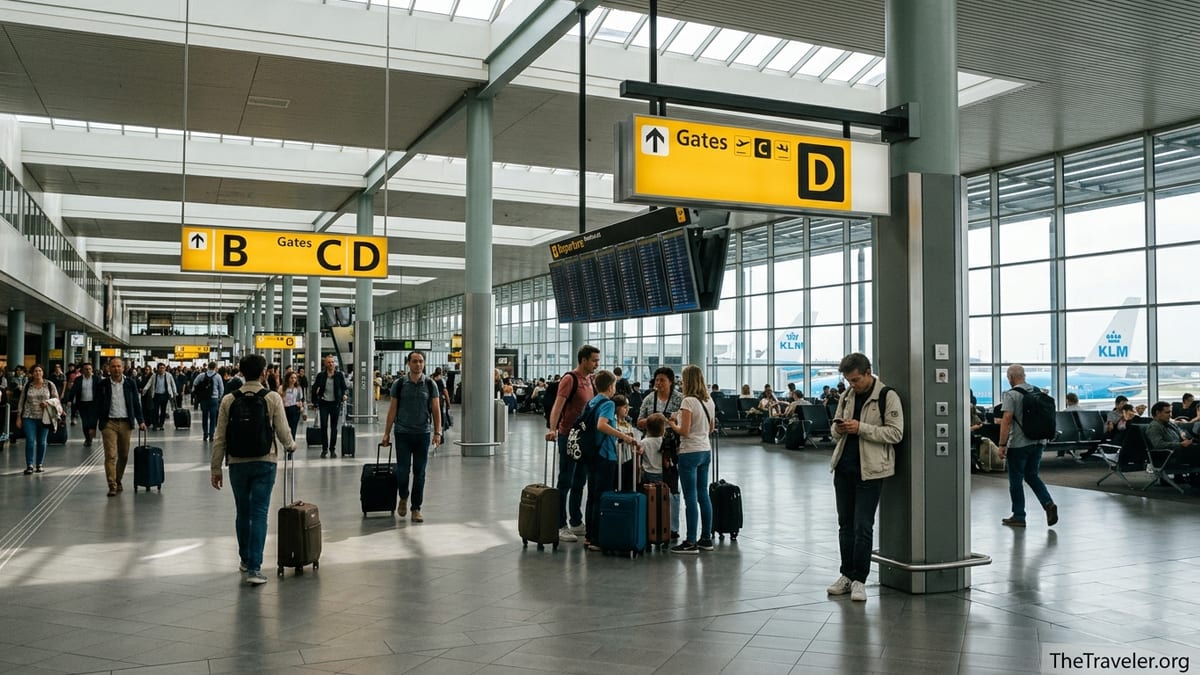
Layout, Terminals and First Impressions
Schiphol operates on a single-terminal concept, which means that all departure halls and piers are technically part of one connected building. In practice, you will see three main departure halls (1, 2 and 3) and several piers labeled B through M. This design is convenient for connections because you generally walk between gates instead of taking trains or buses between terminals, although walking distances can still be long, especially if you land at pier M for low-cost carriers and depart from one of the B or C gates.
Arriving passengers follow a straightforward path from the gate through a corridor to passport control, baggage claim and the central Schiphol Plaza. Signage is mostly visual, with the airport’s familiar yellow and black boards guiding you in English and Dutch. First-time visitors are often surprised that Schiphol Plaza is effectively a shopping mall and food court that also serves non-travelers, so it can feel busy even late in the evening. From this plaza you access trains, buses, taxis, car rentals and hotels such as the Sheraton and Hilton, which are connected by short covered walks.
One advantage of the single-terminal layout is that staying airside during a layover is usually easy. If you arrive from outside Schengen and connect to another non-Schengen flight, you typically remain in the same secure area, moving through a transfer security check but not Dutch immigration. Travelers connecting from non-Schengen to Schengen (for example, New York to Amsterdam to Rome) clear passport control at Schiphol before entering the Schengen gate areas.
For mobility-impaired travelers, the terminal provides step-free routes, elevators and moving walkways on the longer concourses. However, at peak times these can become crowded, and walking from, say, a G-gate arrival to a C-gate departure can easily take 20 minutes at a normal pace. If you know you need assistance, it is wise to request mobility support from your airline in advance so that airport staff can meet you at the aircraft door with a wheelchair or buggy.
Security, Passport Control and Current Queues
Security wait times at Schiphol have been an ongoing concern. The airport’s own updates in May 2026 still warn that security queues can be longer than usual on busy days and advise travelers to arrive about two hours before Schengen flights and three hours before non-Schengen departures. On peak summer weekends or during school holidays, that buffer remains realistic, especially in the middle of the day when many long-haul and holiday flights cluster.
That said, traveler reports in 2025 and 2026 suggest that the worst of the 2022-style chaos has largely passed. Recent accounts describe clearing both security and passport control in 15 to 30 minutes during off-peak hours, with some travelers moving through in under 10 minutes very early in the morning. Others, particularly those departing in mid-afternoon in July and August, still recount waits closer to an hour. The experience is clearly variable, which makes planning and using the tools Schiphol offers particularly important.
One of the most valuable tools is the free security timeslot system promoted on the Schiphol website and in the official app. International travelers on most airlines can reserve a timeslot for security screening, effectively giving access to a dedicated lane at a chosen time window. This can dramatically reduce uncertainty: for example, a traveler on a 14:00 non-Schengen departure might book an 11:30 to 12:00 security slot and aim to reach the airport by 10:45, balancing caution with efficiency. The airport also maintains priority lanes through airline status, business class tickets, and its own Privium membership program, but the free timeslot option is open to a much wider set of passengers.
Passport control is divided between traditional manned booths and automated e-gates. EU and some non-EU biometric passport holders can use the e-gates, which, when working smoothly, often take less than five minutes even when the general lines appear long. Non-EU travelers without biometric passports may face slower queues, especially when multiple wide-body arrivals land at once. If you are connecting on separate tickets and must recheck your bag, it is wise to allow at least 2.5 to 3 hours between flights to comfortably clear immigration, collect luggage, exit to the arrivals hall, re-check and go back through security.
Arrivals Experience and Baggage Claim
On arrival, Schiphol’s process is linear: disembark, follow the yellow “Arrivals” signs to passport control, then proceed to baggage reclaim and customs. The baggage hall has dozens of carousels grouped by zones, with overhead monitors clearly showing airline, origin city, carousel number and estimated delivery time. Recent travelers report typical bag delivery taking around 20 to 40 minutes after landing on intercontinental flights, although this can stretch longer if ground handling is under pressure during summer peaks.
If you are connecting on a single ticket and your bag is tagged through to your final destination, you normally do not see your luggage at Schiphol at all. You simply follow “Transfer” signs after leaving the aircraft, go through transfer security and, if required, passport control, then continue to your next gate. For travelers uncertain whether they need to collect bags, a practical example helps: if you fly from Toronto to Amsterdam on KLM and then Amsterdam to Berlin also on KLM or a SkyTeam partner on the same booking, your bag is checked through. If you fly from New York to Amsterdam on Delta on one ticket and then separately booked a low-cost flight to Lisbon on a different airline, you almost certainly need to collect and re-check your luggage.
Customs at Schiphol is usually a non-event for most visitors. After baggage claim, you walk toward “Nothing to declare” or “Goods to declare” channels, with Dutch customs officers performing occasional inspections. On a typical weekday morning, many passengers walk straight through without being stopped. Still, the Netherlands has strict rules on items such as large amounts of cash, animal products and plant materials, so it is worth checking current customs guidelines if you are carrying anything unusual.
For those facing long lines at passport control or baggage, Schiphol provides free Wi-Fi throughout the terminal, which is reliable enough for messaging, email checks and basic browsing. Many travelers use this time to download the Schiphol app, arrange an airport train ticket, or notify hotels of arrival delays. Seating in the baggage hall is limited, so if you expect a wait, it can be more comfortable to stand near a pillar rather than crowd the carousel edge.
Connections, Minimum Times and Airside Transfers
Schiphol is a major hub for KLM and its SkyTeam partners, which means a large proportion of passengers are connecting between international flights. Official minimum connecting times can be as low as 40 to 50 minutes for some Schengen-to-Schengen or Schengen-to-non-Schengen connections on a single ticket. In practice, many frequent flyers prefer at least 1.5 hours to feel confident, particularly when moving from one end of the terminal to the other or when Schengen passport control is required.
For example, a traveler arriving from Chicago at a non-Schengen E-gate and connecting to a short-haul flight to Munich from a Schengen B-gate will need to pass through passport control and transfer security. If the inbound flight is on time and they have around 90 minutes, this is usually comfortable, but a delay that cuts the gap to 45 minutes can feel tight. KLM and other hub carriers typically monitor such connections and can issue new boarding passes or rebook at transfer desks if a misconnection occurs, but separate-ticket travelers do not receive the same protection.
Within the non-Schengen zone, transferring between long-haul flights is often faster. A passenger arriving from Singapore and connecting to New York may only pass through a quick security check and walk between nearby G and E gates, potentially completing the transfer in 30 to 40 minutes. However, gates at Schiphol can change late in the process, so it is important to check the departure boards frequently and not assume that a boarding gate printed on an earlier boarding pass is final.
Overnight or long daytime layovers can be relatively pleasant by airport standards. Several airside lounges are available, from KLM’s Crown Lounges in both Schengen and non-Schengen areas to third-party options that sell day passes. There are also quieter seating areas, relaxation zones with reclining chairs and a small “airport library” concept equipped with books and airport views. While not luxurious, these spaces can make a four- or five-hour layover significantly more bearable than sitting at a crowded gate.
Getting to Amsterdam and Beyond
One of Schiphol’s greatest strengths is its rail station directly beneath the terminal. From Schiphol Airport station, frequent Intercity and Sprinter trains run to Amsterdam Centraal, typically taking around 16 to 18 minutes. In 2026, the popular Amsterdam Travel Ticket and similar passes allow visitors to combine this airport train ride with unlimited local public transport within Amsterdam for one to three days, often priced in the high teens to high twenties in euros depending on duration and options.
For a concrete example, a new arrival from the United States landing at 10:00 can usually clear immigration and baggage by around 11:00 if queues are moderate. From the arrivals hall they follow signs for “Trains” down an escalator into the ticket hall, where yellow ticket machines and NS service desks sell single tickets and day passes. They might choose a ticket product that covers Schiphol to Amsterdam Centraal plus trams and metros in the city, then board an Intercity service. If they catch the 11:15 train, they can realistically be stepping onto the platforms at Amsterdam Centraal by 11:35.
Beyond Amsterdam, Schiphol’s station is a national and international rail hub, with direct trains to Utrecht, Rotterdam, The Hague and cities in Belgium. High-speed services operated by NS International and partners offer connections towards Brussels and Paris, often requiring a reservation and potentially a surcharge. For travelers heading to Dutch cities like Leiden, Haarlem or Nijmegen, trains from Schiphol are usually faster and more convenient than renting a car, particularly given the Netherlands’ dense rail network and frequent service patterns.
Bus and taxi options are also available directly outside Schiphol Plaza. Airport express buses connect to areas of Amsterdam not served directly by rail, such as Museumplein or Leidseplein, taking roughly 30 to 45 minutes depending on traffic. Metered taxis queue in a dedicated rank, with fares into central Amsterdam typically falling in a broad range that is several times more expensive than the train but attractive for families with heavy luggage or late-night arrivals. Rideshare services operate under local regulations, and designated pickup points are well signposted.
Facilities, Food, Shopping and Services
Schiphol offers an extensive range of shops and food options both landside and airside. In Schiphol Plaza and the departure lounges you will find international chains and local brands: coffee bars, bakeries selling Dutch stroopwafels, sandwich counters, sushi bars, and sit-down restaurants with table service. Prices are typical for a major European hub airport, with a basic coffee often in the low single digits in euros and a casual sit-down meal or main course often moving into the mid-teens.
Duty free shopping focuses heavily on cosmetics, fragrances, liquor and Dutch specialties such as cheese and chocolate. Electronics stores sell travel adapters, headphones and mobile accessories at airport mark-ups, while fashion boutiques stock mid-range to premium European brands. For a traveler on a quick layover, it is entirely possible to pick up a SIM card, a local transit card, a small gift and a bite to eat within 45 minutes between flights, provided security and passport lines are not too long.
Free Wi-Fi is available throughout the terminal. Speed is generally sufficient for streaming short videos, making voice calls and downloading large documents, though performance may dip at very busy gates. Many seats in the departure halls are equipped with power outlets or USB charging points, though these can be in high demand around popular departure times. Bringing a small power strip or multi-USB charger can be helpful if you have several devices and find only one outlet free.
Other services include prayer rooms, baby care facilities, showers in some lounges and a few paid-use rest areas. There are also on-site hotels such as the YOTELAIR and Mercure airside, and larger hotels like the Sheraton and Hilton landside but directly connected to the terminal. These are particularly useful for early-morning departures, giving travelers the option to wake up and be at check-in within minutes instead of navigating early trains from the city.
Pros, Cons and Who Schiphol Works Best For
For international travelers, Schiphol’s main strengths are its integrated rail station, single-terminal design and relatively human-scale layout compared with some mega-hubs. The fact that you can land, clear formalities and be in the center of Amsterdam in under an hour is a major advantage, particularly for short city breaks or business trips. The broad range of shopping and dining options, combined with lounges and quiet spaces, makes moderate layovers manageable and sometimes even pleasant.
On the downside, the airport still grapples with fluctuating security and passport control queues, especially during summer peaks and holiday periods. While the free security timeslot system and real-time information in the Schiphol app have improved predictability, they require some advance planning and awareness that not every traveler has. Walking distances between certain piers can also be longer than first-time visitors expect, and the non-Schengen M pier in particular can feel isolated, with fewer services than the main concourses.
Schiphol tends to work particularly well for travelers who are comfortable with public transport and light to medium luggage. A solo traveler or couple arriving from overseas and heading into Amsterdam by train will usually find the experience efficient and straightforward. Families with young children, older travelers with mobility challenges or those hauling multiple large suitcases may find aspects of the journey more tiring, especially if they arrive at a peak time and face longer queues or long walks between gates.
Travelers who value predictability should make full use of the tools available: checking expected busy periods on the Schiphol website, allowing generous connection times on separate tickets, reserving security timeslots and budgeting time to walk between distant gates. With these precautions, Schiphol can be a reliable and user-friendly hub. Without them, especially during high season, the same airport can quickly feel crowded and stressful.
The Takeaway
In 2026, Amsterdam Airport Schiphol offers a mixed but generally positive experience for international travelers. Its greatest asset remains the combination of a single, walkable terminal and a rail hub directly underneath, making onward journeys across the Netherlands and into Amsterdam especially simple. Public transport integration and amenities are strong, and the range of services airside and landside rivals that of any major European hub.
The main lingering weakness is variability in security and passport control waiting times. On some days, travelers breeze through in minutes; on others, queues can still stretch well beyond an hour, particularly around midday in peak seasons. For most visitors, this is manageable with sensible planning: arriving early, booking security timeslots where possible, and accepting that occasional delays are part of the modern airport experience.
For first-time visitors to Amsterdam, Schiphol is unlikely to be the highlight of the trip, but it generally will not ruin it either. With realistic expectations, smart use of trains into the city, and an eye on queue forecasts, you can pass through the airport efficiently and focus your energy on the canals and museums rather than the security line. Viewed in that light, Schiphol remains a solid gateway to the Netherlands and a practical connecting hub for trips across Europe and beyond.
FAQ
Q1. How early should I arrive at Schiphol for an international flight?
For most long-haul and non-Schengen flights you should plan to arrive about three hours before departure, and around two hours for Schengen flights. In peak summer or during major holidays, consider adding an extra 30 minutes, especially if you need to check bags.
Q2. How long does it take to get from Schiphol to central Amsterdam by train?
The direct trains from Schiphol Airport station to Amsterdam Centraal usually take about 16 to 18 minutes. Including time to walk to the platforms and wait for the next train, most travelers reach central Amsterdam within 30 to 40 minutes of leaving the arrivals hall.
Q3. Do I have to go through passport control at Schiphol during a layover?
It depends on your route. If you are connecting from a non-Schengen country to a Schengen destination, you will go through passport control at Schiphol. If you are connecting between two non-Schengen flights on one ticket, you typically remain in the international transit area and only pass through security, not Dutch immigration.
Q4. Is Schiphol still experiencing very long security queues?
Extreme queues like those seen in 2022 are less common, but waiting times still vary. Many travelers report 15 to 30 minutes at security in 2025 and 2026, though busy periods can still see waits closer to an hour. Booking a free security timeslot and arriving early reduces the risk of delays.
Q5. What is the easiest way to get from Schiphol to my hotel in Amsterdam?
For most visitors, the train to Amsterdam Centraal combined with a tram, metro or short walk is the fastest and most economical option. Taxis are more expensive but convenient if you have heavy luggage, are traveling as a group or are arriving late at night when local public transport runs less frequently.
Q6. Are there good food and shopping options during a layover?
Yes, Schiphol has a wide range of cafes, fast-food outlets, sit-down restaurants and shops both before and after security. You can find everything from Dutch snacks and bakery items to international chains, as well as duty free stores, bookstores, electronics shops and fashion boutiques.
Q7. Is Schiphol a good airport for short connections?
Schiphol can work well for short connections, especially when both flights are on the same ticket and handled by KLM or a partner airline. However, because security and passport control times vary, many travelers prefer a buffer of at least 75 to 90 minutes rather than the absolute minimum connection times.
Q8. Can I sleep at Schiphol during a long layover?
Yes, there are airside hotels and rest areas where you can sleep during a long layover. Some lounges offer quiet zones with reclining chairs, and landside hotels connected to the terminal allow you to rest overnight and reach check-in quickly in the morning.
Q9. Is Wi-Fi free at Schiphol and is it reliable?
Free Wi-Fi is available throughout the terminal. It is generally reliable for messaging, streaming short videos and making calls, though speeds can slow at very busy times or crowded gates. You can usually connect without registration or with only basic details.
Q10. What should I do if I miss my connection at Schiphol?
If your flights are on a single ticket, go to your airline’s transfer or customer service desk in the terminal; they will usually rebook you on the next available flight. If you booked separate tickets, you will need to contact the airline or provider for your onward flight and may have to purchase a new ticket, so always allow extra time for such connections.