


Ask frequent flyers to name their preferred European hub and Amsterdam Schiphol Airport appears again and again. While London Heathrow, Paris Charles de Gaulle and Frankfurt handle similar volumes of traffic, many travelers will still route themselves through Amsterdam when they can. Their reasons are rarely abstract. Schiphol tends to be easier to navigate, better connected to the rail network and less stressful during tight connections. For travelers who value predictability and clear wayfinding over grand architecture, the Dutch hub quietly delivers.
Get the latest updates straight to your inbox!
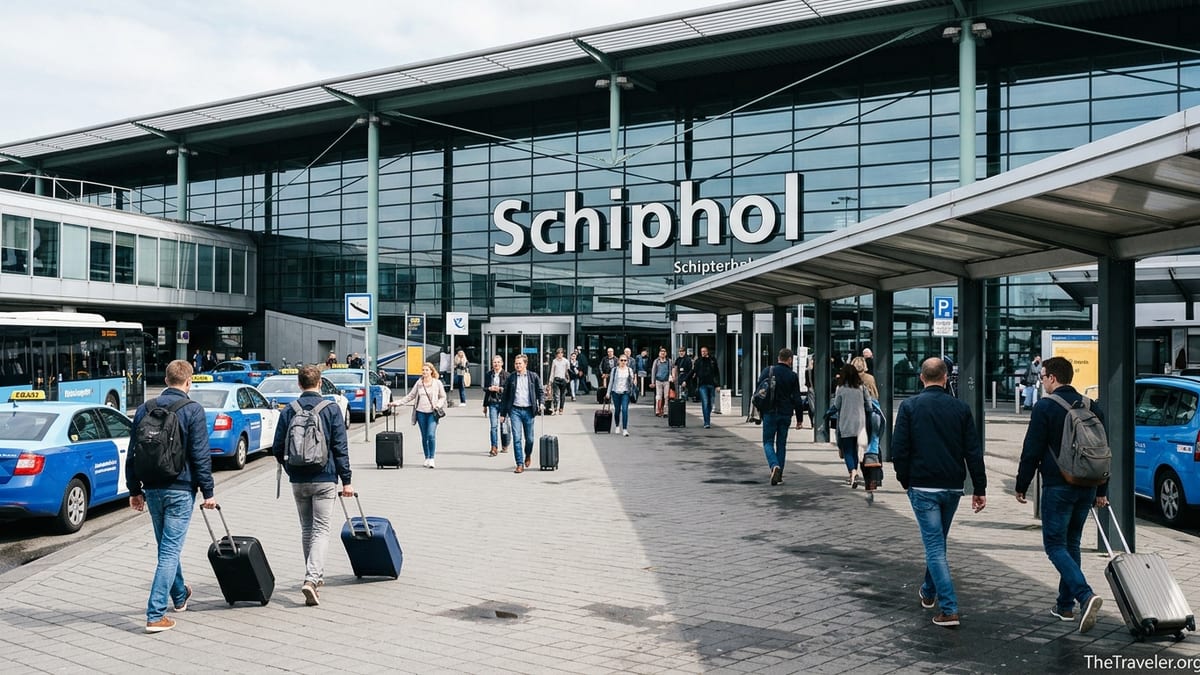
A Single-Terminal Layout That Feels Intuitive
One of the main reasons travelers prefer Schiphol is its “one terminal” concept. Instead of multiple disconnected terminals linked by buses or trains, Schiphol is essentially a single building with several departure halls and piers branching from a central plaza. All check in, security, retail and most lounges sit under one roof. For passengers used to the long transfers between terminals at Heathrow or Charles de Gaulle, the experience can feel refreshingly simple.
For example, a traveler arriving from New York on a KLM flight and connecting to a short hop to Berlin will typically remain airside and simply walk from one pier to another. There is no need to exit into landside, catch an internal train or bus, then clear security again. Wayfinding is straightforward: yellow signage is consistent throughout, and walking times between adjacent piers are often under 15 minutes, even at a relaxed pace.
This layout particularly appeals to those booking tight self-made connections. Travel advisors regularly steer nervous flyers away from hubs where a gate change can involve a terminal change, such as Paris Charles de Gaulle’s 2E to 2F shuffle or Heathrow’s T3 to T5 transfer. By contrast, at Schiphol most connections involve a single continuous walk through the same building, which reduces the cognitive load and the risk of ending up on the wrong shuttle or train.
The design has its limits when the airport is extremely busy, and peak-hour crowding is real. Yet even at busy times, passengers often comment that they at least understand where they are in relation to their gate, security and immigration. For many, that sense of orientation is a decisive advantage over more fragmented hubs.
Efficient Rail Links Right Under the Terminal
Schiphol’s rail station is directly beneath the main terminal. For travelers, this physical integration removes much of the friction involved in getting from runway to city or on to other parts of the Netherlands. Within minutes of exiting arrivals, passengers can be on an escalator down to the station concourse, buying a ticket or tapping in with a contactless card.
From Schiphol to Amsterdam Centraal, direct trains typically take about 15 to 20 minutes and run every few minutes throughout the day. Recent guides comparing transport options in 2026 report one-way standard-class fares to the city center that are still comfortably under 10 euros for adults, making it one of Western Europe’s cheaper airport-to-city train links. Trains continue late into the night, backed up by night services on weekends, which eases anxiety for passengers landing after 23:00 who might otherwise feel compelled to pay for a taxi.
The airport rail station is not just a city shuttle. Intercity and intercity direct services spread from Schiphol to other Dutch cities such as Rotterdam, Utrecht and The Hague, often in under 30 to 40 minutes. For a traveler landing from North America and heading straight to Rotterdam for business, the ability to walk from baggage claim to a fast train under the same roof is a compelling reason to choose Schiphol over hubs where a separate airport train or long metro ride is required.
Compared to airports like Frankfurt, where the long-distance station is in a separate complex, or London airports that require dedicated express services or slower commuter trains, Schiphol’s “everything under one ceiling” approach to air-rail integration feels more seamless. This is one of the core, concrete advantages that regular travelers cite when explaining why they will accept a slightly longer flight routing if it means connecting or arriving in Amsterdam.
Transit Friendliness and Forgiving Connections
Schiphol has developed a reputation as one of Europe’s more forgiving hubs for connections. That does not mean delays never happen or that lines never form at security. Rather, when things go wrong, passengers typically face fewer layers of uncertainty than at airports organized into multiple terminals. Once you are inside Schiphol’s secure area, almost all gates are reachable on foot without re-clearing security.
Travelers booking self-connect itineraries, mixing low cost and full-service carriers on separate tickets, often favor Schiphol for this reason. Independent guides that specialize in self-transfer consistently describe Schiphol as more manageable than other large hubs, noting that its combination of clear wayfinding, compact design and cohesive security processes makes missed connections less likely than at sprawling rivals. Many experienced travelers are comfortable at Schiphol with 2 to 3 hour self-connection windows that they would never risk at more fragmented airports.
For example, a budget-conscious traveler might book a morning Amsterdam arrival on a low-cost carrier followed by an afternoon long haul departure on a full-service airline. At some hubs, this would involve retrieving bags, exiting, changing terminal and reclearing security, with limited ability to predict how long each step might take. At Schiphol, self-connecting passengers still have to collect and recheck bags if flying on separate tickets, but the relatively compact landside layout means those steps are compressed into a smaller physical area. Once back through security, they are again within a single, contiguous departure zone.
The airport has also invested in redesigning transfer security and customs flows in recent years. Projects such as the One-XS transfer filter for non-Schengen passengers consolidated security screening for transfer travelers into a central location, with more seating, clearer queuing and visible staff. The practical effect is that a passenger arriving from, say, Dubai and connecting to a transatlantic flight can move from one long haul gate to another with fewer choke points than before, provided they follow the transfer signage correctly.
Connectivity and Airline Options With a Human Scale
By most connectivity metrics, Amsterdam Schiphol ranks among Europe’s top hubs. Industry reports in 2024 placed it as the second-best connected airport in Europe and within the top five globally for the number of destinations and the strength of its network. Schiphol has offered direct links to roughly 300 destinations worldwide, including a strong spread of secondary European cities and numerous North American, Asian, African and Middle Eastern routes.
This breadth of service, combined with its role as KLM’s primary hub and a core SkyTeam facility, gives travelers extensive options for one-stop itineraries. A traveler from a mid-size US city such as Austin or Portland might find that a one-stop journey to a smaller European capital is easier and sometimes cheaper via Amsterdam than via London or Paris. Delta’s joint venture with KLM provides numerous transatlantic flights, making Amsterdam a logical connection point for North American travelers loyal to those airlines.
Despite this dense connectivity, Schiphol can feel less overwhelming than some competitors. Its piers spread outward from a central spine rather than stacking terminals on multiple levels or clustering buildings in separate zones. This keeps walking distances within reason. For example, walking from a Schengen gate in Pier B to a non-Schengen long haul gate in Pier E may still take 15 to 20 minutes, but it is generally a straightforward route with continuous signage, rather than a series of mode changes.
Passengers also appreciate that the airport’s scale does not completely overshadow basic amenities. Waiting areas typically have abundant seating, and while outlets can be in demand at peak times, there are visible charging points in most concourses. For business travelers, this combination of network breadth and manageable human scale is one of the main reasons they repeatedly choose itineraries via Amsterdam.
Ground Services, Retail and Dutch Practicality
Inside the terminal, Schiphol leans into practical comforts more than theatrical architecture. Travelers often emphasize the reliability of its services rather than any one spectacular feature. Baggage trolleys are usually easy to find and, in most cases, free to use. Airport staff, from information desk agents to security officers, have earned past awards for service quality, and informal traveler reviews frequently highlight their direct but helpful communication style.
The central Schiphol Plaza, accessible before security, functions as both a shopping mall and a public transport hub. It includes supermarkets where passengers can buy reasonably priced snacks or a basic picnic before a train journey, alongside pharmacies, electronics stores and casual dining options. For many travelers this is a concrete, money-saving benefit compared to airports where almost all food and shopping inside the terminal is priced at a heavy premium.
Airside, the retail and dining offer strikes a middle ground between choice and efficiency. You will find familiar international coffee chains, Dutch bakeries selling freshly made sandwiches and stroopwafels, and bars pouring local beers. Prices are not cheap by local standards, but frequent flyers often note that a simple coffee and sandwich typically cost less at Schiphol than at some rival hubs in London or Scandinavia. In practical terms, this means a solo traveler can eat decently during a layover without feeling they have paid a luxury markup for every item.
Another small, real-world detail many travelers appreciate is the prevalence of places to sit or work without feeling obligated to purchase something. There are rows of standard seating at most gates, quiet corners in some piers, and, in newer or renovated areas, high tables with outlets aimed at laptop users. While the airport has also invested in paid lounges, including airline-branded and independent options, the baseline free environment is comparatively comfortable for economy passengers on long layovers.
Access to Amsterdam and the Wider Netherlands
Choosing Schiphol as a hub also unlocks easy access to Amsterdam itself. Because the airport is only about 9 kilometers from the city, travelers on longer layovers can realistically plan quick excursions into town. For example, a traveler with a 7- or 8-hour daytime layover can clear immigration, store their carry-on in a baggage locker at the airport, take the 15- to 20-minute train to Amsterdam Centraal, walk along the canals or visit a museum, then return to the airport with time to clear security again.
This sort of mini-stopover is much harder at airports located far from the city center or poorly connected by public transit. At Schiphol, the straightforward train ride reduces both cost and uncertainty. Rail services run frequently enough that travelers do not need to time their return precisely around an infrequent shuttle. Even outside Amsterdam, direct buses such as the Airport Express to Museumplein or the business district, and regional buses to cities like Haarlem, create options for those staying in the wider metropolitan area.
Travelers continuing by rail beyond Amsterdam also benefit from Schiphol’s position in the Dutch network. It is common for visitors to land in Amsterdam and travel immediately to cities such as Leiden, Utrecht or Groningen. Since long-distance and intercity trains depart from the same underground station used for the city-center trains, passengers simply choose the correct platform rather than dragging their luggage to a separate long-distance terminal.
Practically, this flexibility encourages some visitors to base themselves outside the capital while still using Schiphol as their gateway. A traveler might stay in Utrecht for a conference, for example, knowing that they can catch a direct train from the city’s central station back to the airport in around half an hour on departure day, without having to navigate city traffic or multiple transit changes.
How Schiphol Compares to Other Major European Hubs
When travelers say they prefer Schiphol over other European hubs, they are usually making an implicit comparison to airports such as London Heathrow, Paris Charles de Gaulle, Frankfurt and, increasingly, Istanbul. Each of these hubs has its strengths. Heathrow offers sheer volume of long haul flights, Charles de Gaulle is Air France’s powerful base, Frankfurt is central for Lufthansa and Star Alliance, and Istanbul has become an important bridge between Europe, the Middle East and Asia. Yet each also presents specific pain points that Schiphol addresses more elegantly for some passengers.
At Heathrow and Charles de Gaulle, terminal changes are a frequent source of anxiety. Passengers may need to take internal trains or buses, navigate multiple security zones and account for longer, less predictable transfer times. Frankfurt’s terminals are connected but still feel segmented, and wayfinding can be confusing for those unfamiliar with the airport. Istanbul’s new airport is vast, with long walking distances that can be challenging for travelers on tight connections or with limited mobility.
Schiphol is not free of delays or operational issues. In 2022, for instance, it experienced widely reported staffing shortages and long security queues, prompting local media and airlines to advise passengers to arrive hours earlier than normal. Travelers should be aware that no major hub is immune to such periods of strain, particularly during peak summer or holiday seasons. However, many passengers report that when operations are broadly normal, Schiphol’s physical layout and integrated train station still deliver a smoother, more predictable experience than they typically have at its closest competitors.
For specific itineraries, this practical difference can be decisive. A family flying from Chicago to Rome might find options connecting through both Amsterdam and another hub. If the fares are similar, the promise of a single-terminal connection and the option of a brief Amsterdam stopover on the return often pushes them toward Schiphol. Road warriors who travel weekly across Europe also build loyalty based not only on airline frequent flyer programs but on where they feel least stressed changing planes, and Amsterdam frequently tops their lists.
The Takeaway
Amsterdam Schiphol’s appeal as a European hub is rooted in practical details rather than headline-grabbing architecture. A compact, single-terminal layout reduces the complexity of connections. A rail station directly beneath the terminal offers quick, relatively affordable links to Amsterdam and other Dutch cities. Transfer security has been progressively streamlined, making tight yet realistic connection times possible for experienced travelers.
Combined with strong global connectivity, a culture of straightforward service and easy access to one of Europe’s most visited cities, these attributes make Schiphol a logical favorite for many frequent flyers. It is not perfect, and travelers should still allow sensible buffers during peak seasons, but for those who value clarity, predictability and human-scaled design, Amsterdam often feels like the most rational choice among Europe’s big hubs.
FAQ
Q1. Is Amsterdam Schiphol a good airport for short layovers?
Yes, Schiphol is generally well suited to short layovers because most gates are in a single terminal complex and transfers usually involve only walking and following clear signage. Many travelers are comfortable with official connection times of 60 to 90 minutes on a single ticket, though it is wise to allow more during busy holiday periods.
Q2. How long does it take to get from Schiphol to central Amsterdam?
Most travelers use the train from the airport station directly under the terminal to Amsterdam Centraal. The journey typically takes around 15 to 20 minutes, and trains run frequently throughout the day and evening, making it easy to reach the city without needing a taxi.
Q3. Is the train from Schiphol to Amsterdam expensive?
Compared with many other Western European airports, the train is relatively affordable. A standard one-way adult ticket in second class typically costs under 10 euros. This makes rail a cost effective choice, especially versus taxis, which can easily cost several times more for the same route.
Q4. Can I leave the airport during a long layover at Schiphol?
Yes, if your itinerary and visa status allow, you can leave the airport. With a layover of around 6 to 8 hours or more, many travelers take the train into Amsterdam for a short visit, then return in time to clear security and reach their next gate. Always factor in immigration queues and security screening when planning such an excursion.
Q5. Is Schiphol easier to navigate than Heathrow or Charles de Gaulle?
Many travelers find Schiphol easier to navigate because it functions as a single terminal with connected concourses, while airports like Heathrow and Charles de Gaulle are divided into multiple terminals linked by buses or trains. At Schiphol, transfers usually mean one continuous walk through the same building rather than a change of terminal.
Q6. How early should I arrive at Schiphol before my flight?
For most European flights, arriving about 2 hours before departure is typically sufficient in normal conditions. For long haul flights, 3 hours is a common recommendation. During peak seasons such as summer holidays or major events, airlines and the airport may advise arriving even earlier to allow for possible queues at check in and security.
Q7. What are the food and shopping options like at Schiphol?
Schiphol offers a mix of international chains and Dutch brands, with cafés, bakeries, bars and shops spread across both landside and airside areas. Travelers can find everything from quick takeaway snacks to sit down meals, as well as supermarkets in the Schiphol Plaza area where prices are closer to those in the city.
Q8. Are there good public transport options from Schiphol besides the train?
Yes, in addition to trains there are several bus routes that link Schiphol to Amsterdam districts and neighboring cities. The Airport Express bus is popular for reaching areas like Museumplein, and regional buses connect to towns such as Haarlem. Taxis and rideshare services are also available from designated stands outside the terminal.
Q9. Is Schiphol a good hub for traveling beyond the Netherlands?
Schiphol is one of Europe’s major hubs, with direct flights to hundreds of destinations worldwide. As KLM’s main hub and a key SkyTeam airport, it offers convenient one stop connections to many European, North American, Asian and African cities, which makes it an efficient transit point even if you are not staying in the Netherlands.
Q10. Has Schiphol had problems with crowds or delays in recent years?
Like many major airports, Schiphol has experienced periods of long queues and disruption, particularly during staffing shortages and peak travel seasons. However, outside those spikes, most travelers continue to report that its layout, rail connections and generally clear processes make it a smoother experience than several other large European hubs.