


Amsterdam Airport Schiphol is one of Europe’s busiest hubs and the home base of KLM, linking the Netherlands to more than 300 destinations worldwide. For many trips to and through Europe, you will have a choice: route via Schiphol or pick an alternative like Paris Charles de Gaulle, Frankfurt, or London Heathrow. This review takes a clear, current look at what Schiphol is like in 2026 and helps you decide whether it is the right airport for your next trip.
Get the latest updates straight to your inbox!
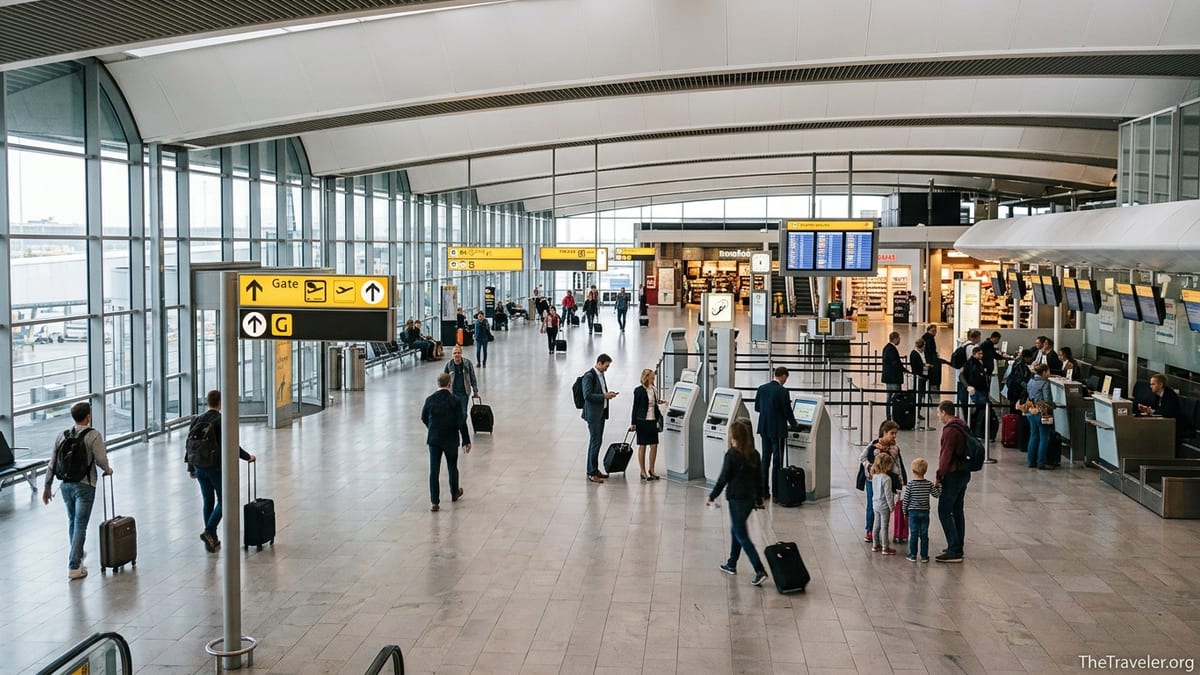
Airport Overview: What Schiphol Does Well and Where It Struggles
Schiphol is the main international airport of the Netherlands and ranks among Europe’s largest hubs by passenger numbers and connectivity. In 2024 it handled tens of millions of passengers and connected the country to roughly 300 destinations, placing it near the top of global connectivity rankings. The airport is a primary hub for KLM and its partners in the SkyTeam alliance, and also an important base for low cost carrier Transavia as well as a long list of European and intercontinental airlines.
The terminal layout is technically a single-terminal concept with multiple interconnected piers (B through H), which often makes connections feel simpler than at multi-terminal airports like London Heathrow. You can walk airside between Schengen and non-Schengen gates, with passport control in between but no need to shuttle between separate buildings. For a traveler changing from a KLM flight from New York to a KLM Cityhopper service to a smaller European city, that usually means a single airside walk, not a bus or train transfer.
In recent years, Schiphol has struggled with crowding and staffing, at times making headlines for long security lines and baggage issues. Those worst days have largely subsided, but signs of strain are still visible. On busy mornings or peak summer weekends, security wait times can stretch beyond the official guidance, which is generally to arrive about two hours before a Schengen flight and three hours before a long haul non-Schengen service. The airport has been working on improvements including extra security staff, better digital information, and free security time-slot reservations that help smooth demand.
At the same time, Schiphol is investing heavily in its future, with a new terminal planned for opening around 2027 and recent upgrades to piers, retail areas, and lounges. The result is a hub that can feel efficient and compact on a normal day, but still occasionally chaotic during disruptions or peak holiday weekends. Whether it is right for your trip will depend on how sensitive you are to queues and how much you value its strong route network and easy rail access to the rest of the Netherlands.
Getting To and From the City: One of Europe’s Easiest Airport Transfers
One of Schiphol’s biggest advantages is how straightforward and affordable it is to reach central Amsterdam and other Dutch cities. The airport’s railway station is directly underneath the main terminal complex. After you exit customs into Schiphol Plaza, escalators lead down to the station platforms, where Dutch Railways (NS) trains operate 24 hours a day. Intercity services to Amsterdam Centraal generally take about 15 to 20 minutes and run roughly every 10 to 15 minutes for most of the day.
A standard second class one way ticket between Schiphol and Amsterdam Centraal typically costs in the range of 5 to 6 euros in 2026 when bought as a regular ticket or e-ticket. Some fare products, such as Amsterdam Travel Ticket bundles, include the airport train plus unlimited city public transport for a day, which can be good value if you plan to use trams and metros extensively. Many travelers simply tap in and out with a contactless bank card or phone wallet at the ticket gates, avoiding ticket machines altogether.
For those staying in the museum district or around Leidseplein, the Amsterdam Airport Express Bus 397 is another practical option. It runs from Schiphol to stops near Museumplein, Rijksmuseum, and Leidseplein, typically taking 30 to 40 minutes depending on traffic. One way fares are usually around 6 to 7 euros. This can be more convenient than taking the train to Centraal and then a tram back to the museum district, especially if you are carrying bulky luggage.
Taxis from Schiphol to central Amsterdam usually cost roughly 40 to 55 euros depending on traffic and exact destination, with ride hailing apps like Uber commonly quoting similar or slightly lower pricing in the 35 to 50 euro range for standard cars. Travel time by road is typically 25 to 45 minutes. For budget conscious travelers or solo visitors, the train remains the standout choice. As an example, a couple arriving on an evening transatlantic flight might spend about 11 euros in total on train tickets to reach the city in under 20 minutes, compared with roughly 45 euros and potentially longer if they choose a taxi in rush hour.
Check In, Security, and Border Control: Queues Improving but Still Variable
Check in at Schiphol is divided across several departure halls, mostly under the same roof. KLM and SkyTeam partners dominate Departure Hall 2 and parts of Hall 1, while many low cost and leisure airlines operate out of Departure Hall 3. Most airlines open check in desks around two to three hours before departure for short haul flights and up to three to four hours for long haul. Self service kiosks and bag drop machines are common, especially for KLM, which allows most passengers to check in online or via its app and use automated bag drops.
Security has been Schiphol’s weak point in recent years. During 2022 and parts of 2023, some travelers saw multi hour waits, and images of queues stretching out of the terminal were widely shared. Conditions have improved since, with more security staff and better planning. The airport now encourages travelers to book a free security time slot in advance for many flights. With a time slot, you use a dedicated lane at the security area, which can significantly reduce waiting. On a normal day, many recent travelers report 10 to 30 minutes from joining the line to clearing security, though this can spike during peak holiday weekends or early morning waves.
Border control is split between Schengen and non-Schengen flows. For arrivals from outside Schengen, automated passport gates handle many EU and some non-EU biometric passports, while others use staffed booths. Wait times vary, but a common experience in 2024 and 2025 has been 10 to 30 minutes for most long haul arrivals, with occasional longer waits after banks of widebody flights arrive together. For Schengen area flights, there is no routine passport check on arrival, which makes intra-European travel through Schiphol relatively smooth.
Security rules at Schiphol currently follow the standard European limit of liquids in containers of 100 milliliters or less carried in a clear plastic bag, despite the installation of newer CT scanners at some checkpoints. Travelers who have read earlier reports about relaxed liquid restrictions should be aware that Schiphol has reverted to the traditional rules, and should pack carry on toiletries and drinks accordingly. You will also still need to remove larger electronics when instructed, although staff often give clear guidance in English and Dutch, and the process is generally efficient when staffing levels are adequate.
Connections and Transfers: How Schiphol Works as a Hub
For connecting passengers, especially those flying with KLM or partners such as Delta, Air France, or other SkyTeam airlines, Schiphol can be an efficient hub. Because the terminal is essentially one large building with multiple piers, most transfers involve walking rather than bus transfers between separate terminals. If your flights arrive and depart within the Schengen area, you will usually stay on the same side of passport control, passing only through security if required.
For intercontinental to European connections, expect to go through Schengen border control either on arrival or departure depending on your direction of travel. For example, a passenger flying from Chicago to Amsterdam and onward to Prague with KLM will land in the non-Schengen area, clear passport control, and then continue to a Schengen gate. Minimum connection times set by airlines are often around 40 to 60 minutes for Schengen to Schengen connections and somewhat longer for non-Schengen transfers, but many frequent travelers advise aiming for at least 90 minutes if you prefer a comfortable margin, especially during busy seasons.
Real world experiences vary but are often positive when flights are on time. Many travelers report walking times between typical KLM gates of 10 to 20 minutes, even when changing from a widebody pier like E or F to smaller regional gates on the B or C piers. Moving walkways help, and signage is generally clear in English. That said, late inbound flights or tight 45 minute connections can still be stressful, particularly if you must clear passport control with a long queue. For those unfamiliar with the airport, leaving at least one and a half to two hours for non-Schengen to Schengen connections is a safer choice.
Baggage handling performance has improved since the worst of the disruption years, but occasional delays and mishandled bags do still occur, as at any large hub. If you are booking separate tickets on different airlines that do not interline baggage, allow extra time to collect and recheck your bags landside. For instance, if you arrive from a low cost flight on an airline not partnered with KLM and then plan to check in again on a separate ticket, treat Schiphol like any other large airport and allow several hours between flights to clear immigration, collect bags, recheck, and pass security again.
Lounges, Food, and Amenities: What to Expect Inside
Schiphol offers a mix of airline, independent, and pay per use lounges. KLM operates two major Crown Lounges, one for Schengen flights (Lounge 25/26) and one large intercontinental lounge between piers E and F. These lounges provide seating, showers, work areas, and buffet food and drinks. Reviews in 2024 and 2025 often praise the scale and natural light of the non-Schengen lounge but are more mixed on food quality during peak times, with some travelers finding the options repetitive or crowded at mealtimes.
In 2024, independent lounge operator Swissport opened new lounges at Schiphol serving oneworld airlines and eligible premium passengers, adding options for travelers on carriers such as American Airlines and British Airways. There are also pay per use lounges accessible to travelers regardless of airline or cabin class, often located in the upper level shopping areas between piers. These can be useful if you have a long layover and no elite status but want a quieter space to work or rest.
Food and retail options in the departure areas are wide ranging. You will find the usual international chains for coffee and fast food, but also Dutch style sandwich counters, cheese shops, and stroopwafel stands. Prices are typical for a major European hub: a barista coffee might run 3 to 5 euros, a simple sandwich 5 to 8 euros, and a sit down meal at a midrange restaurant 15 to 25 euros per person excluding drinks. In practice, that means a family of four grabbing quick counter service meals before a flight could easily spend 50 to 70 euros, so budget accordingly if you are traveling with a group.
Other amenities include a landside public plaza with supermarkets and pharmacies, airside children’s play areas, workstations with power outlets, and free Wi-Fi throughout the terminal. The airport also houses a small branch of the Rijksmuseum that periodically displays rotating art exhibits airside, offering a pleasant break during a long layover. For jet lagged travelers looking to rest, there are some quiet zones and day rooms in nearby airport hotels connected by covered walkways, useful for long connections of six hours or more.
Comfort, Design, and Accessibility
Schiphol’s design reflects its growth over many decades, so some parts of the terminal feel more modern and airy than others. Newer or recently renovated piers have large windows and high ceilings, while a few older gate areas can feel low and crowded in peak periods. Seating has gradually improved, but at busy times it can still be hard to find spare chairs near power outlets, particularly around popular gates for long haul flights to North America and Asia.
Wayfinding is one of Schiphol’s strengths. Yellow and black signage is clear and consistent, with walking times to piers prominently displayed, which is helpful when you are trying to judge whether you have time to stop for food en route to your gate. Information screens are plentiful, and announcements are generally made in Dutch and English. Airport staff in bright vests or jackets roam the terminal and are usually proactive about helping confused passengers, for example guiding people to the correct passport control line when they accidentally queue in the wrong area.
For travelers with reduced mobility or families with strollers, the airport provides elevators, ramps, and dedicated assistance services that can be requested through your airline in advance. The relatively flat layout with few dramatic level changes makes navigation easier compared with some airports that rely heavily on escalators and trains. Still, walking distances can be significant, especially when your flight departs from a far end gate at pier G or H. In those cases, allowing extra time or arranging wheelchair assistance can prevent last minute sprints.
Noise levels and crowding vary by time of day. Early mornings and late afternoons tend to be busiest for European departures, while midafternoon often sees a wave of long haul departures. If you are sensitive to crowds and have flexibility, flying at midday or late evening can sometimes mean a quieter terminal. In practice, a traveler arriving on a late evening transatlantic flight in winter might find a fairly calm immigration hall and empty security lines, while someone departing on a Friday morning in July could face much busier conditions.
The Takeaway
Amsterdam Schiphol Airport offers a mix of strengths and weaknesses that will matter differently depending on your travel style. Its biggest advantages are its extensive route network, especially for KLM and SkyTeam travelers, and the excellent rail links directly under the terminal that make reaching Amsterdam and other Dutch cities simple and affordable. For many itineraries between North America and smaller European destinations, connecting through Schiphol can be one of the most convenient options in terms of schedules and walking-only transfers.
On the downside, Schiphol’s recent history of long queues and capacity strain means that patience and preparation are still required, particularly in peak seasons. While security and border control performance has improved, there remains variability, and tight connections in the 45 to 60 minute range can be nerve wracking if flights are delayed. Food and lounge offerings are solid but can feel crowded at rush times, and some parts of the terminal are showing their age while the airport works toward opening a new terminal later this decade.
If you value efficient rail access, a single terminal with clear signage, and strong connectivity on KLM or its partners, Schiphol is a sensible and often very practical choice. It is especially well suited to travelers who are comfortable booking reasonable connection times, using digital tools like security time slots, and navigating busy hubs. If your top priority is a calm, boutique style airport experience or you are extremely risk averse about delays, you might prefer smaller regional airports when possible, or schedule generous layover buffers when routing through Amsterdam.
In short, Schiphol is not perfect, but it remains one of Europe’s most useful gateways. For many trips it will be the right airport, so long as you approach it with realistic expectations, a bit of spare time in your schedule, and a clear plan for getting into town on arrival.
FAQ
Q1. How long before my flight should I arrive at Amsterdam Schiphol?
Most travelers should plan to arrive about two hours before departure for Schengen flights within Europe and around three hours before long haul non-Schengen flights. In peak summer or during school holidays it can be wise to add an extra 30 minutes, especially if you need to check bags or have not booked a security time slot.
Q2. What is the easiest way to get from Schiphol Airport to central Amsterdam?
The easiest and fastest option for most travelers is the NS train from Schiphol Airport station under the terminal to Amsterdam Centraal. Trains run roughly every 10 to 15 minutes, the journey takes about 15 to 20 minutes, and a one way ticket usually costs around 5 to 6 euros in second class.
Q3. How much does a taxi from Schiphol to Amsterdam city center cost?
Metered taxis from the official rank outside the terminal typically cost about 40 to 55 euros to central Amsterdam, depending on traffic and the exact location of your hotel. Ride hailing apps such as Uber often quote similar or slightly lower prices, generally in the mid 30s to mid 40s in euros for standard vehicles.
Q4. Is Schiphol a good airport for flight connections?
Yes, Schiphol works well as a hub, particularly for KLM and SkyTeam passengers. The single terminal layout means most transfers are walking only, without bus or train transfers between terminals. However, queues at security or passport control can add time, so it is sensible to allow at least 90 minutes for most connections and longer if you are changing between non-Schengen and Schengen flights.
Q5. Are the security lines at Schiphol still very long?
The extremely long lines seen in 2022 have largely eased, thanks to more staff and better planning, but wait times can still fluctuate. On a typical day many passengers clear security in 10 to 30 minutes, yet during peak holiday periods or early morning rush hours the lines can grow. Booking a free security time slot when available and arriving at the airport with recommended advance time helps reduce the risk of delays.
Q6. Does Schiphol still enforce the 100 milliliter liquid rule in hand luggage?
Yes. Despite having newer scanners in some areas, Schiphol currently follows the standard European rules that limit containers of liquids, gels, and aerosols in hand luggage to 100 milliliters each, placed together in a transparent plastic bag. Travelers should pack carry on toiletries accordingly and be prepared to remove liquids and some electronics during screening when instructed.
Q7. What lounge options are available at Amsterdam Schiphol?
Schiphol has multiple lounges, including KLM Crown Lounges for Schengen and non-Schengen flights, alliance lounges for carriers such as oneworld members, and several independent pay per use lounges. Access depends on your airline, cabin class, and frequent flyer status, but travelers without status can usually buy access to at least one independent lounge for a fee if they have a long layover and want a quieter space.
Q8. Is Schiphol suitable for families traveling with children?
Yes, Schiphol offers family friendly facilities such as children’s play areas, baby care rooms, and a generally flat, stroller friendly layout. The direct train to Amsterdam also makes arriving with kids easier than at many airports. However, because the terminal can become crowded at peak times, it is helpful for families to arrive early, allow extra time to move between areas, and bring snacks in case queues are longer than expected.
Q9. Can I easily visit Amsterdam during a long layover at Schiphol?
Often yes. With the direct train taking only about 15 to 20 minutes to Amsterdam Centraal, many travelers with at least six or seven hours between flights can comfortably go into the city for a short visit. You will need to factor in time for passport control if you are arriving from outside Schengen, as well as security checks on your return, but a relaxed walk along the canals or a quick museum visit is realistic on a daytime layover of sufficient length.
Q10. Is Amsterdam Schiphol the right airport choice for my trip?
Schiphol is usually a strong choice if you value good flight options on KLM and its partners, want an easy train link into Amsterdam, and do not mind navigating a busy major hub. It may be less ideal if you are extremely sensitive to crowds, have very tight connections, or prefer smaller airports with a quieter atmosphere. In many cases, weighing your schedule, budget, and connection times will show that Schiphol’s convenience outweighs its occasional congestion.