


Amsterdam Airport Schiphol is one of Europe’s busiest hubs and a common connection point between North America, Europe, Africa and Asia. For many travelers, that means facing layovers of six, eight or even fourteen hours and wondering whether Schiphol is a smart place to spend that time. The answer depends less on the airport’s size and more on your priorities: rest, budget, sightseeing or simple convenience.
Get the latest updates straight to your inbox!
Schiphol at a Glance: A Major Hub Built for Connections
Schiphol is the main international airport of the Netherlands and a primary hub for KLM, with extensive connections across Europe, North America and Asia. Its single-terminal design is spread across multiple piers, so you technically stay inside one interconnected building even when changing from a Schengen to a non-Schengen flight. For long layovers this matters, because you can walk between most gates without taking trains or buses inside the airport.
For connecting passengers, Schiphol generally has efficient wayfinding: yellow signage, clear pier letters and walking time estimates between zones. Travelers report that standard connections of 60 to 90 minutes are usually achievable if flights are on time. For a long layover, this compact layout means you can roam freely between lounges, shops, food courts and relaxation areas without worrying about crossing between terminals or re-clearing security multiple times.
The airport has endured crowding and staffing issues in recent years, but by 2026 day-to-day operations have largely stabilized. Security and passport queues can still build at peak morning and late-afternoon bank times, yet off-peak periods see a comparatively calm terminal. For someone with six or more hours to spare, this translates into enough breathing room to find quieter corners, explore facilities, or even leave the airport altogether and return without a frantic rush.
What sets Schiphol apart from some competitors is the combination of airside rest facilities, a direct rail link underneath the terminal and a broad range of airport hotels within walking distance. Those ingredients together can make a long layover surprisingly productive or relaxing, provided you plan your time around your energy level and arrival hour.
Comfort and Sleep: How Rest-Friendly Is Schiphol?
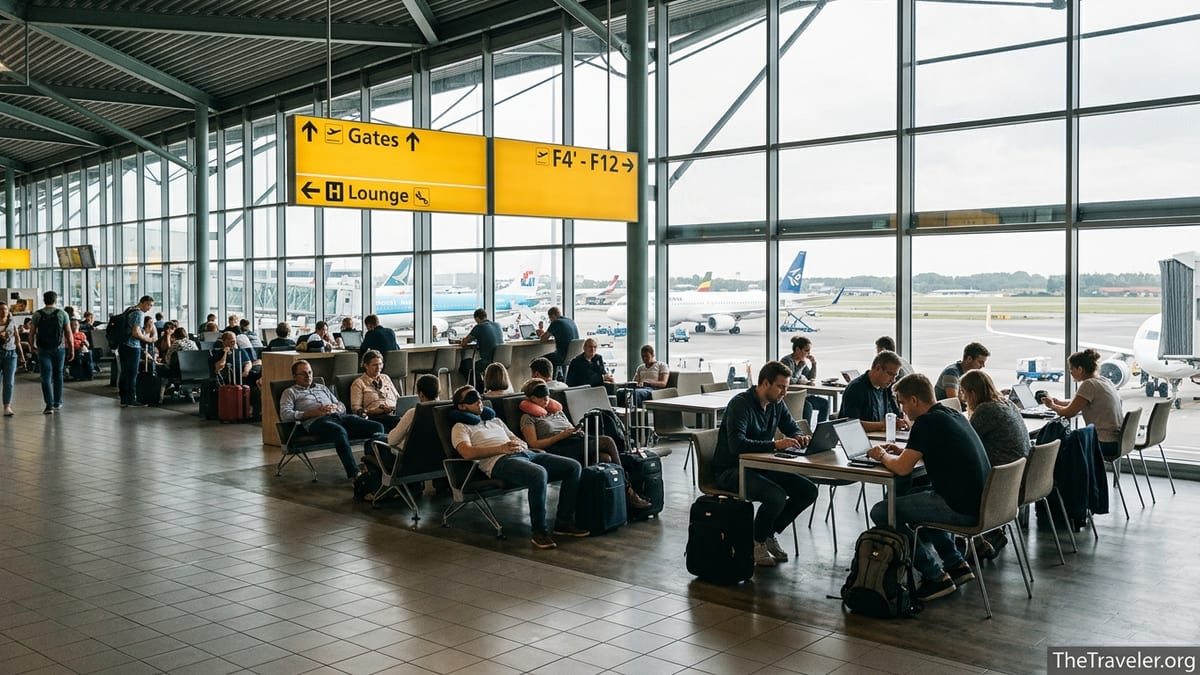
For long layovers, especially overnight, sleep is often the deciding factor in whether an airport feels bearable or miserable. Schiphol offers a spectrum of options, from free reclining seats to dedicated airside hotels. In the non-Schengen and Schengen zones there are “rest zones” with loungers and padded benches where travelers regularly stretch out with eye masks and neck pillows. Power outlets are fairly common, though you may still want a small multi-port charger if you are traveling as a couple or family.
For more privacy, YOTELAIR Amsterdam Schiphol operates airside in Lounge 2, offering compact cabins bookable by the hour or overnight. Typical rates fluctuate, but travelers often report paying roughly the cost of a mid-range city hotel for an overnight, and less for a 4 to 6 hour daytime block. A standard cabin has a bed, shower, Wi-Fi and a small work desk, crucial if you need guaranteed quiet before a red-eye departure. Another option inside the transit area is the Mercure Hotel Schiphol Terminal, located near Lounge 3, which sells both day-use and overnight rooms, handy if you are unable to leave the secure zone due to visa or ticket constraints.
If you are willing to go landside, the cluster of hotels directly connected to the terminal can turn a brutal layover into a mini stopover. The Sheraton Amsterdam Airport Hotel and the Hilton Amsterdam Airport Schiphol are both reachable on foot from the arrivals hall via covered walkways and are popular with airline crews. Many travelers buy a daytime spa or fitness pass at these hotels, which typically includes showers, towels and access to wellness areas. This can be particularly attractive if your layover is eight or nine hours during the day and you prefer a proper bed and shower instead of attempting to sleep in public seating.
On the budget end, some travelers simply camp out on benches in quieter upper levels of the terminal. Reports suggest that overnight staff are used to sleepers as long as they are discreet and keep belongings close. The trade-off is obvious: you save on accommodation but accept harsher lighting, periodic announcements and the risk of limited comfortable spots during busy travel waves. For many backpackers and solo travelers, Schiphol’s relative safety and indoor warmth make this a workable compromise for one night.
Showers, Wellness and Practical Amenities During Long Waits
After a long overnight flight, a shower can matter more than a gourmet meal. Schiphol does not have free public shower rooms in every concourse, but you have several realistic options. YOTELAIR cabins and the Mercure Schiphol Terminal all come with private en-suite showers, which can be used even on short, 4-hour bookings. In the public landside area, hotels such as the Sheraton and Hilton offer paid access to their spa or fitness facilities for non-staying guests, which typically includes modern showers, changing rooms and sometimes extras like saunas or steam rooms.
For travelers who cannot leave the secure zone, airline lounges are another way to access showers. KLM’s Crown Lounges in both the Schengen and non-Schengen areas are equipped with shower suites for eligible passengers or for those who purchase single-entry access. Independent lounges operated by third parties may also offer showers, though capacity is limited at peak times. In practice, if a proper wash is a priority and you are not flying in a premium cabin, it can be worth pricing a short stay at YOTELAIR against lounge access to see which gives better value and guaranteed availability.
Beyond cleanliness, Schiphol has a surprisingly broad wellness and convenience ecosystem for an airport. There are massage chairs scattered around the terminal, nail and beauty bars, a small meditation or silence area and family rooms with play corners. For fitness-minded travelers, some nearby airport hotels maintain full gyms and even small pools, accessible with a day pass. On a ten-hour layover, a routine might realistically look like this: thirty minutes to clear passport control, a quick train ride to drop a bag in a hotel room, a one-hour workout, shower, leisurely meal and a few hours of sleep before heading back to departures.
Daily practicalities are also well covered. Supermarket-style outlets such as Albert Heijn in the public terminal sell affordable snacks, salads, sandwiches and toiletries. This can significantly cut costs compared with eating exclusively at branded fast-food counters. Electronics shops, pharmacies and travel stores stock adapters, SIM cards and basic medications, making it easier to fix small travel problems without leaving the airport complex.
Food, Atmosphere and How Time Actually Feels at Schiphol
One of the most frequent comments about Schiphol from long-haul travelers concerns the atmosphere: bright, busy but generally well-organized. Natural light in several concourses, combined with high ceilings and open spaces, stops the terminal from feeling as claustrophobic as some older airports. That said, it is still an airport environment, with constant announcements and security checks, so you should not expect a spa resort ambiance at the gate.
Food options range from quick grab-and-go counters to sit-down restaurants and bars. In practice you will find international chains offering burgers and coffee side by side with Dutch staples like broodjes (sandwiches), stroopwafels and fresh juices. Prices are what you would expect at a major European hub: a simple sandwich and drink might cost slightly more than in central Amsterdam, while a mid-range sit-down meal often approaches what you would pay in a casual city restaurant.
For coffee, several recognizable international chains share space with smaller European brands. Travelers on long layovers often stake out a corner table, plug in laptops and use the time as a mobile office. Free Wi-Fi across the terminal makes working or streaming easy, though at busier times you may want to move closer to less crowded gates for better bandwidth and quiet. If your layover stretches into the evening, there are bars serving Dutch and Belgian beers, often with runway views that provide a pleasant backdrop for plane-spotting.
Families will appreciate that there are designated play areas and kid-friendly food options in most zones. Still, the airport can get noisy during school holiday peaks, and seating near play corners tends to fill up early. If you are traveling with children on a long layover, consider splitting time between a quieter gate area for naps and one of the play zones for energy-burning sessions, rather than trying to camp in one place for eight hours.
Leaving the Airport: When a Quick Trip into Amsterdam Makes Sense
Schiphol’s biggest advantage for long layovers is its rail station directly underneath the terminal. Trains to Amsterdam Centraal typically take around 15 to 20 minutes and run roughly every 10 to 15 minutes throughout the day. A one-way ticket in 2026 usually costs around 5 to 6 euros, and you can tap in with a contactless bank card or buy a paper ticket from the yellow machines in Schiphol Plaza. This makes a round trip into the city center quick and relatively inexpensive compared with many other European hubs where airport transfers are lengthy or costly.
For hotels near Museumplein or the Rijksmuseum, the Airport Express Bus 397 is a useful alternative. It runs from Schiphol to stops like Museumplein and Leidseplein in about 30 to 40 minutes. A single ticket is typically around 6 to 7 euros. Some visitors opt for bundled products such as the Amsterdam Travel Ticket, which combines the airport transfer with 1 to 3 days of unlimited city public transport, a good fit if your layover is effectively an overnight stopover and you plan to explore into the evening.
Whether you should leave the airport depends on the length and timing of your layover. As a conservative rule, if you have less than six hours between flights, it is risky to go into the city after you factor in time for deplaning, passport control, walking to the station, potential queues and returning through security. With six to eight hours and a daytime arrival, a quick visit to the historic center or a canal-side café becomes realistic. Travelers with eight to ten hours or more can consider more ambitious outings, such as a visit to a major museum or a relaxed lunch around Jordaan or De Pijp.
Real-world examples show how much you can do with careful planning. Some travelers use a 6-hour spring layover to visit the famous Keukenhof flower gardens by taking a train from Schiphol to Leiden and then a dedicated shuttle bus. Others with a 12 to 14 hour daytime layover might drop bags at an airport hotel, take the train to Amsterdam Centraal for a canal cruise and a walk through the Nine Streets, then return in the early evening. The caveats are important: always check visa requirements, reopening times for security at night, and leave a generous time buffer before boarding, especially during peak holiday travel periods.
Who Really Benefits from Choosing Schiphol for a Long Layover?
Not all long layovers are equal. Schiphol is particularly well-suited for certain traveler profiles and less ideal for others. If you are a first-time visitor to Europe hoping to squeeze in a quick taste of Amsterdam, Schiphol is a strong choice because of its direct rail link, compact city center and relatively low transfer costs. In one afternoon you can realistically stroll along canals, sample Dutch snacks and return to the airport without needing taxis or complex routes.
Business travelers often appreciate Schiphol for its work-friendly features. The combination of free Wi-Fi, plenty of tables near power outlets, quiet corners in some piers and pay-per-use lounges means you can comfortably turn a six-hour layover into a half workday. If you are transiting between long-haul flights, booking a half-day cabin at YOTELAIR or a daytime room at the Sheraton or Hilton lets you alternate focused laptop time with real sleep and a hot shower.
Families and older travelers value the lack of terminal changes and the abundance of services within easy walking distance. Having a supermarket, pharmacy, play corners and multiple sit-down restaurants under one roof minimizes the need for long walks with luggage and strollers. On the other hand, budget travelers and backpackers may find Schiphol comfortable enough to spend the night on benches, using the airport more as a safe shelter than a place for structured sightseeing.
Where Schiphol is less ideal is for ultra-short overnight transits where you arrive late evening and depart early morning but cannot or do not want to leave the secure area. After most shops and many restaurants close, the terminal gets quieter but also offers fewer distractions. In that scenario, paying for a few hours at YOTELAIR, the Mercure airside hotel, or a nearby landside hotel can make the difference between an exhausting night and arriving at your next destination reasonably refreshed.
Cost, Value and Comparing Schiphol with Other European Hubs
From a cost perspective, Schiphol tends to sit in the middle of the European pack. Eating and drinking in the terminal is not cheap, but it is rarely as expensive as some Nordic or Swiss airports. A hot meal with a drink may approach what you would pay at a casual restaurant in central Amsterdam, while budget-conscious travelers can keep costs down by relying on supermarket food, refillable water bottles and coffee from chain outlets instead of full-service dining.
Where Schiphol really offers value is the airport-to-city transfer. Paying around 5 to 6 euros for a 15 to 20 minute train ride to the heart of Amsterdam is budget-friendly compared with many cities that rely on slower buses or premium-priced express trains. Taxis from Schiphol to central Amsterdam generally cost significantly more than the train, often in the range of a typical European big-city airport taxi, but rideshare options and pre-booked shuttles provide some middle ground for groups with luggage.
When you compare Schiphol to airports like London Heathrow or Paris Charles de Gaulle for long layovers, the Dutch hub’s strengths are its single-terminal design, relatively straightforward rail link and decent range of airside sleep options. Heathrow and Charles de Gaulle both have multiple terminals, more complex transfers and, in some cases, fewer airside hotels, which can add stress to an already long travel day. On the other hand, some competing hubs have invested more heavily in large, modern lounges and shopping galleries, which may appeal if your priority is luxury rather than quick city access.
Ultimately, the financial equation comes down to how you choose to spend your time. A purely airside layover with supermarket snacks, a free rest zone and some work time on a laptop can be very affordable. Add a paid lounge, a rail trip into the city, museum entry and a restaurant meal, and your layover at Schiphol begins to resemble a mini city break with costs to match. What Schiphol does well is allowing you to scale up or down: it supports both the frugal sleeper on a bench and the traveler turning a connection into a comfortable micro-holiday.
The Takeaway
So is Amsterdam Schiphol Airport worth choosing for a long layover? In most cases, yes. Its combination of a compact terminal, varied rest options, easy rail access to one of Europe’s most walkable city centers and a good spread of practical services makes it an above-average place to spend six hours or more between flights. You can shower, sleep, work, eat decently and, if time allows, step out for real city life without wrestling with complex transfer systems.
Schiphol is not perfect. Nighttime can feel stark once shops close, truly quiet sleeping spots can be hard to secure during peak seasons and paid options like YOTELAIR cabins or airport hotels are not cheap. Yet compared with many other major hubs, the airport gives you more control over how your layover unfolds. Whether you want to treat it as a chance to see Amsterdam’s canals, catch up on work in a quiet corner or simply rest and recharge, Schiphol provides realistic options at different budget levels.
If you are booking flights and see a long layover in Amsterdam, it is generally a connection you can embrace rather than fear. With some advance planning around train times, hotel day rates, and your own energy level, Schiphol can transform a potentially wasted day of travel into a surprisingly productive, restful or even memorable part of your journey.
FAQ
Q1. Is a 6-hour layover at Amsterdam Schiphol enough to visit the city?
For many travelers, six hours is just enough for a quick city visit if flights are on time. You will need around one hour total for deplaning, passport control and walking to the train, 30 to 40 minutes each way on transport, and at least 90 minutes to clear security on return. That leaves roughly two hours in the city center. It is tight but workable for a short canal stroll and a meal, provided you monitor the time closely.
Q2. Can I sleep in Amsterdam Schiphol Airport overnight for free?
Yes, it is generally possible to sleep in public areas of the terminal, and many travelers do so. You will find benches and some reclining seats in quieter zones, though fully comfortable spots are limited and can fill up during busy periods. Lights remain on and announcements continue overnight, so earplugs, an eye mask and a travel blanket can make a big difference.
Q3. Are there sleeping pods or airside hotels at Schiphol?
Schiphol has airside sleep options including YOTELAIR in Lounge 2 and the Mercure Hotel Schiphol Terminal near Lounge 3. Both offer rooms or cabins that can often be booked for a few hours during the day or overnight. These provide private beds, showers and Wi-Fi without leaving the secure zone, which is ideal if you do not have permission or desire to enter the Netherlands during your layover.
Q4. How much does it cost to get from Schiphol to central Amsterdam?
The standard train from Schiphol Airport station to Amsterdam Centraal usually costs around 5 to 6 euros one way in 2026 and takes about 15 to 20 minutes. You can tap in with a contactless debit or credit card or buy a single-use ticket from the ticket machines. The Airport Express Bus 397 to areas like Museumplein or Leidseplein typically costs slightly more and takes around 30 to 40 minutes.
Q5. Is Schiphol a good airport for families on long layovers?
Schiphol works reasonably well for families. The single-terminal layout reduces the need for shuttles between terminals, and there are play areas, family restrooms, high chairs in many restaurants and supermarket-style shops selling snacks and baby essentials. For very long layovers, many families choose to book a nearby hotel room so children can nap in a quiet, dark space rather than in the terminal.
Q6. Are showers available for economy passengers during a layover?
Economy passengers can access showers in several ways. Airside hotels like YOTELAIR and the Mercure Terminal Hotel include private showers in their rooms, even for short daytime bookings. Some pay-per-use or airline lounges offer shower suites that you can access with a one-time fee or certain credit cards. Landside, hotels directly connected to the terminal sometimes sell spa or fitness day passes that include showers and changing facilities.
Q7. Is it worth buying lounge access at Schiphol for a long layover?
Buying lounge access can be worthwhile if you value quieter seating, food, drinks and showers in one place. For a layover of six hours or more, the cost of a day pass is often comparable to having two separate restaurant meals and a shower elsewhere. However, if your priority is exploring Amsterdam or you are comfortable working from regular terminal seating with supermarket snacks, a lounge may be less essential.
Q8. Do I need a visa to leave Schiphol during my layover?
Whether you can leave the airport depends on your nationality, length of stay and Schengen visa requirements. Travelers from visa-exempt countries for short Schengen visits can usually pass immigration and enter the Netherlands freely for a daytime city visit. Others may require a Schengen visa even for a brief excursion outside the airport. Always check your specific visa status and airline advice before planning to leave the terminal.
Q9. How early should I return to Schiphol before my onward flight?
For intercontinental flights, returning to Schiphol at least three hours before departure is a cautious rule of thumb, especially during peak holiday periods. For European flights and off-peak times, two hours may be sufficient, though you should factor in potential security lines and walking time to your gate. If you have checked luggage on a through-ticket, your bags typically remain checked, but you still need time for passport control and any additional screening.
Q10. Is Amsterdam Schiphol better than other European hubs for long layovers?
Schiphol compares favorably with many major European hubs for long layovers thanks to its single-terminal layout, strong rail connection into the city, decent sleep options and wide range of amenities. While some airports excel in luxury shopping or ultra-modern lounges, Schiphol’s strength lies in practical convenience and flexibility. For most travelers looking to rest, refresh or briefly explore a nearby city, it is a solid and often preferable choice.