


Few places in the Caribbean let you pair world class snorkeling with a near-deserted palm backed beach as easily as Anse Chastanet and Anse Mamin in Saint Lucia. Tucked just north of Soufrière on the island’s wild west coast, these two black sand coves share the same bay but offer very different moods: Anse Chastanet is lively, with a dive center, day visitors and boat traffic, while Anse Mamin, a short walk away, feels like a private hideaway at the edge of the jungle. Together they make the best two beach itinerary near Soufrière, ideal for a full day of swimming, snorkeling, biking and exploring plantation ruins.
Get the latest updates straight to your inbox!
Getting Your Bearings: Where These Two Beaches Sit
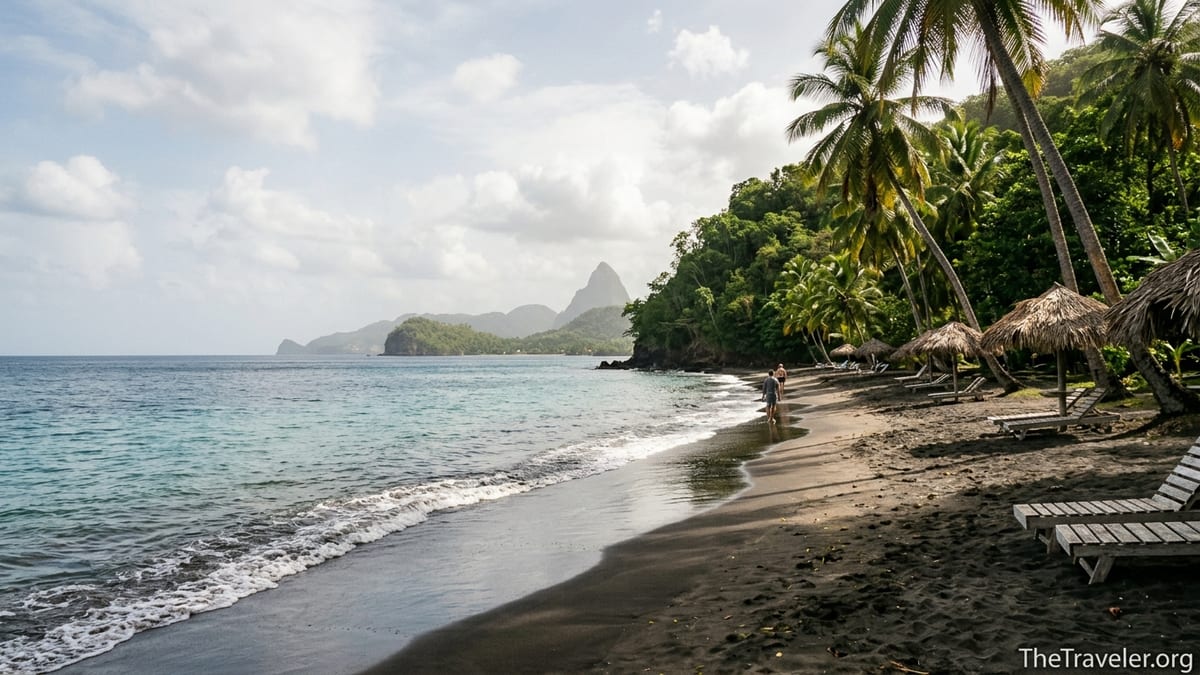
Anse Chastanet and Anse Mamin sit just west of Soufrière town on Saint Lucia’s southwestern coast, in the shadow of the Pitons. Both beaches front the same property as Anse Chastanet Resort and Jade Mountain, but like all beaches in Saint Lucia they are public. In practice, most independent travelers reach them either by taxi from Soufrière, by water taxi, or as hotel guests walking down from hillside rooms.
Anse Chastanet is the first beach you arrive at. It is a gently curving strip of dark volcanic sand backed by palms and resort buildings, with views south toward the Pitons. From here, a coastal path hugs the rocky shoreline under the cliffs to Anse Mamin, a smaller crescent just to the north. Anse Mamin is enveloped by thick jungle and backed by the ruins and coconut groves of the old Anse Mamin Plantation, giving it a more secluded, off grid feel compared with its busier neighbor.
Because both beaches share the same bay, moving between them is easy once you are on site. This makes them perfect for a DIY two beach itinerary from Soufrière, especially if you want to combine a morning of snorkeling at Anse Chastanet with a lazy, quieter afternoon at Anse Mamin, then add in a short walk to plantation ruins or a jungle biking session.
Keep in mind that road access to the area from Soufrière is slow and rough in places, with steep, potholed sections that can feel like more gravel than pavement. Many travelers choose to hire a local taxi rather than driving themselves, particularly if they are not used to hilly Caribbean roads. Once you arrive at the base of the hill, everything in this guide is reachable on foot.
How to Get There from Soufrière and Beyond
From Soufrière town, Anse Chastanet is only a few kilometers away, but the road is narrow, twisting and partially unpaved in sections. In real terms, the drive usually takes about 15 to 20 minutes despite the short distance. Most guesthouses in Soufrière can call a taxi, and fares are typically agreed in advance; travelers commonly report one way prices in the range you would expect for a private ride on a resort road rather than a metered city taxi. It is worth confirming the exact figure with your driver before leaving.
If you are staying further north in popular resort areas like Rodney Bay or Castries, reaching Anse Chastanet by road can take 1.5 to 2 hours each way because the main coastal highway is also winding. Many visitors in that situation either join a full day boat excursion from the north that includes snorkeling at Anse Chastanet, or they arrange a private water taxi that drops them directly on the beach. For cruise passengers docking near Castries, shore excursion companies sometimes bundle a Soufrière tour with a snorkel stop here, which can be an efficient way to see both the Pitons and the reef without managing logistics yourself.
Independent travelers based in Soufrière or at hillside properties like Ladera and smaller boutique lodges often find it easiest to visit by taxi in the morning, then coordinate a pick up time in the late afternoon. Anse Chastanet Resort also offers its own water shuttles for in house guests, but day visitors typically rely on public taxis or pre arranged boat transfers from Soufrière harbor.
Whichever way you arrive, you will be dropped near the back of Anse Chastanet beach, close to the dive shop and water sports hut. From there you can rent snorkel gear, claim a spot on the sand, or immediately begin the short coastal walk to Anse Mamin.
Walking Between Anse Chastanet and Anse Mamin
The main link between the two beaches is a rocky but well used coastal path just above the waterline. It starts near the northern end of Anse Chastanet beach, beside the water sports and dive center area, then skirts the base of low cliffs before emerging at the southern end of Anse Mamin. You do not need a guide, and there are usually other people using the path during daylight hours.
In practical terms, the walk takes about 7 to 10 minutes at an easy pace for most visitors. Travelers who have timed it often report that even with photo stops and pausing to let others pass on narrow sections, they reached Anse Mamin in under 15 minutes. The path is mostly level but can be uneven, with roots and rocks underfoot and occasional puddles after heavy rain, so sturdy sandals or walking shoes are better than flimsy flip flops.
The route feels dramatic rather than dangerous: you walk just above the sea looking out to the open Caribbean, with waves brushing the rocks below and thick jungle rising steeply uphill. Shaded sections alternate with open stretches, so carrying water and sunscreen is still wise. For those who prefer not to walk, resort boats sometimes shuttle hotel guests between the two beaches, but this service is not guaranteed for outside visitors.
If you are planning a full day two beach itinerary, a common pattern is to spend the first few hours at Anse Chastanet, then walk over to Anse Mamin for a late lunch and a quieter afternoon. Because the path returns to Anse Chastanet, where most taxis wait, aim to leave Anse Mamin with enough buffer before dusk to walk back in full daylight.
Snorkeling: Marine Reserve vs Quiet Coves
Anse Chastanet sits at the edge of one of Saint Lucia’s best known marine reserves. The house reef begins just offshore, dropping over volcanic rock formations and coral gardens populated by sponges and reef fish. Local dive operators describe the area as home to over 150 species of fish, and the reef is shallow enough close to shore that snorkelers can see a great deal without venturing far. Snorkeling zones are usually marked off with buoys to separate swimmers from boat traffic.
In practical terms, this means that if snorkeling is a priority for your day, you should allocate more of your underwater time to Anse Chastanet itself. You can rent masks, snorkels and fins from the resort’s water sports center, or bring your own gear and enter from the beach near the marine reserve markers. Early morning often brings the calmest water and best visibility, and there is decent snorkeling for confident swimmers even a short distance along the reef edges.
Anse Mamin, by contrast, is more about atmosphere than standout snorkeling. The bay is smaller, and there is a sandy bottom with patches of rock and seagrass, but not the same extensive reef structure right off the beach that you find at Anse Chastanet. Some visitors still enjoy casual snorkeling along the rocks near the edges of the cove, especially on calm days, but it is better suited to relaxed swimming, floating and enjoying the mountain village backdrop than to serious coral spotting.
A balanced two beach itinerary usually looks like this: start with a focused snorkeling session at Anse Chastanet while you are fresh, using the easy shore entry to explore the reef, then treat Anse Mamin as your place to unwind, swim, and wade in the shallows. For those especially keen on underwater life, local guides and resort staff can also point you toward other nearby shore snorkeling spots in the Soufrière area, including lesser known coves and reef stretches that require a short hike or boat ride.
Finding Quieter Corners and Choosing Your Beach Base
Anse Chastanet is rarely crowded by big city standards, but it can feel busy at peak times when resort guests, day visitors and dive boats all converge. The central section of the beach, near the bar and dive shop, tends to fill first with rows of loungers under straw palapas. If you want a little more space while still staying on this beach, drift toward the far ends: the southern edge often feels calmer, and the northern corner near the start of the Anse Mamin path sees fewer people lingering for long periods.
Loungers and sun shades on Anse Chastanet are technically managed by the resort, and priority goes to in house guests. Day visitors often report that if the beach is not at capacity, staff will still rent chairs or allow use after checking availability, but policies can change and will be influenced by occupancy. Bringing a lightweight travel towel or foldable mat gives you a backup option to sit on the sand, especially closer to the waterline where hotel loungers are less dense.
Anse Mamin, on the other hand, is often described by repeat visitors as one of the quietest developed beaches on the island. You share the cove mainly with resort guests who have intentionally walked or boated over for a change of scene. There are usually fewer loungers and more open sand beneath leaning palms, and the jungle backdrop blocks most signs of human development. This is the place to choose if you want long stretches of reading, dozing or simply listening to the surf with very few interruptions.
Consider your own rhythm when deciding how long to spend at each beach. Families with children might prefer more time at Anse Chastanet, where facilities and staff are close at hand, while couples and solo travelers often gravitate to Anse Mamin for a slow afternoon once they have had their fill of snorkeling and watersports.
Where to Eat: Burgers in the Jungle and Resort Dining
One of the biggest practical questions for a full day beach itinerary is where to eat, especially if you are not staying at the resort. At Anse Chastanet, you will find a beachfront bar and service from the main resort restaurants, which lean toward upscale hotel pricing. Menus change, but you can expect classic Caribbean and international dishes, from grilled fish plates to salads and light lunches, with cocktails, fresh juices and local beer. Day visitors are generally welcome to order, but it is courteous to ask staff where walk in guests should sit.
Over at Anse Mamin, a small open air beach grill has become something of a minor legend among repeat visitors for its substantial burgers and casual menu. The exact offerings vary with the season, but travelers frequently mention ordering grilled burgers with local seasonings, fries and cold drinks while sitting at simple tables in the sand. Prices are in line with resort operated beach grills across the Caribbean, so plan for a laid back but not budget level lunch.
If you plan to spend the entire day between the two beaches, a simple strategy is to snack or have a light breakfast in Soufrière, then aim for a proper lunch at the Anse Mamin beach grill once you have walked over late morning or early afternoon. That lets you linger for an hour or two in the shade, then shift straight into your afternoon of swimming or exploring the plantation trails behind the beach.
Travelers with dietary restrictions, or anyone visiting in the slower wet season months, should check ahead with the resort or their Soufrière host to confirm current opening hours, especially for the Anse Mamin grill, as beachside outlets can occasionally adjust days or times based on occupancy and weather.
Jungle Biking and Plantation Ruins Behind Anse Mamin
Behind Anse Mamin beach lies the Anse Mamin Plantation, a former 18th century sugar estate later planted with coconuts and other crops. The ruins of old stone structures, including mill buildings and estate walls, are scattered through the forest. Today that land forms the setting for a purpose built jungle biking operation, which offers guided and self guided rides on a network of dirt trails threading between the ruins, reservoirs and groves.
The biking center, operated under the Bike St Lucia brand, maintains a network of roughly 8 to 12 miles of trails graded from beginner loops to more challenging routes. New riders begin with a short orientation loop of about 1.5 miles at an easy pace that also doubles as a mini interpretive tour, with guides pointing out historic sites and flora. More experienced cyclists can then branch off onto intermediate or advanced tracks that climb and descend through the jungle, crossing old plantation cart roads and skirting an 18th century stone reservoir.
Day visitor packages typically include bike rental, helmet, a guided orientation and trail access for a set period. Pricing varies by season and inclusions, but representative offers have bundled a scenic boat transfer from other hotels, bike use, a picnic lunch and snorkeling gear for a full Anse Mamin day. If you are staying nearby in Soufrière, you can usually arrange to join just the biking portion by advance reservation and simply walk a few minutes from Anse Mamin beach to the trailhead.
Even if you are not keen to ride, short walking paths from the back of Anse Mamin beach lead into the plantation area, where you can see low stone walls, overgrown structures and large trees growing through masonry. These casual walks are not as structured as an official plantation tour, but they give a tangible sense of the area’s history and make for evocative photos, especially in the soft light of late afternoon.
Photography Tips: From Black Sand to Jungle Trails
With two distinct beaches, mountainous backdrops and historic ruins, Anse Chastanet and Anse Mamin lend themselves to a full day of photography. At Anse Chastanet, the most iconic shots usually frame the dark sand and palm trees against the Pitons rising in the distance, particularly in the morning when the sun is behind you and the mountains are clearly defined. Walking toward the southern end of the beach gives slightly different angles on the peaks and a wider sweep of coastline.
Anse Mamin rewards a quieter, more detail oriented approach. The curve of the bay is more intimate, with dense jungle pressing right up to the sand. Photographers often work with leading lines created by leaning palms and washed up driftwood, shooting along the water’s edge at a low angle to emphasize the texture of the volcanic sand. Late afternoon light filtering through the canopy can produce beautiful dappled patterns on the beach and on the old stone walls of the plantation, ideal for close up shots.
On the plantation trails, consider switching to a slightly wider lens or mode on your phone to capture the scale of the jungle around the ruins. Mossy stone steps, rusted metal remnants and buttressed tree roots all make strong foreground elements. If you are carrying a camera in the rainy season, pack a small dry bag or at least a plastic cover; showers can roll in quickly, and the humidity under the canopy is consistently high.
Underwater, if you plan to photograph while snorkeling at Anse Chastanet’s reef, a simple waterproof phone pouch or entry level underwater compact camera is sufficient. Stay mindful of buoyancy and maintain distance from corals, both to protect the reef and to avoid kicking up sand that will cloud your images. Early morning, when the water is typically calmer and boat traffic lighter, yields the clearest shots of schooling fish and coral heads.
Planning a Full Beach Day: Practical Itinerary
To turn these two beaches into a seamless full day from Soufrière, start by arranging a taxi pickup around 8:30 or 9:00 in the morning. Aim to arrive at Anse Chastanet by about 9:30, when the sun is high enough for bright water but the beach is still relatively quiet. After a quick orientation walk along the sand, rent snorkel gear or unpack your own and spend 60 to 90 minutes exploring the reef from shore while conditions are at their best.
By late morning, when the sun is stronger and more people have arrived, pack up your gear and set off along the coastal path to Anse Mamin. Plan for a 10 minute walk to allow time for photos and to navigate carefully. Once you reach Anse Mamin, choose a spot under the trees or near the waterline, then cool off with a swim before ordering lunch from the beach grill. This is a good moment to linger, read, and simply enjoy the quieter setting.
In the mid afternoon, those interested in jungle biking can peel off for a ride on the plantation trails, while others explore the ruins on foot or continue to swim and relax. Keep an eye on the time and your energy level; the heat can be intense throughout the year, especially from late spring into autumn. Most travelers find that leaving Anse Mamin between 3:30 and 4:30 in the afternoon provides a comfortable buffer to walk back to Anse Chastanet in full light, rinse off sand, and meet a pre arranged taxi by 5:00.
Bring the essentials you would pack for any Caribbean beach day but tailored slightly for this terrain: reef safe sunscreen, a brimmed hat, sturdy sandals for the rocky path, a lightweight cover up for sun protection, and a dry bag or zippered pouch for electronics. Cash or a card is helpful for food and drink purchases, and if you plan to rent snorkel gear or join a biking session, check ahead whether those providers prefer card payment or local currency.
The Takeaway
Pairing Anse Chastanet and Anse Mamin in a single day near Soufrière lets you experience two different sides of Saint Lucia’s west coast without spending much time in transit. At Anse Chastanet you have easy access to one of the island’s most established house reefs, with gear rental, dive services and the structure of a full service resort beach. Just minutes away on foot, Anse Mamin offers a softer, more secluded atmosphere backed by jungle and plantation ruins, with a simple beach grill and the option to venture inland on bike trails.
When you plan your day with the natural rhythm of the place in mind snorkeling early, walking the coastal path in the cooler hours, taking a long lunch in the shade at Anse Mamin, and exploring the plantation or biking when the sun begins to dip these two neighboring coves deliver far more than a standard beach stop. They become a compact introduction to the wild landscapes, layered history and relaxed pace that make the Soufrière area one of Saint Lucia’s most compelling corners.
FAQ
Q1. How long does it take to walk from Anse Chastanet to Anse Mamin?
The coastal walk between the two beaches usually takes about 7 to 10 minutes at an easy pace, or up to 15 minutes if you stop for photos.
Q2. Do I need to be a hotel guest to use Anse Chastanet and Anse Mamin?
No. Both beaches are public under Saint Lucian law, but facilities such as loungers and some services are managed by the resort and prioritize in house guests.
Q3. Is snorkeling better at Anse Chastanet or Anse Mamin?
Snorkeling is significantly better at Anse Chastanet, where a shallow reef and marine reserve begin just offshore. Anse Mamin is more suitable for relaxed swimming than for coral viewing.
Q4. Can I rent snorkel gear on the beach?
Yes. Anse Chastanet has a water sports and dive center on the beach that rents snorkel equipment. Many travelers still prefer to bring their own masks and snorkels for comfort.
Q5. What should I wear for the walk and plantation trails?
Wear sturdy sandals or light walking shoes rather than thin flip flops, as the path between beaches and the plantation trails can be rocky, uneven and occasionally muddy.
Q6. Is jungle biking at Anse Mamin suitable for beginners?
Yes. The bike center offers an easy orientation loop on beginner friendly trails before allowing guests to try more challenging routes, so novices and occasional cyclists are welcome.
Q7. Are there restaurants or food options at both beaches?
Anse Chastanet has resort dining and a beachfront bar, while Anse Mamin typically has a casual beach grill serving burgers and simple lunches. Opening times can vary by season.
Q8. What is the best time of day to snorkel at Anse Chastanet?
Morning is usually best, when wind and boat traffic are lower and water visibility tends to be clearer. Many visitors plan their snorkeling session before late morning.
Q9. How safe is it to leave belongings on the beach?
These beaches are generally calm and feel safe, but standard precautions apply. Keep valuables to a minimum and consider a small dry bag or lockable pouch for essentials.
Q10. Can I visit Anse Chastanet and Anse Mamin from a cruise ship stop?
Yes. Some shore excursions include snorkeling at Anse Chastanet, and private drivers or water taxis from the cruise port can arrange a custom trip, provided you factor in travel time from Castries.