


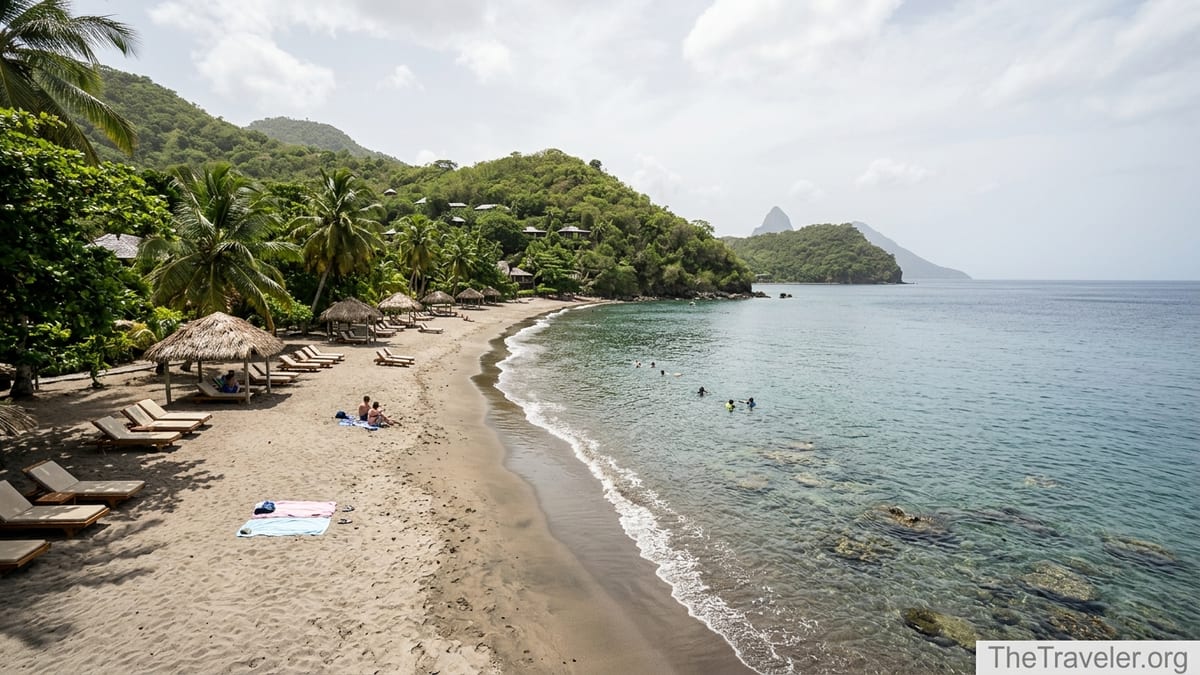
Anse Chastanet, on Saint Lucia’s lush southwest coast near Soufrière, is one of the island’s most famous beaches. Framed by steep green hills and views toward the Pitons, it belongs to the Anse Chastanet resort estate but, like all beaches in Saint Lucia, the shoreline itself is legally public. That creates a common point of confusion for day visitors: do you need a resort day pass, what exactly does it include, and how much of the beach experience can you enjoy without staying overnight? This practical guide breaks it down in clear, real-world terms.
Get the latest updates straight to your inbox!
Are There Official Day Passes at Anse Chastanet?
Unlike some Caribbean resorts that widely advertise day passes, Anse Chastanet does not prominently promote a standard, fixed-price day pass for non-resident visitors on its public materials as of mid-2026. The resort’s focus is largely on overnight guests, and many of its services, such as meal plans and activity packages, are designed around people staying on property. That said, the reality on the ground is more nuanced. In practice, the resort may allow limited outside use of certain facilities, particularly through booked activities like diving, snorkeling tours, or spa treatments.
Travelers who visit the beach by car or water taxi commonly report that they can access the sand and swim without needing to purchase a full day pass. However, they are not automatically granted use of guest facilities such as loungers, private cabanas, or beach waiter service. In some cases, staff may offer a spend-minimum approach, for example requiring you to commit to food and drink consumption at the beach bar to use certain amenities. This is not an official published policy and can vary with season and occupancy, so it is important to arrive with flexible expectations and be prepared to adapt based on what staff communicate on the day.
If you are specifically interested in something closer to a classic “resort day pass” experience, the most reliable option is to contact Anse Chastanet directly via phone or email before your trip, explain your plans, and ask what is realistically available to non-residents on your intended date. Policies can shift from year to year, and during peak periods such as Christmas or February high season, the resort may restrict outside use to preserve space for in-house guests. If the resort offers a package for your chosen day, request a summary of what it includes, typical pricing, and how to secure a confirmed reservation rather than showing up unannounced.
For many visitors staying elsewhere in Soufrière or arriving by cruise ship, the most practical approach is to treat Anse Chastanet primarily as a beautiful public-access beach with optional paid add-ons, rather than expecting a fully inclusive day pass with guaranteed loungers, pool access, and all-inclusive drinks. That mindset avoids disappointment and helps you evaluate whether a visit makes sense compared with other south-coast beaches that actively market structured day packages.
Understanding Beach Access Without Staying at the Resort
Saint Lucian law considers all beaches public up to the high-water mark, which means you are legally allowed to walk, swim, and relax on the sand at Anse Chastanet even if you are not a resort guest. In practice, the resort controls the road access, parking, and facilities directly behind the beach, but not the shoreline itself. Independent travelers often arrive by rental car, taxi, or water taxi from Soufrière town, then walk onto the beach unobstructed, especially if they are clearly just carrying towels or small bags and not trying to occupy resort furniture.
The access road to Anse Chastanet is a steep, unpaved track that many visitors describe as bumpy but manageable. Hiring a local taxi or using a rental SUV is often more comfortable than tackling it in a small car. Once at the bottom, day visitors typically park near the entrance area and walk past the reception and beach bar area to reach the sand. Staff are usually accustomed to a mix of hotel guests, dive groups, and outside visitors, so polite communication goes a long way. Letting staff know you are there to enjoy lunch at the beach restaurant, book a dive, or simply have a swim makes interactions smoother.
Because the resort invests in maintaining the beachfront, they understandably prioritize in-house guests for premium spaces like cushioned loungers under palapa-style huts. If you are visiting independently, expect to sit or lie on your own towel rather than occupying resort furniture without permission. There is ample stretch of sand, and most independent travelers set up at the edges of the main lounger areas or nearer the snorkeling zones, where they can enjoy the same soft sand and calm water without intruding on clearly reserved spaces.
One of the advantages of Anse Chastanet’s layout is that the main beach is not overwhelmingly long, but it connects by a short coastal path to neighboring Anse Mamin, another small black-sand beach on the same estate. Day visitors who are comfortable with a short walk can access both shorelines in a single outing. This makes the trip especially worthwhile if you plan to spend several hours, as you can swim, stroll along the rocky path, and sample different sections of reef while still respecting resort zones set aside for hotel guests.
Loungers, Huts, and Where Non-Guests Can Actually Sit
The iconic scene many travelers associate with Anse Chastanet is a row of neatly spaced loungers on the black sand, each shaded by a thatched hut with a small flag for calling beach attendants. These loungers are a signature perk for resort guests and, in general, are not automatically available for free to outside visitors. At busy times of year, staff may reserve them solely for people staying at Anse Chastanet or its sister property Jade Mountain, especially the front-row setups closest to the water and the clusters near the main beach bar.
Reports from recent visitors suggest that non-guests sometimes have the option to rent loungers or use specific sections if availability allows, often in conjunction with a food-and-drink tab at the beach restaurant. For example, a couple staying in a guesthouse above Soufrière might come down for lunch, order cocktails and a main course each, and then be offered loungers for the afternoon. The exact expectations, including any minimum spend or rental fee, can vary and are rarely advertised. If this is important to your comfort, ask discreetly at the beach bar on arrival: explain that you are day visitors, intend to dine on site, and would like to know whether there are any loungers available to rent for a few hours.
If loungers are not an option, you can still enjoy a relaxed day with a bit of planning. Many independent travelers bring packable beach blankets or lightweight travel chairs, then set up on the open sand away from clearly marked guest cabanas. Shade can be limited in the midday hours, so a wide-brim hat and reef-safe sunscreen are essential. The benefit of this more low-key setup is flexibility: you can move easily between the main bay and Anse Mamin, follow the sunlight or shade as it shifts, and avoid the expectations that sometimes come with occupying resort-branded furniture.
For those who strongly prefer a guaranteed lounger and dedicated beach service, staying at Anse Chastanet for at least one night may offer the best value compared with negotiating ad hoc arrangements every time. Short stays, particularly in shoulder seasons like late April or early June, can sometimes bridge the gap between a bare-bones public beach experience and the full-service Caribbean resort atmosphere travelers dream about.
Food, Drinks, and Snorkeling Gear for Day Visitors
One of the most practical ways to enjoy Anse Chastanet as a non-guest is to plan around lunch or drinks at the beachside restaurant. The resort’s beachfront venues typically serve grilled fish, burgers, salads, and Caribbean-inspired dishes, often using produce from their own farm in the Soufrière area. Prices reflect a four-star resort setting rather than a casual local snack shack, so expect main courses in the range common to upscale Caribbean hotels rather than budget beach bars. For many day trippers, the trade-off feels fair: in exchange for paying resort-level prices, you gain access to clean restrooms, attentive service, and a comfortable setting to break up your swim and snorkel sessions.
Snorkeling is one of Anse Chastanet’s biggest attractions. The bay in front of the resort forms part of a marine reserve, and the reef begins just offshore, which means you can see coral formations and reef fish without a boat trip. Resident guests can use complimentary gear from Scuba St Lucia, the on-site dive operation, and book guided boat dives or escorted snorkel excursions directly from the beach. Non-guests who book formal snorkeling or diving activities with Scuba St Lucia generally have access to the necessary gear as part of their package, which can be a convenient way to combine reef time with a structured visit.
If you are arriving independently and do not plan to join a formal tour, bringing your own mask, snorkel, and fins is the simplest and most cost-effective option. Some visitors report being able to arrange snorkel gear rental on a per-hour or per-day basis, but availability and pricing can vary, and staff understandably prioritize resort guests when supplies are limited. Having your own gear removes that variable and lets you explore at your own pace, moving between the shallow reef at the main bay and the slightly quieter waters off Anse Mamin.
In terms of etiquette, even if you are not staying at the resort, it is considered good form to purchase at least a drink or snack if you are using beach facilities like the bar area or restrooms. This is common practice across Saint Lucia’s resort beaches and helps maintain a positive relationship between independent travelers and hotel operators. If you are spending several hours on site, factoring one or two rounds of drinks and a snack plate into your budget is a reasonable way to support the infrastructure that maintains such a pristine piece of coastline.
Reservations, Tours, and When a Package Makes Sense
Because Anse Chastanet does not have a publicly promoted, fixed day-pass product, the most reliable way to secure a structured visit is to book a specific activity or tour that uses the resort as its base. Scuba St Lucia, for example, offers diving and snorkeling packages that are open to non-residents on a day-guest basis, usually including boat transport to nearby sites like coral gardens and drift walls, along with gear and professional guides. If you are a certified diver staying elsewhere on the island, booking a two-tank morning dive through the operator is a straightforward way to enjoy Anse Chastanet’s marine environment and spend downtime on the beach before or after your trip.
Another option for visitors based in the north of Saint Lucia or arriving by cruise ship is to work with a local tour provider that includes Anse Chastanet as a stop on a broader Soufrière day itinerary. These custom or small-group tours often combine sights like the Sulphur Springs, botanical gardens, and viewpoints of the Pitons with beach time in the afternoon. In such cases, the logistics of access, parking, and timing are handled by the guide, and you can usually count on at least an hour or two to swim and relax on the sand, even if a full resort-style day pass is not part of the package.
If you value certainty about facilities, it is wise to ask specific questions when booking. For example, you might email a tour operator to clarify whether their Soufrière excursion includes access to sun loungers at Anse Chastanet, or if you should bring towels for the sand. Some operators maintain informal relationships with resort staff, which can occasionally unlock perks like reserved lunch tables or priority bar service, especially during less crowded periods. Getting those details in writing helps align expectations and prevents awkwardness if arrangements differ on the day.
For travelers who want the full range of amenities that many people associate with a “day pass” experience, it is worth comparing the cost of a one-night stay at Anse Chastanet or a nearby mid-range hotel with the likely spending at the resort for food, drinks, and any ad hoc facility fees. In shoulder seasons, a special overnight package that includes breakfast and some activities can sometimes cost only modestly more than what two people might spend on a long, unstructured day visit with multiple meals, cocktails, and rentals.
Alternatives Nearby: Anse Mamin, Sugar Beach, and Soufrière Options
While Anse Chastanet is a highlight, it is not the only option in the Soufrière area for a day at the beach. Immediately north, reachable by a short coastal path or a boatside drop-off, lies Anse Mamin. This smaller black-sand bay is also part of the Anse Chastanet estate, with its own casual beach bar and a quieter, more secluded feel. Resort guests often split their time between the two beaches using a small shuttle boat or the jungle walking path, while independent visitors can simply walk along the shoreline path. For day trippers, Anse Mamin offers a more laid-back atmosphere, often with fewer loungers and a simpler setup, but the same volcanic-sand charm and access to nearshore snorkeling.
Another well-known alternative is Sugar Beach, set between the Pitons with a different luxury resort backing the sand. Unlike Anse Chastanet, Sugar Beach’s management has historically offered clearer day-pass packages at various times, which may include use of certain loungers or the resort’s facilities in exchange for a fixed fee or minimum spend. The public access area is typically at one end of the bay, with more basic loungers or chairs, while the resort’s premium setups are reserved for in-house guests or day-pass holders. Travelers often compare the two experiences, balancing Anse Chastanet’s reef and slightly wilder feel against Sugar Beach’s dramatic mountain backdrop and more overtly structured day-guest program.
Beyond these high-profile spots, there are simpler local beaches around Soufrière and along the west coast where the atmosphere is less curated and prices are lower. Hummingbird Beach, just outside Soufrière town, offers views back toward the Pitons and a more local mix of beach bars, small guesthouses, and water taxis. For travelers staying several nights in the area, combining a relaxed afternoon at Hummingbird with a more polished day at Anse Chastanet gives a well-rounded sense of the region’s coastal life.
When planning your itinerary, it is worth considering how each beach fits into your overall trip style. If you are comfortable with rustic access roads and value top-notch snorkeling just steps from the sand, Anse Chastanet and Anse Mamin are particularly appealing. If you prioritize white sand, clearly defined day-pass prices, and access to resort pools or spas, Sugar Beach or northern-island resorts might be a better match. Many travelers ultimately choose to sample more than one, using water taxis from Soufrière to hop between bays in a single sunny day.
The Takeaway
Anse Chastanet is one of Saint Lucia’s signature beaches, with excellent snorkelling, sweeping views, and a refined resort backdrop. Yet for day visitors, the experience does not revolve around a simple, one-size-fits-all day pass. Instead, it sits on a spectrum, from free public access to the sand and sea at one end, to fully immersive overnight stays with all the trimmings at the other. Understanding that distinction before you arrive is the key to enjoying your visit without frustration.
If you approach Anse Chastanet as a public-access beach enhanced by optional resort services, you are likely to be pleasantly surprised: you can swim, snorkel, and sunbathe without a room key, enjoy a leisurely lunch at the beach bar, and perhaps book a world-class dive or snorkel excursion. What you should not assume is automatic access to premium loungers, cabanas, or pool areas unless you are staying on property or have arranged something specific in advance.
By combining realistic expectations, a bit of advance communication, and a willingness to bring your own towel or snorkel gear, you can make the most of this spectacular southwest-coast bay. Whether you are a diver basing yourself in a hillside villa, a cruise passenger with a single afternoon in Soufrière, or a road-tripper exploring Saint Lucia’s beaches, Anse Chastanet can be a rewarding highlight when you understand how its blend of public shoreline and private resort amenities actually works.
FAQ
Q1. Do I need a day pass to visit Anse Chastanet beach?
In most cases you do not need a formal day pass just to access the sand and swim, as the beach itself is public. A pass or special arrangement may only be relevant if you want guaranteed use of resort facilities like loungers, cabanas, or certain services reserved primarily for overnight guests.
Q2. Can I use the resort’s loungers if I am not staying at Anse Chastanet?
Loungers and shaded huts are primarily reserved for resort guests and Jade Mountain guests. Non-residents are sometimes offered access if availability allows, often tied to restaurant or bar spending or an informal rental fee, but this is not guaranteed and depends heavily on occupancy and staff discretion on the day.
Q3. Is the road to Anse Chastanet difficult to drive for day visitors?
The access road is steep, narrow, and unpaved in sections, which many people describe as bumpy but manageable. Using a taxi or a rental SUV is typically more comfortable than a small car, and once you reach the bottom, parking for day visitors is usually straightforward near the resort entrance.
Q4. Can I rent snorkeling gear at Anse Chastanet if I am not a guest?
Snorkeling equipment for resort guests is handled by the on-site dive center, and non-guests who book organized snorkel or dive trips usually have gear included. Casual day visitors without a booked tour may not always be able to rent gear, so bringing your own mask, snorkel, and fins is the most reliable option.
Q5. Are there restaurants or bars I can use without staying at the resort?
Yes. The beachfront restaurant and bar typically serve both in-house guests and outside visitors. Prices reflect a four-star resort, but many day trippers consider a sit-down lunch or a couple of cocktails part of the experience and a fair way to support the resort’s maintenance of the beach area.
Q6. Can I walk from Anse Chastanet to Anse Mamin as a day visitor?
Yes. A short coastal path connects the two beaches along the estate. Day visitors commonly walk this route to enjoy a quieter stretch of sand at Anse Mamin, as long as they respect any clearly marked resort-only zones and follow staff guidance.
Q7. Do tours or excursions include access to Anse Chastanet’s facilities?
Some Soufrière-area tours include beach time at Anse Chastanet as part of a wider day trip, often with transport and timing organized for you. Access to specific facilities, such as loungers or changing areas, varies by operator, so it is important to ask in advance exactly what is included in the price of the excursion.
Q8. Is Anse Chastanet a good choice for cruise ship passengers on a short visit?
For cruise visitors docking near Soufrière or transferring from the north, Anse Chastanet can be an excellent option thanks to its close-in reef and scenic setting. With limited time, it is usually best to arrange a taxi or water taxi and focus on swimming, snorkeling, and a relaxed meal, rather than expecting a comprehensive resort-style day-pass experience.
Q9. How does Anse Chastanet compare to Sugar Beach for a day visit?
Anse Chastanet offers excellent off-the-beach snorkeling and a slightly wilder, volcanic-sand feel, with more informal arrangements for day visitors. Sugar Beach is known for its white sand and more clearly structured day-pass options, but often with higher prices and busier public zones. Many travelers visit both to decide which suits their style.
Q10. Would it be better value to stay one night at Anse Chastanet instead of visiting on a day pass?
If you strongly value guaranteed loungers, beach service, and full use of resort amenities, a one-night stay can sometimes offer better overall value, especially in shoulder seasons. Overnight guests typically enjoy complimentary gear use, organized activities, and meal-plan options that are hard to replicate piecemeal as a day visitor.