


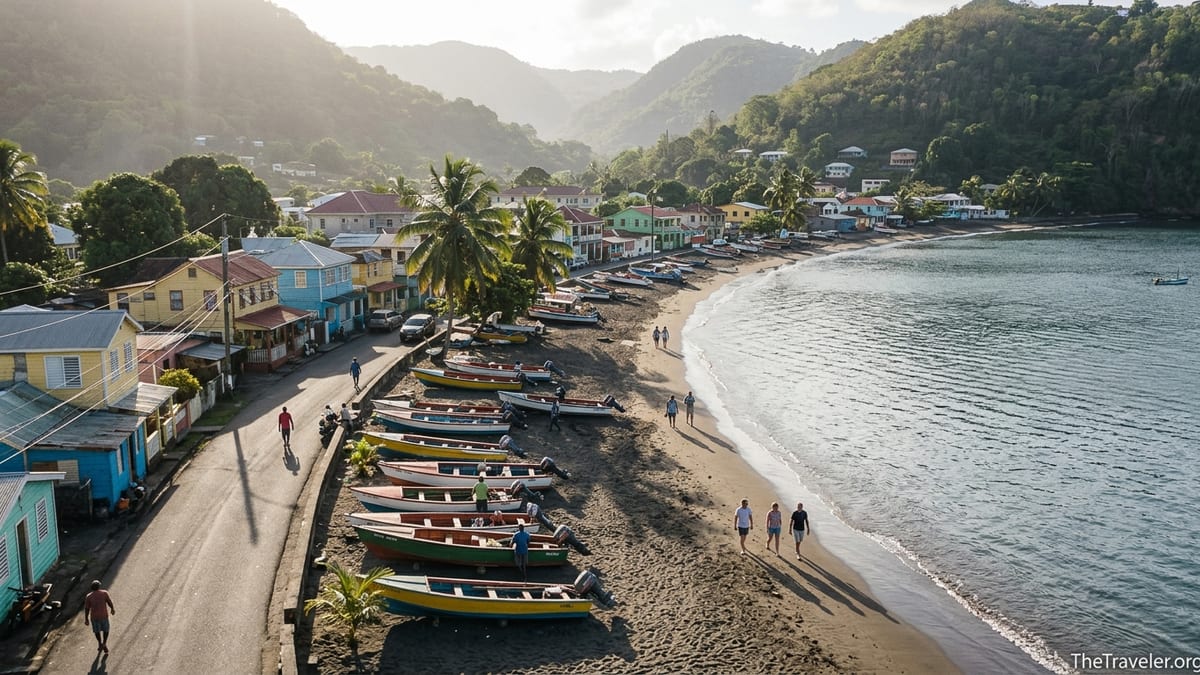
On Saint Lucia’s winding west coast road, Anse La Raye appears suddenly after a curve: painted wooden houses, fishing skiffs pulled up on the sand, and the smell of grilled fish drifting from the waterfront. This small village is not a resort hub or a beach club destination. Instead, Anse La Raye is where many travelers pause between Castries and Soufrière to see how people actually live beside the Caribbean, to taste fresh catch straight from the bay, and to take in some of the island’s best coastal views.
Get the latest updates straight to your inbox!
Where Anse La Raye Sits on Saint Lucia’s West Coast
Anse La Raye lies on Saint Lucia’s west coast, facing the Caribbean Sea roughly 11 to 12 kilometers south of the capital, Castries, and around 30 kilometers north of Soufrière. Drivers reach it along the primary west coast highway, a narrow, twisting road that links the north of the island to the south. For visitors staying in Rodney Bay, the transfer to Soufrière by land almost always involves passing above or through Anse La Raye, which makes the village a convenient break in an otherwise curvy, sometimes tiring journey.
The village itself is strung between a narrow black-sand bay and steep, green hills that rise quickly behind the houses. Two rivers, the Grande Rivière de l’Anse La Raye and the Petite Rivière de l’Anse La Raye, descend from the interior and meet the sea here, which historically made the location attractive for both fishing and small-scale farming. The district around the village covers about 38 square kilometers and has a population of roughly 5,800 people according to recent official estimates, though the village core feels much smaller and more intimate.
From a traveler’s perspective, Anse La Raye is about 20 to 30 minutes by car from Castries in light traffic and around 45 to 60 minutes from Soufrière, depending on road conditions and how confidently your driver handles the bends. Catamaran and speedboat excursions that run between the two hubs often pause just offshore in Anse La Raye Bay, giving guests a quick look at the colorful houses and fishing boats, while land tours use the village as a scenic rest stop on full-day island circuits.
Although Anse La Raye is modest in size and facilities compared with larger centers, its position on the only continuous coastal artery in western Saint Lucia gives it outsized importance for visitors. If you are traveling between the island’s north and south by road, you are almost guaranteed to encounter Anse La Raye, even if only from the panoramic lookouts above.
A Fishing Village Shaped by the Sea
Fishing has defined daily life in Anse La Raye for generations. Walk the waterfront early in the morning and you will see small fiberglass pirogues and wooden canoes, known locally as canots, heading back toward shore after night or pre-dawn trips beyond the bay. The catch is usually modest but varied: mahi mahi, tuna, snapper, kingfish, and seasonal lobster and conch. Families clean fish on makeshift tables at the edge of the street, selling directly to neighbors or to small restaurants along the coast.
This rhythm is not a show put on for tourists. Many residents still rely on the sea for their main income, supplemented by work in small shops, agriculture in the hills, or jobs in hotels elsewhere on the island. The local Catholic church, whose parish dates back to the 18th century, and the cluster of primary schools and community centers nearby, anchor a village that feels closely knit and strongly tied to its coastal setting. When you walk a single block inland from the sea you quickly leave the visitor-facing strip and step into quiet residential lanes where children play football in between parked cars.
For travelers, the most visible expression of the fishing culture is food. Even on ordinary days, a couple of simple cookshops near the waterfront serve plates of grilled or stewed fish with green fig and saltfish style sides, rice and peas, or ground provisions like dasheen and breadfruit. Expect to pay in the region of 20 to 35 Eastern Caribbean dollars for a filling lunch plate, noticeably less than coastal restaurants in the north. Menus tend to be written on chalkboards or not at all, so asking what came in on the boats that morning is the most reliable way to order.
Anse La Raye is also known across Saint Lucia for its Friday night seafood event, often referred to locally as a fish fiesta or fish fry. While the format and scale have changed over the years and visitors should check locally whether it is active during their stay, the basic idea has been the same: the waterfront closes to through traffic, and vendors set up stalls and grills to cook the day’s catch while DJs and small bands provide music. When it is running, this weekly event draws both locals from Castries and Soufrière and visitors from hotels all along the coast, turning the village’s quiet main street into a lively open-air dining room.
Atmosphere: Between Sleepy Village and Local Street Party
Outside of any organized event, Anse La Raye feels slow and lived-in rather than curated for visitors. The main road hugs the coast, and on mid-morning weekdays you might see a couple of minivans loading passengers, a few schoolchildren in uniforms heading home for lunch, and a handful of travelers stepping out of tour vans to stretch their legs. There are no big resort complexes here, no international chains, and only a few small guesthouses inland from the beach, so overnight visitors are still relatively rare compared with stops like Marigot Bay or Soufrière.
That everyday atmosphere is a large part of the appeal. Travelers who break their journey in Anse La Raye often do so for a 30 to 60 minute pause: a walk along the sand, a plate of grilled fish, and a chance to wander the grid of streets back from the water. When cruise ship shore excursions pass through, the village can temporarily feel busier, but even then it retains a local rhythm, with residents going about their errands alongside tour groups.
On evenings when the fish fiesta or similar food-centered gatherings are active, the tone changes completely. The same quiet street fills with stalls selling skewers of marinated mahi mahi, grilled lobster halves brushed with garlic butter, and plastic cups of rum punch or local Piton beer. Prices fluctuate, but visitors can usually expect to pay roughly 25 to 40 Eastern Caribbean dollars for a generous fish plate and about 6 to 10 for a local beer. Music ranges from soca and dancehall to older calypso tracks, and the crowd is a mix of Saint Lucian families, off-duty resort staff from the north, yacht crews anchored in nearby bays, and visitors staying in hillside hotels near Soufrière.
That contrast between a sleepy daytime village and occasional lively night scene means Anse La Raye can suit different types of traveler. Those looking for quiet, unpolished west coast scenery can stop in for a brief, low-key visit during the day. Food-focused visitors and nightlife fans may aim specifically for a Friday evening if events are running, pairing time in the village with a taxi ride back to accommodations in Castries, Marigot Bay or Soufrière.
West Coast Views, Waterfalls and Nearby Nature
Although Anse La Raye is modest as a beach destination compared with Saint Lucia’s marquee sands, the village and the surrounding district offer memorable west coast views and access to nearby natural sites. The bay itself is a crescent of dark volcanic sand with fishing boats pulled up along the high-tide line. The water is usually calm in the early morning and late afternoon, making it suitable for a quick swim on travel days, though facilities are simple and visitors should not expect loungers or beach clubs.
Just north and south of the village the highway climbs steeply, opening out onto viewpoints where drivers often pull over. On clear days, travelers heading south see the coastline tumble away in a series of forested headlands, with Anse La Raye framed by green hills and the Caribbean stretching beyond. From the opposite direction, heading north from Soufrière, the approach to the village takes you past small banana farms and pockets of rainforest, with the bay appearing unexpectedly below a curve in the road.
Inland from Anse La Raye, the hills carry several short hiking and adventure routes that many tours bundle with a village stop. A popular example is the ATV excursion that departs from the Rodney Bay area and follows tracks through forest and farmland toward a waterfall in the Anse La Raye district. Travelers report combining a half-day ride and swim at the falls with a quick coastal visit to the village itself, which gives a sense of how compact the area is geographically. There are also river and bamboo rafting experiences on the nearby Roseau and other rivers, accessible within an hour’s drive, that showcase the lush interior landscapes behind the coast.
Snorkeling and offshore swimming around Anse La Raye are possible but are not considered among the island’s headline underwater sites compared with southerly spots like Anse Chastanet or Sugar Beach. Boat tours sometimes anchor briefly for a dip off the coast here, particularly during calm sea conditions, more for the scenic setting and the novelty of jumping in near a working village than for coral or fish variety. For serious snorkeling, most operators will steer you closer to Soufrière’s marine reserves and then incorporate Anse La Raye as a cultural or food stop instead.
How Anse La Raye Connects Castries and Soufrière
Geographically and practically, Anse La Raye sits almost exactly where many visitors begin to feel the winding nature of Saint Lucia’s west coast road. Leaving Castries, drivers pass through the Roseau Valley and a series of small communities before the road starts to hug steep slopes above the Caribbean. Anse La Raye becomes the first proper coastal village where travelers can stop, park, and step out at sea level after a run of curves.
Public minibuses serving the route between Castries and Soufrière use Anse La Raye as one of their intermediate stops, which means budget-conscious travelers can board in the capital, pay a modest fare in local currency, and disembark right in the village. Services are more frequent during the day and slow significantly after dark, so anyone relying on public transport to visit for an evening fish fiesta should plan their return carefully or arrange a taxi in advance. Taxi charges fluctuate with fuel prices and demand, but visitors can expect rides from Castries or Marigot Bay into the Anse La Raye area to cost substantially more than a local minibus, reflecting government-regulated tourism rates.
Many full-day tours that link Castries or Rodney Bay with Soufrière include a short stop at Anse La Raye on the way south. These itineraries often combine a look at the fishing boats and main street with photo stops at panoramic lay-bys above the village. Some catamaran and sailing trips trace a similar pattern from the sea, cruising from Castries past Marigot Bay, then idling off Anse La Raye so guests can see the village and, depending on the operator, occasionally tender ashore.
For travelers staying in Soufrière, Anse La Raye is part of the mental map of the island, even if they never stop there. When booking transfers between the airport in the south and resorts on the west coast, drivers often mention the village when describing the route. Guests hear that they will climb into the hills near the Pitons, pass through Soufrière, and then wind north along the coast through Canaries and Anse La Raye before reaching Marigot Bay and Castries. For road-trippers rented cars are available from major agencies in Rodney Bay and near the airports the village is a natural waypoint to mark progress on what can be a demanding drive.
Stopping in Anse La Raye: Food, Culture and Practical Tips
For most visitors, Anse La Raye is a short, intentional stop rather than an overnight destination. The question is less whether to stay there and more how to make good use of an hour or two along the way. A straightforward pattern is to time your drive between Castries and Soufrière so that you reach the village around lunchtime. You can park along the main road or side streets, walk the few meters to the beach, and then choose one of the simple eateries near the water for a freshly cooked fish plate.
On days without large tour groups, service is usually relaxed and informal. You may wait a little while as your fish is scaled, seasoned with green seasoning and local herbs, and grilled or pan-fried to order. This is not fast food, so plan accordingly, enjoy the view of the bay, and use the time to wander the short stretch of sand. Dress is casual, and it is fine to arrive in beachwear with a T-shirt or cover-up.
If you are coordinating with a taxi or private driver, agree in advance on how long you will stop. An hour is usually sufficient for a leisurely walk and lunch, while photography-focused travelers might want a little more time to explore the back streets and the church area. Some visitors also schedule a brief shopping pause at stalls that sell handmade crafts and small souvenirs like woven bags or locally made sauces, though Anse La Raye’s craft offerings are more limited than those in Castries market.
Safety-wise, Anse La Raye feels like a typical small Saint Lucian community. Petty crime can occur, especially when crowds increase around events, so standard travel precautions apply: keep valuables out of sight, avoid leaving bags unattended on the beach, and limit how much cash you carry to what you expect to spend. At night, especially if you are unfamiliar with the area, it is sensible to stick to the main street and stay within well-lit, populated zones near the food stalls and music.
Who Will Appreciate Anse La Raye Most
Anse La Raye appeals most to travelers who are curious about everyday coastal life beyond the island’s resort gates. If your idea of a perfect day is a manicured beach club with reserved cabanas and extensive cocktail lists, the village may feel too simple and unstructured. But if you want to sit on a plastic chair beside the water, eat fish that was swimming in the bay earlier that day, and watch local children play football barefoot on the sand, the stop can be one of the most memorable parts of the Castries to Soufrière journey.
Food lovers in particular tend to rate Anse La Raye highly when the seafood events are operating. Compared with more polished restaurant experiences in Rodney Bay or at luxury hotels near the Pitons, the grills and stalls in the village offer a direct connection between sea and plate, with recipes that highlight local flavors rather than international presentation. Trying dishes like grilled snapper with lime and pepper sauce, or crayfish cooked in coconut milk, gives a sense of how Saint Lucians themselves enjoy their coastal bounty.
Photographers also find Anse La Raye rewarding. The combination of colorful homes, lines of fishing boats, and volcanic sand framed by green hills creates strong compositions at almost any time of day. In the late afternoon, when the sun lowers over the Caribbean, the light softens and reflections on the water make for especially atmospheric images. Even a brief stop can yield a set of photographs that feel different from those taken in better-known, more developed bays.
Finally, Anse La Raye suits travelers who enjoy seeing the contrasts within a small island: between government and commercial centers like Castries, resort-focused enclaves in the north, and working villages that rely on traditional livelihoods. Spending an hour here as part of a broader west coast day out helps connect the dots between the postcard views of the Pitons and the people who fish and farm in their shadow.
The Takeaway
Anse La Raye is not a destination of big-ticket attractions, but that is exactly why it matters on a Saint Lucia itinerary. Sitting between Castries and Soufrière, the village offers a window onto the island’s fishing heritage, a place to pause on a winding coastal road, and a setting where the line between visitor and local briefly narrows over shared plates of grilled fish.
Whether you stop for a simple lunch, time your journey to coincide with a seafood street event, or just pull over at a viewpoint to look down at the bay, Anse La Raye adds depth and texture to any exploration of the west coast. It reminds travelers that beyond the resorts and iconic peaks, Saint Lucia is also a network of small, sea-facing communities that continue to live largely on local terms.
For many visitors, the memory that lingers is not a particular site or activity, but a combination of sights and sensations: boats pulled up on black sand, the sound of soca drifting from a street bar, the taste of lime and chilies on freshly cooked fish, and the sweep of the Caribbean beyond. In that sense, Anse La Raye is less a checklist stop and more a mood: a brief immersion in the everyday life that gives the island its character.
FAQ
Q1. Where exactly is Anse La Raye on Saint Lucia?
Anse La Raye is on Saint Lucia’s west coast, about a 20 to 30 minute drive south of Castries and roughly 45 to 60 minutes north of Soufrière along the main coastal highway.
Q2. Is Anse La Raye safe for visitors?
Anse La Raye generally feels like a typical small Caribbean village, and most visits are trouble-free. Use normal precautions, keep valuables out of sight, and stay in well-lit, populated areas if visiting at night.
Q3. Can I swim at the beach in Anse La Raye?
Yes, you can swim from the village’s dark-sand beach, especially when the sea is calm. Facilities are basic, so there are usually no loungers, lifeguards, or rental kiosks, and visitors should be mindful of fishing boats.
Q4. How do I get to Anse La Raye without a rental car?
You can reach Anse La Raye by public minibus from Castries or Soufrière, by taxi arranged through your hotel, or as part of an organized tour that includes a stop in the village.
Q5. What is the Anse La Raye fish fry?
The fish fry, sometimes called a fish fiesta, is an occasional Friday evening event when vendors set up stalls along the waterfront to serve grilled and fried seafood with music and drinks. Its schedule can change, so check locally during your stay.
Q6. Are there hotels in Anse La Raye?
There are a few small guesthouses and rental rooms in and around Anse La Raye, but most visitors stay in larger hubs such as Rodney Bay, Marigot Bay or Soufrière and visit the village on a day or evening trip.
Q7. What should I eat when I stop in Anse La Raye?
Order the fresh catch of the day, often mahi mahi, snapper or tuna, grilled or stewed and served with local sides like rice and peas, breadfruit or green fig salad, along with a cold Piton beer or fruit juice.
Q8. Is Anse La Raye a good snorkeling spot?
Snorkeling directly off Anse La Raye’s beach is possible but not considered among the island’s top sites. For better coral and fish life, most travelers head farther south to areas near Soufrière and visit Anse La Raye mainly for food and scenery.
Q9. How long should I plan to spend in Anse La Raye?
Most travelers find that 45 to 90 minutes is enough time for a relaxed walk around the village and a meal. If you attend an evening fish fry, plan on spending a few hours to enjoy the atmosphere.
Q10. Can I visit Anse La Raye by boat?
Yes, many catamaran and sailing tours along Saint Lucia’s west coast pass Anse La Raye. Some pause just offshore for photos or a swim, and a few operators may tender guests ashore when sea conditions and schedules allow.