


More news on this day
Flight operations at Philadelphia International Airport appear to be largely back on schedule on Wednesday, September 23, 2026, following a major Federal Aviation Administration equipment outage earlier in the week that disrupted air travel across the Northeast.
Get the latest news straight to your inbox!
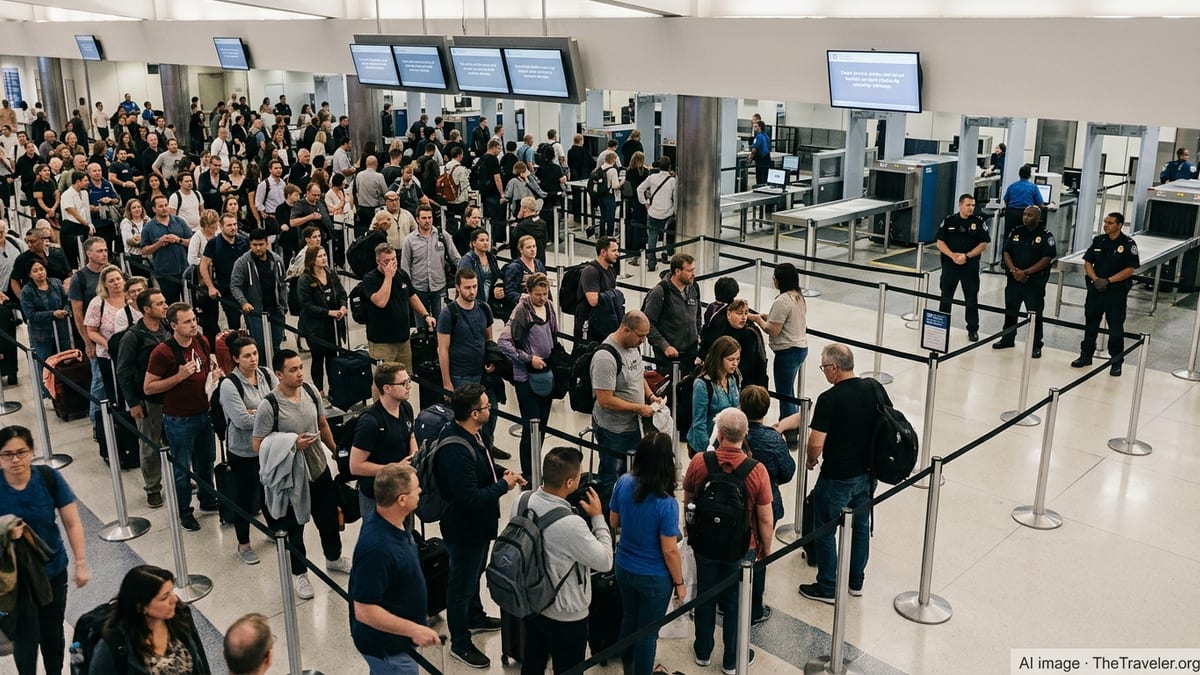
Real-time data shows PHL listed as “on time”
Publicly available FAA traffic information for September 23 lists Philadelphia International Airport in “on time” status, indicating no current nationwide air traffic control program is causing systemic arrival or departure delays at PHL today. Aggregated delay dashboards that draw on FAA data similarly show Philadelphia categorized as operating on time alongside other major hubs such as Atlanta, Chicago O’Hare and Dallas–Fort Worth.
Live flight-status boards from several tracking services on Wednesday morning show most Philadelphia departures and arrivals operating close to schedule. While individual flights still show typical short holds, early-morning PHL departures broadly appear as scheduled or recently departed rather than uniformly delayed or canceled.
The airport’s own flight information portal for September 23 lists a full slate of departures and arrivals with standard status indicators such as “scheduled,” “on time” and “departed.” These boards change throughout the day, but early data suggests that the broad, system-level disruptions seen earlier in the week have eased.
Background: FAA equipment failure triggered widespread disruption
The relatively smooth picture at PHL today follows two difficult days for travelers. Published coverage from regional and national outlets describes an equipment failure at a key air traffic control facility serving Philadelphia and Newark that began on Monday, September 21, 2026. The issue involved damaged or failed communications circuits, including a backup line affected during construction work, which led to loss of radar and frequency capabilities over part of the Northeast airspace.
The outage prompted the FAA to implement ground stops and severe flow restrictions at several major airports, including Philadelphia International, Newark Liberty and New York City area facilities. Reports indicate that as of late Monday, Philadelphia International Airport alone had logged hundreds of delays and cancellations as airlines worked around constrained airspace and reduced capacity.
Travelers posting publicly on social platforms and aviation forums on September 21 and 22 described hours-long waits, missed connections and overnight disruptions involving PHL, with some passengers facing delays of eight hours or more or rebookings into next-day itineraries. These accounts align with formal reporting describing a cascading impact as aircraft and crews were left out of position throughout the network.
By Tuesday, September 22, transportation officials and industry updates indicated that the damaged telecom lines had been repaired and that operations at Northeast airports, including Philadelphia, were resuming. However, those same reports cautioned that it would take time to clear the backlog of delayed and displaced flights.
Residual impacts may linger on individual flights
Even as system-wide metrics show Philadelphia operating on time today, some travelers may still encounter knock-on effects. Flight trackers for specific long-haul services touching PHL in recent days show departure delays of around 20 to 50 minutes on certain routes earlier this week, illustrating how aircraft and crew rotations can remain out of sync after a major disruption.
Publicly available schedules for the overnight period bridging September 22 and September 23 list a mostly normal pattern of late-evening and early-morning departures at PHL, with a small number of cancellations and scattered delays. These isolated schedule changes are consistent with airlines adjusting aircraft routings and crew duty times after the earlier ground stops rather than with a new or ongoing technical failure.
Travelers connecting through Philadelphia today may still see occasional schedule adjustments, especially on routes that depend on aircraft arriving from other previously affected Northeast airports. However, available operational data does not indicate a continuing airport-wide delay pattern specific to PHL on September 23.
What passengers flying through PHL today should expect
For travelers holding tickets into or out of Philadelphia on September 23, the current data suggests a more typical busy day at a large U.S. hub rather than the severe disruptions seen earlier this week. Airlines appear to be operating full schedules, and FAA summaries do not list any ongoing ground stops, ground delay programs or weather-driven initiatives that single out PHL.
Given the recency of the Northeast outage, airlines have issued some travel waivers covering trips involving Philadelphia and other affected airports for dates spanning September 21 through September 23. These waivers, described in public airline advisories and customer communications, generally allow travelers to adjust plans within a limited window without change fees, subject to fare rules and seat availability.
Passengers scheduled to fly today are still being encouraged in public-facing guidance from airlines and travel tools to check their flight status closely on the day of travel and to monitor departure gates, particularly if their itinerary includes tight connections or aircraft arriving from the New York or Newark area. While broad airport-wide delays are not currently indicated, individual flight disruptions remain possible as operations fully normalize.
Outlook for the rest of the week at Philadelphia International
Daily air traffic reports and live delay dashboards provide a forward-looking snapshot of potential constraints such as thunderstorms, low visibility or planned airspace flow programs. The latest available outlook for midweek shows no special FAA traffic management initiative targeting Philadelphia International beyond normal en route flow controls used across the system.
As airlines continue to work through aircraft positioning and crew scheduling following the earlier outage, observers will be watching for any renewed signs of strain at PHL, especially during peak morning and late-afternoon banks of departures. At present, however, published data indicates that operations in Philadelphia have largely stabilized.
For travelers heading through the region after September 23, the most up-to-date picture of any renewed delays will come from real-time FAA status pages, airport flight information boards and airline-specific alerts. Based on what is visible on Wednesday morning, the worst of this week’s disruption at Philadelphia International Airport appears to be in the past, even as a small number of itineraries continue to bear the aftereffects of Monday’s outage.