


More news on this day
Flights at Philadelphia International Airport have largely returned to normal on September 23, 2026, following a major air-traffic control equipment outage earlier in the week, but travelers may still encounter scattered delays as airlines work through the final effects of the disruption.
Get the latest news straight to your inbox!
Real-time FAA data shows only minor delays at PHL
Publicly available information from the Federal Aviation Administration’s Air Traffic Control System Command Center shows that, as of the early hours of Wednesday, September 23, Philadelphia International Airport is operating without any active nationwide ground stop or ground delay program specific to the airport. The FAA’s status page lists no destination-specific delays into PHL.
The same FAA dashboard indicates that both arrival and departure traffic at PHL are experiencing delays of 15 minutes or less. These short holds are categorized as general gate, taxi, or airborne delays and are within what the FAA typically considers normal variation for a busy hub airport rather than part of a broader disruption.
Travelers booked to fly into or out of Philadelphia today are being advised, through airline and airport channels, to monitor their individual flight status directly with their carrier. While systemwide metrics show only modest delays, individual flights can still be affected by late-arriving aircraft, crew scheduling issues, or weather elsewhere in the network.
National operations planning advisories issued late Tuesday referenced the possibility of additional traffic management measures for PHL if needed, but by early Wednesday there was no active ground stop or ground delay program in place for the airport.
How Monday’s outage triggered severe disruptions
The relatively calm picture this morning is a sharp contrast to conditions on Monday, September 21, when a technical failure at an air-traffic control facility serving the Philadelphia region triggered ground stops at several major Northeast airports. Published coverage from multiple outlets describes a blown or damaged circuit at the FAA’s Philadelphia-area radar and communications center, which manages traffic for PHL and contributes to control of flights at New York-area airports.
The outage led the FAA to halt or sharply restrict departures and arrivals into airports including Philadelphia International Airport, Newark Liberty International Airport, and New York’s LaGuardia and Kennedy airports. Advisories from the agency’s command center documented ground stops and ground delay programs that, at their peak, stretched for hours and produced cascading disruptions across the national airspace system.
News reports from Monday and Tuesday detail hundreds of delayed or canceled flights linked to the Philadelphia facility problem. One regional outlet reported nearly 400 delayed flights in and out of PHL on Monday alone, while national coverage noted that more than 200 flights at PHL were canceled as airlines struggled to reposition aircraft and crews.
By Monday evening and into Tuesday, officials at the national and regional level reported that the damaged telecommunications lines serving the Philadelphia-area facility had been repaired and that air traffic operations were resuming across the affected airports. However, they also cautioned that it would take time for airlines to work through the backlog of delayed and displaced passengers.
Tuesday’s lingering delays and cancellations
Although the core technical problem was resolved by late Monday, Tuesday, September 22, brought a second day of significant delays at PHL. Local television and newspaper coverage described continued cancellations and late departures, attributing the problems to a combination of residual knock-on effects from the outage and additional weather-related constraints affecting major hubs.
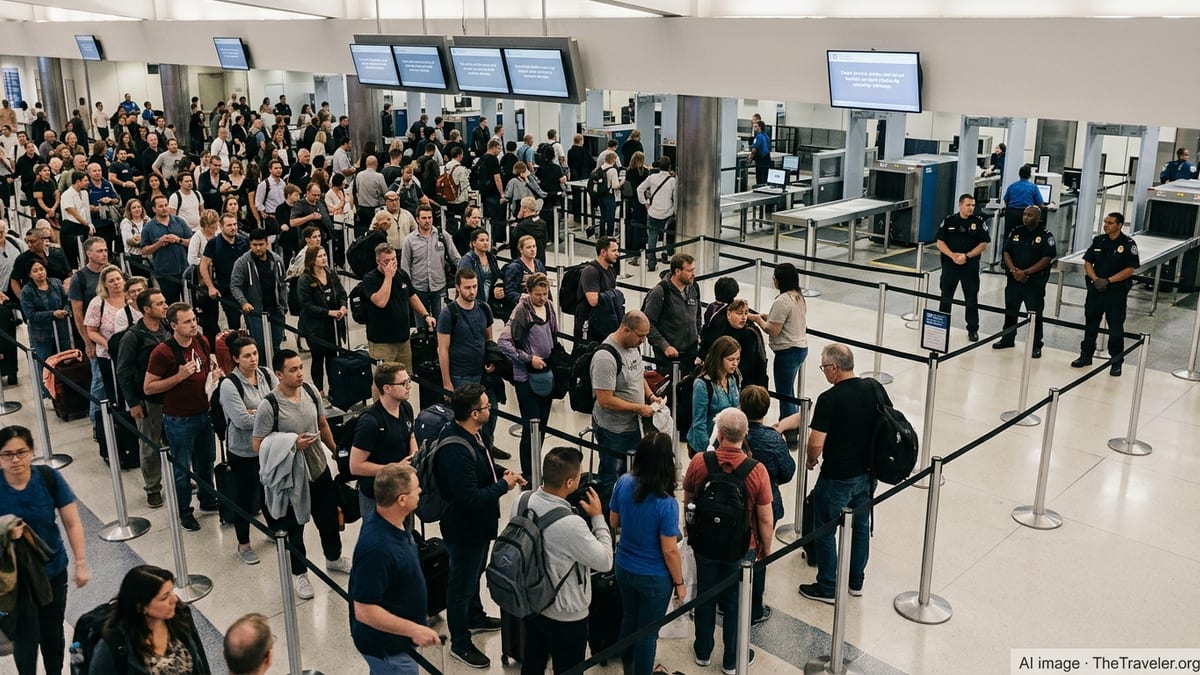
Some regional reports highlighted that Philadelphia and Newark in particular were still experiencing elevated disruption levels on Tuesday. Travelers described long lines, rolling delay estimates, and missed connections as airlines attempted to re-accommodate passengers whose flights had been canceled or severely delayed the day before.
Airlines responded with travel waivers that allowed passengers booked through September 23 to change their itineraries without standard change fees, provided they rebooked within specified dates and used the same carrier. Public posts from airline customers mentioned waiver coverage that specifically listed Philadelphia as one of the affected airports, enabling some travelers to shift to later flights while operations normalized.
By late Tuesday night, regional television coverage noted that delays were still rising by the hour at some Northeast airports, including PHL, but the character of the disruption had shifted from a centralized technical failure to a more typical mix of weather, congestion, and aircraft positioning challenges.
What travelers flying today should expect
For passengers traveling on Wednesday, September 23, the most recent FAA system summary indicates that the national airspace is operating without the extraordinary restrictions seen earlier in the week, and that PHL is not under any special nationwide traffic management program. That means flights are generally allowed to depart and arrive according to normal schedules, subject to routine sequencing and spacing.
However, some residual effects are still possible. Aircraft and crew rotations thrown off by earlier disruptions can lead to isolated delays even after a ground stop has been lifted. A flight departing Philadelphia this morning may still be using an aircraft that arrived late from another city affected by Monday’s outage or Tuesday’s weather impacts.
Travelers heading to or from Philadelphia today are likely to encounter a more typical airport experience compared with the past two days, but they may still see minor waits at the gate or on the taxiway. The most up-to-date information for individual flights remains available from airlines through their mobile apps, websites, and customer-notification systems at the airport.
Those with tightly timed connections or critical same-day commitments may wish to build in extra time or consider earlier departures where possible, in case isolated delays persist in parts of the network still recovering from the earlier disruption.
Why PHL is prone to ripple effects
The recent episode fits into a longer-running pattern of operational challenges at Philadelphia International Airport. Industry surveys and local coverage have repeatedly noted that PHL has struggled with customer satisfaction rankings, with delays, congestion, and crowded facilities frequently cited as key pain points for travelers.
As a major hub, especially for connecting traffic on large legacy carriers, Philadelphia is highly sensitive to disruptions elsewhere in the system. When severe weather, equipment failures, or airspace restrictions affect the busy Northeast corridor, PHL can quickly feel the impact in the form of ground delay programs, holding patterns, and schedule compression.
Planning documents from the airport and the FAA discuss ongoing efforts to modernize air traffic management systems and enhance runway and taxiway capacity to reduce delays over the long term. While those initiatives aim to make operations more resilient, they do not eliminate the immediate effects when a critical communications circuit fails or when severe weather sweeps through multiple hubs on the same day.
For now, the latest data indicates that the acute disruption caused by this week’s equipment outage has largely passed, and that flights at Philadelphia International Airport are moving with only modest, generally manageable delays. Travelers, however, remain advised to stay alert to changing conditions, particularly during peak travel periods when any new constraint in the Northeast airspace can rapidly translate into fresh delays at PHL.