


More news on this day
A technology failure early Tuesday caused widespread slowdowns in ticketing and check-in at San Diego International Airport, leading to long lines, crowded terminals and delays for morning departures as airlines shifted to backup procedures.
Get the latest news straight to your inbox!
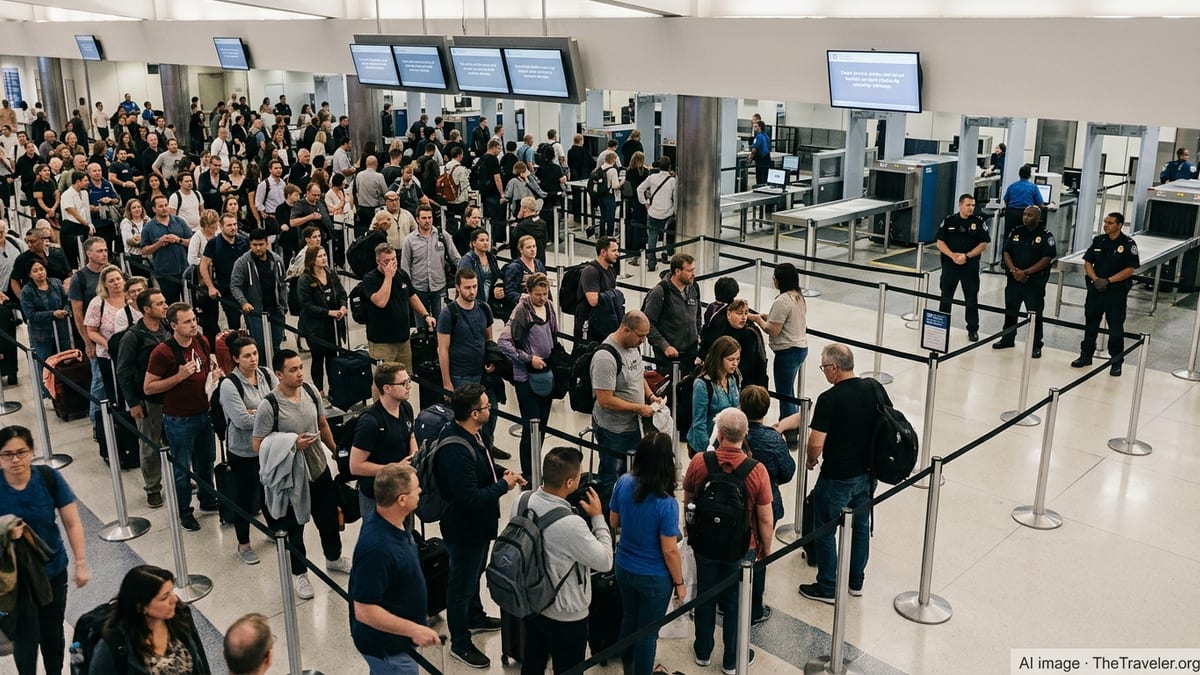
Early-morning IT failure disrupts ticketing and check-in
Publicly available information from local broadcasters indicates the disruption began around 5:30 a.m. Pacific time, affecting check-in and ticketing systems across both terminals at San Diego International Airport. Passengers arriving for early departures encountered kiosks that were intermittently unavailable, along with airline counters processing customers at a slower pace than usual.
Reports from television outlets describe an information technology issue that limited access to normal check-in tools. In response, airline staff in both terminals were seen relying more heavily on mobile devices and handwritten or printed boarding documents to move the lines forward. Social media posts from travelers showed queues stretching well beyond standard roped areas as the morning rush intensified.
Coverage from multiple news organizations notes that security checkpoints remained open, but many travelers were delayed before they could even reach screening. The technical issue came during one of the airport’s busier windows, when a cluster of early-morning departures typically pushes check-in counters and ticketing areas close to capacity.
Airport communications shared through media partners emphasized that the cause of the outage was still under review as of late morning, with no detailed explanation immediately available regarding the precise system or vendor involved.
Airlines pivot to manual workarounds as delays build
According to local news coverage, each carrier operating at San Diego International Airport implemented its own contingency measures once automated systems began to fail. Staff members at several airlines reportedly used tablets and iPads at the counter to verify reservations and issue documents, while others turned to paper-based processes for bag tags and boarding passes.
Images shared by travelers and described in broadcast reports showed agents escorting passengers through improvised check-in stations and prioritizing imminent departures. Some passengers with mobile boarding passes were able to bypass the longest lines, while others who needed to check bags or make itinerary changes encountered the most significant waits.
Available flight-tracking data and media summaries from late morning indicated a growing number of delayed departures as airlines worked through the backlog. While there were some disruptions to schedules, published accounts did not point to a large wave of outright cancellations tied solely to the ticketing issue.
Public advisories relayed through news outlets encouraged travelers to maintain contact with their specific airline for the latest departure times, rather than relying on earlier confirmations or generic airport status boards, given the evolving nature of the outage.
Airport urges early arrival and direct contact with airlines
Messages amplified by regional television and online news platforms showed San Diego International Airport urging passengers to arrive early and check flight status before leaving home. One advisory circulated around 8:30 a.m. recommended that travelers use airline apps or carrier websites to confirm departure times and, when possible, to complete mobile check-in to reduce pressure on ticket counters.
The airport’s own guidance, as reflected in its frequently asked questions, typically recommends arriving two hours before a domestic departure and three hours before an international flight. On Tuesday morning, published reports suggested that travelers facing the IT issue needed additional buffer time, especially if they had luggage to check or were traveling with families.
News coverage also pointed out that San Diego International Airport operates a single-runway airfield with a concentrated morning schedule, leaving relatively little slack when check-in or baggage handling encounters problems. Once the slowdown at the front of the journey developed, even minor issues at the counter level had an outsized impact on departure punctuality.
By late morning, publicly available updates indicated that operations were gradually improving, although some residual delays remained as airlines worked to reposition aircraft and crews whose early flights had been held at the gate.
Context: recent tech failures highlight aviation vulnerabilities
The difficulties in San Diego arrived in a period when aviation and travel systems have faced repeated technology-related interruptions. Earlier this year, published coverage documented a global outage tied to a cybersecurity software update that temporarily disrupted airline check-in and airport computer systems in multiple countries, prompting large-scale delays and cancellations in some hubs.
Similar episodes at other major airports in recent years, including incidents reported at Los Angeles and Seattle, have underscored how dependent modern air travel has become on integrated IT systems for everything from baggage routing to boarding pass issuance. Even when air traffic control and security screening remain fully functional, an outage in the check-in layer can quickly translate into long lines and missed flights.
Industry analyses cited in recent reporting note that many airports and airlines maintain manual fallbacks, but these are designed primarily as temporary stopgaps. When an outage coincides with peak travel hours, as it did in San Diego on Tuesday morning, staff and systems can struggle to keep pace with normal passenger volumes.
The San Diego incident once again drew attention to the broader resilience of aviation technology, including questions about redundancy, vendor oversight and the speed at which updates or configuration changes are deployed on mission-critical systems.
What travelers can do on days with system disruptions
Travel experts and transportation analysts quoted in prior coverage of similar outages often stress the value of preparing for occasional breakdowns in the digital infrastructure that supports air travel. Completing online check-in as early as carriers allow, generally 24 hours before departure, can reduce dependence on airport kiosks if they go offline.
On days when technical issues are widely reported, publicly available travel guidance suggests that passengers plan to arrive even earlier than usual, particularly at airports like San Diego that experience concentrated peaks in morning and evening traffic. Carry-on-only travel, when feasible, can also help reduce exposure to the slowest parts of the process when baggage systems are affected.
For those who must check bags, monitoring airline alerts, using mobile boarding passes where possible, and heading directly to the correct terminal and check-in zone can help save a few critical minutes. San Diego International Airport’s own materials emphasize working directly with the airline operating the flight, rather than relying solely on general airport information, when disruptions occur.
As of Tuesday afternoon, publicly available information indicated that the specific cause of the San Diego ticketing failure had not yet been fully detailed. Travelers with upcoming flights were advised through media reports to keep a close watch on updates from both the airport and individual airlines in case of further knock-on effects.