


In an era of budget airlines, short attention spans, and Instagram-optimized travel, the idea of spending half a day wandering around old farmhouses or reconstructed streets can sound, at best, like a niche interest. Yet open-air museums from Stockholm to Aarhus are reporting healthy visitor numbers, leaning into immersive storytelling, food, and live crafts to stay relevant. For modern travelers planning tightly packed itineraries, the real question is simple: is an open-air museum still worth your valuable time and money?
Get the latest updates straight to your inbox!
What Exactly Is an Open-Air Museum Today?
Open-air museums began in northern Europe in the late 19th century as a way to preserve traditional buildings that were disappearing from rapidly modernizing landscapes. The classic example is Skansen in Stockholm, often cited as the world’s first open-air museum, where historic wooden houses, farmsteads, and workshops were moved from around Sweden and reassembled in one large park-like setting. The concept spread quickly, inspiring similar projects across Europe and later in North America and Asia.
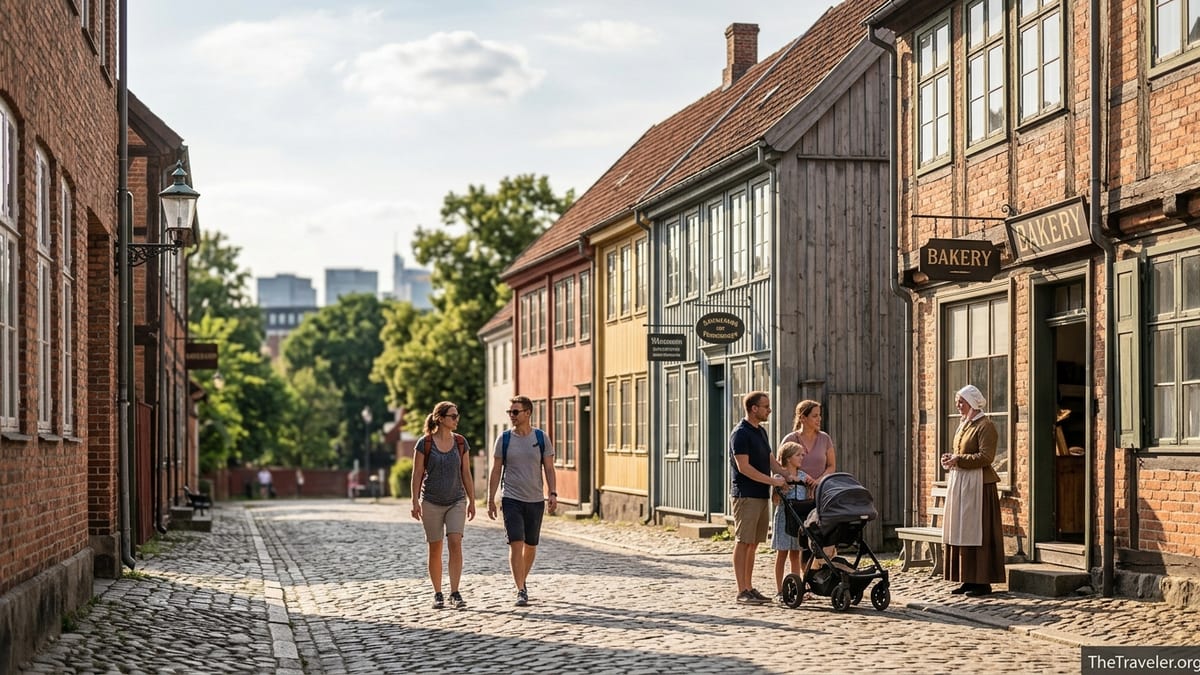
In 2026, though, these places are not just collections of pretty old buildings. Modern open-air museums increasingly function as full-scale “time travel environments,” with costumed interpreters, seasonal festivals, food from historic recipes, and interactive workshops. Den Gamle By in Aarhus, Denmark, for instance, lets visitors walk through Danish town life from the 1700s to the late 20th century, including recreated shops and apartments from the 1970s. Rather than look at artifacts in glass cases, you step into complete streets and interiors designed to feel lived in.
This shift responds to changing traveler expectations. Visitors used to static labels now tend to look for immersive, story-driven experiences that justify ticket prices and travel time. Many open-air museums have added modern visitor centers with cafes, digital exhibits, and children’s play areas. Norsk Folkemuseum in Oslo, which spans around 160 historic buildings from across Norway, blends a contemporary main building and indoor galleries with a large outdoor area of farms, townhouses, and the 12th-century Gol Stave Church re-erected on site.
The result is that “open air museum” can now mean anything from a quiet, contemplative rural site to a bustling village of costumed characters and seasonal festivals. For travelers, understanding which type you are heading to is key to deciding whether it matches your style.
What the Experience Feels Like on the Ground
At their best, open-air museums feel like walking onto a film set where you control the pace. In Den Gamle By, you move from cobbled lanes lined with 19th-century townhouses into a 1920s street with a functioning bakery and then forward to mid-20th-century apartments decorated down to the radio programs and magazines of the era. Many visitors describe it less as “going to a museum” and more as “wandering through history,” which can appeal even to travelers who usually avoid galleries and traditional exhibits.
Norsk Folkemuseum offers a different kind of immersion. The site is spread across a large hill on Oslo’s Bygdøy peninsula, with wide gravel paths, patches of forest, and clusters of wooden farmsteads. As you wander from a coastal fishing village setting to mountain farm buildings, you are constantly outdoors, with the smell of pine and, in summer, farm animals in some paddocks. On busy days you may encounter staff in traditional dress demonstrating crafts, baking flatbread, or explaining how families once lived in dark-timbered rooms with open hearths.
Social interaction is a major part of the appeal. Beamish Museum in northeast England, for example, has long been known for relying heavily on costumed interpreters to share stories rather than written labels. Visitors can chat with a “1913 shopkeeper,” ask about prices in old shillings, and compare them to modern costs. Many travelers find that these conversations stick in their memories more than any artifact description.
Seasonality matters a lot. In northern Europe, winter visits can feel atmospheric but quiet. Several visitor guides note that places like Norsk Folkemuseum can resemble a ghost town on cold weekdays, with few outdoor activities running. In contrast, summer programs can include guided tours, daily demonstrations, and special events that make the site feel lively but also busier and, at times, more touristy. Modern travelers who value atmosphere over crowds should check seasonal schedules before committing half a day.
Costs, Time, and Practical Trade-Offs
From a practical point of view, open-air museums demand two resources that modern travelers guard carefully: time and money. Ticket prices vary by country, but large flagship sites in Scandinavia and the UK typically charge the equivalent of around 20 to 35 US dollars for adult admission, with discounts for students and families. Den Gamle By and Norsk Folkemuseum are broadly in this range, often offering seasonal passes or combination deals with other local attractions.
For budget travelers, that price has to compete with free city walks, public parks, and low-cost attractions. However, the ticket often covers several hours of entertainment. Many visitors spend three to five hours at Den Gamle By alone, especially if they sit down for coffee at a historic-style café or join guided tours. When you divide the cost by the time you actually spend on site, open-air museums can compare favorably to short, high-priced attractions like observation decks.
Time logistics deserve serious consideration, especially on short city breaks. In Oslo, Norsk Folkemuseum is located on Bygdøy, a short bus or ferry ride from the center. Travel writers often suggest combining it with nearby maritime museums, turning the peninsula into a full day of sightseeing. That is rewarding but may not suit a traveler who only has 24 hours in the city and wants to prioritize contemporary neighborhoods or fjord cruises. Similarly, a side trip to Den Gamle By from Copenhagen involves at least several hours of travel to Aarhus, which some locals argue is too much if your stay in Denmark is only a few days.
On the plus side, many open-air museums have modern amenities that make them easy stops even for families. Visitor centers generally include restaurants or cafés, gift shops, stroller-friendly paths in key areas, and indoor sections for rainy days. Larger sites like Norsk Folkemuseum highlight areas with good accessibility and note that some older buildings may be difficult for wheelchairs. Planning ahead with a site map and checking opening hours, which can vary by season, helps avoid frustration.
Who Gets the Most Value from an Open-Air Museum?
Not every traveler will find an open-air museum a highlight, but for some types of visitors the format is almost ideal. History enthusiasts are obvious beneficiaries. If you already enjoy reading about social history or architecture, walking through a recreated 19th-century Welsh farmhouse at St Fagans National Museum of History near Cardiff or stepping into a Polish wooden church at Skansen in Stockholm can bring those interests to life in tangible ways.
Families with children also tend to do well in these environments. Compared with conventional museums full of fragile objects and “do not touch” signs, open-air sites generally offer more space to roam, outdoor play areas, and informal learning opportunities. At Norsk Folkemuseum, for instance, family-focused events with animals, crafts, and open houses are scheduled on many weekends and holidays. Kids can move between houses, peer into kitchens, and sometimes try basic tasks like churning butter or writing with chalk, all of which break up the day and make history less abstract.
Photographers and casual content creators increasingly see open-air museums as low-stress places to capture evocative images. Den Gamle By’s colorful streets and vintage interiors, or Skansen’s hilltop views over Stockholm, provide historic backdrops without the crowds of major city centers. For travelers who care about their visual travel diaries, this can quietly tip the scales in favor of a visit, even if they are not naturally drawn to historical interpretation.
On the other hand, some travelers will likely feel underwhelmed. If your main interest in a destination is high-end dining, nightlife, or contemporary design, you may find half a day among thatched roofs and iron stoves a lower priority. Similarly, if you dislike walking or spending extended time outdoors in all weather, a sprawling hillside site like Norsk Folkemuseum might be more tiring than rewarding. For these visitors, a compact indoor museum or a short architectural walking tour in the modern city could offer a better return on time invested.
Modern Storytelling: From Nostalgia to Social Issues
One of the more surprising reasons open-air museums can still feel relevant in 2026 is their evolving approach to storytelling. Many started life with a strong nostalgic tone, focusing on “simpler times” and picturesque rural life. Today, curators increasingly use these historic settings to discuss complex topics such as industrialization, migration, class, gender roles, and environmental change.
Den Gamle By is a good example of this shift. Alongside its 18th-century streets, it has created 20th-century townscapes, including post-war and 1970s environments, and has experimented with recreated spaces designed specifically for visitors with dementia, where familiar brands and interiors can trigger memories. This shows how a museum that looks, at first glance, like a charming old town can also become a platform for contemporary conversations about health, memory, and community.
Similarly, Beamish Museum uses costumed staff not just for quaint effect but to talk visitors through the realities of life in coal-mining communities, including long working hours, child labor in earlier periods, and the impact of industrialization on rural families. For travelers interested in social history rather than kings and battles, this kind of grounded, everyday storytelling can be powerful.
This more critical, nuanced framing helps open-air museums avoid feeling like historical theme parks. When done well, you come away not just with atmospheric photographs but with a richer sense of how ordinary people lived and how that shapes the places you are visiting today. For many modern travelers, especially those who value context and meaning alongside entertainment, that is a strong argument in favor of visiting.
Planning a Visit: How to Judge If It Is Worth Your Time
Deciding whether an open-air museum belongs in your itinerary comes down to matching the site’s strengths with your personal priorities and the realities of your schedule. Start by looking at what era and themes the museum covers. If you are traveling in Norway and already exploring fjords and wooden villages, you might decide that Norsk Folkemuseum largely duplicates what you will see elsewhere. On the other hand, if your time is mostly in Oslo and Bergen, the museum’s concentrated collection of regional buildings could offer a useful overview you would not otherwise get.
Next, check the current season’s program. Many large museums publish detailed summer and holiday calendars listing guided tours, craft demonstrations, concerts, and markets. A day when costumed interpreters are baking, blacksmithing, or running children’s activities can feel very different from a quiet Tuesday in late autumn. If your dates line up with a major event, such as a Christmas market at Skansen or a midsummer celebration, that can make the visit more memorable but possibly also more crowded and more expensive due to special ticketing.
Think realistically about logistics. Ask yourself how much door-to-door time you will spend reaching the museum and returning, and what you are giving up to make room for it. Travelers with only a single full day in Stockholm, for example, may reasonably prioritize Gamla Stan’s medieval streets and a boat tour over a half-day at Skansen. Those staying several days, especially with children, might value the slower pace and greenery of the open-air site as a break from city crowds.
Finally, set expectations correctly. Open-air museums reward wandering, lingering conversations with guides, and attention to small details like tools on workbenches or posters on walls. If you rush through in 45 minutes between other commitments, you may leave wondering what the fuss was about. Travelers who allocate a solid half day, dress for the weather, and arrive with curiosity tend to report much higher satisfaction, regardless of the specific site.
The Takeaway
For modern travelers accustomed to tightly edited city breaks and social-media checklists, open-air museums are not obvious headliners. They demand time, a reasonable ticket budget, and a willingness to slow down. Yet when chosen and timed well, they can deliver exactly what fast travel often lacks: context, atmosphere, and human stories that connect you to the places you are visiting.
Whether it is walking through a recreated Danish high street at Den Gamle By, exploring regional farmsteads and a medieval church at Norsk Folkemuseum, or watching live crafts at Beamish, these institutions are quietly reinventing themselves for contemporary audiences. They combine outdoor space, interactive storytelling, and hands-on experiences in a way that suits families, history fans, and travelers who enjoy seeing how ordinary people once lived.
If your itinerary is already packed with open-air historic quarters, or if your main interests lie in ultra-modern culture and nightlife, you might reasonably skip them. But if you have a half day to spare and care about understanding a country beyond its postcard views, an open-air museum is often worth both the ticket price and the detour. In a travel world focused on speed and novelty, they remain one of the more grounded, memorable ways to spend a day.
FAQ
Q1. What is the main difference between an open-air museum and a regular museum?
An open-air museum spreads historic buildings and environments across a large outdoor site, often with whole streets or farms reconstructed, whereas regular museums mainly display objects indoors in galleries. You walk through real or relocated structures rather than viewing items behind glass.
Q2. How much time should I plan for an open-air museum visit?
Most travelers find that three to five hours is a comfortable amount of time for major open-air museums, allowing for walking, short breaks, and participation in a tour or demonstration. Smaller sites may take two hours, but rushing through in under an hour usually feels unsatisfying.
Q3. Are open-air museums suitable for children?
Yes, they are generally very family friendly. Children can move more freely outdoors, explore houses and workshops, and often join simple hands-on activities. Many museums schedule special weekend or holiday programs specifically aimed at families, with animals, crafts, and interactive storytelling.
Q4. Are visits to open-air museums good value for budget travelers?
Value depends on your priorities, but tickets typically cover several hours of experiences in one place, which can be good compared with short high-priced attractions. If you are on a strict budget, check for student, youth, or family discounts and consider visiting on days with extra programming to get more from the entrance fee.
Q5. What is the best time of year to visit an open-air museum?
Late spring to early autumn usually offers the richest experience in northern climates, when outdoor areas are fully open and more live demonstrations run. Winter visits can be atmospheric, especially for Christmas markets, but may have fewer activities and can feel very quiet on weekdays.
Q6. Do I need to join a guided tour, or can I explore on my own?
You can usually do both. Most open-air museums are designed for self-guided wandering, with maps and information signs. Many also offer scheduled tours or short talks that provide deeper context. Joining at least one tour can enrich your understanding without locking you into a rigid schedule.
Q7. How accessible are open-air museums for people with mobility issues?
Accessibility varies by site. Visitor centers and main paths are often designed for wheelchairs or strollers, but older buildings can involve steps, uneven floors, or steep slopes. It is wise to check the museum’s access information in advance, study the map, and plan a route that focuses on the most accessible areas.
Q8. Will I enjoy an open-air museum if I am not very interested in history?
Possibly, especially if you enjoy photography, people-watching, or quiet green spaces. Many travelers who are not history enthusiasts still appreciate the atmosphere, food, and chance to see traditional crafts or animals. However, if you strongly prefer contemporary culture and nightlife, other activities might suit you better.
Q9. Can I visit more than one open-air museum in the same trip without it feeling repetitive?
Yes, particularly if they focus on different regions or themes. For example, an urban-focused museum with reconstructed town streets will feel quite different from a rural farmstead site. That said, if your time is limited, it is usually better to choose one well-suited museum and explore it thoroughly.
Q10. How can I decide if a specific open-air museum is worth adding to my itinerary?
Look at what periods and themes it covers, how easy it is to reach from where you are staying, and what special events run during your travel dates. Compare the time and cost with what you would otherwise do. If the museum offers stories, settings, or activities you cannot easily experience elsewhere on your trip, it is likely worth including.