


More news on this day
Record rainfall around Bangkok has flooded key roadways and disrupted operations at Suvarnabhumi International Airport, leaving hundreds of South Korean passengers stranded overnight for up to 14 hours as aircraft and crew were delayed.
Get the latest news straight to your inbox!
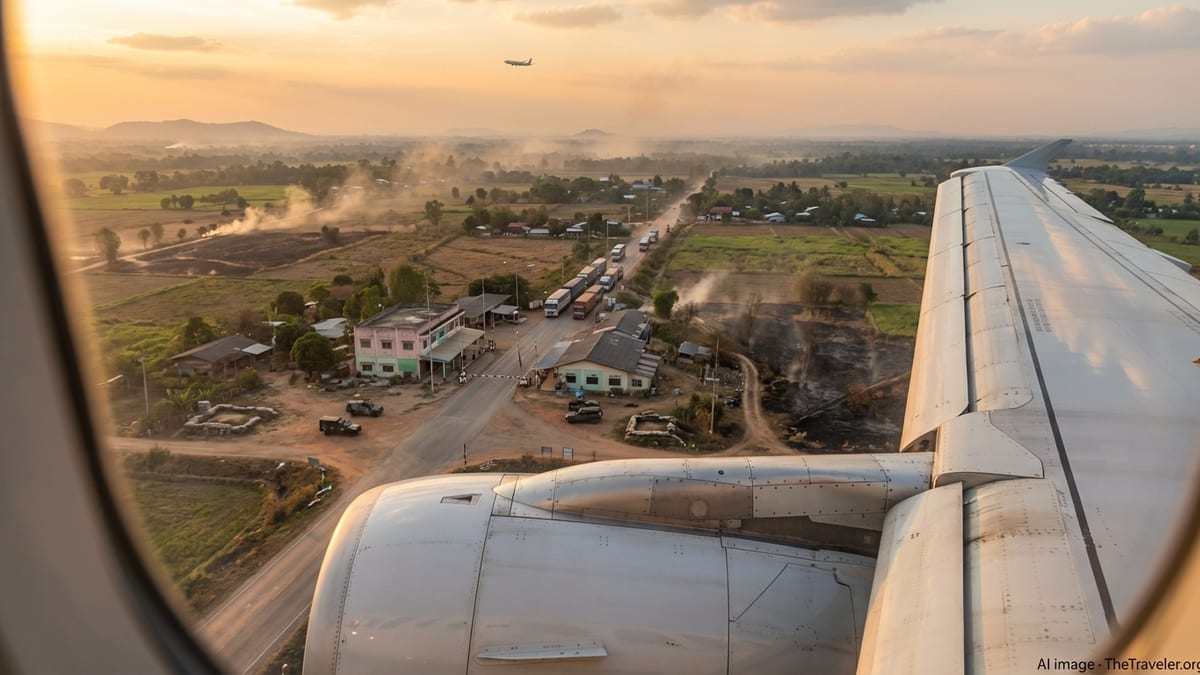
Record rains swamp Bangkok and disrupt air travel
Publicly available information from Thai and Korean media indicates that more than 330 millimeters of rain fell on the Bangkok metropolitan area between September 24 and 27, 2026, triggering extensive flooding across the Thai capital. Low lying neighborhoods reported water levels reaching chest height, while images from major arteries showed cars partially submerged and traffic at a standstill.
Bangkok authorities have reported that about 52,000 households have been affected by the flooding, with around 4,900 residents moving into roughly 200 emergency shelters set up in schools and temples around the city. Several districts remain under a formal flood emergency as cleanup and drainage work continues.
The heavy rain arrived during Thailand’s wet season but exceeded typical totals, with local coverage describing it as one of the most intense multi day downpours in recent years. As water pooled on roads and around key logistics hubs, disruptions rippled quickly into ground transport and aviation.
Suvarnabhumi International Airport, Bangkok’s main international gateway, has remained physically open, yet ground handling and staff movements have been hampered. Airport statements and local news reports describe reduced staffing levels, baggage delays and longer aircraft turnaround times as workers struggled to reach the airport through flooded streets.
Hundreds of Korean passengers stuck overnight at Suvarnabhumi
Among the most affected travelers were passengers booked on Thai Airways flights from Bangkok to South Korea on the night of September 27 and into the morning of September 28. Korean language media report that several hundred South Korean nationals were left waiting at Suvarnabhumi for more than 10 hours, with some accounts describing delays that stretched beyond 14 hours from their original departure times.
One Seoul bound Thai Airways flight scheduled to depart around 11:10 p.m. on September 27 reportedly saw its departure time repeatedly pushed back into the early hours, moving first to after 1:30 a.m., then to 3:00 a.m., 4:00 a.m. and eventually beyond 6:00 a.m. Another service originally set to leave at about 11:35 p.m. was also delayed. As schedules shifted through the night, passengers remained at the gate area waiting for updated information.
Published Korean coverage notes that many of these travelers had arrived at Suvarnabhumi several hours ahead of departure due to the heavy rain, only to find themselves effectively confined to the terminal as the flooding worsened outside. Reports describe families with children and group travelers resting on seats and floors through the night as they waited for confirmation that crew and ground staff could reach the airport and that aircraft would be cleared for departure.
Accounts shared with domestic Korean outlets also highlight passengers’ frustration at limited on site communication and the absence of airline staff at some gates during the longest delays. Coverage indicates that Korean diplomatic staff in Thailand were monitoring the situation, but there have been no reports of injuries among the affected air travelers.
Thai Airways operations and staffing challenges
Information carried by Thai and Korean news organizations suggests that the main factor behind the prolonged delays was not flooding on the runway itself but the difficulty of moving crew and ground personnel to the airport. Staff reportedly struggled to cross flooded sections of eastern Bangkok, leading to shortages in cabin crew, maintenance workers and baggage handlers needed to turn around departing flights.
Thai Airways flights on the Seoul route are typically operated from Suvarnabhumi’s main international concourse, and their schedules require precise coordination between inbound and outbound services. When inbound aircraft arrived late due to the weather and crews could not be repositioned on time, downstream evening departures to destinations such as Incheon were pushed back by multiple hours.
The situation was compounded by the high volume of weekend travel between Thailand and South Korea, a route that has seen strong demand from tourists and migrant workers. With services already running close to capacity, there was little room to rebook stranded passengers onto alternative flights at short notice.
Airports of Thailand, the operator of Suvarnabhumi, has publicly acknowledged disruptions to flight operations and baggage handling related to the flooding. The company has stated in Thai press coverage that it is working to clear access roads, coordinate with public transport providers and stabilize staffing levels, particularly for peak departure periods.
Wider impact on tourism and travel in Thailand
The flooding has come during a busy period for Thai tourism, as travelers from East Asia and beyond take advantage of late rainy season deals and shoulder season hotel rates. South Korea has been one of Thailand’s fastest growing source markets in recent years, and Korean tourists are a common sight in Bangkok, Pattaya and island destinations.
Travelers currently heading to or from Bangkok are being urged, in publicly available advisories, to allow extra time to reach both Suvarnabhumi and Don Mueang airports, particularly when traveling during evening storms or at high tide. Local transport updates indicate that the Airport Rail Link, Bangkok’s BTS Skytrain and MRT subway have generally continued operating, providing alternative routes when surface roads are flooded, although services may be crowded.
Hotel operators in central Bangkok report that most tourist districts remain accessible, even as some residential neighborhoods and low lying suburbs are still dealing with standing water. In beach destinations such as Pattaya, localized flooding has affected some roads and low areas, and separate Korean media coverage notes that a South Korean national went missing in floodwaters near the city during the same period.
Tourism agencies in Thailand have emphasized that visitor services are largely functioning but acknowledge that journeys may take longer than usual and that some attractions or neighborhoods could be temporarily inaccessible. Travelers are encouraged to monitor local weather reports, check flight status frequently and stay in contact with airlines for any schedule changes.
What travelers should know if flying through Bangkok now
For passengers scheduled to transit Bangkok in the coming days, current information suggests that both of the city’s airports remain open and operational, but with the possibility of sporadic delays when heavy rain coincides with peak travel times. Airlines serving Suvarnabhumi, including Thai Airways and Korean carriers, continue to post schedule updates through their customer channels as the situation evolves.
Travel advisories highlight the importance of checking in online where possible, traveling to the airport earlier than usual when rain is forecast, and considering rail options to avoid flooded road segments. Passengers with tight connections are being warned by travel forums and news coverage that connection times may need to be longer than normal until conditions stabilize.
For those already in Bangkok, local reports describe the flooding pattern as highly localized, with some streets and intersections under water while nearby areas remain dry. This means that route planning, including the use of the Airport Rail Link and elevated train lines, can significantly reduce disruption, even on days of intense rain.
While drainage efforts are ongoing and water levels are expected to recede in many neighborhoods within days, authorities continue to monitor weather forecasts closely. Travelers bound for or transiting through Bangkok in early October are being advised by tourism information channels to stay up to date on both flight operations and local transport conditions, particularly if their itineraries include late night airport transfers or visits to outlying districts.