


More news on this day
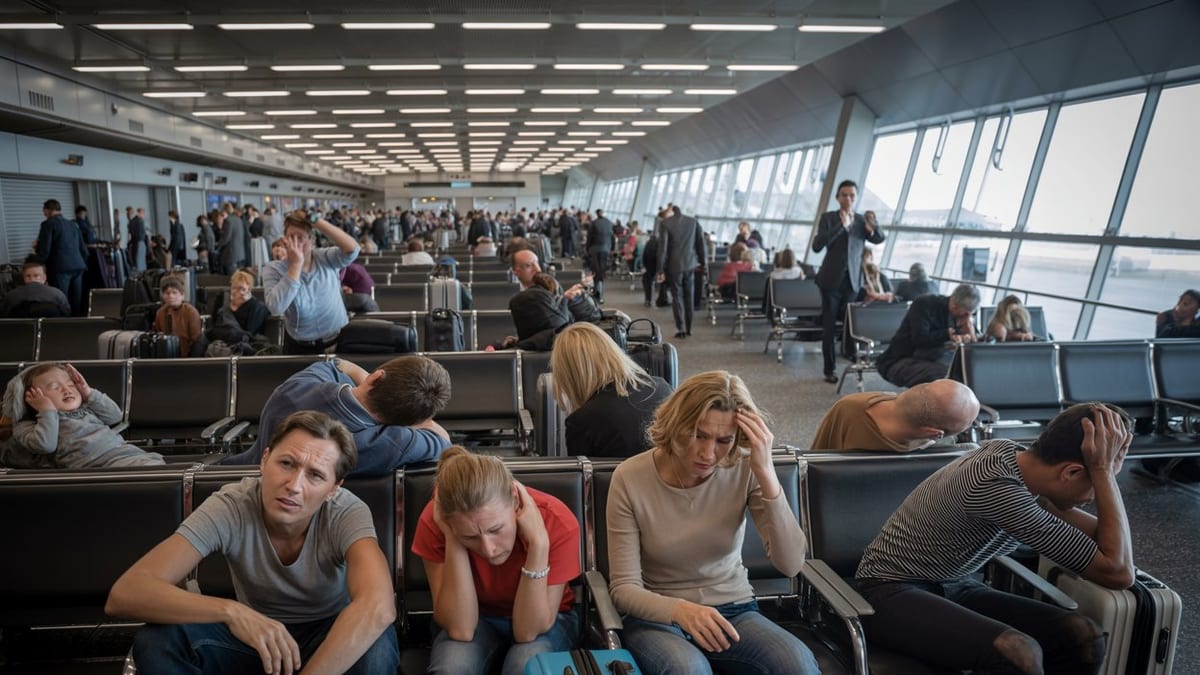
Hundreds of South Korean travelers attempting to depart Bangkok have been stranded for more than 14 hours at Suvarnabhumi Airport after record rainfall flooded large parts of the Thai capital, disrupting road access and delaying outbound flights to Seoul and other Korean destinations.
Get the latest news straight to your inbox!
Record Rains Bring Bangkok to a Standstill
Publicly available meteorological data and local media reports indicate that Bangkok has received around 300 to 330 millimeters of rain over the past several days, an amount that has inundated key districts and swamped major traffic arteries. Streets in low lying neighborhoods turned into brown waterways, while underpasses and frontage roads near the main expressways to the airports saw extensive waterlogging.
On September 27 and 28, 2026, the heaviest downpours coincided with evening rush hour, creating gridlock across the city. Images shared by local outlets and travelers show cars and buses stalled in waist deep water and long lines of vehicles backed up on roads leading toward Suvarnabhumi International Airport on the eastern side of Bangkok.
Visitor information published by the Tourism Authority of Thailand in recent days notes that both Suvarnabhumi and Don Mueang airports remain operational but warns that localised flooding and traffic congestion around Bangkok can significantly slow journeys to and from the terminals. Travelers are being urged in official advisories to allow several extra hours of travel time when heading for flights.
Hundreds of Koreans Facing Overnight Airport Ordeal
Against this backdrop, Korean language news coverage on September 28 describes scenes of hundreds of Korean passengers stuck inside Suvarnabhumi’s departure area through the night. Many had arrived early on the evening of September 27 for return flights to Incheon and other Korean airports, only to encounter mounting delays as crew members and incoming aircraft struggled to reach the airport through the flood affected city.
The reports describe travelers waiting in the terminal for more than 14 hours, with departure times repeatedly pushed back into the early morning. Some accounts highlight confusion among passengers as they monitored changing flight information displays while heavy rain continued outside and ground access routes remained congested or partially flooded.
Coverage in Seoul based outlets indicates that at least one large group booked on a Thai carrier experienced an extended overnight wait after check in. The combination of delayed inbound aircraft, crew unable to reach the airport on time because of submerged roads, and weather related air traffic restrictions contributed to the prolonged disruption.
The incident adds to a growing list of weather related interruptions that have affected travelers in and out of Thailand’s main gateway this rainy season, underscoring how quickly tropical downpours can cascade into aviation delays when city infrastructure is under strain.
Airlines and Thai Agencies Outline Support Measures
In parallel with the latest flooding, Thai government information platforms and airline announcements have set out assistance measures for affected passengers. Summaries published on official portals detail a compilation of airline policies, including options to change travel dates, reroute itineraries, or request refunds for flights disrupted by the flooding situation in Bangkok.
One major regional carrier with a hub in Bangkok has publicised temporary flexibility for ticket changes on flights touching the capital, while notices shared by airport linked agencies emphasize that passengers should contact their airlines directly for the most up to date rebooking conditions. These measures apply to both international and domestic travelers whose plans are impacted by weather or access problems.
Thailand’s aviation regulators have also urged carriers to coordinate closely with airports to manage backlogs and to keep passengers informed about expected departure times. Public communications stress that airports remain open, with runway and terminal operations continuing, but acknowledge that staffing levels and aircraft rotation can be affected when flooding slows the movement of workers and vehicles across the city.
For stranded Korean travelers at Suvarnabhumi, these support policies mean that those who miss connections or choose to postpone their journeys may have options to adjust their tickets without standard penalties, depending on the airline and fare class. However, the immediate challenge for many on September 27 and 28 has been the simple necessity of waiting in crowded gate areas until flights can safely depart.
Ground Access Emerges as the Weakest Link
Information released by Thai transport and tourism agencies in recent days consistently highlights ground transport as the primary vulnerability in severe weather, rather than the airports themselves. While Suvarnabhumi’s runways and taxiways have remained usable, several approach roads in the surrounding Lat Krabang and Bang Phli areas have experienced standing water, slowing private cars, taxis, and airport buses.
Guidance for visitors now advises avoiding heavily flooded routes and, where possible, using elevated expressways and airport rail links that are less exposed to surface flooding. Local travel forums and social media posts from the weekend describe some passengers arriving at Suvarnabhumi in reasonable time via the Airport Rail Link, while others reported multi hour taxi journeys from central districts as traffic ground to a halt in submerged streets.
Don Mueang International Airport in northern Bangkok, an important base for low cost carriers, is reported to be operating flights as scheduled but similarly affected by disruption on surrounding roads. Aviation focused updates note that aircraft movements have continued, yet passengers and staff have faced difficulties reaching the terminal, particularly during the most intense rainfall windows.
For travelers heading to or from Bangkok in the coming days, publicly available guidance recommends checking real time traffic and weather information before setting out, allowing substantially longer transfer windows, and staying in close contact with airlines for any schedule changes prompted by the evolving flood situation.
What the Disruption Means for Upcoming Travel
As floodwaters slowly recede in some Bangkok neighborhoods, Thai authorities and tourism bodies are emphasizing that the city and its airports remain open, but that conditions can change quickly with further heavy showers. Travel advisories suggest that visitors bound for Bangkok monitor local news and official visitor information channels on the days leading up to their flights.
The experience of the Korean passengers stranded for 14 hours at Suvarnabhumi illustrates how weather impacts can ripple across an entire travel day. Even when infrastructure such as terminals and runways is functioning, the combination of delayed crews, aircraft repositioning, and jammed access roads can turn a routine overnight flight into an extended airport stay.
For those planning itineraries that require connections through Bangkok to other Southeast Asian destinations, travel specialists are recommending more generous layover times during the current rainy spell. While future storms may not repeat the exact scale of this week’s flooding, the latest disruption has renewed attention on how monsoon weather, urban drainage challenges, and dense traffic intersect at one of Asia’s busiest aviation hubs.
In the short term, travelers arriving from or departing to South Korea are being advised in publicly available guidance and media reports to reconfirm flight status on the day of travel, depart for the airport earlier than usual, and prepare for possible delays at check in, security, and baggage claim as airlines and ground handlers work through backlogs created by the flooding.