


More news on this day
Severe flooding across Bangkok has affected an estimated 700,000 residents, triggering special public holidays, large-scale evacuations and widespread travel disruption as Thailand endures days of intense monsoon rain.
Get the latest news straight to your inbox!
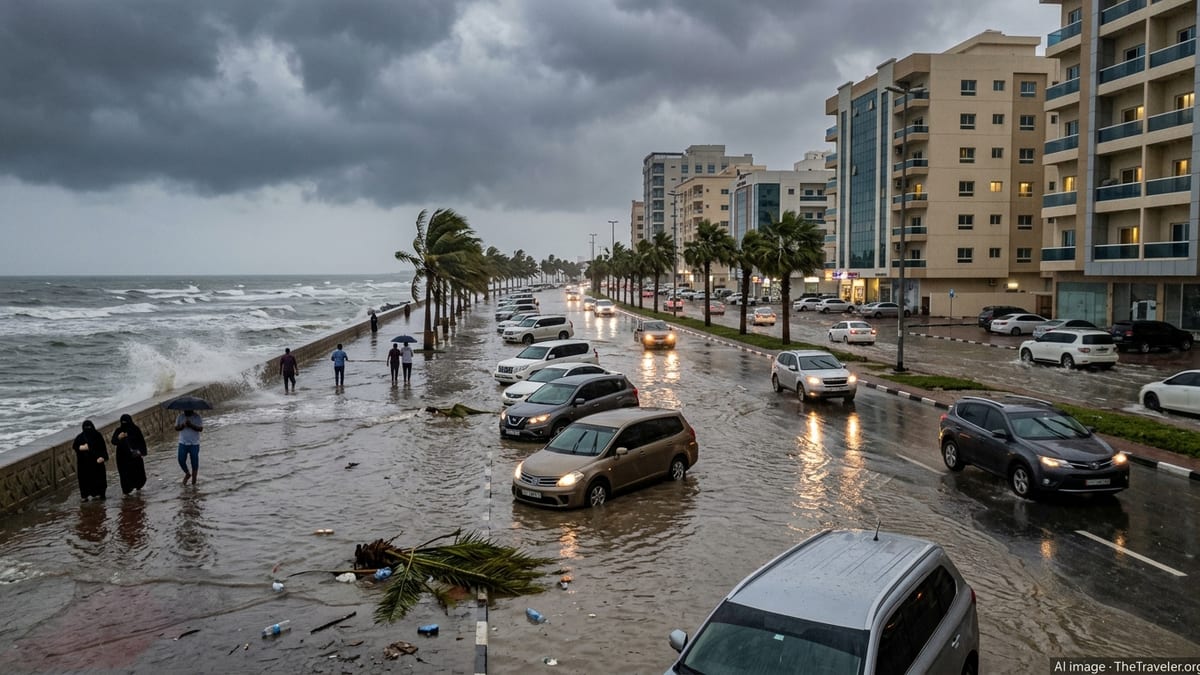
Flood emergency deepens across Bangkok’s districts
Publicly available information from Thai and international outlets indicates that continuous heavy rain through late September has left extensive areas of Bangkok under water, particularly in low-lying eastern and northern districts. Reports describe accumulated rainfall of more than 30 centimetres in parts of the capital, overwhelming the city’s drainage canals and leaving streets submerged for days.
Coverage from regional news agencies notes that roughly 329,000 households, or about 700,000 people, have been affected across the metropolitan area, with high water levels reported in districts such as Lat Krabang, Bang Kapi, Khan Na Yao, Sai Mai, Suan Luang, Saphan Sung and Lak Si. Water is being channelled through major canals including Prawet Burirom and Lat Phrao, but canal levels remain high and in some locations continue to rise as runoff from surrounding provinces reaches the city.
National reports highlight that schools in several parts of Bangkok have been designated as temporary shelters, while city authorities and the army have deployed high-clearance vehicles and boats to move people out of inundated communities. Thousands of residents in low-lying neighbourhoods on the fringes of the capital have reportedly left their homes, either temporarily relocating to shelters or moving to stay with relatives in drier areas.
In response to the disruption, the Thai government has declared a two-day special holiday in Bangkok and three neighbouring provinces, including Nonthaburi, Pathum Thani and Samut Prakan. The measure, announced for Monday and Tuesday, is intended to reduce commuter movements, ease pressure on flooded transport corridors and allow drainage work to continue with fewer vehicles on the roads.
Travel disruption: roads, rail and flight delays
The flooding has had an immediate impact on mobility within Bangkok and beyond. A citywide update on Sunday 27 September identified at least 31 roads that motorists were advised to avoid, many with standing water at depths of 20 centimetres or more. In some stretches, small vehicles were reported unable to pass, and traffic images circulating in local media show long tailbacks where lanes narrow around flooded sections.
Among the affected corridors, reports have highlighted key routes such as parts of Lat Phrao Road, sections of Phetchaburi Road and low-lying suburban arteries that feed into the city’s expressways. Even where rain has started to ease, large pools of water remain on the surface, and drainage teams are working to pump water from intersections, underpasses and frontage roads that sit below canal level.
Intercity travel has also been hit. National coverage indicates that several long-distance train and bus services have been suspended or rerouted because of flooded tracks and highways in central and eastern Thailand. Travellers heading between Bangkok and provinces in the lower Northeast and East have been advised to expect longer journey times and potential last-minute changes to schedules as operators respond to evolving conditions.
Air travel is continuing, but not without disruption. Travel industry briefings report that Bangkok’s main international gateway, Suvarnabhumi Airport, has faced flight delays and baggage backlogs as ground-handling operations slow in heavy rain and saturated airside areas. The country’s aviation regulator has issued general cautions about weather-related disruption, while clarifying that airlines remain responsible for providing assistance such as meals, communication and rebooking options when services are delayed but not cancelled for safety reasons.
Warnings, risk maps and evolving weather outlook
The Thai Meteorological Department has issued a series of advisories through late September warning of heavy to very heavy rain affecting Bangkok, its vicinity and large parts of eastern and central Thailand. Forecasts attribute the severe conditions to an intense low-pressure system linked to a monsoon trough, combined with a strengthening southwesterly monsoon over the Andaman Sea, the Gulf of Thailand and the mainland.
These advisories, updated in recent days, have warned of flash floods, rapid runoff from foothills and waterlogging in low-lying urban areas, with particular emphasis on locations that experience recurrent flooding. The Department of Disaster Prevention and Mitigation has also circulated alerts covering dozens of provinces, recommending close monitoring of local water levels, preparation of temporary shelters and the deployment of flood-response machinery to high-risk zones.
Hydrological updates from the Royal Irrigation Department describe high flows along the Chao Phraya River basin and caution that increased releases from upstream dams may raise water levels in low-lying areas outside formal flood barriers. While agencies have sought to counter online speculation about a repeat of earlier “mega flood” events, official briefings acknowledge that districts along major waterways, and areas without robust floodwalls, are likely to face prolonged waterlogging even after intense rainfall subsides.
For Bangkok, this means that some neighbourhoods are likely to remain inundated for days as water drains gradually through canals and tunnels into the Chao Phraya and then out to sea. Weather models referenced in local coverage suggest that although the heaviest bursts of rain over the capital may ease after 27 to 28 September, scattered showers and thunderstorms are expected to continue, keeping the risk of renewed flooding elevated if drainage capacity is exceeded again.
Implications for domestic and international travelers
The flooding is reshaping how residents and visitors move around Bangkok in the short term. Travel advisories published by Thai media urge people to avoid non-essential trips through known flood-prone corridors and to allow extra time if journeys cannot be postponed. Motorists are being encouraged to check local traffic and flood updates before setting out, particularly in eastern districts and along major radial routes that connect the suburbs to the city centre.
For international travellers, current reports indicate that both Suvarnabhumi and Don Mueang airports remain operational, but passengers may encounter longer check-in queues, baggage delays and schedule changes, especially during heavy downpours. Airlines and airports are advising passengers to arrive earlier than usual, monitor flight-status notifications closely and be prepared for potential gate or timing adjustments as weather cells move across the Bangkok area.
Within the city, some river and canal services are adjusting operations in response to high water levels and strong currents. Where conditions become unsafe, local authorities have signalled that boat services may be temporarily suspended, particularly on stretches of the Chao Phraya and smaller khlong routes that pass through heavily inundated neighbourhoods. Visitors who normally rely on river ferries or commuter boats are being encouraged to consider rail alternatives such as the BTS Skytrain and MRT where these lines remain unaffected by surface flooding.
Accommodation providers in less affected parts of Bangkok continue to operate, but travellers with bookings in outlying districts are being advised, through travel trade updates and hotel communications, to confirm whether access roads are passable and whether any facilities have been temporarily closed. Some tour operators are adjusting itineraries to avoid low-lying markets, riverside attractions and day trips to nearby provinces that are dealing with severe waterlogging.
What travelers should monitor in the coming days
As the situation evolves, publicly available information points to several key indicators that travelers should watch. First is the short-range weather outlook for Bangkok and central Thailand, especially any fresh advisories of heavy to very heavy rain that could trigger renewed urban flooding. The second is transport status across the city, including daily road-flooding summaries, rail service announcements and airport operations updates that reflect the condition of runways, taxiways and access roads.
Another crucial factor is the water level in Bangkok’s drainage canals and along the Chao Phraya River. Local news coverage has stressed that even after skies clear, high canal levels can slow the rate at which surface flooding recedes and may increase the risk of renewed waterlogging during subsequent downpours. Travelers planning to stay in riverside districts or to take boat services can benefit from following these hydrological updates through reputable Thai news outlets and official agency channels.
Finally, prospective visitors considering trips to Bangkok in the coming days or weeks may wish to review their travel insurance coverage for weather-related disruption, including trip delay, interruption and missed connections caused by flooding. Travel industry analysis notes that comprehensive policies commonly respond to severe weather events that significantly impact transport and accommodation, although exact terms vary by provider and product.
For now, tourism and aviation operators are maintaining services as conditions allow, and many parts of central Bangkok remain accessible. Yet with 700,000 people already affected across the capital and flood warnings still in effect for large areas of Thailand, the situation remains fluid. Travelers are being urged by publicly available advisories to remain flexible, stay informed through trusted channels and be prepared to adjust their plans if water levels or weather conditions change at short notice.