


Arlanda Express is the fastest way to travel between Stockholm Arlanda Airport and Stockholm Central Station, covering the distance in about 18 minutes. For many visitors, it is the first touchpoint with Sweden’s capital. Yet the speed and convenience can come with a price if you do not understand how its tickets, discounts and timing really work. Before you tap your card or buy in advance, it is worth knowing the most common mistakes travelers make when booking Arlanda Express tickets and how to sidestep them.
Get the latest updates straight to your inbox!
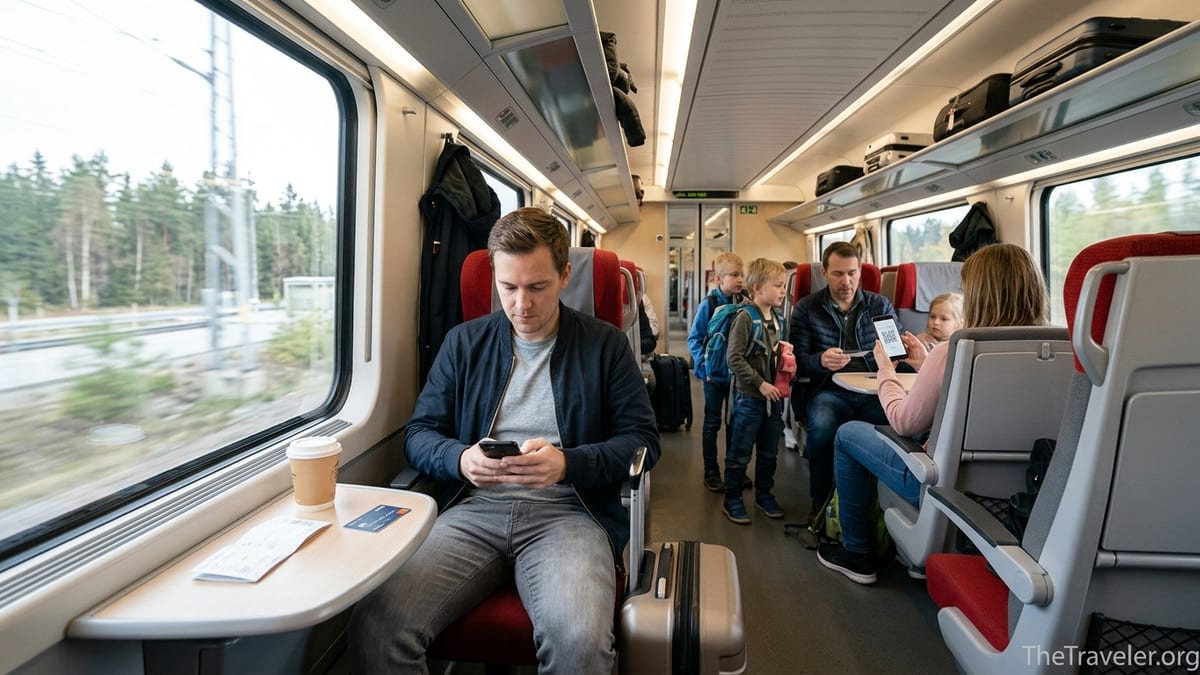
Misunderstanding How Arlanda Express Pricing Really Works
One of the biggest surprises for first-time visitors is how much the Arlanda Express costs compared to local trains and airport buses. As of mid-2026, a standard one-way adult ticket at the regular fare is around 340 Swedish kronor, with a round trip priced at about 640 kronor. That makes a single journey on Arlanda Express several times more expensive than taking the commuter train via Arlanda Central or an airport coach, even though those options only add roughly 20 minutes of travel time. Many travelers simply see “airport express” signs at the terminal and tap their card without checking the fare first, then later realize they could have saved a significant amount by choosing another mode.
Another common misunderstanding is how flexible the Arlanda Express fare structure actually is. Tickets are typically valid for any departure in either direction within 90 days of purchase, which is much more generous than people expect from an airport train. Some travelers overpay for flexible tickets because they assume they need to book a specific departure time to secure a seat. In practice, trains run several times an hour for most of the day and you can simply board the next available service with your valid ticket, so there is no advantage to locking yourself into one specific departure.
This lack of clarity often shows up when people compare Arlanda Express with the commuter train from Arlanda Central to Stockholm Central, which takes about 38 minutes. A family arriving mid-day might see large signs advertising the 18-minute express journey and assume it is the only realistic way to reach the city quickly. In reality, if they are not traveling at rush hour and do not mind an extra 20 minutes, they could pay much less by using the regular rail or bus options. The mistake is not in choosing Arlanda Express itself, but in making that choice without understanding how different the price is compared with the alternatives.
There is also confusion about youth, pensioner and corporate fares. Arlanda Express offers reduced fares for travelers aged roughly 18 to 25 and for seniors aged 65 and above, but staff occasionally encounter foreign visitors who paid the full adult fare through a third-party travel site because they did not realize they qualified for a discount. If you are a student, under 26, or a senior, it is worth checking the official pricing categories before you book, especially if you are buying multiple tickets.
Ignoring Group and Family Discounts, Especially With Kids
Arlanda Express is famous among Stockholm-based parents for one perk that many international visitors completely miss: children travel free with a paying adult or pensioner, up to a generous limit. This offer is prominently listed in the ticket information but can be easy to overlook when you are booking quickly on a phone after landing. The result is that some families pay for separate children’s tickets when they did not need to, simply because they bought through a booking engine that did not make the “kids ride free” rule obvious.
Consider a couple arriving from New York with two children aged 9 and 12. If they buy four separate standard tickets at the regular adult price, their one-way ride into Stockholm could cost well over 1,000 kronor. If they had checked the family rules on the Arlanda Express site or the staffed machines in the arrivals hall, they would have seen that both children could travel at no cost when linked to the adults’ tickets. For a return journey, that difference can easily fund a full sit-down meal in Stockholm or admission to a major attraction.
Group discounts for adults can also significantly lower the cost for small travel parties. Arlanda Express pricing is structured so that the first adult pays the full fare and additional adults traveling together pay a much lower add-on price. For example, a single adult may pay around 340 kronor one way, but adding a second adult on the same ticket drops the combined cost down to roughly 460 kronor, and a third adult increases it only modestly from there. Travelers often miss this and each buy individual tickets through different apps or bank cards, losing out on the lower per-person rate that applies when they are booked on one shared ticket.
These oversights often come down to coordination. Friends or colleagues on the same flight may walk at different speeds through the terminal and purchase their tickets separately from different machines, not realizing that buying together could have given them a group fare. If you are arriving in Stockholm with others and you know you will be boarding the same Arlanda Express train, agree in advance that one person will handle the ticket purchase and collect payment later. That simple step can lower your effective fare per person by a noticeable margin.
Booking the Wrong Ticket Type or Misjudging Flexibility
Arlanda Express offers a mix of single tickets, round-trip tickets and multi-journey travel passes. Each has different rules around validity, refunds and activation, and travelers frequently choose an option that does not match how they actually end up using the service. One of the most frequent pitfalls involves round-trip tickets. These are usually cheaper than buying two separate singles, but once the return part of the ticket has been activated and used in one direction, it is generally non-refundable. Visitors whose return flight changes or who decide to leave Stockholm by long-distance train or ferry instead of flying may discover that the unused portion of their Arlanda Express ticket cannot be refunded.
Another issue arises with travel passes that bundle multiple trips over a longer period, often up to 24 months. These passes are designed for frequent travelers who pass through Stockholm several times a year, such as consultants or airline crew. Occasional tourists sometimes fall into the trap of buying a multi-trip product because on paper the price per ride looks attractive. If you are only in Sweden once this year, and you only need two journeys between the airport and the city, it is unlikely that a travel pass will work out in your favor, especially since activated passes are not usually refundable.
There is also confusion around when tickets need to be activated. Standard one-way and round-trip tickets are typically valid for 90 days and do not need to be tied to a specific train. Some visitors think they have to select an exact departure time to “activate” the ticket and therefore worry about flight delays or long queues at passport control. In practice, the flexible validity means that if your plane lands late, you simply board a later train without needing to change your reservation. The mistake is in assuming the system is stricter than it really is, which can lead people to buy extra “backup” tickets that they never use.
Finally, third-party booking platforms sometimes use their own terminology such as “flex,” “semi-flex” or “non-flex” for Arlanda Express tickets. This can be misleading because those labels may reflect the platform’s own refund and change rules rather than Arlanda Express policy. A traveler in London might purchase a so-called non-refundable airport train ticket through a well-known reseller, then later discover that if they had booked directly, they could have requested a refund up until the end of the validity period. Whenever possible, it is safer to base your decision on the official wording from the operator itself instead of relying entirely on generic labels from intermediaries.
Forgetting to Compare Arlanda Express With Other Airport Options
Arlanda Express is positioned as the premium, time-saving option between the airport and Stockholm Central Station. The journey takes about 18 minutes non-stop, which is significantly faster than the 38 minutes on the commuter train, and faster still than most airport buses that can take 40 minutes or longer depending on traffic. However, the speed premium comes at a cost, and many travelers book Arlanda Express automatically without comparing it to these other modes. This is particularly common among short-stay visitors and business travelers who hear that “the express train is the way to go” and click through a booking link embedded in their hotel or airline confirmation.
For solo travelers on a moderate budget, especially those arriving outside of rush hour, a slower option might be perfectly acceptable. The regional trains operated by Swedish rail companies can connect Arlanda Airport with Stockholm Central in roughly 20 minutes on certain services, while charging noticeably lower fares than Arlanda Express. Airport coaches run by established Swedish bus companies offer another mid-priced alternative that serves multiple stops in central Stockholm, which can be more convenient if your hotel is not within walking distance of the central station. The difference between paying the express fare and an alternative can easily cover a restaurant meal or museum entry, especially for longer stays.
There are also special cases where Arlanda Express is not the best choice even from a pure time perspective. Travelers heading onward by long-distance train from Stockholm Central sometimes assume the express is mandatory to make a tight connection. In practice, if your onward departure is not for several hours, you might not need to pay premium prices to save 20 minutes on the airport-city leg. Similarly, visitors staying in northern suburbs along the rail corridor might be better off taking regional or commuter services directly to a local station instead of going all the way into central Stockholm on the Arlanda Express and then backtracking.
On the other hand, there are scenarios where the express’s reliability is worth the cost. Morning flights from Stockholm Arlanda to North America or Asia often involve passengers with bulky luggage and limited time, and the predictable 18-minute journey can be reassuring compared with the variability of highway traffic. The key is to make a conscious choice rather than an automatic one. Before booking, take two minutes to compare the express fare with the cost and travel time of the commuter train, regional rail, taxi and the main airport coach companies, then decide based on your schedule, budget and hotel location.
Mistiming Trains and Cutting It Too Close
Although Arlanda Express runs frequently, timing mistakes are surprisingly common. A recurring problem is assuming that the 18-minute train ride is the only element that matters. In reality, you need to factor in the time required to walk from your gate to the train platforms at the airport, buy or retrieve your ticket if you do not already have one, and then make your way from Stockholm Central Station to your final destination. For arrivals from outside the Schengen area, passport control and baggage claim can add even more uncertainty. Travelers who schedule a connecting train from Stockholm Central only 20 or 25 minutes after landing at Arlanda often discover that even the express cannot overcome those bottlenecks.
A typical example is a traveler landing at 17:30 on an international flight and planning to catch an onward long-distance train from Stockholm Central at 18:00. Even if the plane touches down on time, taxiing, disembarkation, border checks and baggage retrieval can easily push them past 18:00 before they even reach the Arlanda Express platform. Even a more modest plan, such as targeting an 18:11 or 18:23 express departure, may leave very little margin for delay. If anything goes wrong with the flight or at passport control, they end up rushing through the terminal and possibly missing both the express and the onward train.
On departure days, the risk runs in the other direction. Visitors sometimes leave their hotel in central Stockholm calculating backwards from the 18-minute train time and the airline’s recommended airport arrival, then find themselves cutting it too close when real-world factors intervene. A five-minute check-out delay at the hotel, a few minutes spent buying snacks at the station, or a missed elevator in the central station can quickly eat into a tight schedule. While Arlanda Express typically runs up to four times an hour and sometimes more during peak periods, missing one departure can still mean waiting more than 10 minutes for the next, which may leave you arriving at the airport later than you or your airline would like.
The safest approach is to treat the 18-minute train journey as only one part of the total transit time and to build in at least one extra train’s worth of buffer. If you absolutely must be at the airport by a certain time, plan to arrive one departure earlier than the latest possible train. That way, if you miss your intended Arlanda Express because of a taxi delay or slow checkout, the next one will still get you there comfortably. Similarly, if you are arriving at Arlanda and have an onward train from Stockholm Central, aim for a timetable that allows a full hour or more between the scheduled plane landing and the departure of your city-center train, especially if you will need to clear passport control and collect checked bags.
Overlooking Refund Rules, Delay Compensation and Payment Options
Another set of mistakes revolves around what happens when things go wrong. Arlanda Express has published rules for refunds and delay compensation that are more generous than many travelers expect, yet those policies are frequently misunderstood or never used. Standard tickets are generally refundable until the last day of their validity period if they have not been used. However, many people assume that because they bought a ticket for “today,” they cannot get their money back if their flight is canceled or rerouted. As a result, they leave unused tickets unclaimed, even though a simple online form or email to customer service would have allowed them to request a refund.
Delay compensation is another area where travelers lose out. Arlanda Express has guidelines that can entitle passengers to a partial refund or alternative transport if trains are significantly delayed, often starting from around 20 minutes of anticipated delay. In practice, that can mean receiving a new ticket or reimbursement for reasonable taxi costs between the airport and Stockholm Central up to a specified cap. Occasional visitors often do not realize this and may pay for an expensive taxi themselves after a disruption, never seeking compensation from the operator even though they would have qualified under the rules.
Payment methods can also trip people up. The convenience of tapping a contactless bank card at the gates or machines is appealing, but it can create challenges later if you need a receipt for expense reimbursement or to support a refund claim. Business travelers in particular sometimes forget to request a digital receipt at the time of purchase, then struggle to reconstruct the transaction when accounting asks for documentation. Buying through the official app or online store, where tickets and receipts are linked to an email address, can make it much easier to manage documentation if changes or claims are required.
Finally, travelers using rail passes such as Interrail or Eurail sometimes assume these products automatically cover the Arlanda Express, since they do apply to many other trains in Sweden. In reality, the express operates under a separate commercial agreement, and pass holders may need to use different trains or pay a separate fare. Stories of confused visitors showing an international rail pass to an onboard inspector and then being charged on the spot for a valid Arlanda Express ticket are common. To avoid similar surprises, check in advance whether your pass covers airport connections in Sweden and, if not, budget separately for this part of the journey.
The Takeaway
Used wisely, Arlanda Express is an efficient and comfortable way to travel between Stockholm Arlanda Airport and the city center. The key is to treat it as one option among several rather than an automatic default. Before you book, take a moment to check whether you qualify for youth, senior, family or group discounts, and ensure you choose the right ticket type for your actual travel needs rather than the one that merely looks like the best deal per ride on paper.
Think beyond the 18-minute journey by including walking time, passport control, luggage collection and your onward connection when planning your schedule. Build a sensible buffer into your timings and avoid locking yourself into non-refundable products unless you are confident your plans will not change. If something does go wrong, remember that Arlanda Express has clear policies for refunds and delay compensation, and that you may be entitled to partial reimbursement or an alternative ticket.
Above all, a little preparation goes a long way. Read the current terms on the official Arlanda Express channels shortly before you travel, compare the express fare with commuter trains and airport coaches, and discuss group ticket options with your travel companions. By doing so, you can enjoy the speed and simplicity of the express train without falling into the common traps that catch many first-time visitors.
FAQ
Q1. Is Arlanda Express worth the price compared with buses or commuter trains?
For many travelers it can be worth paying for the 18-minute non-stop journey, especially with tight schedules or heavy luggage. However, commuter trains and airport buses are usually significantly cheaper while taking 20 to 40 minutes longer, so it depends on how much you value time versus budget.
Q2. Do children really travel free on Arlanda Express?
Yes, Arlanda Express allows children to travel free when accompanied by a paying adult or senior, up to a set number of children per adult. The exact rules can vary, so always check the current conditions before you travel, but families often save a substantial amount compared with buying separate children’s tickets.
Q3. How far in advance do I need to book Arlanda Express tickets?
You usually do not need to book far in advance. Standard tickets are often valid for any departure within a 90-day window, and trains run frequently throughout the day. Booking a day or two before your trip, or even on arrival, is generally enough unless you want to secure a specific promotion.
Q4. Are Arlanda Express tickets refundable if my flight is canceled?
Unused standard tickets are typically refundable until the end of their validity period, but round-trip tickets that have been partially used and certain pass products may not be. If your flight is canceled, contact Arlanda Express customer service or use their online channels as soon as possible to check your refund options.
Q5. What happens if my Arlanda Express train is delayed?
If your train is significantly delayed, you may be entitled to compensation. Depending on the length of the delay, this could include a partial refund of your ticket or reimbursement for reasonable alternative transport between Stockholm Central and Arlanda Airport, up to a set maximum amount.
Q6. Can I use an Interrail or Eurail pass on Arlanda Express?
Generally, international rail passes such as Interrail and Eurail do not cover Arlanda Express, which is operated under a separate commercial agreement. Pass holders typically need to either buy a specific Arlanda Express ticket or use regular regional and commuter trains that are included in their pass.
Q7. Is it better to buy Arlanda Express tickets from a third-party site or directly?
Buying directly from Arlanda Express, either via their website, app or machines, usually gives you the clearest information on pricing, validity and refund rules. Third-party platforms can be convenient but may use their own labels for flexibility and may have stricter change or refund policies than the operator itself.
Q8. How much time should I allow between my flight and an onward train from Stockholm Central?
It is sensible to allow around an hour between your plane’s scheduled landing time at Arlanda and any onward train from Stockholm Central, especially if you need to clear passport control and collect luggage. This provides enough buffer even if you miss your first possible Arlanda Express departure.
Q9. Are there any luggage limits on Arlanda Express?
Arlanda Express is designed for air travelers and generally accommodates typical checked and cabin baggage without extra fees. You should be able to bring standard suitcases and carry-ons as long as they do not obstruct aisles or exits, but very large or unusual items may have restrictions, so check the latest guidelines if you are unsure.
Q10. How late and how early does Arlanda Express operate?
Arlanda Express services usually run from early morning until late evening, with the first trains leaving around shortly after midnight and the last departures close to midnight or slightly later, depending on the day. Frequency is typically every 15 minutes at busy times and somewhat less often during early morning or late evening periods.