


More news on this day
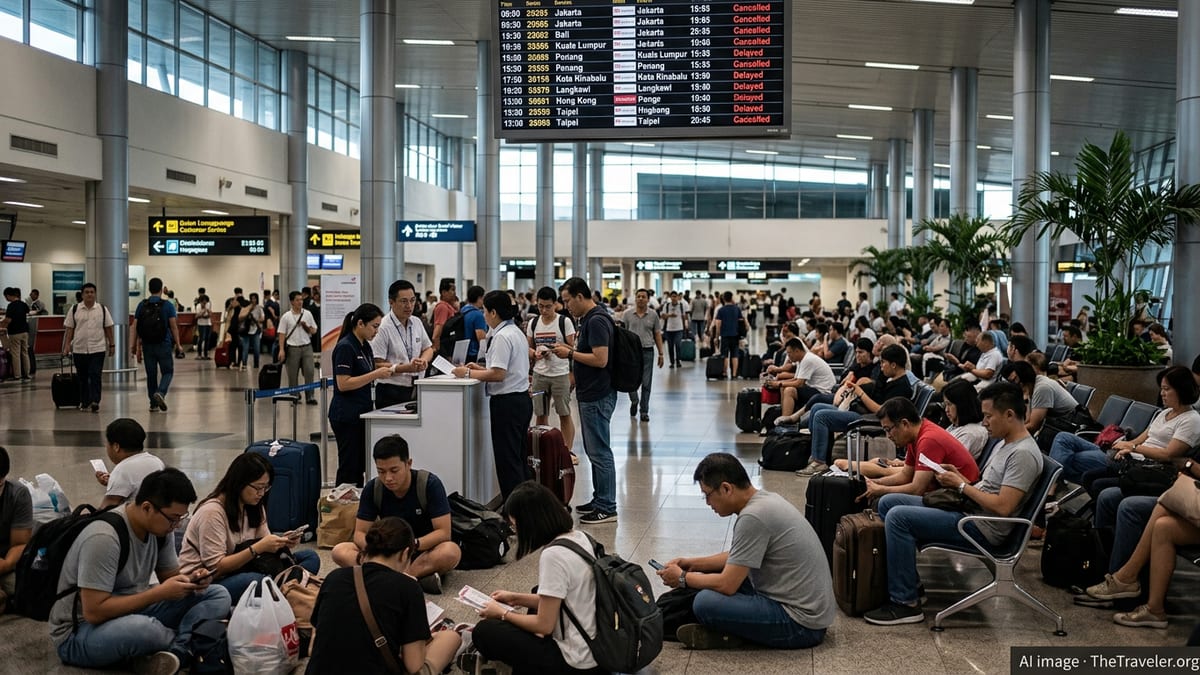
Passengers across Asia faced fresh travel turmoil over the weekend as more than 60 flights were cancelled in Indonesia, Taiwan, Hong Kong, and Malaysia, disrupting key routes to Frankfurt, San Francisco, Jakarta, and other major destinations.
Get the latest news straight to your inbox!
Wave of Cancellations Hits Major Asian Gateways
Published coverage indicates that the latest round of disruption has concentrated on some of the region’s busiest hubs, including Jakarta’s Soekarno Hatta International Airport, Kuala Lumpur International Airport, Hong Kong International Airport, and Taipei-area airports. These gateways serve as critical connectors between Southeast Asia, North Asia, Europe, and North America, so interruptions quickly ripple across networks.
Reports point to more than 60 cancellations in a short period, affecting departures and arrivals on regional and long-haul routes. Travelers bound for or transiting through Frankfurt, San Francisco, and Jakarta have been among the most affected, as carriers adjust schedules, consolidate services, or temporarily suspend selected frequencies.
According to recent aviation and travel-industry coverage, passengers have reported extended waits in terminals, last-minute gate changes, and rebooking challenges as airlines work through limited spare capacity on alternative flights. With many routes still operating close to pre-crisis load factors, finding open seats for disrupted travelers has proven difficult.
Publicly available flight data and media reports suggest that while the overall scale of cancellations is below the peaks seen during earlier global disruptions, the concentration on a handful of strategic hubs makes the impact particularly acute for travelers connecting between Asia, Europe, and North America.
Garuda Indonesia, Batik Air, Malaysia Airlines and Global Carriers Affected
Regional and international airlines have all been drawn into the latest wave of schedule changes. Coverage from aviation trackers and travel outlets notes that Garuda Indonesia and Batik Air have scrubbed multiple departures from Indonesian airports, including services that feed onward connections to long-haul flights operated by partner and codeshare carriers.
In Malaysia, Malaysia Airlines and other operators using Kuala Lumpur as a connecting hub have adjusted operations, with several flights either cancelled outright or retimed. These changes have affected both intra-Asia itineraries and journeys linking Southeast Asia with Europe and North America.
European group Lufthansa has also been cited in recent reports as facing ongoing network adjustments related to wider geopolitical and fuel-supply disruptions, which have already led to selective cancellations on routes into and out of Asia, including services that feed Frankfurt. United Airlines, meanwhile, has been highlighted in travel-industry analysis as one of the North American carriers recalibrating its Asia schedules in response to airspace restrictions and operational pressures.
Other airlines serving Hong Kong and Taiwan have reportedly trimmed or consolidated services as they navigate a combination of weather-related risks, regional airspace issues, and capacity constraints. The result is a patchwork of cancellations that can suddenly affect itineraries involving multiple carriers on a single ticket.
Stranded Passengers Confront Long Delays and Complex Rebookings
Travelers caught up in the disruption across Indonesia, Taiwan, Hong Kong, and Malaysia have faced a familiar set of challenges: long queues at service desks, limited real-time information, and difficulty securing alternative routes. Reporting from regional travel outlets describes passengers stranded overnight at Jakarta and Kuala Lumpur after late-evening cancellations left few immediate options for rebooking.
At Hong Kong International Airport, previous rounds of weather-related cancellations have already shown how quickly stranded travelers can fill terminals when several airlines adjust schedules at once. Recent coverage suggests a similar pattern, with passengers attempting to re-route through other hubs such as Singapore or Bangkok when flights through Hong Kong or Taipei are cut.
In Taiwan, where international capacity remains carefully managed across different airports, the loss of even a small number of long-haul departures can significantly compress available options. Travelers heading to the United States or Europe often rely on specific daily departures to link with onward flights, and the removal of one leg can unravel an entire multi-stop itinerary.
Consumer-rights organizations and travel advisory services are emphasizing the importance of checking flight status frequently, monitoring airline notifications, and considering flexible tickets or travel insurance products that cover last-minute cancellations. Publicly accessible guidance notes that, depending on jurisdiction and ticket type, passengers may be eligible for refunds, vouchers, or rebooking at no extra charge.
Underlying Pressures: Airspace Restrictions, Fuel Costs, and Weather Risks
The current pattern of cancellations does not stem from a single cause. Instead, industry analysis points to a combination of airspace restrictions linked to tensions in parts of the Middle East, elevated jet fuel prices, and seasonal weather systems affecting the Western Pacific. Each of these factors can push airlines to thin out schedules and prioritize the most commercially critical routes.
Recent reports on global aviation conditions describe how prolonged airspace closures force carriers to reroute flights around conflict zones, lengthening journey times and increasing fuel burn. For airlines operating on thin margins, this can make certain one-stop itineraries less viable, leading to selective cancellations or the consolidation of flights.
Coverage from travel and aviation specialists also highlights fuel-supply constraints in parts of Asia that have already driven airlines to cut back frequencies or swap larger aircraft for smaller ones. When schedules are tight and spare aircraft are limited, even minor operational hiccups can cascade into a series of cancellations across multiple hubs.
In addition, seasonal storms and typhoon systems around the Philippines, Taiwan, and the South China Sea can disrupt flight operations into Hong Kong and Taiwan at short notice. While the current disruption is not solely attributed to a single storm event, past experience in the region demonstrates how fast-moving weather can amplify existing network stresses.
What Travelers Headed to Frankfurt, San Francisco, and Jakarta Should Expect
For travelers planning trips to or from Frankfurt, San Francisco, and Jakarta in the coming days, publicly available forecasts and airline advisories suggest that schedules remain subject to change, particularly on routes that cross sensitive airspace corridors or depend on tight connection windows at Asian hubs.
Travel publications recommend building extra buffer time into itineraries involving Indonesia, Malaysia, Hong Kong, or Taiwan, especially where separate tickets or self-transfers are involved. Passengers are also encouraged to opt for through-tickets on a single carrier or alliance where possible, as this can improve the chances of automatic rebooking if one leg is cancelled.
For those already on the road, monitoring airline apps and airport departure boards remains crucial. Many recent cancellations have been announced only a few hours in advance, leaving limited time to adjust ground transport or accommodation plans. Travelers connecting to long-haul services to Europe or North America may wish to arrive at the hub city earlier than strictly necessary to widen their fallback options.
Industry observers note that while airlines are gradually adapting to the latest set of geopolitical and operational constraints, further short-notice adjustments cannot be ruled out. For now, passengers using key Asian gateways such as Jakarta, Kuala Lumpur, Hong Kong, and Taipei can expect a more fragile network than headline schedules might suggest, with the possibility of further pockets of disruption in the weeks ahead.