


More news on this day
Thousands of passengers across Bahrain, India, the UAE, Saudi Arabia and Pakistan are facing severe travel disruption as Gulf Air, FlyDubai, Saudia and Air Arabia cancel dozens of flights and delay many more, snarling key routes through Chennai, Mumbai, Riyadh, Dubai, Lahore and Peshawar.
Get the latest news straight to your inbox!
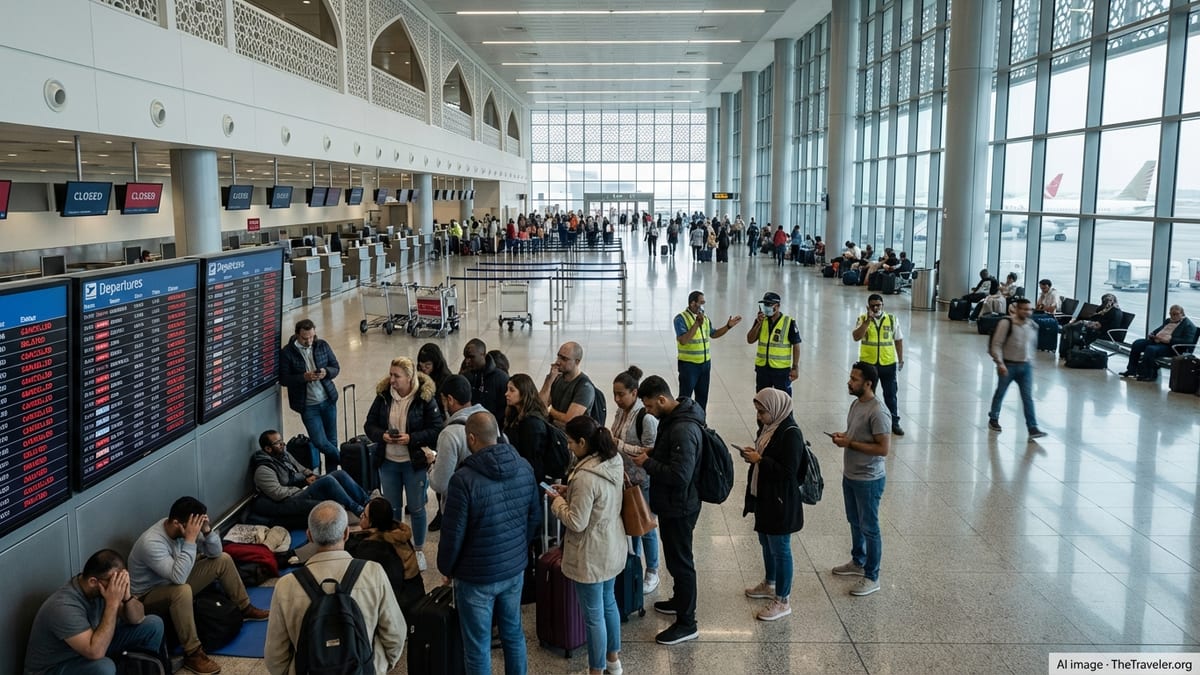
Middle East Airspace Turmoil Ripples Across Key Hubs
Recent weeks of unstable airspace conditions in parts of the Middle East have cascaded into widespread schedule upheaval for carriers that rely on Gulf hubs. Publicly available flight-status data and regional news coverage indicate that Gulf Air, FlyDubai, Saudia and Air Arabia together have scrapped around 30 flights and delayed more than 50 across a short window, concentrating disruption on heavily trafficked South Asian and Gulf city pairs.
These schedule changes are occurring against the backdrop of intermittent airspace closures and operational constraints over and around Iran, Iraq and parts of the Gulf, which have forced airlines to reroute, trim frequencies or temporarily suspend services on certain sectors. Aviation analytics cited in regional media suggest that hundreds of thousands of seats have been affected across the wider Middle East network, with knock-on effects on connections to India and Pakistan in particular.
While some carriers have resumed limited services on previously suspended routes, operations remain fragile. Passengers are reporting last minute cancellations, rolling delays and repeated rebookings as airlines attempt to thread aircraft through congested alternative corridors while maintaining safety margins and crew duty rules.
The resulting congestion at hubs such as Dubai, Bahrain and Riyadh is compounding delays across the network, leaving travelers stranded in transit or stuck at departure airports with little clarity on revised timings.
India Routes Hit: Chennai and Mumbai Bear the Brunt
On India bound and India originating routes, the impact has been acutely felt in Chennai and Mumbai, two of the busiest South India and West India gateways to the Gulf. Flight-status trackers and airport information show multiple cancellations and long delays on services operated by FlyDubai, Gulf Air, Saudia and Air Arabia between these cities and hubs in the UAE, Bahrain and Saudi Arabia.
Reports from Indian media and traveler accounts indicate that several Gulf-bound flights from Chennai and Mumbai have been pulled from schedules at short notice or pushed back by many hours as aircraft and crews are repositioned. Connecting passengers relying on onward links through Dubai, Sharjah, Manama or Riyadh have faced missed connections and unplanned overnight stays.
In Mumbai, which normally sees dense Gulf connectivity through a mix of full-service and low-cost operators, the reduction in frequencies has tightened capacity on remaining flights. Travel-industry commentary suggests that alternative routings via Europe or Southeast Asia have become harder to secure at short notice, particularly for budget-conscious workers and visiting family passengers who dominate many India Gulf routes.
Chennai, a significant source market for Gulf employment corridors, has experienced similar disruption. Cancelled outbound flights have left workers, students and leisure travelers scrambling for rebookings, with some opting to return home from the airport or delay journeys altogether until schedules stabilize.
Pakistan Disruption Deepens in Lahore and Peshawar
In Pakistan, where connections to the Gulf form a vital travel and remittance lifeline, the turbulence has been especially visible at Lahore and Peshawar airports. Recent Pakistani coverage and flight-tracking summaries point to clusters of cancellations on services operated by Gulf Air, FlyDubai, Saudia and Air Arabia alongside other regional carriers.
Lahore has recorded repeated cancellations and substantial delays on flights to Dubai, Sharjah, Bahrain and Saudi destinations, leaving departure boards dominated by revised timings and scrubbed services. Peshawar, a key origin point for Gulf-based expatriate workers, has seen a similar pattern, with multiple flights to UAE and Saudi hubs removed from operations on certain days.
The disruption in Pakistan has had a compounding effect because many passengers travel on tight schedules related to employment contracts, medical appointments or family events. Local reports describe crowded airline desks and call centers as travelers seek refunds, revalidation or alternative itineraries, often with limited immediate options due to wider regional capacity cuts.
Aviation-focused outlets note that some Gulf carriers have adjusted by operating select services from alternative airports or by consolidating passengers onto fewer frequencies, a strategy that alleviates some pressure but can leave those on cancelled flights facing lengthy waits.
Riyadh, Dubai and Bahrain Struggle to Keep Transit Flows Moving
Hub airports in the Gulf are at the heart of the unfolding disruption. Dubai, typically one of the world’s busiest international gateways, has been operating on a reduced and frequently changing schedule after a series of airspace related and incident driven constraints. Public updates and independent aviation analysis show waves of delays and cancellations hitting not only Emirates but also FlyDubai and Air Arabia services into and out of the city.
Flight lists for Dubai on several recent days have included cancelled or heavily delayed services touching Chennai, Mumbai, Lahore and Peshawar, highlighting how a disturbance at a single super hub can reverberate across South Asia. Travelers in transit through Dubai report extended layovers, missed same day connections and rebookings spread over several days in extreme cases.
In Saudi Arabia, Riyadh has emerged both as a hub under pressure and as a partial alternative. Saudia has continued to operate many domestic and regional flights while curtailing or suspending select international services tied to constrained airspace. Aviation outlets describe instances of Riyadh, Jeddah or Dammam being used as staging points for reconfigured routings, including for passengers originally ticketed via Bahrain or the UAE.
Gulf Air, whose operations have historically centered on Bahrain, has been particularly exposed to airspace restrictions. Specialist aviation reporting notes that the airline has shifted a portion of its activity to Saudi airports such as Dammam during periods of Bahraini airspace closure, a move that has rippled through its India and Pakistan schedules and contributed to cancellations and delays across the carrier’s South Asian network.
Passenger Options: Refunds, Rebookings and Ongoing Uncertainty
For travelers caught in this latest wave of disruption, options depend heavily on airline policies and ticket conditions. Public advisory notices and travel industry briefings indicate that many Gulf carriers, including FlyDubai and Air Arabia, are offering fee waivers for rebooking on affected dates, with some allowing changes within a defined travel window without additional charges.
In certain cases, passengers on cancelled flights have been offered full refunds, though processing times can vary and are sometimes reported to stretch over several weeks. Budget carriers in particular tend to emphasize self-service tools for managing disrupted bookings, directing passengers to websites or mobile apps to request changes or refunds instead of relying on airport desks.
Consumer advocates and travel agents in the region advise passengers not to head to the airport until they have confirmed that their flight is operating, given how quickly operational decisions can shift in response to airspace or security developments. They also stress the importance of monitoring airline notifications closely, as some rebookings are actioned automatically and require prompt acceptance from travelers.
With the underlying geopolitical context still unsettled, industry observers caution that further short notice schedule changes remain possible. While airlines are gradually restoring capacity where conditions permit, the experience of stranded passengers in Chennai, Mumbai, Riyadh, Dubai, Lahore and Peshawar underlines how sensitive Gulf centric route networks remain to any renewed airspace restrictions or security related incidents.