


More news on this day
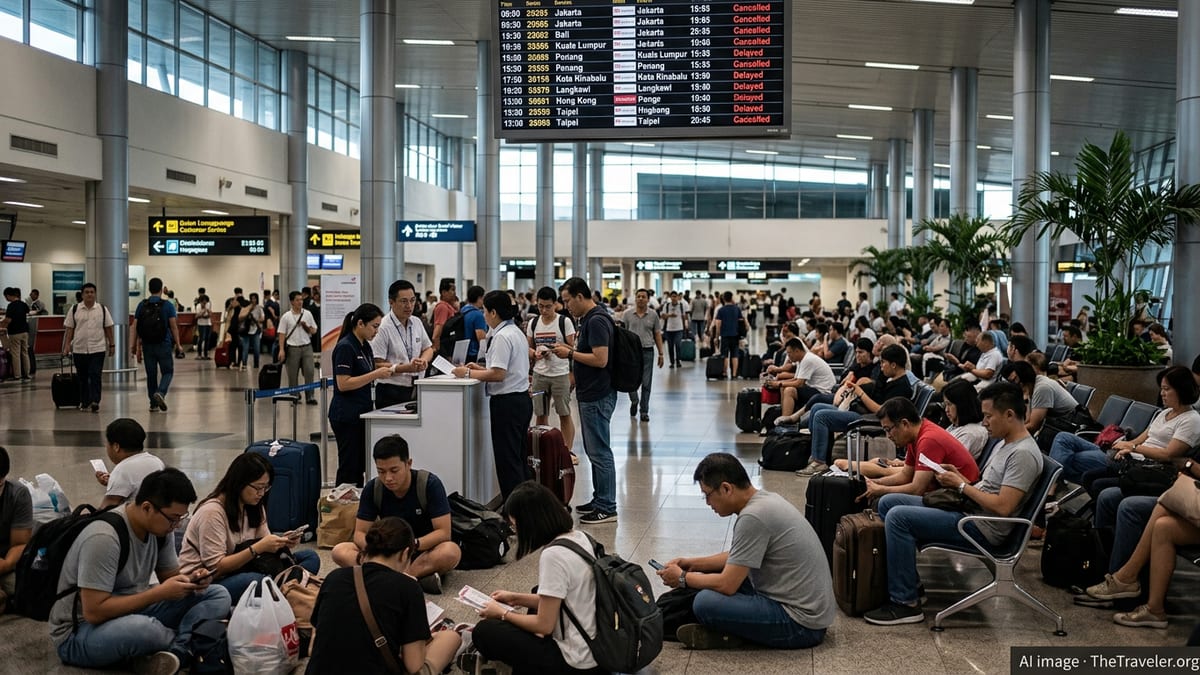
Passengers across Asia faced long queues, missed connections and overnight airport stays as a new wave of cancellations and delays hit major hubs including Mumbai, Delhi, Singapore, Bangkok, Dubai and Beijing, highlighting how fragile regional air travel remains amid ongoing disruptions linked to Middle East airspace restrictions.
Get the latest news straight to your inbox!
Fresh Disruptions Hit India’s Busiest Gateways
At India’s primary international gateways in Mumbai and Delhi, a cluster of cancellations and rolling delays disrupted tightly packed schedules and left travelers crowded around departure boards. Publicly available airport data and local media tallies indicate at least a dozen flights were canceled and more than 800 delayed across key Asian airports over a single 24 hour period, with India’s financial and political capitals among the hardest hit.
The latest disruption comes only weeks after wider Middle East tensions triggered more than 140 international cancellations across Indian airports, including Mumbai and Delhi, and forced airlines to reroute or suspend services on Gulf corridors. Reports indicate that many of the newly affected flights again involve westbound services, which must navigate a patchwork of airspace closures and restrictions over parts of West Asia.
Indian carriers have been periodically publishing advisories urging passengers to check flight status before leaving for the airport and to expect extended rerouting and holding times on certain long haul sectors. Recent schedule updates from major airlines show additional recovery flights being operated on some days, even as regular rotations remain thinned out on others, contributing to irregular departure and arrival patterns at both Mumbai and Delhi.
Travel industry analysts note that the impact on passengers extends beyond those directly booked on canceled services. Missed onward connections, crew rotation challenges and aircraft being out of position can produce secondary delays across domestic networks, amplifying the effect of even a relatively small number of outright cancellations in a single day.
Gulf Hub Strain Continues to Ripple Through Asia
Dubai, long a linchpin for traffic moving between Europe, Africa and Asia, remains under unusual operational strain, and this continues to send shock waves across the wider region. Earlier waves of Middle East-related disruption led to hundreds of cancellations at Dubai International Airport and forced Gulf carriers to operate at sharply reduced capacity on some days, according to multiple industry and media reports.
Recent operational summaries from major airlines indicate that regular schedules through Dubai, Abu Dhabi and Doha are still not fully restored, with ad hoc services and limited relief flights often replacing normal, high-frequency rotations. This has a direct effect on Asian airports such as Bangkok, Singapore and Beijing, where many passengers rely on Gulf connections for travel to Europe and North America.
Passengers currently flying through Gulf hubs are experiencing longer journey times, involuntary layovers and, in some cases, last-minute rerouting via alternative transit points such as Istanbul or European hubs. Capacity constraints on those alternate routes have pushed up fares and reduced seat availability, with some carriers adding extra frequencies to high-demand Asian cities to partially offset the lost Gulf connections.
Because Gulf hubs act as key interchange points for travelers originating in India, Southeast Asia and China, any reduction in their throughput rapidly translates into congested check in lines, crowded transfer desks and full standby lists at Asian airports, even when local weather and infrastructure conditions are normal.
Bangkok, Singapore and Beijing Grapple With Downstream Effects
In Southeast Asia, major hubs including Singapore Changi and Bangkok Suvarnabhumi reported another day of elevated delays on long haul services, particularly on routes that traditionally connected via the Gulf. Published coverage shows that several carriers have extended suspensions or capacity cuts on Dubai and other West Asia routes, removing key links from airline networks and forcing complex rescheduling.
At Beijing, long haul flights to Europe and the Middle East have also been affected by airspace constraints and shifting routings. Aviation data providers tracking day of operations performance have highlighted clusters of late departures and arrivals, along with isolated cancellations, as airlines juggle flight plans, crew duty time limits and fuel requirements associated with longer detours around restricted areas.
The combination of missed inbound connections, delayed aircraft arrivals and reduced flexibility in hub banks is particularly visible in late evening and early morning waves, when many Asia Europe and Asia Middle East services are scheduled. In those time bands, even a single late inbound aircraft can cascade into multiple late departures, tightening minimum connection windows and increasing the chances that passengers will misconnect.
Operational briefings suggest that regional carriers are prioritizing the preservation of core trunk routes while trimming frequencies or using smaller aircraft on lower demand sectors. For travelers in markets such as secondary Chinese, Thai and Indian cities, this can translate into fewer daily options and longer wait times for available rebooking when disruptions occur.
Stranded Passengers Face Long Waits and Limited Alternatives
For passengers caught in the latest wave of disruption, the immediate impact has been hours-long waits at check in counters and service desks as airlines work through rebooking backlogs created by the combined effect of 12 cancellations and hundreds of delayed departures. Reports from several Asian hubs describe families sleeping on terminal floors, long queues at security checkpoints after gate and timing changes, and heavy demand for same day hotel rooms near airports.
Travel advisers note that rebooking has become more complex than during previous disruption cycles because some routes remain partially suspended and others are operating only on selected days or as irregular relief services. This means that many stranded passengers are being re protected on multilayer itineraries involving additional stops or overnight layovers, particularly when traveling between South Asia and Europe.
Airlines are generally waiving change fees and offering flexible rebooking windows on affected sectors, according to public advisories and customer information pages. However, limited spare capacity during peak travel periods means that some travelers face waits of 24 hours or more to secure a new seat, particularly in economy cabins on popular long haul departures.
Consumer advocates are advising travelers to document all communications with carriers, keep boarding passes and receipts for any out of pocket expenses, and review their rights under local regulations and airline contracts of carriage. In some jurisdictions, compensation or reimbursement may be available for long delays or cancellations, especially when caused by operational or scheduling issues rather than airspace closure or security directives.
Outlook: Prolonged Volatility for Asia’s Long Haul Networks
Industry observers indicate that the near term outlook for Asia’s long haul air travel remains volatile while airspace restrictions and geopolitical tensions in parts of the Middle East persist. Even when specific corridors reopen, airlines may take time to rebuild schedules, reposition aircraft and restore crew patterns, leading to a prolonged period of irregular operations.
Several major carriers have already announced extended suspensions on selected Gulf routes and incremental capacity additions on alternative paths linking Europe and Asia. This evolving patchwork of service patterns means that passengers planning travel in the coming weeks may continue to experience schedule changes, aircraft swaps and altered routings at short notice.
For airports across Asia, including Mumbai, Delhi, Singapore, Bangkok, Dubai and Beijing, the priority remains managing fluctuating passenger flows, ensuring that staff and infrastructure can cope with sudden surges at check in, immigration and transfer points when delayed flights bunch together. Ground handling resources, baggage systems and border control queues all come under pressure when even modest timetable irregularities accumulate over a busy travel day.
Travel planners suggest that passengers build in additional buffer time for connections, monitor airline notifications closely and consider routes that avoid the most constrained airspace where possible. While the specific tally of 12 cancellations and 830 delayed flights reflects only a snapshot in time, it underlines how quickly shocks in one part of the global aviation network can disrupt journeys for thousands of travelers across Asia.