


More news on this day
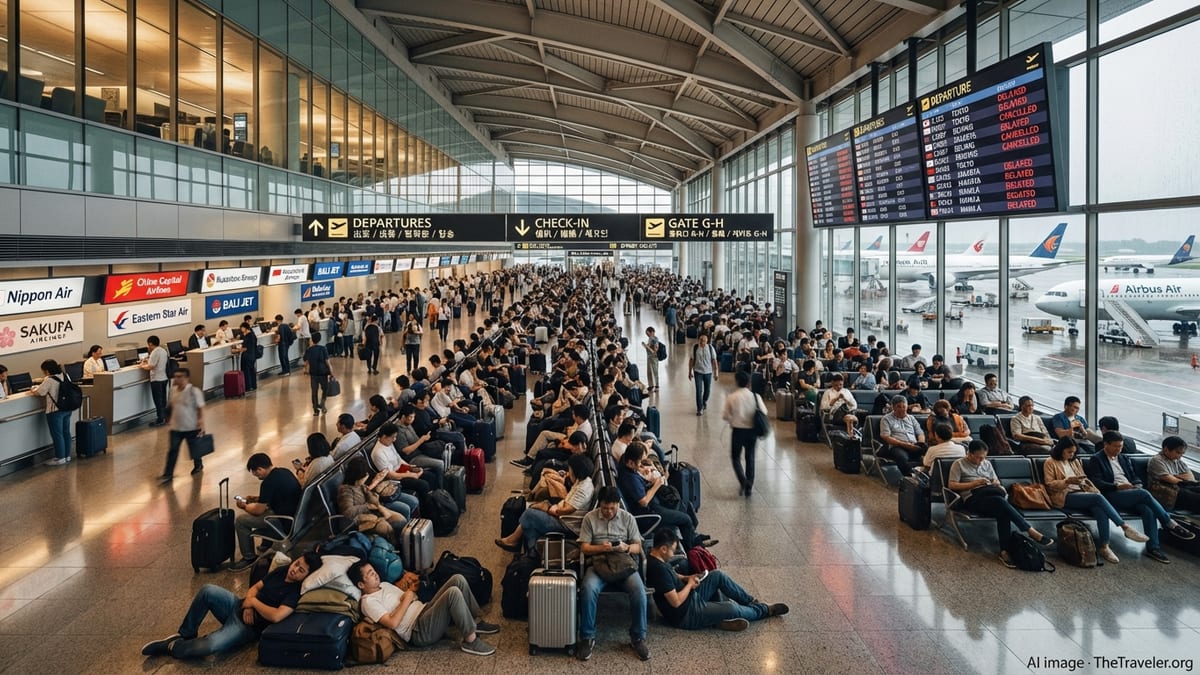
Air travel across Asia faced fresh disruption on July 9, 2026, as publicly available tracking data showed 5,597 delayed and 159 cancelled flights in Thailand, Japan, Hong Kong, India, China, Indonesia and the Philippines, stranding passengers from Bangkok and Tokyo to Delhi and beyond.
Get the latest news straight to your inbox!
Major Hubs From Bangkok To Tokyo Hit By Widespread Disruption
Reports indicate that the latest wave of delays and cancellations has hit some of Asia’s busiest international gateways, including Bangkok Suvarnabhumi, Tokyo Narita and Haneda, Hong Kong International and Delhi’s Indira Gandhi International Airport. The disruption figures compiled for July 9 point to a region under mounting operational strain during what is already a peak summer travel period.
In Thailand, Bangkok’s role as a key connecting hub for Southeast Asia means schedule changes ripple across regional and long haul networks. Recent data and local coverage show Thai carriers trimming or temporarily suspending services on routes such as Bangkok to Delhi and selected Japan links, a pattern that contributes to the day’s tally of cancellations and missed connections.
Japan’s major airports are also feeling the pressure. Tokyo Narita, a central hub for transpacific and intra-Asian operations, has recorded a mix of delayed departures and selective cancellations involving both Japanese and foreign carriers. These disruptions are forcing last minute schedule adjustments and extended layovers for travelers heading to and from North America, Europe and other parts of Asia.
In India, domestic and international operations have been affected as airlines juggle capacity, crew availability and higher operating costs. Publicly discussed schedule changes at carriers such as Akasa Air, alongside adjustments reported by other Indian airlines, have reduced options from key cities like Delhi, further tightening already busy networks across the region.
Cathay Pacific, Thai Airways, Akasa Air And Others Forced To Adjust Schedules
The disruption has not been limited to low cost or regional operators. Full service airlines including Cathay Pacific and Thai Airways have seen their schedules impacted, particularly on trunk routes linking Hong Kong and Bangkok with major Asian capitals. Flight status data and recent advisories highlight a mix of delays and cancellations on services connecting Hong Kong with Japan and Southeast Asia, and on Thai Airways flights between Bangkok, Tokyo and Indian cities.
Cathay Pacific’s network, anchored at Hong Kong International Airport, has been operating against a backdrop of fluctuating demand and operational complexity. The carrier’s publicly available timetable and status pages show rolling adjustments on flights into Japan and Southeast Asia around early July, reflecting both congestion and the knock-on effect of delays from earlier rotations.
Thai Airways, which relies heavily on routes to Japan and India, has also been recalibrating its network. Local business coverage in Thailand has detailed reductions and temporary cancellations on certain Bangkok to Delhi and Japan services during June and July, with some flights on the Bangkok to Tokyo sector recorded as cancelled in recent tracking data. These changes add to the total of 159 cancellations registered across Asia on July 9.
In India, fast growing carrier Akasa Air has faced scrutiny from travelers after schedule cuts affecting several tier two cities were flagged in public forums and booking platforms. While the airline continues to operate on core domestic sectors, reductions in smaller-city routes have left some passengers recalculating connections to major Asian hubs, compounding the impact of delays elsewhere in the region.
Operational Pressures Linked To Fuel Costs, Geopolitics And Peak Season Demand
Behind the daily disruption numbers lie several overlapping pressures on Asian airlines and airports. Industry and local media analyses over recent weeks have pointed to elevated fuel prices linked to tensions in the Middle East, which have prompted Thai carriers and others to trim frequencies or suspend less profitable routes. These structural cuts reduce network resilience, making it harder to absorb sudden operational shocks on busy travel days.
Airlines in Thailand, including Thai Airways and Thai Lion Air, have already reported multi-month reductions on routes to India and parts of Northeast Asia. Published reports describe thousands of flights removed from schedules in the first half of 2026, with more than a million seats lost across affected routes. While regulators and operators stress that overall conditions are gradually normalizing, days like July 9 show that recovery remains uneven and sensitive to peaks in demand.
Geopolitical uncertainty has also played a role. Public discussion among travelers and analysts has highlighted route changes and aircraft redeployments as carriers seek to avoid higher risk airspace or adapt to shifting traffic flows. In some cases, long haul services to and from Europe and the Middle East have been reduced or rerouted, placing extra pressure on intra-Asian connections through hubs such as Bangkok, Hong Kong and Tokyo.
All of this is unfolding against the backdrop of high summer demand. With leisure and business travel in Asia largely recovered, load factors on many flagship routes are reported to be strong. When flights are already close to full, even minor schedule changes can cascade into missed connections and limited rebooking options, amplifying the impact of each delay or cancellation on the traveling public.
Knock-On Effects For Passengers Across Multiple Countries
The immediate impact of 5,597 delayed and 159 cancelled flights is being felt most acutely by passengers caught mid-journey. Travelers transiting through Bangkok, Hong Kong, Tokyo and Delhi are encountering missed connections, unexpected overnight stays and reshuffled itineraries, as airlines attempt to consolidate services and reposition aircraft.
Publicly shared experiences on travel forums over recent weeks describe travelers navigating last minute cancellations on routes linking India, Thailand and Japan, as well as suspensions on selected Southeast Asia services. Some passengers report being moved to different days or routings, while others describe lengthy refund and rebooking processes when suitable alternatives are not available on the same carrier.
Budget travelers are particularly exposed when cancellations involve low cost airlines with leaner networks and fewer interline agreements. When a single segment is removed, the onward itinerary may no longer be viable without buying new tickets on other carriers. With accommodation, visa timing and tour bookings often tied to fixed dates, a lost connection can quickly escalate into broader disruption and extra expense.
Families and long haul travelers connecting between Europe or North America and Asia are also affected. With tight connection windows at hubs like Hong Kong and Bangkok, rolling delays can push arrival times beyond onward departure slots, forcing rebooking on later flights or different routings. For those traveling during school holidays or to major events, limited spare capacity can mean longer waits before an open seat appears.
What Travelers Can Do As Disruptions Continue
With Asia’s aviation network still vulnerable to spikes in delays and cancellations, publicly available guidance from airlines, airports and consumer bodies points to several practical steps for travelers. Checking flight status regularly in the 24 to 48 hours before departure, and again on the day of travel, remains essential. Airline apps and official status pages typically provide the earliest indication of schedule changes, often before they are reflected on third party platforms.
Passengers are also encouraged by consumer advocates to familiarize themselves with airline policies on rebooking, refunds and assistance in the event of cancellations. In markets such as India, regulator-issued rules outline compensation, meals and accommodation in specific circumstances, while other jurisdictions rely more heavily on carrier contracts of carriage. Understanding these frameworks in advance can help travelers assert their rights more effectively when disruptions occur.
Travel planners suggest building longer connection times into itineraries that transit busy hubs like Bangkok, Tokyo, Hong Kong and Delhi, especially when combining tickets from different airlines or when traveling during local holiday peaks. Allowing a wider buffer between flights gives more room to absorb moderate delays without missing onward departures.
Finally, travelers booking complex or multi-country trips across Asia may benefit from choosing itineraries on a single airline group or alliance where possible, as this can increase the likelihood of through-checking and smoother reaccommodation when schedules change. While July 9’s figures stand out for the sheer scale of disruption, recent months indicate that Asia’s skies are likely to remain dynamic, and flexible planning is increasingly becoming part of the long haul travel experience.