


More news on this day
Delta Air Lines passengers traveling from Grand Rapids to Minneapolis on Flight DL1555 faced an extended disruption this week, as the regularly scheduled Airbus A220-100 service reportedly endured a delay of around five hours following an operational interruption on the busy regional route.
Get the latest news straight to your inbox!
Evening Regional Departure Turns Into Late-Night Arrival
Flight DL1555 typically links Grand Rapids’ Gerald R. Ford International Airport with Minneapolis–Saint Paul International Airport as part of Delta’s Upper Midwest network, using an Airbus A220-100 configured for short and medium-haul routes. Publicly available flight-tracking data for recent days show DL1555 operating as an evening arrival into Minneapolis, aligning with commuter and connecting traffic across the Delta hub.
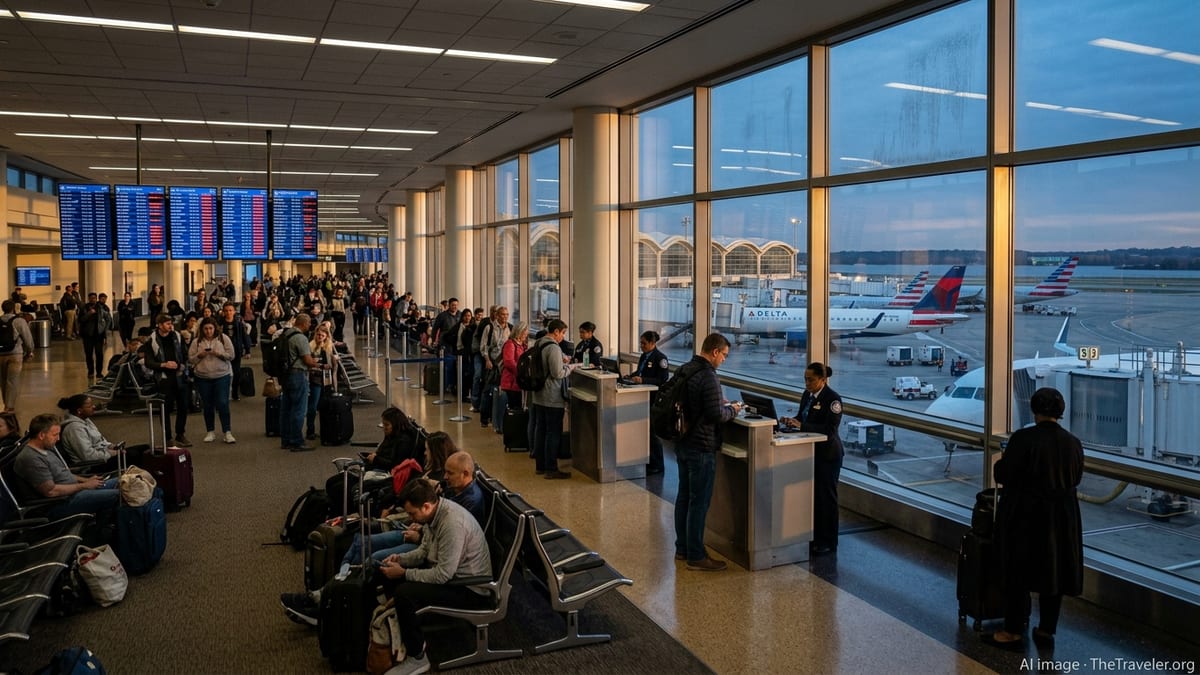
On the day of the disruption, the Grand Rapids to Minneapolis sector experienced a prolonged delay of roughly five hours, transforming what is normally a short hop of just over an hour into a late-night arrival scenario for passengers. Schedules indicate that the flight is usually planned to reach Minneapolis in the evening, but the interruption pushed operations significantly beyond the expected timeline, affecting onward connections and ground transport plans.
Available records do not show safety-related incidents in connection with the flight, and there are no indications of diversions or emergency procedures linked to this delay. Instead, the interruption appears to have been contained to the schedule itself, with the aircraft eventually completing the route to Minneapolis after the extended hold.
The use of the Airbus A220-100 on the route is consistent with Delta’s broader fleet strategy in the region, pairing a newer-generation narrowbody with a high-frequency hub connection. When irregular operations occur on these shorter segments, the ripple effect can be pronounced, as a single delayed aircraft can quickly fall out of alignment with a densely timed hub schedule.
Operational Interruption Follows Broader Disruption Pattern
The extended delay on DL1555 comes against a wider backdrop of operational strains in parts of the U.S. air travel system. Industry data, research and recent news coverage point to a combination of weather variability, air traffic flow constraints and airline-specific scheduling pressures that can collectively drive prolonged holds and rolling delays, particularly in peak travel periods.
Recent reporting on Delta’s network performance has highlighted how localized operational interruptions can escalate into multi-hour delays when aircraft and crews are tightly scheduled. Studies on U.S. flight operations suggest that once a disruption enters the system, recovery on hub-and-spoke networks can be challenging, especially on evening departures where fewer alternative flights are available.
Minneapolis–Saint Paul, one of Delta’s primary hubs, is a focal point for connecting traffic across the Upper Midwest and beyond. Any sustained delay into the hub, such as the one experienced on DL1555, can complicate passenger itineraries, particularly for those counting on onward connections to late-night departures or early next-morning services.
Grand Rapids, meanwhile, has steadily grown as a regional origin point, with Minneapolis ranking among its key domestic routes. The combination of rising passenger volumes and limited spare capacity late in the day increases the impact of a single delayed rotation, magnifying the operational and customer-facing effects of an interruption like the one reported on this flight.
Impact on Passengers and Regional Connectivity
For travelers on DL1555, the five-hour delay meant extended time in the terminal at Grand Rapids and a late arrival into Minneapolis, compressing rest time and complicating onward plans. For those with tight connections, the disruption likely triggered rebookings onto later or next-day flights, with associated challenges for hotel stays, ground transport and missed engagements.
Passenger accounts from similar recent delays across Delta’s domestic network describe a mix of rebooking efforts, digital notifications and same-day changes as the primary tools used to manage the fallout. When delays extend into several hours, travelers often face limited same-day alternatives, particularly on smaller regional routes or at times of day when schedules are already winding down.
Extended delays on routes like Grand Rapids to Minneapolis also underscore the importance of regional connectivity in the broader U.S. aviation system. When a key feeder flight into a major hub is disrupted, the effect is not only local but network-wide, as missed inbound passengers translate into empty seats, reassignments and potential load imbalances on onward flights.
For Grand Rapids, where Minneapolis is one of the primary connection points for national and international travel, any extended disruption on DL1555 creates a cascading series of adjustments for both leisure and business travelers. For Minneapolis, the late arrival of a feeder service can add incremental pressure in the final operational bank of the day.
Delta’s Operational Context and Reliability Efforts
Publicly available information about Delta’s operational performance over recent years shows that the airline has invested in both modernization and network resilience, yet has also faced notable system-wide disruptions tied to technology, weather and broader industry factors. These episodes have prompted scrutiny of how tightly scheduled fleets and complex hub operations respond under stress.
Industry analyses of flight delays in the United States indicate that large network carriers, including Delta, regularly balance on-time performance targets with aggressive scheduling designed to maximize aircraft utilization. When conditions are normal, this approach can support frequent service and competitive connection times. When an operational interruption emerges on a given day, however, the margin for recovery can be limited, especially on late departures like DL1555.
Experts studying flight delay patterns have noted that evening flights are statistically more vulnerable to extended delays, as the day’s cumulative disruptions concentrate into the final operational waves. A five-hour delay on a short-haul regional sector aligns with these broader patterns, where a combination of early-day disruptions, resource constraints and traffic management measures can culminate in protracted holds for individual flights.
While the precise trigger for the DL1555 operational interruption has not been detailed in public documentation, the event illustrates how even a single heavily delayed rotation can become a focal point for passenger frustration and network complexity, particularly when it affects a key regional link into a major hub.
What the Delay Signals for Summer Travelers
The disruption on the Grand Rapids to Minneapolis route serves as a reminder that summer travel remains vulnerable to multi-hour delays, even on seemingly routine regional flights. Aviation researchers continue to highlight that congested airspace, convective weather patterns and high seasonal demand together increase the likelihood of significant schedule deviations.
For travelers relying on routes like DL1555, the episode underscores the value of building time buffers into itineraries that depend on critical connections, especially for international departures or important time-sensitive commitments out of Minneapolis. Industry data suggests that earlier departures and longer layovers can reduce the risk of missed links when irregular operations arise.
For airlines, episodes like this five-hour delay contribute to the ongoing conversation about operational resilience and passenger communication. Carriers are under continued pressure to refine scheduling practices, invest in technology, and improve disruption management so that delays, when they occur, are contained and better managed for travelers across the network.
As peak travel periods continue, the experience of passengers on DL1555 illustrates how a single operational interruption on a regional sector can reverberate across a hub system, turning a short scheduled hop into a lengthy and disruptive travel day.