


More news on this day
Nanning Rail Transit Group Co Ltd is sharpening its role in the fast-changing transport landscape of southern China, pushing ahead with metro construction, digital mobility tools and hub developments that are reshaping daily travel across the Guangxi capital and the wider region.
Get the latest news straight to your inbox!
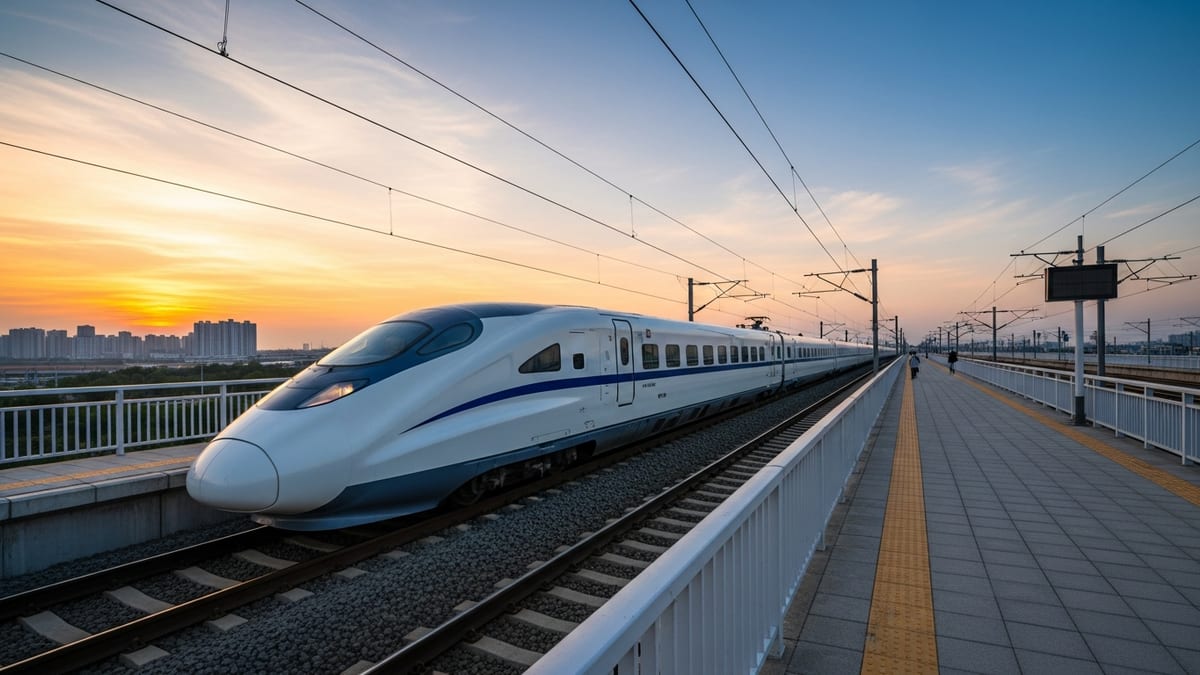
Expanding Nanning’s metro network across new districts
Publicly available information shows that Nanning’s metro system has undergone a rapid build-out in recent years, with Nanning Rail Transit Group involved in planning, construction and operations across multiple lines. Local media coverage indicates that Line 4’s initial phase has completed full-line operation, taking the network’s total operational length beyond 130 kilometers and extending rail coverage into new urban districts.
Reports from regional outlets describe Line 4 as a key east–west spine that strengthens connections between residential areas, emerging business zones and existing interchange hubs. The line’s opening is seen as a milestone for the city’s long-term transport blueprint, reducing journey times across the metropolitan area and providing additional capacity during peak commuting periods.
The expansion aligns with Nanning’s broader strategy to create a dense urban rail grid that supports compact, transit-oriented development. As more districts connect to the network, transit planners are focusing on coordinated bus links and pedestrian routes that shorten door-to-door travel times for residents and visitors.
Industry commentary notes that the growing metro network is also improving access to tourism and leisure destinations around Nanning, making it easier for travelers to combine rail, metro and local transport during regional trips.
Line 6 construction highlights complex urban engineering
Recent construction updates from Nanning highlight the progress of Metro Line 6, a project in which Nanning Rail Transit Group-linked entities play a central role. Local reports indicate that the main structure of the Yikedayi Fuyuan (First Affiliated Hospital of Guangxi Medical University) station was topped out in June 2026, becoming the fourth Line 6 station to reach this milestone.
The station is located at a busy five-way intersection on Taoyuan Road, surrounded by major hospitals, government offices, a popular urban park and dense residential blocks. Coverage from regional news outlets notes that the site’s deep excavation and complex underground utility layout required detailed engineering solutions, including three-dimensional modeling of pipelines, round-the-clock monitoring of ground settlement and targeted traffic management to maintain access for emergency vehicles and daily commuters.
Construction teams have also introduced noise and dust mitigation measures, adjusting work schedules and deploying automatic spraying systems to reduce disturbance to nearby medical facilities and neighborhoods. Project updates emphasize that these measures are designed to maintain medical services and daily life while advancing the structural works needed to prepare Line 6 for future trial operations.
Once operational, Line 6 is expected to function as a “health and wellness corridor” within the network, linking several major hospitals and residential communities. For travelers, the line will offer a convenient connection from central districts to key service clusters, reinforcing Nanning’s role as a medical and administrative center in Guangxi.
Smart mobility and the 15-minute “happiness circle”
Alongside physical construction, Nanning Rail Transit Group is participating in the city’s push toward smart, integrated mobility. Local newspaper reporting on Nanning’s “15-minute happiness life circle” describes how metro, bus and slow-traffic options are being blended through digital tools, including a unified “one-code” platform that allows passengers to plan routes, access ticketing and connect with on-demand services in a single interface.
This integration aims to solve the “last kilometer” challenge by coordinating metro arrivals with feeder buses, shared bicycles and neighborhood-scale shuttle services. Residents can increasingly move from home to station, workplace or school with fewer transfers and shorter walking distances, supported by real-time information on service intervals and crowding.
The smart mobility initiative also supports tourism and business travel. Visitors arriving in Nanning by high-speed rail or air can connect to the metro network and onward ground transport with minimal friction, using digital tools to navigate stations and identify suitable interchanges. This system reduces language and wayfinding barriers, particularly for travelers from other parts of China and neighboring Southeast Asian countries.
According to published coverage, Nanning’s combination of metro expansion and digital integration is being positioned as a model for medium-sized Chinese cities seeking to balance infrastructure growth with user-friendly services and low-carbon urban development.
Linking rail transit with regional logistics and ASEAN trade
The activities of Nanning Rail Transit Group intersect with a broader regional story of rail-led connectivity. Reports on the development of the Nanning International Railway Port highlight its function as a logistics gateway for the New International Land-Sea Trade Corridor, linking inland China with coastal ports and Southeast Asia through a mix of rail, road and sea routes.
Media coverage notes that the railway hub and adjacent bonded and airport zones are moving ahead with dozens of investment projects, strengthening Nanning’s role as a platform for cross-border industrial cooperation and trade. While freight services are managed by separate rail entities, the presence of an expanding urban rail network improves workforce access to these hubs, supporting the daily movement of employees, service providers and visitors.
At recent regional forums and trade events, Nanning-based transport groups have showcased end-to-end service capabilities spanning construction, operations, digital management and urban development. Public information from these events underscores how metro projects, station-area real estate and integrated ticketing are being presented as part of a single value chain that supports both local mobility and international linkages.
For travelers and businesses, the convergence of urban rail transit and regional logistics in Nanning means smoother transfers between city-scale mobility and long-distance services, whether by high-speed train, cross-border freight corridors or air connections at the city’s expanding airport.
Implications for domestic and international travelers
The ongoing work of Nanning Rail Transit Group is likely to have a visible impact on how domestic and foreign travelers experience the city over the next several years. As new metro segments such as Line 6 move closer to partial operation, access to hospitals, government districts, commercial centers and tourist attractions is expected to become more direct and predictable.
Short-term disruptions from construction, including temporary road closures and station works, are balanced by longer-term gains in reliability and capacity. Travel reporting already emphasizes that expanded operating hours during peak holidays and festival periods are helping to disperse crowds and reduce dependency on private cars and taxis.
For international visitors who use Nanning as a gateway to destinations in Guangxi and neighboring countries, a more extensive metro grid and integrated ticketing tools should simplify transfers between intercity rail, airport services and urban destinations. As additional infrastructure projects around the international railway port and airport come online, the role of the metro as the primary connector between these nodes and the city center is expected to strengthen further.
With multiple lines under construction or recently opened, and digital services gradually maturing, Nanning Rail Transit Group appears positioned to remain at the center of the city’s transport transformation, influencing how residents and travelers navigate one of southwest China’s most strategically located urban hubs.