


More news on this day
In the Yangtze River Delta city of Huaian, a sleek blue and white tram glides past canals and new apartment towers, offering a quiet, wire free alternative to buses and cars on one of China’s most distinctive modern tram lines.
Get the latest news straight to your inbox!
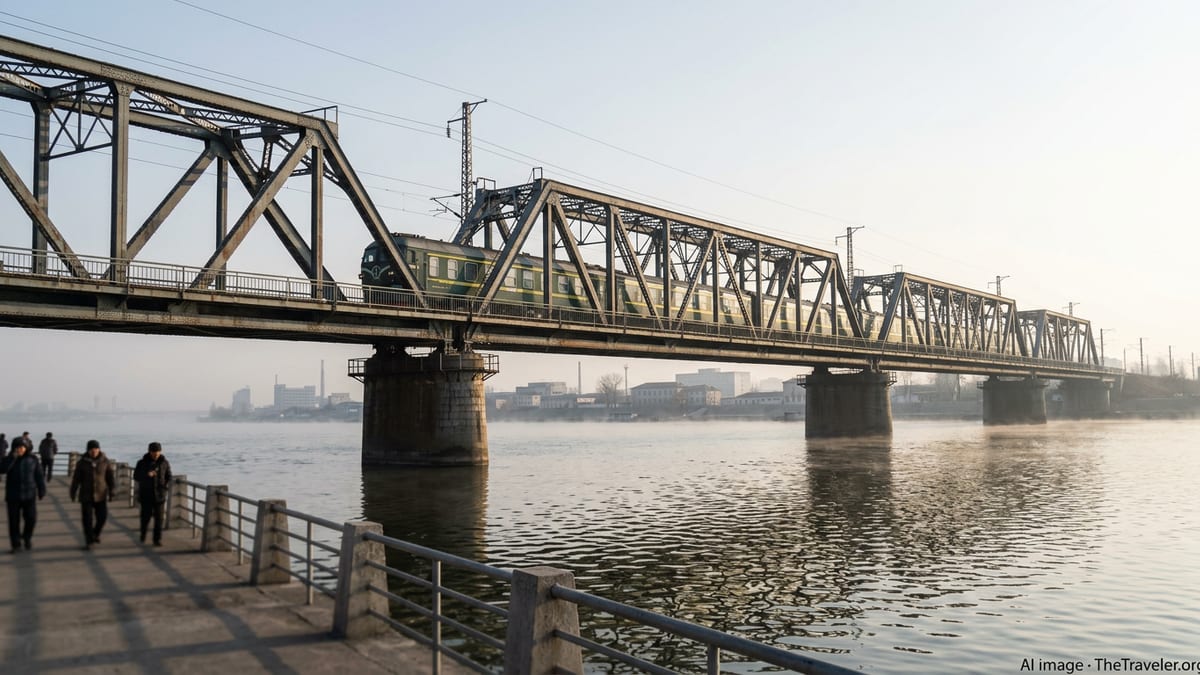
A Catenary Free Line Across an Expanding City
The Huaian Modern Tram, often referred to as Huaian Tram Line 1, opened to passengers in late 2015 and has since become a defining feature of this fast growing city in northern Jiangsu. Publicly available information shows that the 20 kilometer line runs from Huaian Gymnasium to South Gate, threading its way across both older districts and emerging development zones.
Reports indicate that the route connects Qinghe District, the Huaian Economic and Technological Development Zone, the Ecological New City and Huaian District, tying together commercial streets, new business parks, government offices and cultural and tourism sites. For visitors, the line offers a straightforward way to understand the city’s layout, moving from older urban cores to broad new boulevards in a single ride.
The system is designed as an at grade, largely segregated tramway, helping services avoid the worst of surface congestion. Stops are spaced to balance commercial access with travel speed, making the line suitable for both commuters and leisure travelers heading to shopping areas or riverfront promenades.
Unlike many light rail projects that run alongside elevated expressways or in fenced medians, much of the Huaian alignment is visually open. This allows trams to sit comfortably within the streetscape, an effect that has been used in local promotional material to reinforce the image of a modern but human scaled city.
Supercapacitor Technology and a Wire Free Skyline
One of the Huaian Tram’s most striking features is its catenary free operation through the use of on board supercapacitor technology. According to technical descriptions published by manufacturers and engineering firms involved in the project, the low floor vehicles recharge at stations, drawing power during brief dwell times and recovering energy when braking.
This approach removes the need for overhead wires along much of the line, preserving long, unobstructed views down major corridors and around key landmarks. For travelers, the absence of poles and cables can make photographs and street vistas noticeably cleaner, a detail that local tourism campaigns have not ignored.
The vehicles themselves are articulated, climate controlled and designed for level boarding from raised platforms, easing access for passengers with luggage, strollers or mobility challenges. Interior layouts are typical of modern tram fleets elsewhere in China, with generous standing room and large windows that emphasize the connection between the cabin and the surrounding city.
Industry reports note that the choice of supercapacitors was also intended to support Huaian’s environmental goals, cutting local emissions and showcasing a technology focused brand for a city that does not yet have a metro system. For visitors, the result is a quiet, smooth ride that feels closer to a light rail train than a conventional bus.
Financing, Construction and Urban Strategy
Project summaries from construction and investment companies associated with the line indicate that the first phase of the Huaian tram cost in the range of several billion yuan, making it the largest single municipal project in the city’s history at the time of building. Work began in 2014, with civil engineering, track laying, power systems and depot facilities all delivered on a tight schedule ahead of trial operations.
The economic rationale presented in public documents frames the tram as a backbone for medium capacity urban transit, positioned between a full metro and enhanced bus corridors. City planners have highlighted that Huaian’s population and fiscal capacity did not support a heavy rail subway, while a bus based system alone would have struggled to shape long term development patterns along key corridors.
In practice, the tram alignment has been used to reinforce development in the Ecological New City and other growth areas, guiding residential and commercial projects toward a spine of fixed rail infrastructure. Urban development analyses note that this strategy mirrors approaches in other Chinese cities that deploy tram lines to structure expansion before higher capacity metros are justified.
From a traveler’s perspective, this planning logic is visible in the contrasts along the route. Historic neighborhoods and older commercial streets in Qinghe give way to wide avenues, landscaped medians and newly built civic buildings in the Ecological New City, all framed by the presence of the tramway.
Positioning Huaian Among China’s Tram Cities
Huaian is one of a growing number of Chinese cities that have invested in modern tram systems as part of broader urban rail networks. While metropolises such as Beijing, Shanghai and Guangzhou focus on expanding dense metro grids, mid sized cities including Wuhan, Nanhai, Honghe and others have explored trams as flexible, lower cost solutions.
Studies on Chinese urban rail published by international transport organizations highlight Huaian as a notable example of a city using a tram as a core public transport backbone rather than a purely feeder or tourist oriented line. In this view, the Huaian Tram is less a heritage nod to early 20th century streetcars and more a contemporary attempt to shape travel behavior and land use.
For domestic tourists, the system offers an accessible way to experience a second tier city that is not yet on the standard high speed rail and flight itineraries dominated by China’s largest hubs. For international visitors already traveling in Jiangsu, the tram provides a contrast to the heavy metro systems of nearby Nanjing or Suzhou, underlining the diversity of rail based transport across the region.
As tram projects elsewhere in China navigate questions of long term ridership, operating costs and network integration, Huaian’s experience will remain a reference point. The city’s decision to anchor key development zones around a catenary free tram corridor has given it a distinctive profile in the national conversation on sustainable urban mobility, and offers travelers a different way to see how China’s smaller cities are reimagining everyday movement.