


More news on this day
Shijiazhuang Metro, one of China’s newer urban rail systems, is rapidly expanding its network and ridership as the capital of Hebei Province positions itself as a key transport hub in northern China.
Get the latest news straight to your inbox!
A Young Network Reaching Across the City
Shijiazhuang Metro entered service in 2017 and has grown into a backbone of daily travel in the provincial capital. Publicly available data indicates that by 2022 the city operated around 76 kilometers of urban rail, with more than 60 stations serving riders across core districts and emerging urban areas. The system currently consists of multiple lines running largely underground, linking residential neighborhoods with key commercial zones, railway stations, and government precincts.
Reports indicate that the network now carries several hundred thousand passenger trips on busy days, reflecting a steady shift from road-based transport to rail. The metro is designed to ease surface congestion on Shijiazhuang’s main corridors, where rapid urbanization and rising car ownership have strained traditional bus services and road capacity. For everyday commuters, students, and workers, the metro offers a faster and more predictable alternative to navigating dense traffic at street level.
Travel information platforms show that the initial lines were routed to connect major landmarks such as Shijiazhuang Railway Station, key hospitals, universities, and established residential districts. Subsequent extensions and new lines have pushed the system further north and south, tying in new development zones and broadening the metro’s catchment. This gradual build-out is turning what began as a compact core network into a citywide grid.
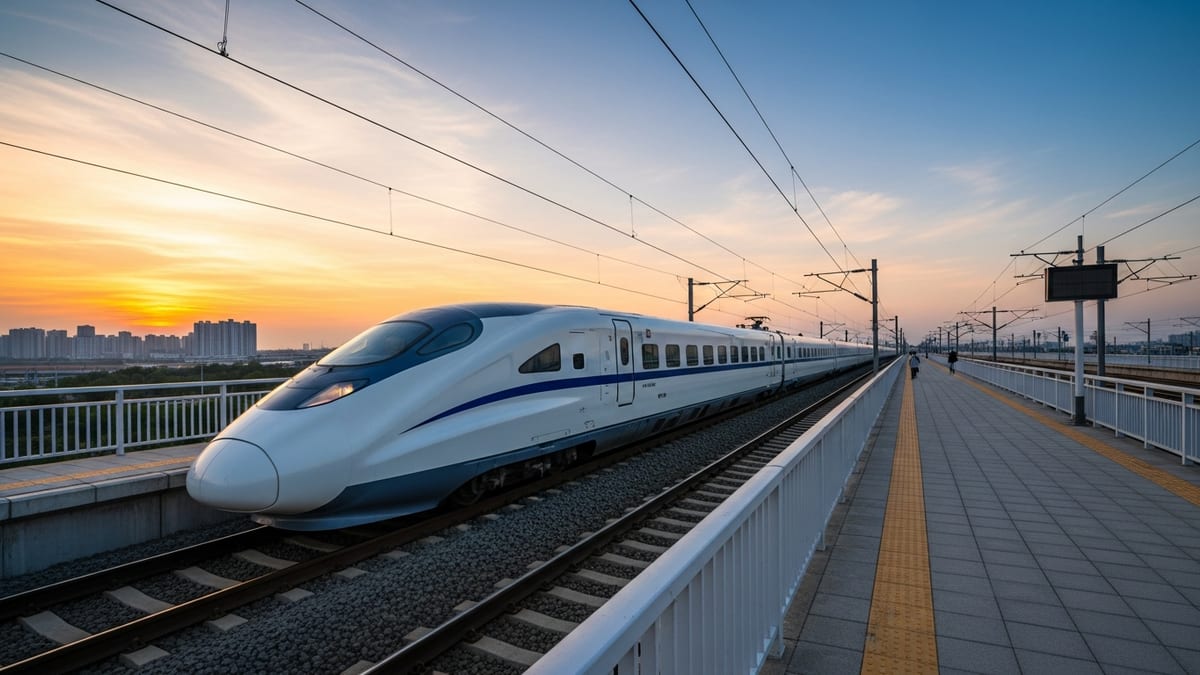
In recent years, Shijiazhuang Metro has also taken on the role of “gateway” infrastructure, linking passengers arriving by high-speed rail with the wider urban area. Network maps highlight interchanges at national railway hubs, allowing travelers on intercity services to transfer directly to metro lines and continue their journeys across the city without relying on taxis or private cars.
Latest Construction and Upgrades Through 2026
Construction activity around Shijiazhuang Metro remains visible in 2026 as the city advances its second phase of urban rail building. Planning documents and local tender notices describe ongoing works along Line 1’s second phase, especially in the Zhengding New District to the north of the traditional city core. This extension is designed to improve access to new residential areas, business parks, and infrastructure projects under development in the district.
Recent procurement announcements point to targeted engineering tasks along the Line 1 Phase II corridor, including ground reinforcement and tunneling works between stations in the city’s northeastern sector. These technical projects are intended to stabilize subsurface conditions around existing tunnel segments and prepare for full revenue operation as the wider extension nears completion. Such works highlight the complexity of building underground transit in a fast-changing urban environment with dense utilities and growing road networks.
Meanwhile, existing lines continue to receive incremental upgrades in signaling, rolling stock, and station facilities. Industry coverage notes that newer trains and improved passenger information systems are being deployed to support higher service frequencies during peak hours. Platform safety enhancements, accessibility improvements, and refinements to ventilation and emergency systems are also being prioritized in line with national standards for urban rail in China.
As expansion proceeds, coordination between metro construction and surface-level urban projects has become more prominent. Technical studies on Shijiazhuang’s new districts describe how some station structures and tunnel segments are being reserved or partially built in tandem with major roadworks and municipal pipelines. This integrated approach aims to reduce future disruption by aligning underground transit with other infrastructure from the outset.
Ambitious Long-Term Plans to 2035 and Beyond
Beyond the lines already in service, Shijiazhuang’s long-term rail blueprint is notably ambitious. According to publicly released planning documents, the city’s urban rail transit network for 2021 to 2035 envisions nine metro lines and a complementary set of urban and suburban railways. The total planned rail grid, combining metro and rapid suburban corridors, would span more than 600 kilometers once fully realized, substantially reshaping regional mobility within Hebei.
Within this framework, Shijiazhuang Metro’s second phase of construction focuses on new corridors and extensions that fill key gaps in the existing network. Planning summaries describe upcoming lines that will serve dense residential belts, industrial clusters, and planned transit-oriented development zones. Additional lines are earmarked to extend coverage to satellite towns and suburban counties, forming a one-hour rail commuting ring between Shijiazhuang and nearby cities.
Urban rail statistics compiled at the national level show that Shijiazhuang has already made significant strides within a relatively short timeframe, moving from a city without metro service a decade ago to one operating dozens of stations today. Officials at the national planning level have positioned Shijiazhuang as an integrated transport node, with metro, high-speed rail, and conventional rail forming an interconnected system.
As more segments open, planners expect passenger flows to diversify beyond traditional commuter peaks. Future phases are designed to support new cultural, educational, and commercial hubs throughout the metropolitan area, enabling residents to access jobs and services without relocating to the historic core. For visitors, a denser metro network will make it easier to move between railway stations, airport facilities, exhibition centers, and key city landmarks using a single fare medium.
Impact on Daily Life and Urban Development
For Shijiazhuang’s residents, the expanding metro is changing how people plan their days and choose where to live. Real estate listings and urban development reports frequently highlight proximity to metro stations as a major selling point, especially in newer neighborhoods anchored by transit hubs. Residential projects clustered around station areas are marketed on the promise of shorter commutes, lower transport costs, and convenient access to schools, clinics, and retail centers.
Transit-oriented development has become a recurring theme in Shijiazhuang’s planning documents, with station precincts earmarked for mixed-use buildings, pedestrian-friendly streets, and integrated bus and taxi facilities. As these nodes mature, the metro network supports denser, more walkable communities that are less dependent on private cars. This shift is particularly important for a city where rapid growth has historically led to expansive, car-oriented suburbs.
On the environmental side, increased metro ridership is expected to help moderate traffic congestion and air pollution, both long-standing concerns in northern Chinese cities. Urban transport analyses of comparable cities suggest that a strong rail backbone can reduce average trip times and vehicle emissions by drawing commuters away from congested arterial roads. Shijiazhuang Metro’s relatively high capacity and frequent service make it a key instrument in meeting such policy goals.
The system also plays a role in social inclusion. By offering standardized fares and serving a wide geographic area, the metro provides more predictable access to jobs and public services for residents across income levels. As the network grows into peripheral districts and county-level urban areas, it may narrow spatial disparities in access to employment, education, and healthcare, strengthening the city’s overall cohesion.
What Travelers Can Expect on the Network
For visitors, Shijiazhuang Metro offers a straightforward way to navigate a city that can otherwise feel sprawling. Station signage and onboard information are typically bilingual, with Chinese and English station names displayed on maps and platform screens. Trains are air-conditioned and generally operate at frequent intervals during the day, with longer headways in early morning and late evening periods.
Key stations serve as gateways to major attractions, hospitals, and shopping streets, making the metro a practical choice for travelers breaking a longer rail journey in Shijiazhuang or using the city as a base for exploring Hebei. Interchange stations link multiple lines, enabling cross-city trips without leaving the paid area. For those arriving at high-speed rail hubs, well-marked transfer corridors guide passengers directly from national railway platforms to metro concourses.
Security screening and ticket checks follow national standards for urban rail in China, so travelers can expect baggage scanners at station entrances and controlled access to platforms. Contactless smartcards and mobile payment options are widely used, although single-ride tickets remain available from machines for occasional riders and tourists. Fare structures are distance-based, with relatively modest prices compared with many global metro systems.
As more lines and extensions come into service over the next decade, Shijiazhuang Metro is likely to become the default way to move around the city for both residents and visitors. For travelers interested in contemporary urban China, the system offers a close-up view of how a rapidly growing regional capital is using rail transit to steer its development, connect new districts, and cement its role as a transport hub in northern China.