


More news on this day
Service on the Sonoma-Marin Area Rail Transit (SMART) corridor was temporarily disrupted after a commuter train struck a bicycle at a grade crossing, with early reports indicating no major injuries and only minor damage to equipment and infrastructure.
Get the latest news straight to your inbox!
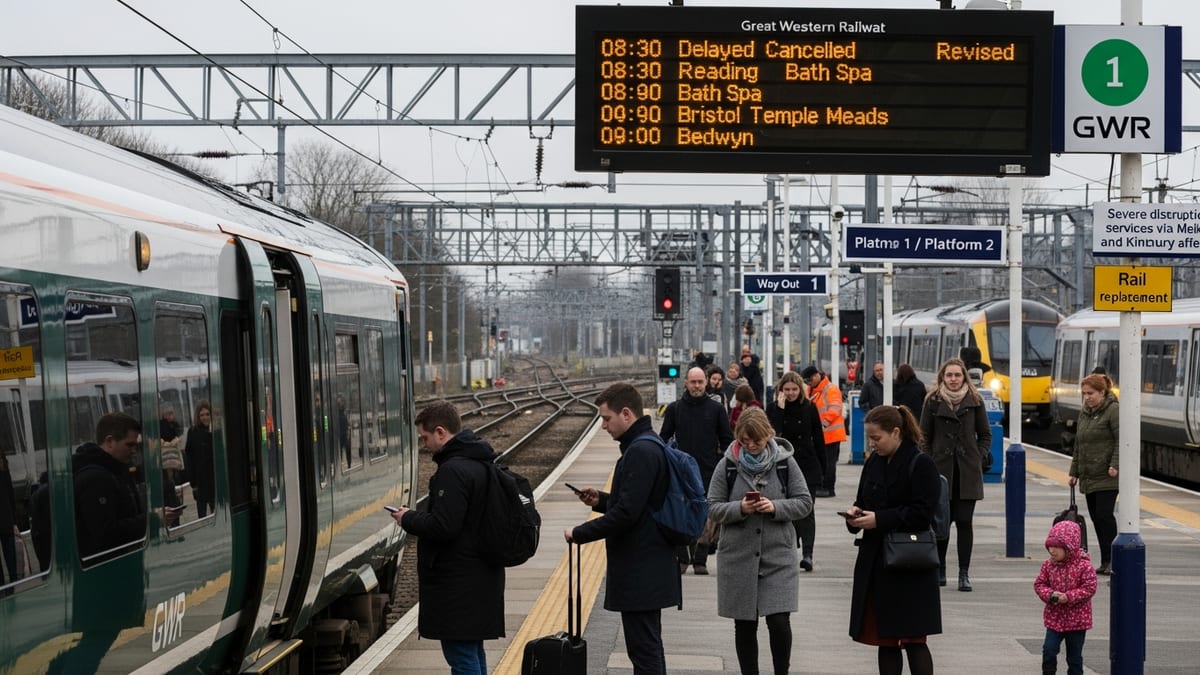
Brief delay on North Bay commuter corridor
According to published coverage and transit status updates, a SMART train operating on the North Bay commuter route was involved in a low-speed collision with a bicycle at a designated crossing point. Initial information indicates the rider avoided life-threatening harm and that no serious injuries were reported among passengers on board the train.
Rail operations were halted for a short period while crews inspected the train and tracks and verified that signaling and crossing protection were functioning properly. Delays were largely confined to the immediate area, with later departures adjusted to accommodate the temporary stoppage.
Publicly available information shows that the incident did not result in a derailment, fuel spill, or fire. The train was able to remain upright and on the rails, allowing SMART personnel to focus on safety checks, documentation, and rider transfers rather than emergency evacuation.
By later in the day, regular schedules were largely restored, though some riders reported residual delays as dispatchers worked trains through the affected section of track under additional operating precautions.
What is known about the bicycle collision
Reports indicate that the collision occurred at a level crossing where pedestrians and cyclists share space with road traffic. Early summaries suggest that warning systems were active at the time, though a detailed sequence of events has not yet been publicly outlined. The bicycle sustained significant damage in the impact, but the individual involved did not appear to suffer major trauma.
Transit incident summaries typically distinguish between visible injuries, complaints of pain, and severe or life-threatening harm. In this case, information made public so far points to injuries, if any, remaining in the minor category, with no immediate indication of hospitalizations tied directly to the train impact.
Witness descriptions referenced in local reports describe a rapid response from emergency services, with paramedics assessing the cyclist and checking on passengers inside the train. The absence of serious on-board injuries meant attention could remain focused on the individual with the bicycle and on verifying the integrity of the rail equipment.
As is standard practice after any train-involved collision, operational logs, onboard event recorders, and crossing equipment data are expected to be reviewed to clarify train speed, horn use, and barrier status at the time of impact.
SMART’s evolving safety record and previous incidents
The SMART system, which connects communities across Sonoma and Marin counties, operates along a corridor that includes multiple road and trail crossings used by pedestrians and cyclists. Over recent years, publicly available reports have documented several serious encounters between trains and individuals on or near the tracks, including fatal incidents involving pedestrians and cyclists away from road crossings.
Board reports and safety reviews published by the agency describe a continuing effort to strengthen protections at crossings through upgraded gates, clearer sightlines, additional warning signage, and targeted public outreach. Past summaries have highlighted cases in which people on foot or on bicycles entered the right of way despite warning devices, prompting calls for better education about the risks of trespassing on active rail lines.
Regional and national data compiled by transportation agencies show that train interactions with people outside of vehicles, including those on bicycles, typically result in severe outcomes. Against that backdrop, the outcome of the latest SMART incident, with no major injuries reported, is being framed as comparatively fortunate.
Nonetheless, safety advocates in the North Bay have often pointed to each new incident as a reminder that high-speed rail operations and growing bicycle traffic require ongoing attention to design details at crossings, particularly where multi-use paths run parallel to or intersect with tracks.
Passenger disruption and communication challenges
Riders using the SMART corridor during the incident period reported short-term delays and altered plans as trains were held while the collision scene was secured. Some passengers were required to remain onboard while inspections were carried out, while others experienced extended dwell times at upstream stations as dispatchers balanced safety checks with service continuity.
Publicly available rider accounts suggest that, as with other rail disruptions in the region, real-time information was a crucial factor in how passengers experienced the delay. Many travelers turned to official service alerts, station message boards, and local media updates to understand whether they could complete planned connections to buses, ferries, or carpools.
Travelers relying on the rail line for work commutes or airport transfers reported needing to add buffer time or consider backup options, such as regional buses or highway car trips, until word came that the affected section of track was clear and operating under normal conditions.
After the line reopened, service patterns gradually normalized, though some trains continued to experience minor schedule deviations as dispatchers worked through the ripple effects of the temporary shutdown.
Renewed focus on bicycle and rail safety
Safety analyses produced at the federal, state, and county levels frequently highlight level crossings as high-risk points where rail traffic intersects with people walking and cycling. Even at relatively low speeds, the speed and mass of a passenger train create dynamics in which collisions can quickly become life-threatening.
Transportation safety literature notes that common contributing factors in bicycle and pedestrian rail incidents include attempts to beat flashing lights or descending gates, distraction from headphones or mobile devices, and misjudging how fast a train is approaching. Education campaigns across North America emphasize that trains can be both quieter and faster than expected, leaving little time to react once a person is already on the tracks.
Planners and engineers in many regions have responded by experimenting with additional safety measures at high-use crossings, such as barrier designs that are harder to circumvent, separate protected paths for people on bikes, and clearer ground markings that guide trail users away from the active rail zone.
In the wake of the SMART collision with a bicycle, local discussions are likely to revisit whether further changes are needed at specific crossings, including new signage, physical separation from nearby trails, or enhanced public messaging. The fact that this incident did not produce major injuries may encourage transportation agencies and local governments to treat it as an opportunity to refine safety practices before a more serious outcome occurs.