


More news on this day
Fuzhou’s rapidly expanding metro network has entered a new phase, with the opening of the Binhai Express airport link and a series of extensions that are reshaping how residents and visitors move around the coastal Chinese city.
Get the latest news straight to your inbox!
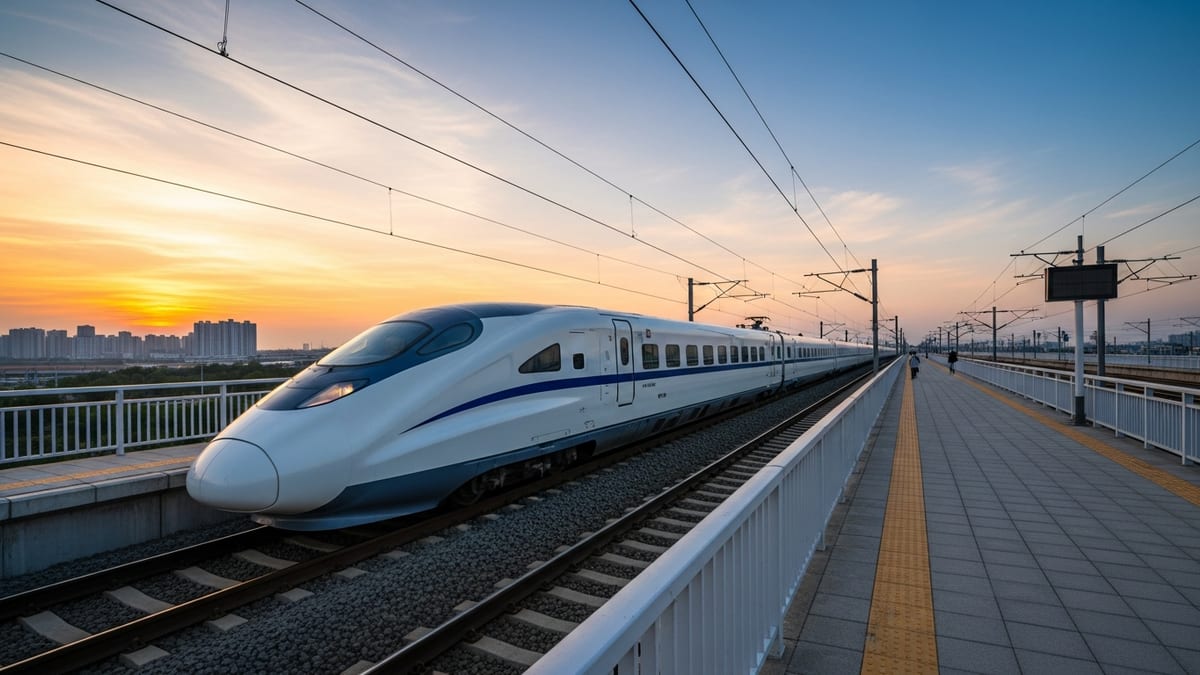
Six-line era for a fast-growing coastal metro
Recent project updates show that Fuzhou Metro has quickly evolved from a modest urban rail system into a multi-line network connecting key residential districts, business areas and long-distance rail hubs. The system now includes Lines 1, 2, 4, 5, 6 and the Binhai Express, bringing the city into what local coverage describes as a “six-line” operating pattern with more than 200 kilometers of track in service.
Fuzhou Metro, often abbreviated locally as FZM, began with a primarily north–south trunk corridor but has expanded through successive five-year development plans into an orbital and radial layout. This framework is designed to support the growth of Fuzhou’s central city, its emerging coastal new town, and satellite communities along the Min River estuary.
According to publicly available planning documents, the current build-out is intended not only to handle rising daily commuting volumes but also to relieve pressure on congested road corridors that link the historic inner city with suburban industrial and residential zones. For travelers, the denser network translates into shorter transfer chains between mainline rail, bus terminals and the airport.
With additional extensions under construction and in planning, transport analysts expect Fuzhou Metro’s scale to continue increasing through the late 2020s, further consolidating its role as the backbone of urban and regional mobility in the Fuzhou metropolitan area.
Binhai Express: a dedicated airport and coastal corridor
The opening of the Binhai Express line has been one of the most visible milestones for Fuzhou Metro in recent years. This dedicated corridor links Fuzhou Railway Station in the city’s core to Fuzhou Changle International Airport and the rapidly developing coastal new town areas to the east.
Official summaries of the project describe the Binhai Express as an express-style metro and intercity hybrid, often referenced as an airport intercity railway within the overall Fuzhou Metro system. The line offers limited-stop services tailored to airport passengers alongside all-stop trains for local commuters along the corridor.
Service plans outlined in government briefings indicate that the Binhai Express will operate with several running patterns, including fast services between central Fuzhou and the airport that can complete the journey in roughly half an hour under optimal conditions. This represents a significant improvement compared with earlier surface transport options, particularly during peak traffic periods on the expressways to the coast.
For travelers, the new line provides a one-seat ride from the traditional city rail gateway at Fuzhou Railway Station to the airport, reducing the need for multiple transfers and improving the reliability of connections to long-haul domestic and international flights departing from Changle.
Line 6 integration and future transfer potential
Alongside the Binhai Express, Line 6 has emerged as another key component of Fuzhou Metro’s eastern network. Line 6 currently links multiple eastern suburban districts, with further extensions planned that will bring it closer to the airport and improve integration with the coastal development belt.
Project descriptions for the so-called east adjustment segment of Line 6 detail a new underground stretch of approximately 5.5 kilometers with several additional stations, two of which are designed as transfer hubs to connect with other metro or regional services. This expansion is expected to strengthen Line 6’s role as a feeder and distributor for the Binhai Express and for the wider metro grid.
Plans also call for a westward extension of Line 6, included in provincial construction schedules, which would carry the line deeper into existing urbanized areas. Combined, these eastern and western projects are intended to turn Line 6 into a full cross-city axis, improving through travel between long-established neighborhoods and the newly built coastal zones.
Longer term, published information on network planning suggests that airport access will become increasingly multimodal, with Line 6 expected to pass close to the airport area and offer additional transfer opportunities for passengers using the Binhai Express as well as future suburban rail links.
Strategic focus on hubs and seamless transfers
Recent announcements relating to the Binhai Express highlight the strategic role of major interchange hubs in Fuzhou’s transport vision. One prominent example is Fuzhou North Railway Station, where a comprehensive redevelopment of the south square area is under way. The latest construction phases are scheduled to be completed toward the end of 2026, according to local government bulletins.
When finished, this hub is expected to function as a high-capacity interface between national rail services, the Binhai Express, city buses and other metro lines. Design concepts described in public materials include streamlined passenger flows and simplified security transfer arrangements so that travelers moving between conventional rail and the Binhai corridor can change modes with minimal walking and processing time.
At the city-center end of the network, Fuzhou Railway Station remains the core interchange between metro and mainline rail. The integration of the Binhai Express at this node is intended to enable same-station transfers for passengers arriving from other Chinese cities who are continuing directly to the airport or to coastal districts, enhancing Fuzhou’s attractiveness as a regional gateway.
For visiting travelers, these interchange upgrades mean that itineraries involving high-speed rail plus metro plus air can increasingly be planned with predictable transfer windows. That consistency is especially valuable during holiday peaks and major trade events, when both the metro and the airport experience strong demand surges.
Implications for travelers and future outlook
For international and domestic visitors, Fuzhou Metro’s new airport and coastal corridor reduces the uncertainty traditionally associated with reaching an outlying airport in a rapidly growing Chinese city. The Binhai Express in particular offers a clearly defined, rail-based route that connects the historic city core, key rail hubs and the terminal area in a single integrated system.
The network’s continued expansion also broadens hotel and neighborhood options for travelers. Districts along Lines 4, 5, 6 and the Binhai Express become more practical bases for business trips or longer stays, since they now offer direct or single-transfer links to the airport, long-distance rail and major commercial zones.
Looking ahead, construction schedules made public by Fuzhou’s urban construction authorities point to ongoing work on several metro extensions through the mid-2020s. Once those projects are completed, transport observers expect further improvements in average travel times, transfer convenience and network resilience during disruptions.
For TheTraveler.org readers planning trips through southeastern China, Fuzhou now stands out as a city where the metro has rapidly caught up with air and rail demand, offering an increasingly seamless sequence from long-distance train or flight to the dense street grid of the historic riverfront and the new developments along the coast.