


More news on this day
Hundreds of flight cancellations and more than ten thousand delays across key Asian hubs on 4 July are straining airline networks from Tokyo and Seoul to New Delhi and Doha, disrupting operations at carriers including Air China, IndiGo, Batik Air and AirAsia as the region heads into the peak summer travel period.
Get the latest news straight to your inbox!
Ripple Effects Across Asia’s Busiest Corridors
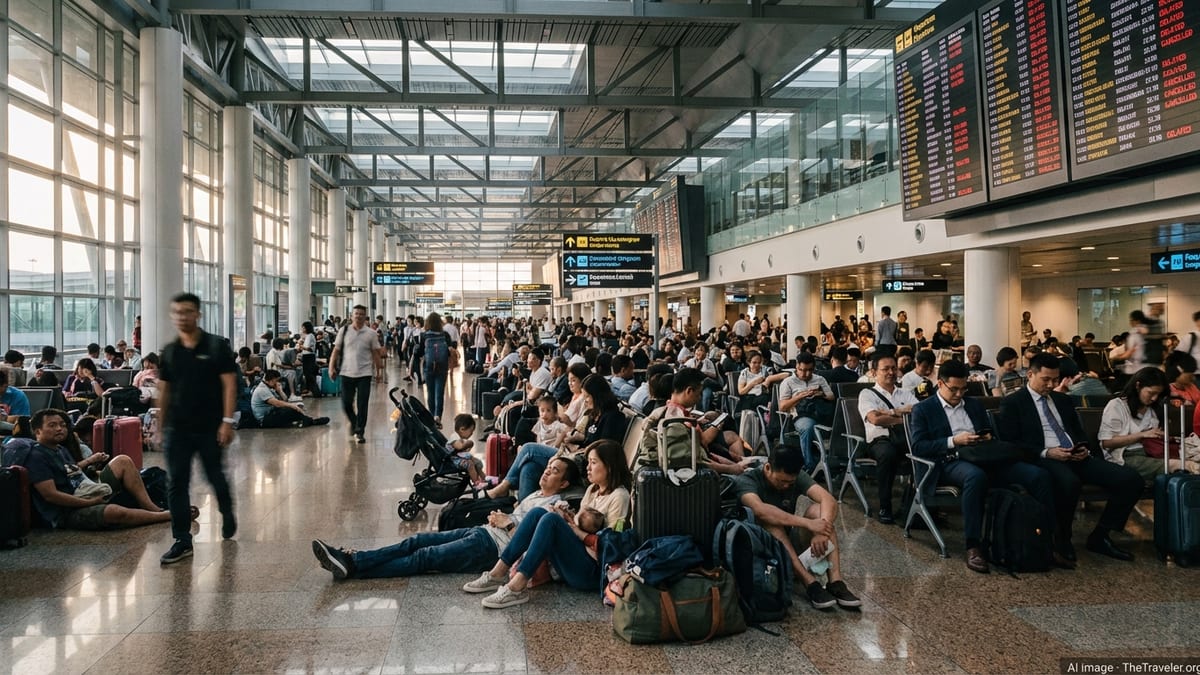
Aggregated data from airport status boards and live tracking platforms for 4 July indicate that around 560 flights were cancelled and close to 10,910 were delayed across Asia, with disruption concentrated on dense intra-Asia corridors linking North Asia, South Asia and the Gulf. These figures capture the scale of operational stress on a day when many airports were already running near peak capacity.
Japan’s capital region, anchored by Tokyo Haneda and Narita, reported sustained periods of late departures and stretched turnaround times. Publicly available dashboards show dozens of flights departing outside their scheduled windows, particularly on regional routes connecting to South Korea, China and Southeast Asia, creating knock-on effects for aircraft and crews needed later in the day.
In South Korea, Incheon International, one of the region’s major transfer hubs, also saw elevated levels of delays. Live airport statistics pointed to a significantly higher proportion of services leaving late than being cancelled altogether, suggesting carriers were prioritizing keeping aircraft and passengers moving, even at the cost of extended waits at the gate or on the tarmac.
India’s Indira Gandhi International Airport in New Delhi, meanwhile, continued to face pressure from a heavy domestic and regional schedule. Published coverage drawing on aviation data shows that New Delhi has recorded persistent congestion this northern summer, and 4 July followed the same pattern, with a cluster of late-running departures on routes linking the Indian capital to Gulf hubs and East Asia.
Tokyo, Incheon, New Delhi and Doha Under Strain
Tokyo’s dual-airport system has been particularly sensitive to disruption this season. Recent storm systems in Japan and coastal East Asia have already forced schedule adjustments, and publicly visible data for early July show carriers grappling with residual delays in and out of both Haneda and Narita. High-frequency domestic shuttles and regional flights mean that even modest hold times at Tokyo can ripple through airlines’ daily rotations.
Incheon, serving as a bridge between Northeast Asia, Southeast Asia and long-haul services to Europe and North America, has experienced a similar pattern. Live statistics released on 4 July show numerous airlines operating with a measurable share of delayed flights, underscoring how tight connection windows can quickly erode when arrival banks are slowed, even if headline cancellation numbers remain contained.
New Delhi’s role as a South Asian gateway has been complicated by rapid traffic growth and a busy monsoon season. Industry analyses note that airlines have been trimming some international frequencies in recent months to regain schedule resilience, yet data from tracking platforms still point to clusters of late departures and arrivals on heavily used sectors such as New Delhi to Doha and other Gulf cities.
Doha’s Hamad International, the Gulf linchpin in this latest wave of disruption, has been juggling late inbound services from Asia with outbound long-haul departures to Europe, Africa and the Americas. Aviation trackers on 4 July showed multiple Asia-origin flights arriving behind schedule, compressing turnaround times and heightening the risk of missed connections for transit passengers.
Air China, IndiGo, Batik Air, AirAsia and Others Feel the Impact
The operational turbulence has resonated across a wide spectrum of airlines. Publicly available flight-status feeds and regional media coverage highlight that Air China, IndiGo, Batik Air, AirAsia and other carriers with dense intra-Asia networks have all been managing a mix of cancellations, rolling delays and ad hoc re-timings.
For Air China and other mainland Chinese carriers, the combination of summer thunderstorms, congested airspace and tight schedules at key hubs has magnified the effect of each disruption. When departures from major Chinese gateways leave late for Tokyo, Seoul or Southeast Asian cities, the aircraft often return to their home bases hours behind schedule, leaving little slack for recovery.
Indian low cost operators such as IndiGo, and regional airlines including Batik Air and AirAsia, have faced similar constraints. Business press reports and schedule filings in recent weeks describe how some carriers have reduced frequencies on selected leisure routes for the July to September period, aiming to protect on-time performance on core services. Even so, the high number of delays logged on 4 July indicates that day-of-operations pressures remain intense.
Gulf carriers and codeshare partners have also been drawn into the turbulence. With Doha acting as a central interchange for traffic between Asia and Europe, late arrivals from New Delhi, Tokyo or Seoul can trigger short-notice gate changes, rebookings and revised departure times across multiple onward routes.
Why Hundreds of Flights Were Cancelled and Thousands Delayed
Operational data and recent analyses of Asia’s aviation system point to a combination of factors behind the 560 cancellations and 10,910 delays recorded on 4 July. Weather has been a persistent driver, particularly in East and South Asia, where seasonal storms and monsoon patterns frequently reduce runway capacity and force air traffic control to meter arrivals and departures.
Network congestion has compounded these weather effects. The 2026 travel season has seen a strong rebound in demand across Asia, with many airports operating close to their design limits at peak times. Industry commentary notes that when a primary hub in the region experiences even a brief ground stop or arrival backlog, tailbacks can spread rapidly because airlines are running such tight schedules.
Strategic schedule adjustments have also played a role. Some carriers, including those based in India and the Gulf, have been fine-tuning capacity in response to demand trends, regulatory requirements and aircraft availability. While these changes are often planned months in advance, they can translate into clusters of cancellations on particular city pairs when older timetables intersect with updated operational plans on booking and tracking platforms.
Finally, the rapid build-up of new capacity at several Asian airports during 2026 has introduced additional complexity. New runways, terminals and airspace procedures are intended to improve long-term efficiency, but industry observers caution that transitional phases are prone to teething issues that can temporarily raise the risk of delay and disrupt tightly choreographed bank structures at transfer hubs.
What Travelers Can Expect in the Weeks Ahead
Aviation analysts monitoring Asia’s summer operations suggest that the pattern seen on 4 July, with many more delays than outright cancellations, is likely to persist in the short term. Airlines generally aim to operate flights even when significantly late, both to move passengers and to keep aircraft and crews positioned for future rotations.
For travelers planning trips through Tokyo, Incheon, New Delhi, Doha and other regional hubs, publicly available guidance from airlines and airports continues to emphasize the importance of building in additional connection time and monitoring flight status frequently on the day of travel. High load factors and busy security and immigration points can amplify the impact of even modest schedule changes.
Carriers in Asia are gradually adding resilience, including schedule padding, revised crew patterns and selective frequency cuts on thinner routes, in an effort to stabilize operations. However, the combination of volatile weather, crowded airspace and sustained demand means that irregular operations are unlikely to vanish quickly.
As the peak summer travel period continues, the 560 cancellations and 10,910 delays logged across Asia on 4 July serve as a reminder that even small disruptions at key hubs can reverberate widely across interconnected networks, affecting airlines and passengers far beyond the airports where the problems first appear.