


More news on this day
Hundreds of travelers across Asia are facing cancellations, rolling delays and missed connections this week as powerful storms, seasonal flooding and aircraft issues disrupt flight schedules from China and Japan to the Philippines and the Pacific.
Get the latest news straight to your inbox!
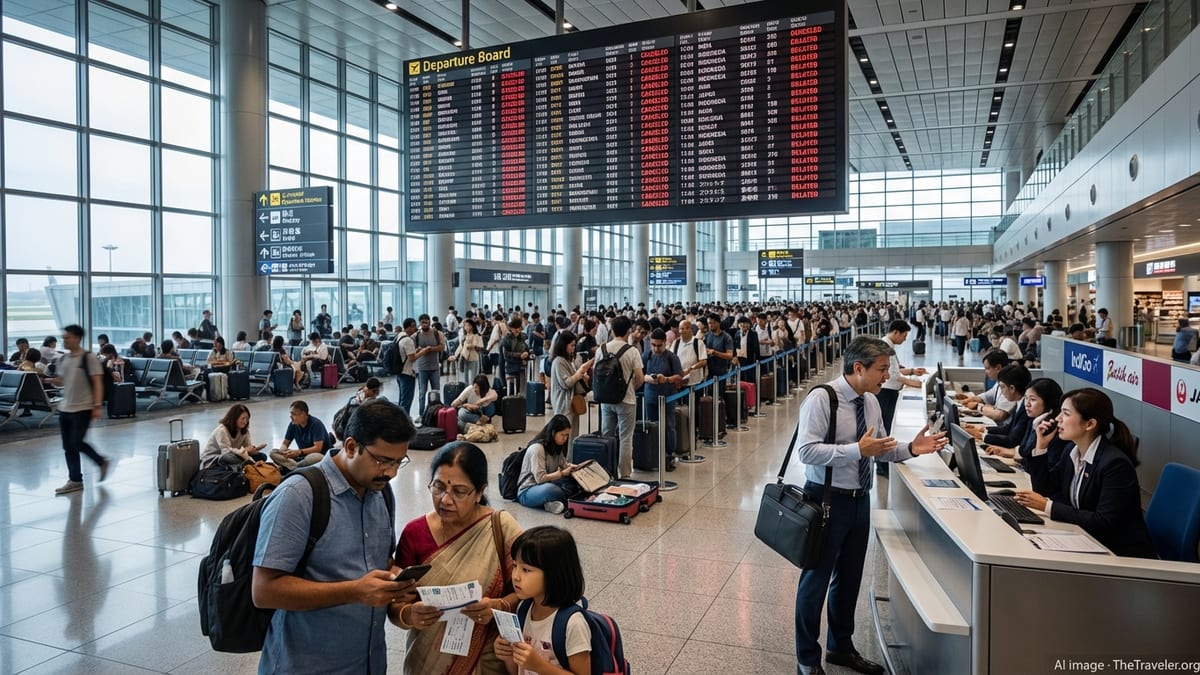
Typhoon Dolphin Triggers Mass Cancellations in China and Japan
Recent typhoon activity has emerged as a major driver of disruption across Asian air corridors, with Typhoon Dolphin causing extensive flight cancellations at several of the region’s busiest airports. Publicly available information from airport operators and news outlets indicates that Shanghai’s Hongqiao and Pudong airports together scrapped more than 1,300 flights in a single day as the storm neared China’s eastern coast, followed by hundreds more cancellations as heavy rain continued into the week.
In eastern China, coverage from multiple outlets shows that Dolphin’s landfall brought sustained winds, torrential rain and localized flooding that forced airlines to halt or significantly scale back operations. Reports indicate that more than 900 flights were canceled in Shanghai on one Monday alone, amounting to roughly 40 percent of the schedule, with knock-on delays for services that did operate as crews and aircraft rotated back into position.
The ripple effects extended north and east as the same system moved through the region. In Japan, national broadcasters and wire services reported that more than 500 domestic and international flights were canceled in early August as Dolphin approached southwestern prefectures, with evacuation advisories issued in multiple communities. While many flights resumed once conditions improved, lingering weather bands and aircraft repositioning left travelers confronting rolling delays, missed connections and last-minute gate changes over several days.
Taiwan’s transportation networks also saw preemptive cuts as the storm’s outer rainbands approached. According to published coverage, airlines adjusted schedules on routes from Taipei and Taoyuan to Okinawa and other nearby destinations, with some flights canceled and others retimed by several hours. For passengers in the region, the result was a patchwork of partial closures, limited service windows and crowded rebooked flights as carriers sought to balance safety with demand during the peak summer travel period.
Flooding and Monsoon Rains Disrupt Travel in the Philippines
Beyond typhoon landfalls, seasonal monsoon rains are adding to the disruption picture in Southeast Asia. In the Philippines, industry briefings and local reporting describe a pattern of multi-day interruptions at Manila’s Ninoy Aquino International Airport throughout August, as successive weather systems contributed to poor visibility, gusty crosswinds and waterlogged ground operations.
According to situation summaries compiled by regional meteorological and risk analytics providers, dozens of flights at Manila were canceled or diverted on multiple dates, with additional services operating under significant delay. Each weather episode stranded thousands of travelers in terminals, with some passengers facing repeated cancellations as they attempted to rebook during narrow weather windows.
The cumulative impact has been particularly challenging for domestic and short-haul international routes linking Manila with other Luzon and Visayas cities. With frequent thunderstorms and low clouds forcing go-arounds and extended holding patterns, airlines have had to juggle aircraft rotations, crew duty limits and constrained runway capacity. Publicly available information shows that this has led to congested departure halls, long check-in queues and extended waits for updated departure times for travelers throughout the month.
Industry observers note that aviation infrastructure in low-lying coastal cities such as Manila is especially vulnerable to intense rainfall and flash flooding, which can quickly overwhelm drainage systems and ground handling operations. While most disruptions have been temporary, the recurrence of weather-related interruptions over several days has compounded frustration for travelers, particularly those with onward international connections.
Operational Problems Add to Weather Woes at Asian Carriers
While extreme weather has been the headline factor, operational and technical issues at individual airlines have also contributed to delays and cancellations affecting travelers across Asia. Recent coverage from India highlighted an incident in which a domestic carrier’s evening flight from Delhi to Pune was delayed on the tarmac amid complaints of inadequate air conditioning, before ultimately being canceled and reassigned to a different aircraft. Passengers aboard the original service reported sweltering conditions in the cabin and a prolonged wait before disembarkation and rebooking.
Elsewhere in the region, carriers have continued to announce last-minute schedule changes linked to maintenance requirements and fleet constraints. One South Pacific airline with extensive links to Asian hubs recently confirmed that technical issues with a widebody aircraft forced the cancellation of flights on a Paris–Bangkok–Nouméa rotation, disrupting onward connections for travelers using Bangkok as a transit point to and from Asia. The airline’s publicly posted updates outlined efforts to charter replacement capacity and offer hotel accommodation and meal support to affected customers.
These incidents underscore how fragile summer schedules can become once aircraft and crews fall out of position. With many airlines already operating at or near pre-pandemic capacity, there is limited slack in fleets to recover quickly from unplanned maintenance or weather-related groundings. Industry analysts observing the region note that even a small number of aircraft offline for several days can cascade into dozens of cancellations and widespread missed connections.
Travelers bear the brunt of these operational pressures, often facing a combination of weather alerts, crew time-out constraints and technical checks that together push flights beyond published departure times. For many, the disruption unfolds incrementally: multiple short delays displayed on departure boards, followed by a late-night cancellation once regulatory or operational thresholds are reached.
Knock-On Effects for Regional Hubs and Long-Haul Connections
The recent wave of cancellations and delays has had a visible impact on Asia’s major connecting hubs, where tight transfer windows and complex itineraries amplify even modest schedule changes. Industry reports point to congestion at large airports in mainland China, Japan and Southeast Asia as disrupted passengers attempt to secure scarce alternative seats on already busy summer flights.
Container shipping data and aviation briefings compiled after Typhoon Dolphin indicate that disruption has not been confined to passenger services. Major ports around Shanghai and Ningbo temporarily halted operations, and airlines curtailed freighter flights alongside passenger services. Analysts suggest that with both air and sea links affected, travelers moving between Asia, Europe and the Pacific can expect limited routing options and higher fares on remaining services in the short term.
Hub carriers in the Gulf and East Asia, which serve as key bridges between Europe, North America and the Asia-Pacific region, are particularly sensitive to interruptions at source markets. Travel forums and social media posts in recent days reference rolling delays on flights transiting through Middle Eastern and Southeast Asian hubs, with some passengers attributing missed onward connections to late arrivals from storm-affected cities in China, Japan and the Philippines.
These secondary impacts can extend long after headline weather systems have passed. Once large numbers of flights are canceled or heavily delayed in a single day, schedules often require several additional days to fully normalize as airlines work through backlogs of displaced travelers, reposition aircraft and reset crew rosters in line with duty-time regulations.
What Travelers Can Expect and How to Navigate Ongoing Disruptions
For travelers planning imminent trips across Asia, publicly available advisories from airlines, airports and meteorological agencies suggest that conditions may remain changeable through the remainder of August. The regional typhoon season is still in progress, monsoon rainfall remains active in parts of Southeast Asia and individual airlines continue to fine-tune schedules in response to operational constraints and fluctuating demand.
Industry guidance emphasizes the importance of monitoring flight status frequently, including on the day of departure, and building additional buffer time into connections where possible. Many major airlines and airports in the region now provide real-time updates through mobile apps, SMS alerts and social channels, which can help passengers adjust plans before leaving for the airport.
Travel insurance providers and consumer advisories also encourage travelers to review policy terms related to weather and operational disruptions. While coverage varies, some policies may offer compensation for long delays, missed connections or necessary overnight stays if flights are canceled or rescheduled at short notice. Booking flexible tickets or using carriers that offer voluntary rebooking waivers during forecast storms can further reduce the risk of being stranded.
As Asia’s peak summer travel season continues, the current pattern of overlapping weather systems and tight airline operations suggests that sporadic disruptions are likely to persist. For the hundreds of travelers already affected by the latest wave of cancellations and delays, and for many more planning upcoming journeys, staying informed and allowing extra time have become essential parts of navigating the region’s skies.
Rich links: BBC News Travel, FlightAware live flight status, IATA traveler information